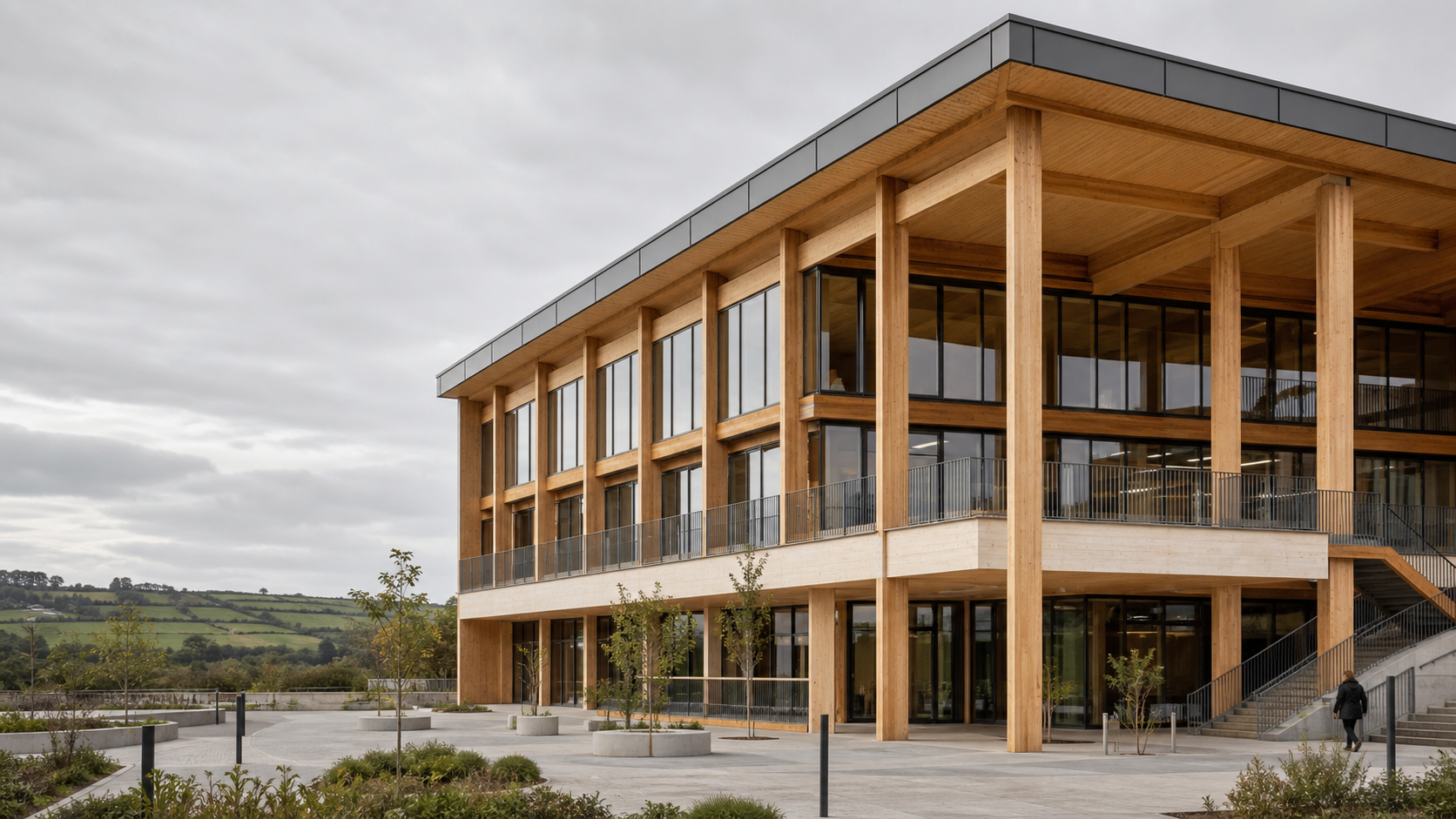
Ireland Lays the Groundwork for a “Wood First” Policy in Public Projects
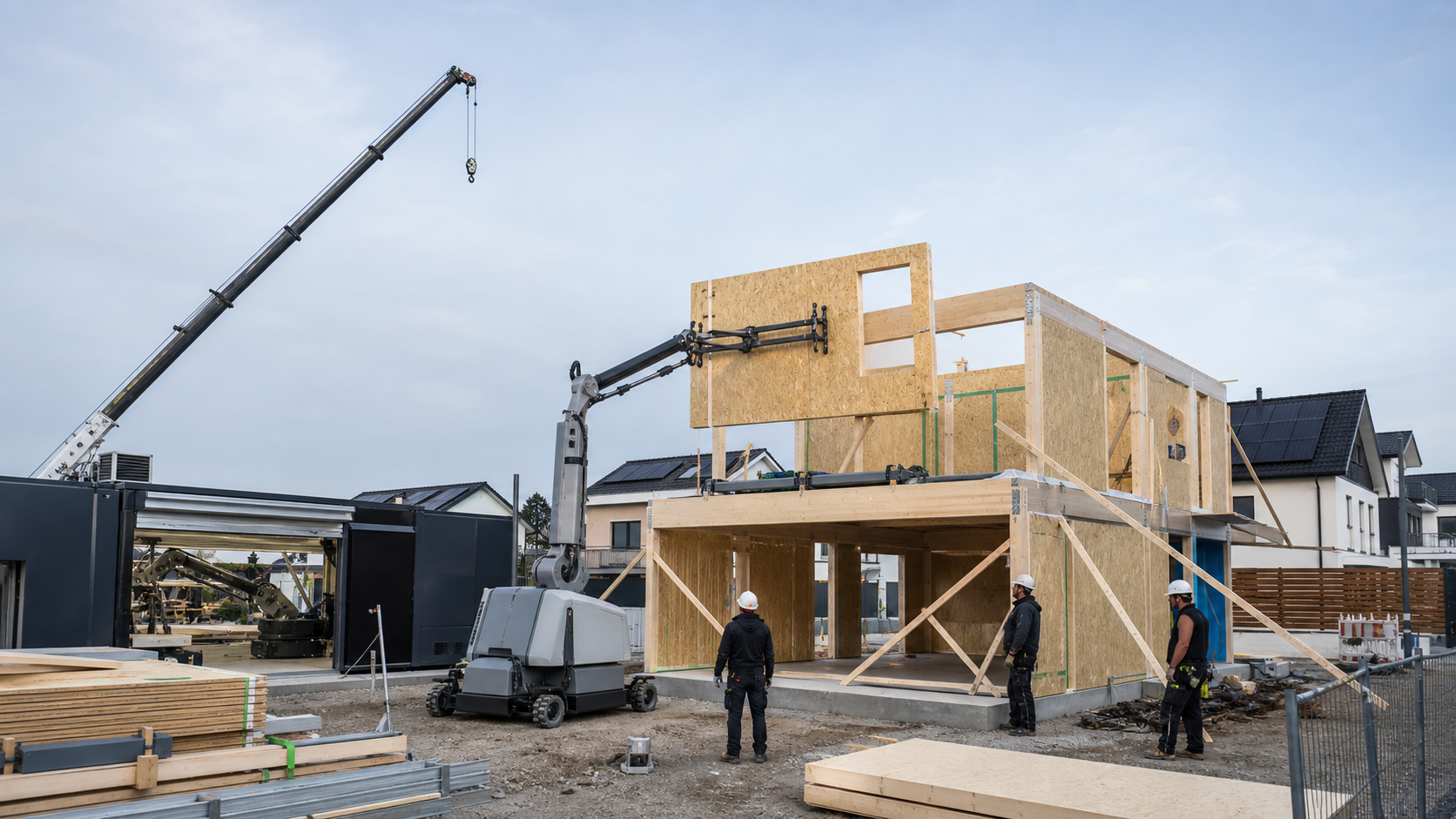
Ireland’s Timber in Construction Steering Group has delivered a seven-point roadmap covering regulation, procurement, carbon, skills and industry capacity. Its proposed “Wood First” approach would make timber the first material considered for public projects—not an automatic choice and not yet a nationwide mandate.
Ireland has taken a significant policy step toward using more timber in construction. On 9 June 2026, the government published the final report of the interdepartmental and industry Timber in Construction Steering Group, after Minister for Agriculture, Food and the Marine Martin Heydon brought it to Cabinet.
The distinction matters: Ireland has not introduced a blanket legal requirement forcing every public building to use wood. The report is a roadmap. It gives government departments and agencies seven strategic recommendations, identifies responsible leads and sets implementation timelines. The proposed direction is clear, but the relevant authorities must still examine and implement the measures.
Three pillars and seven recommendations
The roadmap groups its recommendations under three connected pillars: Regulation and Standards; Procurement and Carbon Policy; and Innovation, Training and Adoption.
The regulatory work includes developing a national technical specification for mass-engineered timber. This is intended to give designers, engineers, building-control authorities and fire officers a more consistent basis for assessing systems such as cross-laminated timber and glulam. A centralised framework of specialist advice is also proposed to support public authorities while standards and experience continue to develop.
Procurement is where the “Wood First” idea becomes most visible. The report proposes a public procurement strategy, led by the Office of Public Works, under which timber and timber-based systems would be considered first for new public buildings, extensions and major refurbishments. That does not mean timber must be selected regardless of context. A project could use another solution where a robust technical or economic case supports it. The policy would change the starting question from “Can we use timber?” to “Is there a sound reason not to consider it first?”
The same pillar connects procurement with whole-life carbon. The roadmap calls for clearer embodied-carbon targets and more consistent life-cycle assessment, allowing material choices to be evaluated on their impact across the building’s life rather than only on operational energy or initial cost.
The remaining measures focus on market capacity: a Timber Knowledge Development and Innovation Facility; stronger timber content in architecture, engineering and construction education and continuing professional development; and potential incentives to improve the viability and uptake of timber projects.
Why public procurement can change the market
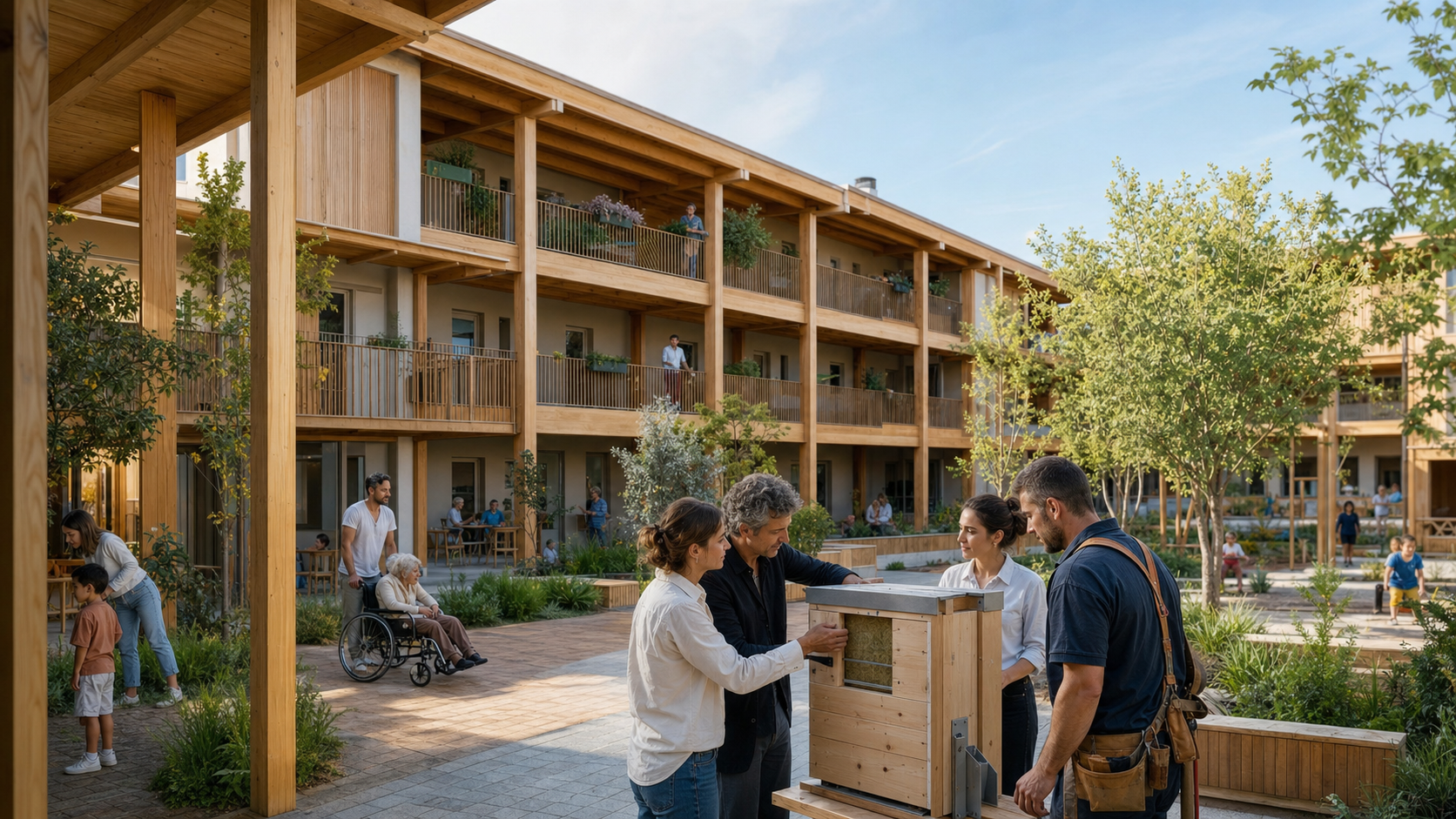
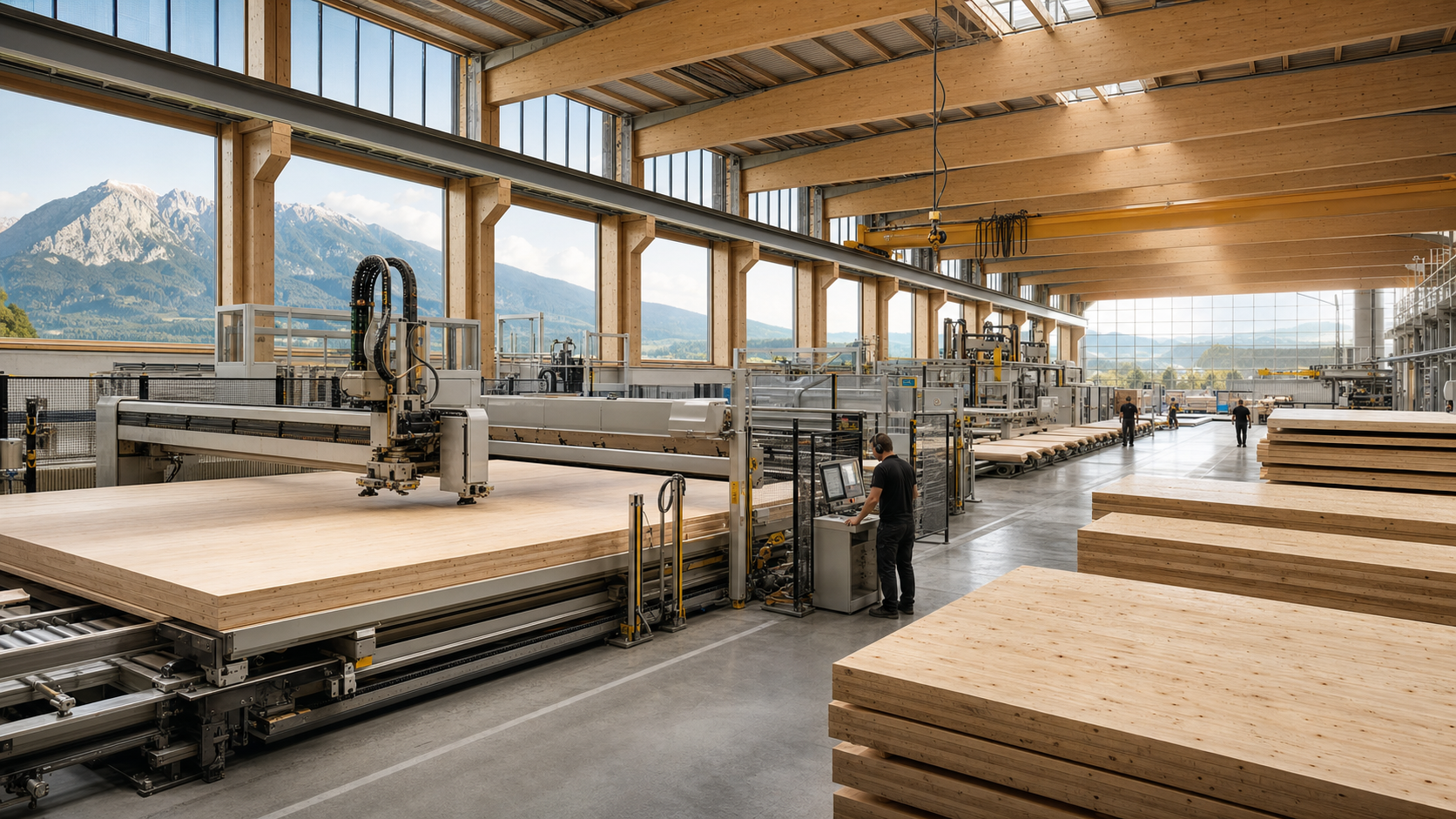
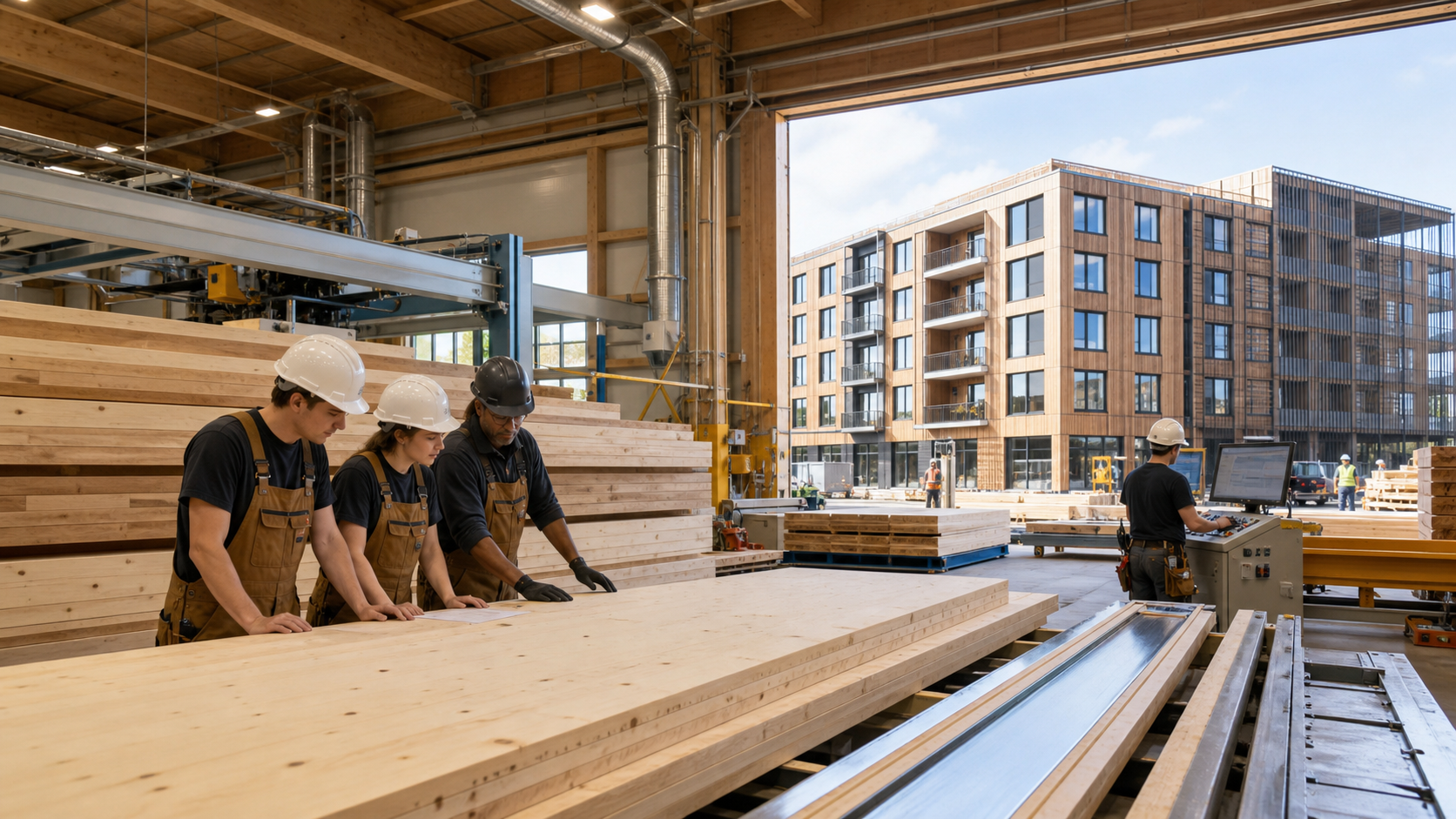
Public clients can create predictable demand. A consistent pipeline of schools, libraries, offices, housing and civic buildings gives manufacturers and contractors a reason to invest in design capability, certification, prefabrication and production capacity. Demonstration projects also create reference details and performance evidence that later projects can reuse.
The Steering Group was established in November 2023 and worked with representatives from 64 institutions and organisations across government, industry and academia. Its five thematic groups covered market opportunity; regulation, standards and compliance; public procurement and demonstration projects; research and development; and communication, education and training.
Ireland also has a material-supply reason to act. According to the government, forests cover 11.6% of the country, conifers account for almost 70% of stocked forest area, and annual roundwood supply is forecast to rise from about 5 million cubic metres today to almost 7.8 million cubic metres by 2035. Ireland’s Forest Strategy envisions Irish-grown timber becoming the primary material for new Irish homes by 2050.
What this means for digital timber design
A Wood-First policy will only work if early design decisions can be converted into buildable, verifiable information. Designers need to compare structural systems, quantify timber, assess embodied carbon and carry the selected solution into fabrication and procurement without rebuilding the data at every stage.
That creates a direct role for timber-focused digital tools. A reliable model can connect geometry, material quantities, component identity and fabrication outputs to the evidence public clients will increasingly request. For platforms such as FrameVerk, the opportunity is not simply to visualise timber buildings, but to make timber options easier to evaluate, specify and deliver with traceable information.
A policy direction, not a finished rule
The final report gives Ireland a coordinated direction and assigns ownership to the next steps. Its impact will depend on how quickly technical standards, procurement guidance, carbon rules, training and industry capacity move from recommendations into practice.
For now, “Wood First” should be understood precisely: a proposed decision framework for public projects, not an unconditional material mandate. Even so, making timber the first option to be examined could materially change how public buildings are conceived—and create a stronger domestic market for modern timber construction.
Sources: Government of Ireland, “Minister Heydon and Minister Collins welcome the Timber in Construction Steering Group’s final report and recommendations to increase the use of timber,” 9 June 2026; Timber in Construction Steering Group, Final Report and Recommendations, June 2026; Coillte, “Coillte welcomes today’s publication of the Timber in Construction Steering Group Final Report,” 9 June 2026.