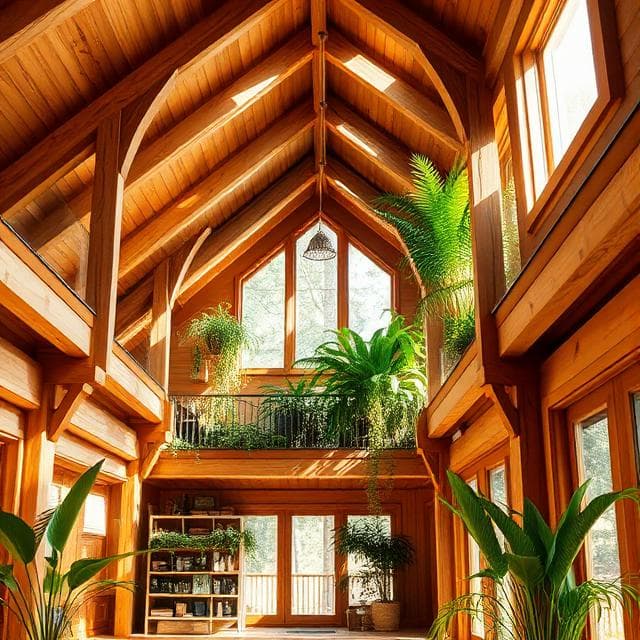
Biophilia in Buildings: How Timber Structures Boost Wellbeing and Productivity
Modern timber buildings don’t just look good—they actively improve how we feel and perform. Discover the science behind biophilia, why real wood changes the brain, and how timber design boosts wellbeing, focus, and recovery.
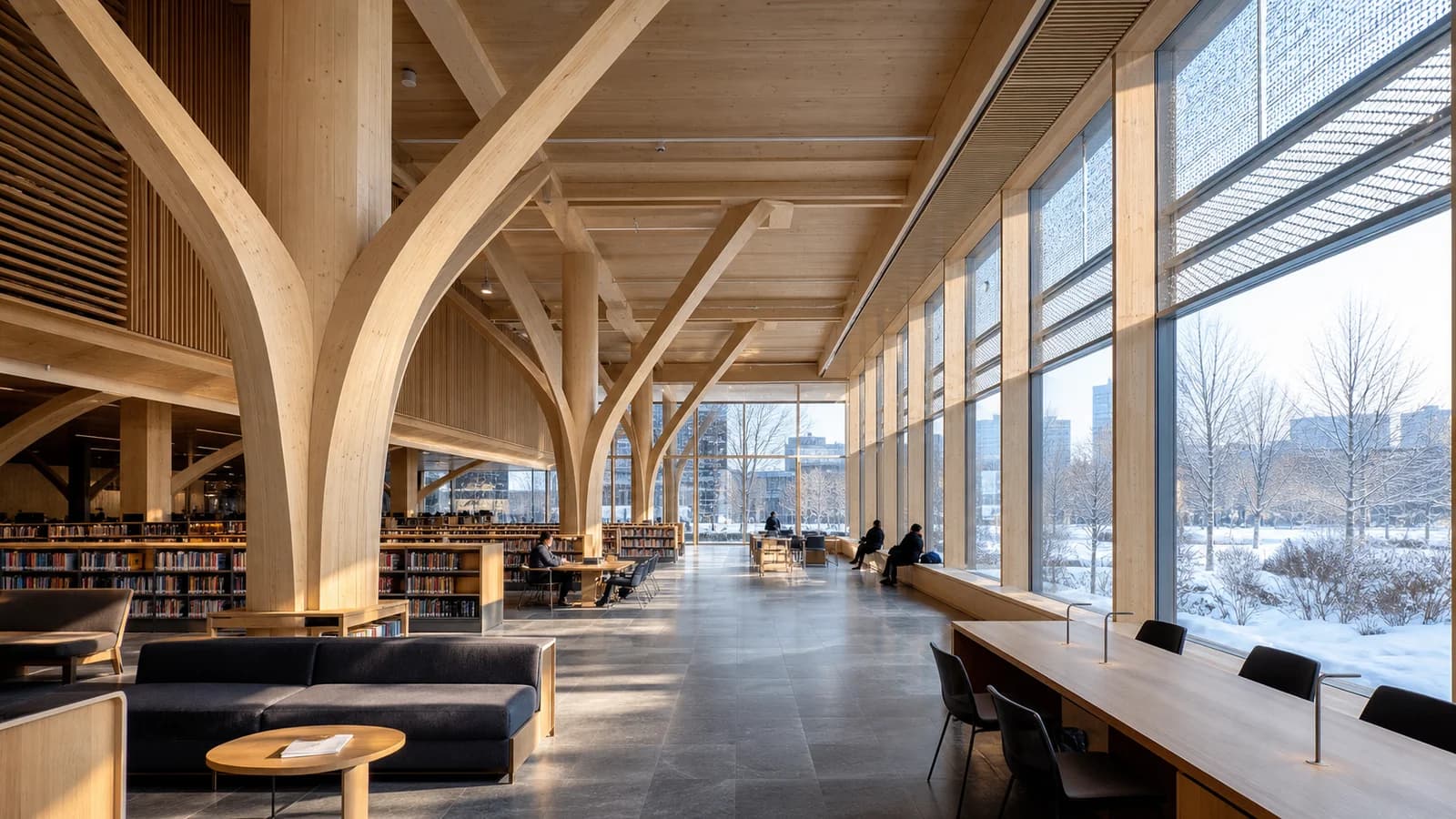
In an age of screen overload, urban density, and permanent mental pressure, buildings are no longer just about shelter or function. They are becoming regulators of mood, focus, and nervous system balance.
Architects, neuroscientists, and wellness experts are now aligned around a powerful idea:
Human-centered design must reconnect us with nature.
And among all natural materials, timber stands alone.
Not as decoration.
Not as imitation.
But as nature itself—transformed into structure.
This is the true power of biophilic design.
🌿 What Is Biophilic Design (Really)?
Biophilic design is the intentional integration of:
- Natural light
- Plants & water
- Stone & earth textures
- And, most importantly, real wood
…into indoor spaces to support mental and physical health.
Green walls and skylights are flashy, but structural timber does something deeper:
✅ It doesn't simulate nature
✅ It is nature—re-engineered for architecture
And today, we have the science to prove its impact.
🧠 The Science Behind the Grain
Multiple peer-reviewed studies now confirm what craftsmen have known for centuries:
Wood calms the nervous system.
🔬 Key Research Highlights
- University of British Columbia & FPInnovations (2021)
Office workers in rooms with visible wood surfaces showed:- Lower heart rate
- Lower cortisol (stress hormone)
Compared to identical spaces without wood—even when light and plants were the same.
- University of Vienna (Kelz et al., 2015)
Students in timber classrooms experienced:- Lower pulse
- Better concentration
- Higher comfort and emotional stability
🧩 Why It Works
Neuroscience explains this using Attention Restoration Theory (ART):
Natural materials like wood activate “soft fascination”—a gentle, restorative attention mode that allows overstimulated brains to recover.
Unlike steel, glass, and polished surfaces that reflect light harshly and overload the senses, wood absorbs, diffuses, and warms.
Add to that:
- Subtle wood scent (cedar, spruce, fir)
- Warm tactile feedback
- Organic grain irregularity
These trigger limbic-system responses linked to:
- Safety
- Memory
- Emotional grounding
Wood quite literally tells your brain:
You’re not in danger. You can relax now.
🏀 Case Study: Victory Capital Performance Center — Timber as a Recovery Tool
Few projects embody biophilic timber design more powerfully than the Victory Capital Performance Center in San Antonio, Texas—the official training facility of the NBA’s San Antonio Spurs.
Designed by Lake|Flato Architects and completed in 2022, the building reframed performance around one core idea:
Recovery is part of strength—and environment shapes recovery.
🪵 Where Timber Takes Control
- Exposed glulam beams
- CLT walls
- Warm Douglas fir ceilings
- A central timber atrium flooded with natural light
- Views into landscaped green courtyards
But the most striking part is where timber was placed:
✅ Recovery zones (cryo, massage, therapy)
Fully lined in cedar—chosen for:
- Antimicrobial properties
- Calming aroma
✅ Training halls
Open timber structures that eliminate the trapped feeling of steel gym boxes.
✅ Offices & strategy rooms
Wood ceiling baffles and wall paneling to reduce:
- Noise
- Visual fatigue
- Mental burnout
One sports psychologist from the facility summarized it perfectly:
“The building itself acts as a non-pharmacological recovery tool. You can see players’ shoulders physically drop when they enter.”
In 2024, the project was named a Top 10 Mass Timber Project by Think Wood—not just for structure, but for human performance impact.
🏢 Beyond Sports: Offices, Schools & Healthcare
The biophilic effect of timber extends across all building types.
🏬 Offices
A 2023 World Green Building Council report found:
- +15% wellbeing
- +6% productivity
- +15% creativity scores
in workplaces with high biophilic integration, including real timber.
Across Northern Europe, modular CLT offices by Puutalo Oy report:
- Reduced sick leave
- Higher talent retention
- Lower burnout rates
🏫 Education
At the Blake School Early Learning Center in Minneapolis:
- Exposed timber frames
- Warm wood ceilings
- Quiet acoustic absorption
Result:
✅ Lower behavioral incidents
✅ Improved attention span
✅ Calmer classroom dynamics
🏥 Healthcare
In the Maggie’s Centre, Aberdeen, built with Scottish larch:
Patients consistently describe the space as:
“It doesn’t feel like a hospital.”
And that psychological difference directly improves:
- Stress response
- Treatment resilience
- Emotional wellbeing
⚠️ Why Fake “Wood Look” Fails
Not all “natural” materials are equal.
❌ Laminate with wood print
❌ Plastic wall panels
❌ Digital nature projections
These do NOT trigger the biological response associated with real timber.
Some studies even show higher cognitive load from artificial “nature displays”.
✅ Why Real Timber Works
- Micro-texture interaction
- Natural volatile compounds (phytoncides)
- Thermal warmth
- Subtle humidity exchange
- Biological variability
A sunbeam hitting cedar releases trace scent compounds that boost immune response.
Timber doesn’t pretend to be nature.
It is nature—reconfigured into architecture.
🧩 Designing for Biophilia: Best Practices
If you want real biophilic performance—not just aesthetics—follow these rules:
✅ Go structural, not decorative
Beams, columns, ceilings have stronger impact than furniture alone.
✅ Prioritize texture over polish
Matte, oiled, lightly sanded finishes > glossy sealed surfaces.
✅ Mix species intentionally
- Spruce → ceilings (light & spacious)
- Cedar / walnut → walls (intimacy & calm)
✅ Layer biophilic systems
Timber + daylight + greenery + water features = compound effect.
✅ Expose the joints
Mortise-and-tenon, scarf joints, pegs = visual storytelling that reinforces cognitive comfort through continuity and craft.
🧠 The Bottom Line: Wellness Is Now Infrastructure
For decades, we measured buildings by:
- Square meters
- Load capacity
- Energy efficiency
The future measures:
- Stress reduction
- Focus duration
- Nervous system recovery
- Emotional resilience
Timber isn't just:
✅ Sustainable
✅ Renewable
✅ Structural
It is now clearly:
A neurological wellness technology.
It lowers cortisol.
It stabilizes heart rhythm.
It restores attention.
It grounds anxious minds.
As the Victory Capital Performance Center proves:
When you design with biology, not just geometry, you don’t just build better spaces—
You help people feel better simply by existing inside them.
And in a world running permanently at 120% overload…
That might be the most valuable feature of all.