Festool’s Hidden Gem: The Domino XL DF 700 for Timber Frame Bracing — Yes, Really
The Domino XL (DF 700) isn’t a replacement for traditional mortise-and-tenon—but it is a surprisingly useful “plan B” for temporary bracing, non-structural timber details, and repair work. Here’s where it shines, where it doesn’t, and how to use it without upsetting the timber gods.
A slightly heretical tool that can save your frame, your time, and your sanity (Imperial + Metric)
Let’s get one thing straight: if you walk into a traditional timber framing shop waving a Festool Domino XL (DF 700), you might get the same look people give someone who brings a salad to a barbecue.
“That’s… cute,” they’ll say, while gently guiding you toward the chisel rack—where real joinery happens.
And sure: in the sacred world of hand-cut mortise-and-tenon joints, the Domino XL is not exactly seated at the high table. It doesn’t whisper of centuries-old tradition. It doesn’t require sharpening while humming folk songs. It beeps, it has a depth display, and it even vibrates a little when it’s excited.
But here’s the twist:
A growing number of working timber framers—especially in Germany, Austria, and Scandinavia—are using the Domino XL not for fancy chairs… but for big timbers.
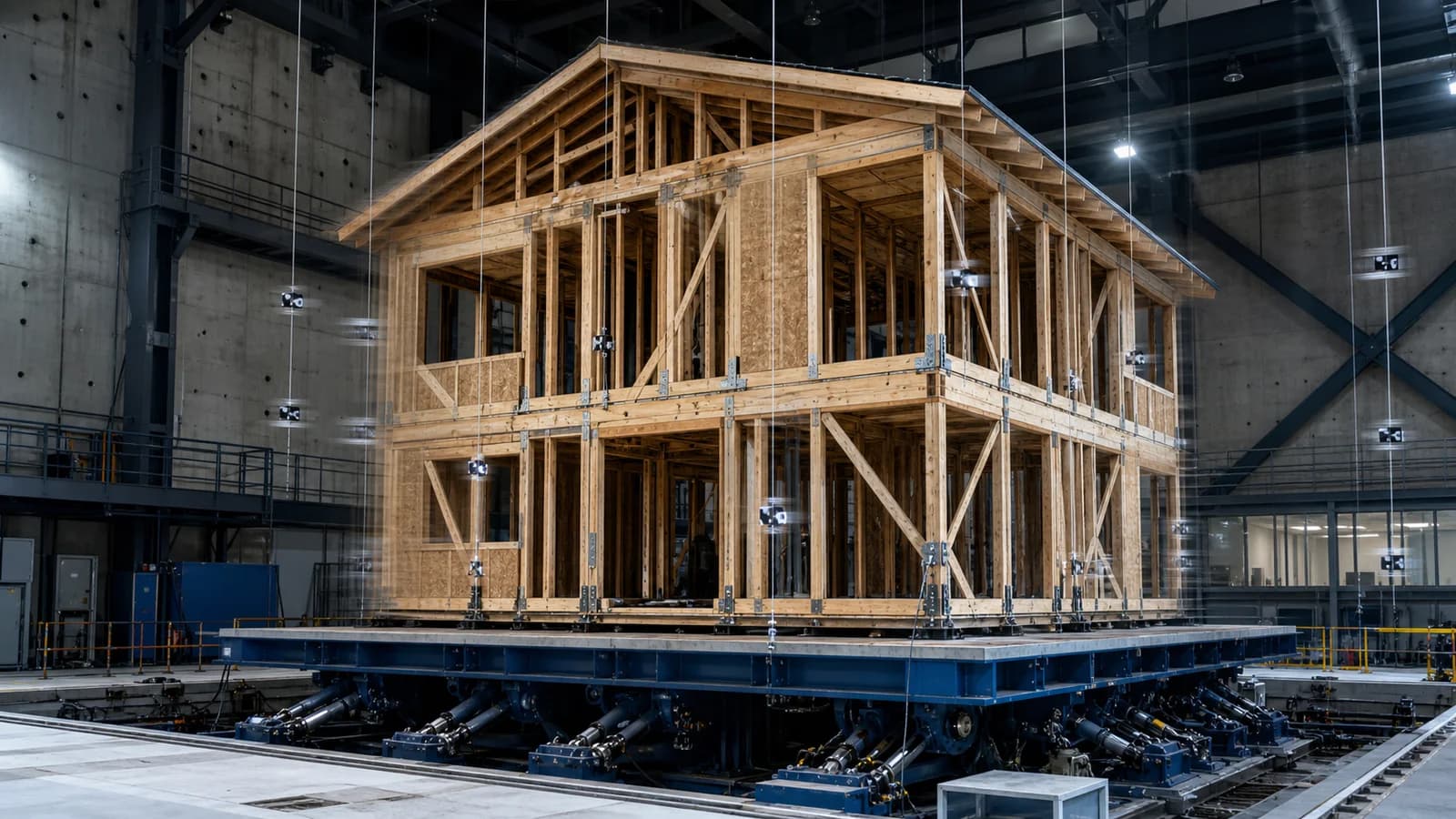
Yes. Framing. As in: wind loads, bracing, repairs, and 30 ft / 9 m bents.
Why? Because sometimes you need speed, repeatability, and a very good plan B.
What the Domino XL Actually Does (Without the Marketing Hype)
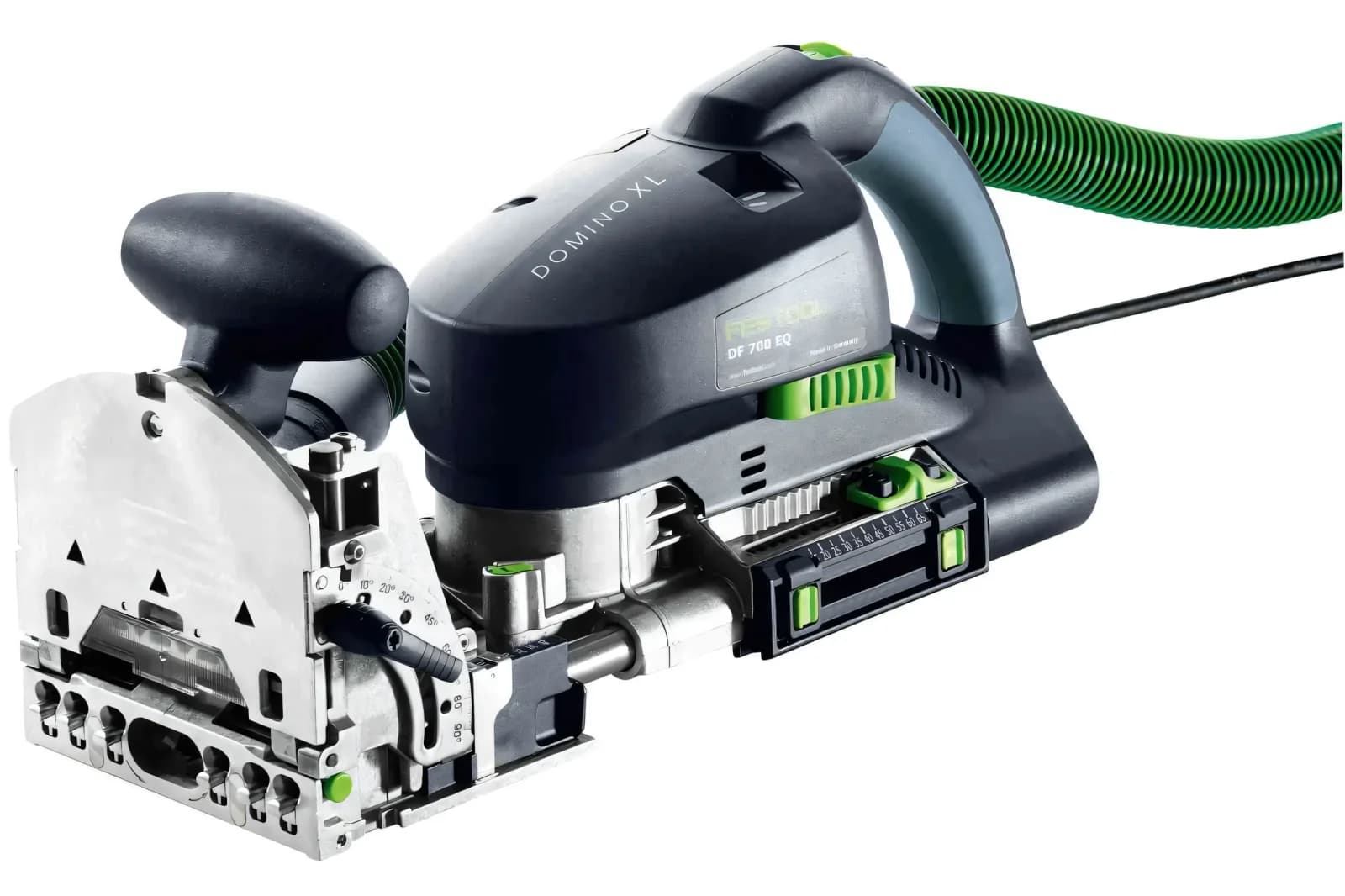
At its core, the Domino XL is a loose-tenon machine.
Instead of cutting a tenon on one piece and a mortise in the other, it cuts matching slots in both pieces of wood—then you insert a ready-made beech “domino” (floating tenon) to lock them together.
Think of it as:
- Mortise-and-tenon’s efficient cousin
- Who skipped the poetry class
- But shows up on time and brings snacks
Key Specs (Imperial + Metric)
- Designed for thicker stock (up to roughly 4 in / 100 mm class work depending on layout)
- Domino sizes: 8 mm / 5⁄16 in, 10 mm / 3⁄8 in, 12 mm / ~1⁄2 in, 14 mm / ~9⁄16 in
- Max plunge depth: 70 mm / 2.75 in (per side)
And here’s the important reality check:
✅ The Domino XL can be incredibly useful in timber frame workflows.
❌ It is not a blanket replacement for primary structural joinery, and in many regions it won’t be accepted as a structural connector without engineering approval.
So no—you don’t Domino your main posts on a house frame and call it a day.
But for the right tasks, it’s borderline brilliant.
Where It Actually Makes Sense (3 Real-World Use Cases)
1) Temporary Bracing During Assembly
2) Non-Structural Joinery (Interior + Decorative Elements)
3) Retrofit & Repair Work
Let’s break them down.
1) Temporary Bracing: Because Gravity Has No Patience
Picture this:
You just raised a 1,200 lb / 545 kg bent.
It’s standing. Barely.
The wind picks up. A bird sneezes. Your frame starts auditioning for Riverdance.
This is where the Domino XL can be a lifesaver.
Instead of wrestling with clamps, lag screws, or—shudder—random nails that love splitting green timber, framers use the Domino XL to install removable diagonal braces quickly.
How it works:
- Mark brace position
- Cut matching slots in brace + post/beam
- Insert 14 mm / ~9⁄16 in tenon (often dry-fit; glue depends on the plan)
- Brace holds alignment while the “real” joinery/hardware is finalized
- Remove later and reuse
Why it’s nice:
- No pilot holes
- No stripped screws
- No fighting clamp geometry on awkward angles
- It’s fast and repeatable
If you’re doing multiple bents, those minutes add up.
2) Non-Structural Joinery: Speed Meets “Good Enough”
Not every joint in a timber frame carries the roof.
A lot of elements live in the “looks solid and stays put, but won’t hold up the sky” category:
- Interior partitions
- Loft edges and guard framing
- Mantels
- Decorative knee braces
- Trim-like timber accents inside a frame
For these, Domino can be excellent:
- Minimal layout: align edges, reference face, plunge
- Clean cuts: enclosed cutter reduces tear-out
- Reversible: can be disassembled for transport or later modifications
This is exactly the kind of place where a shop can save time without compromising the integrity of the main structure.
3) Retrofit & Repair Work: The “Oops, This Beam Cracked” Specialist
Old frames move. Green timber dries. Buildings settle. Sometimes:
- a tenon snaps
- a mortise wall blows out
- a brace cracks
- or a joint becomes loose after decades
Traditional repair can mean disassembly and major recutting—often in awkward, cramped conditions.
The Domino XL can offer a more surgical fix:
Example workflow (cracked brace repair):
- Stabilize the crack (epoxy, reinforcement where appropriate)
- Cut a Domino slot crossing the repair line
- Insert a 14 mm / ~9⁄16 in tenon with epoxy
- Clamp and cure
Done. Fast. Clean. Often stronger than the surrounding wood (depending on species, moisture, and geometry).
Important: any repair affecting structural performance should be reviewed by an engineer—especially on load paths or historic structures.
Honest Downsides (Because No Tool Is Magic)
Let’s not pretend the Domino XL is a spellbook.
- Cost: It’s a serious investment (tool + cutters + tenons).
- Dust: Fine dust. Use a vacuum unless you enjoy the “powdered donut” look.
- Geometry limits: It’s great at straight slots; complex compound joinery still needs traditional methods.
- Expectations: It’s a helper tool, not a structural stamp of approval.
So… Should You Add It to Your Timber Frame Toolkit?
Use this rule:
If the joint is primary structure:
→ Stick to proven joinery and/or engineered connectors.
If the task is bracing, non-structural detailing, or repair assistance:
→ The Domino XL can be an absurdly effective cheat code.
It won’t replace tradition.
But it can give you back time, reduce fatigue, and on chaotic raising days… save your frame from becoming modern art.
Because the best framer isn’t the one who uses only hand tools.
It’s the one who knows which tool solves the problem in front of them—then uses it properly.
Even if that tool beeps.
Final silly note: We once left a Domino tenon in the workshop fridge for 3 weeks / 21 days. It swelled a little, still fit, and somehow looked proud of itself. Beech is weirdly resilient—just like timber framers. 🌲