Dust Ain’t Just Dirt—It’s a Liability: Why Your Dust Collection System Is Non-Negotiable (and What’s New in 2025)
Dust isn’t just mess—it’s a health hazard, a machine killer, and a hidden liability. Here’s why modern dust collection systems in 2025 are smarter, quieter, safer, and absolutely essential for timber framing workshops of any size.
—Because your lungs, your tools, and your insurance agent all agree: wood dust is not a seasoning.
Picture this: You’re mid-cut, the saw sings, the shavings fly—and a fine cloud of golden dust rises like a mystical fog.
Poetic? Yes.
Safe? Absolutely not.
That “wood perfume” you’re breathing? It’s not ambiance.
It’s particulate matter with a side of risk.
Let’s be honest: In a timber framing shop, dust isn’t a byproduct.
It’s the third employee—and frankly, it’s the laziest, most dangerous one on the payroll.
It doesn’t clock in.
It doesn’t follow safety protocols.
It just… settles.
On your tools.
In your lungs.
Inside your CNC’s electronics (where it throws tiny, destructive parties).
And—eventually—on your conscience.
(“Did I really skip the dust collector again to ‘save five minutes’?”)
Spoiler: Five minutes now = five thousand dollars later.
In tool repairs.
In health bills.
In fines.
Or—in the worst case—in a shop shutdown.
So let’s clear the air. (Literally.)
🌫️ Dust: Not Just “Mess”—It’s Multi-Tool Sabotage
Wood dust is sneaky. It looks soft. Feels light. Smells like a forest walk.
But make no mistake: it’s a triple threat.
1. Your Lungs Don’t Have a “Filter” Setting
OSHA and similar health agencies agree: prolonged exposure to fine wood dust—especially from hardwoods like oak, beech, or walnut—raises risks of respiratory disease and even nasal cancers.
Yes, cancer.
That “tough it out” attitude? Not a badge of honor. It’s a liability.
2. Your Machines Hate Dust More Than You Hate Mondays
Dust creeps into:
- bearings
- belts
- stepper motors
- laser sensors
- control boards
A CNC router’s stepper? Dust-coated → overheating → failure.
A table saw arbor? Dust-packed → wobble → ruined cuts → wasted timber.
One woodworker told us:
“My $8,000 dust collector paid for itself in three months—just by keeping my CNC alive.”
3. Your Insurance Will Notice
Audits today aren’t asking, “Where’s your dust collector?”
They’re asking: “Where’s your data that it’s working?”
Modern systems log airflow, runtime, filter status—and can literally reduce your insurance premiums.
🔧 The Old Way vs. The 2025 Way: It’s Not Just “Big Pipe + Fan”
A decade ago, dust collection meant:
✅ Loud shop-vac on a table saw
✅ Bucket under the planer
✅ Broom (a.k.a. “last hope”)
We called it hope-based filtration.
(Hope is not a strategy.)
But at the WMS Expo 2025 in Toronto, the future of dust management became impossible to ignore. Here’s what’s new—and worth caring about.
✅ 1. Modular Cyclones That Grow With You
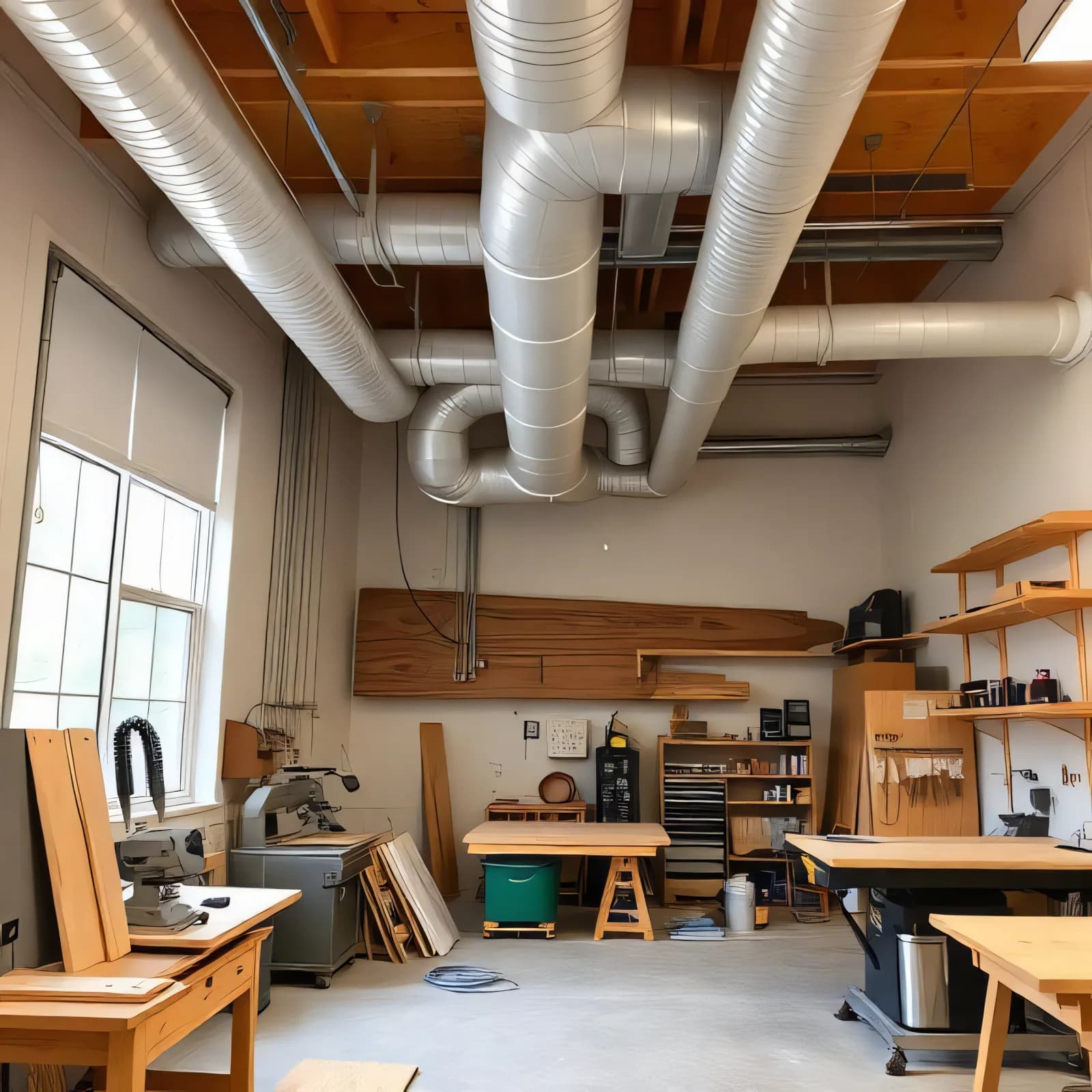
Oneida, Jet, and others now offer stackable cyclone stages:
- start small
- expand without replacing the system
- improve filtration as your shop grows
Think LEGO blocks—but for breathing.
✅ 2. Smart Sensors That Talk to Your Tools
New systems feature LED airflow monitors:
🟢 Green = all clear
🟡 Yellow = filter needs cleaning
🔴 Red = airflow blocked—stop now
Some even auto-pause your CNC when suction drops.
A seatbelt for your workshop.
✅ 3. Quiet Mode (Finally Not a Joke)
Brushless motors + acoustic housings = up to 40% noise reduction.
Dust collection no longer sounds like a jet engine testing for takeoff.
✅ 4. Integrated Labeling & Collection
Castaly’s 2025 CNC bed includes:
- onboard label printer
- router drilling
- automatic dust extraction
All in one cycle.
No extra stations. No dust clouds. Just smooth workflow.
🛠️ Choosing Your System: 3 Questions (Not 30)
You don’t need a PhD—just ask:
1. What’s My Real CFM Need?
- Hobby shop → 500–800 CFM
- Contractor shop → 1,000–1,500 CFM
- CNC / multi-station → 2,000+ CFM
Underpowered = dust stays.
Overpowered = waste + noise.
2. Bag, Canister, or Cyclone?
System | Pros | Cons |
|---|---|---|
Bag | Cheap | Fine dust blowback |
Canister | Efficient, easy clean | Higher cost |
Cyclone | Best for heavy work | Larger footprint |
2025 Sweet Spot: Cyclone + canister combo.
3. Is It Really Grounded?
Static sparks + fine particles = major fire hazard.
Use metal ducting + certified equipment.
🪵 Real-World Wisdom: What the Pros Do
Hobbyist (Maine):
“Jet 1.5HP + PVC ducts. Clean filters every Friday. Non-negotiable.”
Pro Contractor (Oregon):
“Remote-start cyclone saves 20 minutes per job—and one lung per decade.”
Startup (Vermont):
“We budgeted dust control before the CNC. Our bank loved it.”
🌍 Bonus: Dust Collection in Multilingual Shops
Tips that work in RO, EN, ES, FR, DE:
- color-coded ducts
- universal icons
- bilingual warning stickers
Humor optional. (But recommended.)
✅ The Bottom Line
A dust collector isn’t an expense.
It’s:
- insurance
- uptime
- health
- compliance
- craftsmanship
In 2025, the best tools don’t just cut wood.
They protect the person using them.
So next time you think “just one more cut”…
Turn.
It.
On.
🔧 Quick 2025 Recommendations
Shop Size | Budget | Top Pick (2025) | Why |
|---|---|---|---|
Hobbyist | $300–$800 | Jet DC-1100VX | Quiet, reliable, enough CFM |
Contractor | $1,500–$4,000 | Laguna Cyclone 2.5HP | Smart sensors, remote start |
Startup | $5,000+ | Oneida Super Dust Gorilla | Scalable, UL-certified |
Ready to breathe easy?
Join the FrameVerk Waitlist.
Where clean air meets clean cuts.