Proposed Fire Rules Could Restrict Timber Buildings Above 11 Metres in England
England is consulting on changes to Approved Document B that would remove its standard guidance route for combustible structural elements above 11 metres. The proposal could reshape even modest mid-rise timber projects, but it is not a final ban.
England’s next fire-safety update could materially change the route to approval for structural timber buildings. In March 2026, the UK government opened a consultation on changes to Approved Document B, the central statutory guidance used to demonstrate compliance with the fire-safety requirements of the Building Regulations in England.
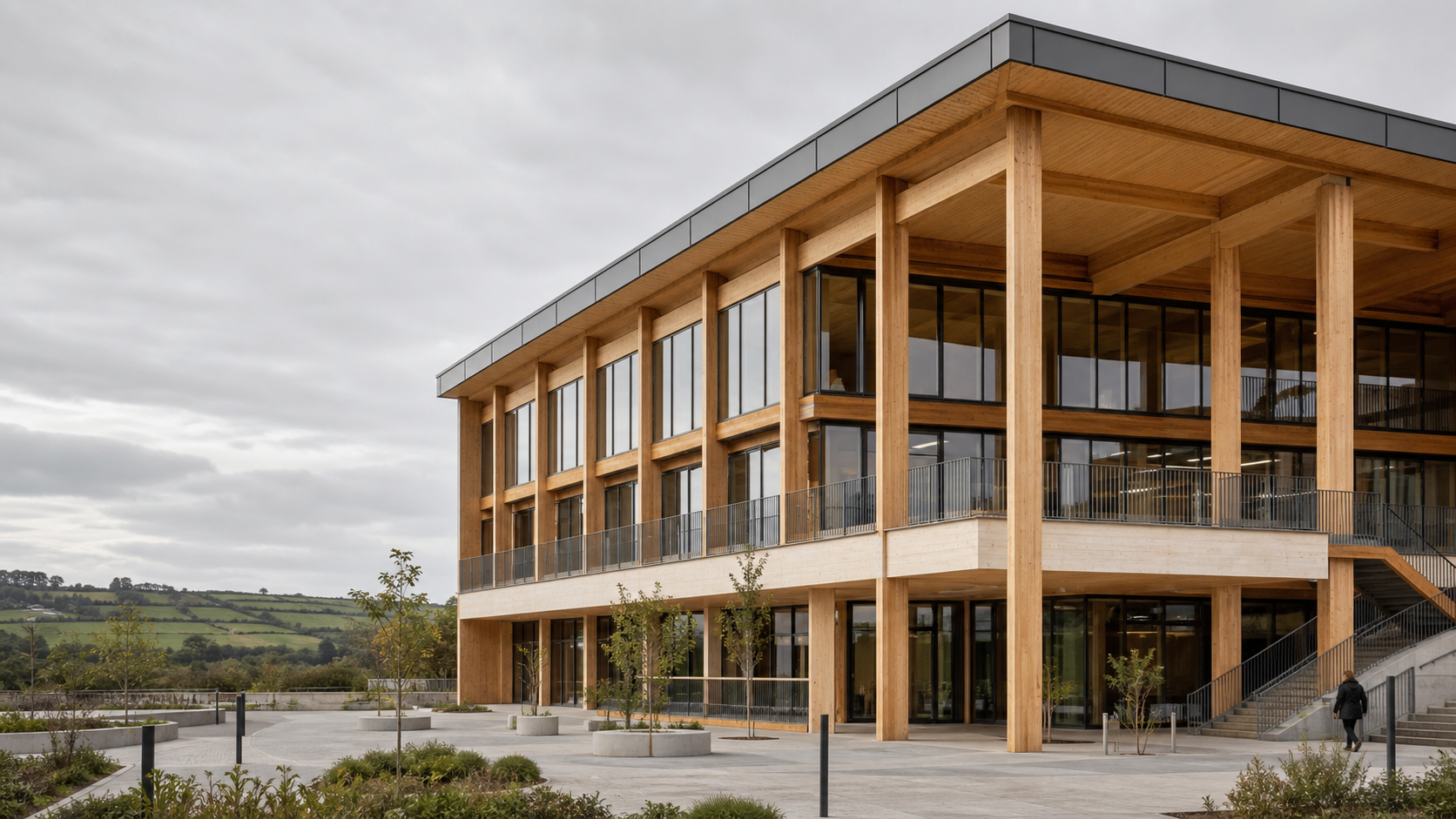
The proposed wording would disapply the document’s guidance for buildings taller than 11 metres when combustible materials are used in structural elements. Because timber is combustible, industry organisations warn that the change could affect mass timber and light timber frame schemes—including residential buildings of only four or five storeys.
The distinction is important: this is a consultation proposal, not an enacted blanket prohibition. Approved Document B is one route for showing compliance, and a project may still be able to follow a fire-engineered alternative. However, removing the familiar guidance route can introduce additional design work, evidence, specialist review, time and uncertainty. In practice, that can be enough to make a material system commercially difficult even where it is not legally forbidden.
Why 11 metres changes the mid-rise market
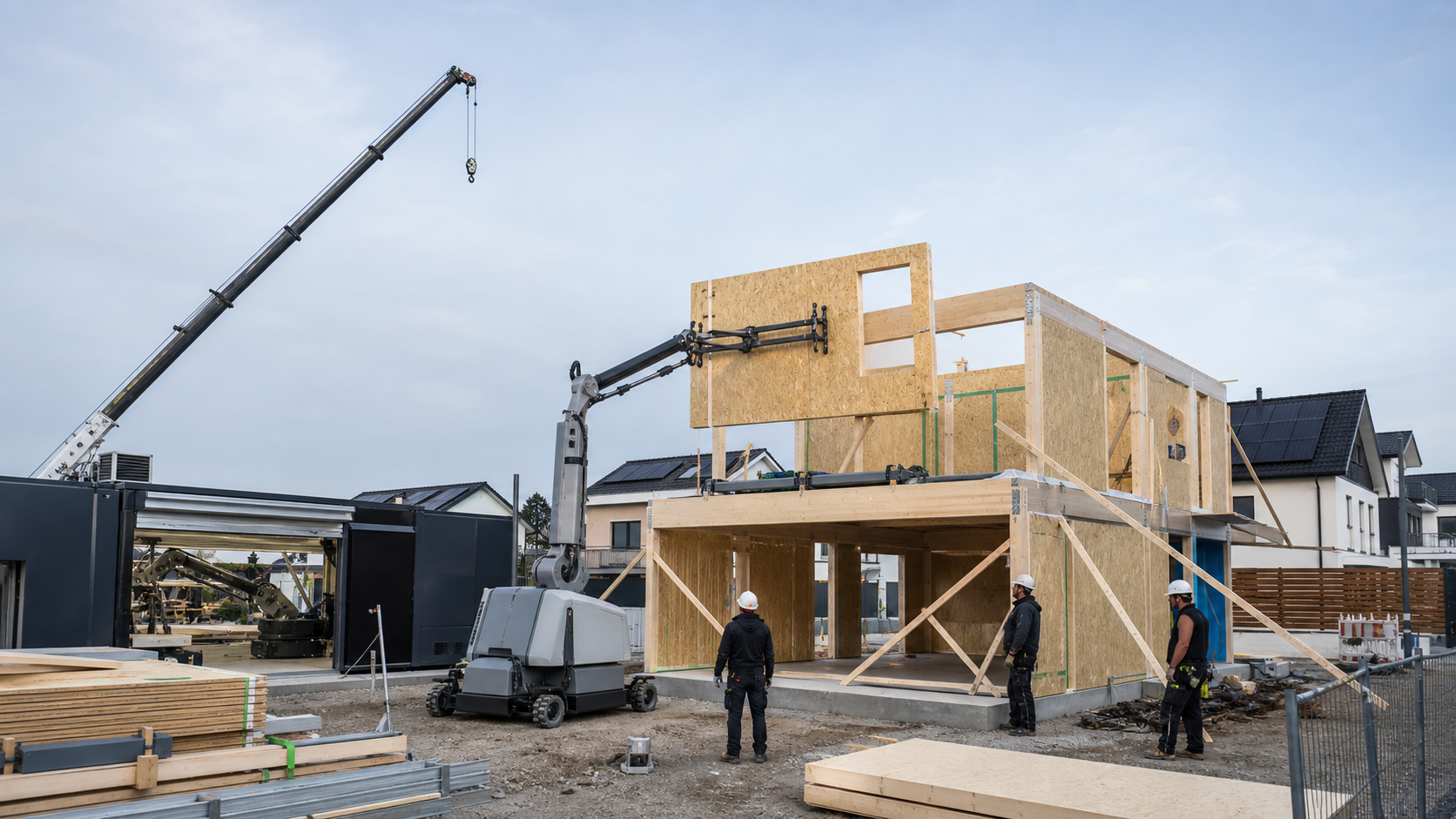
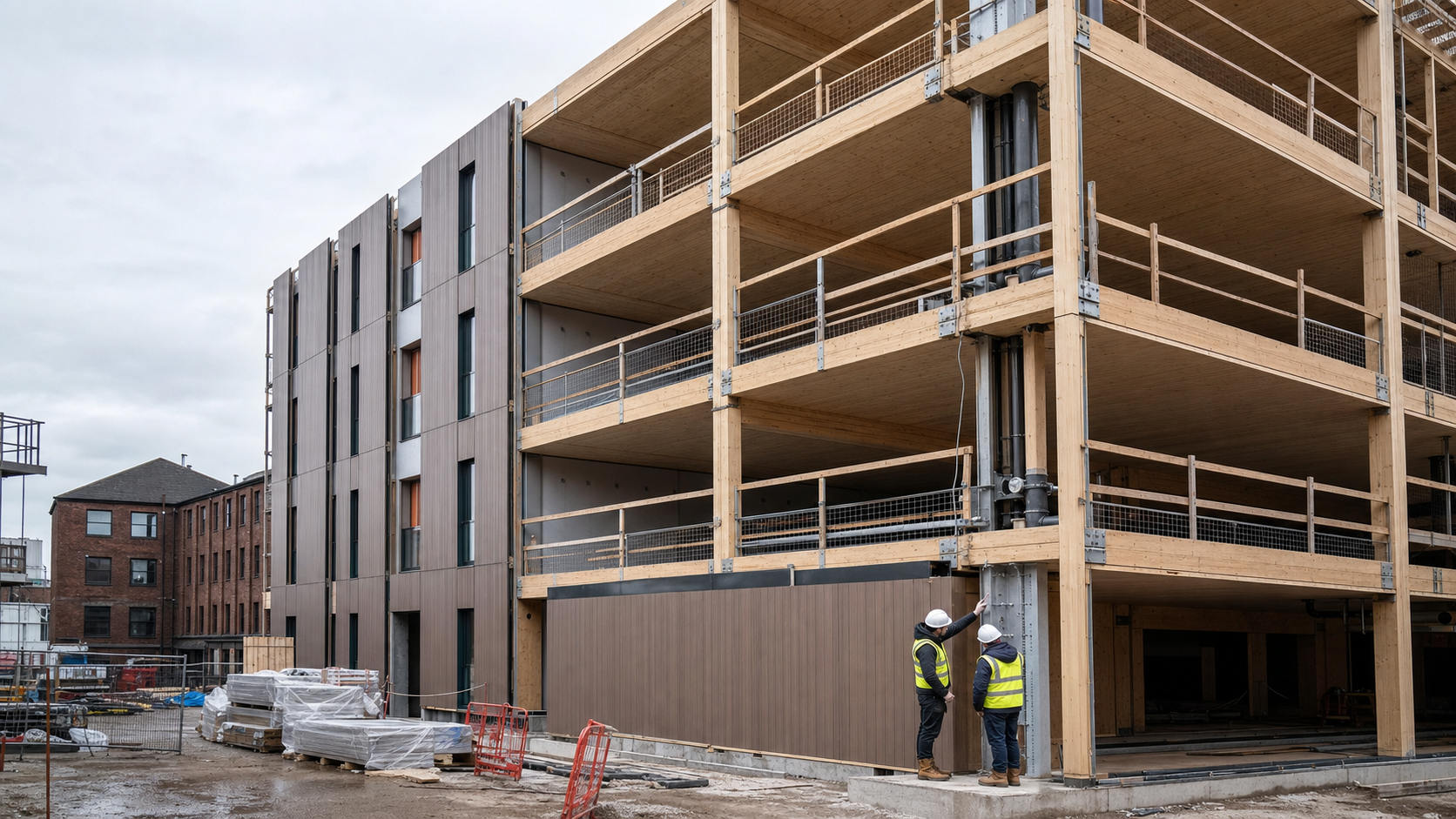
An 11-metre trigger reaches well below the height normally associated with towers. Depending on floor-to-floor dimensions and site conditions, it can capture compact apartment buildings, student housing and other projects in the four-storey range. These are precisely the building types where timber systems can offer fast dry construction, lower foundation loads and a high degree of prefabrication.
Industry concern is therefore not limited to landmark mass timber projects. It extends to repeatable housing and public buildings where standardised details and predictable approvals are central to viability.
The government’s stated objective is to strengthen fire safety following its wider review of Approved Document B. The consultation also sits within an evolving regulatory environment shaped by post-Grenfell reforms. Any responsible timber project must address compartmentation, cavity barriers, encapsulation, connections, penetrations, façade interfaces, evacuation strategy and fire-service access as a coordinated system. The debate is about the regulatory route and the evidence threshold, not about bypassing those duties.
What designers and manufacturers should prepare for
If the proposal is adopted, early fire strategy will become even more important. Structural concept, exposure of timber, charring allowances, protective linings and service coordination may need to be resolved before the geometry and commercial model are fixed.
Digital workflows can help by keeping fire-related assumptions connected to the actual building model. Element identity, material build-ups, penetrations, fire-resistance requirements and fabrication data should remain traceable as the design changes. A visually convincing timber scheme is not enough; the model must support the evidence used by engineers, building-control teams, contractors and manufacturers.
A proposal, not the final rule
The consultation closed in 2026 and government must now assess responses before publishing any final amendment. The eventual wording, transitional arrangements and treatment of alternative engineered solutions will determine the real market impact.
For now, claims that England has “banned timber above 11 metres” go too far. The accurate conclusion is narrower but still significant: government has proposed removing the standard Approved Document B guidance route for combustible structural elements above that threshold. If adopted without a clear proportionate pathway, it could sharply reduce the number of mid-rise timber projects that reach construction.
Sources: UK Government, “Review of Approved Document B: fire safety guidance,” consultation published 25 March 2026; UK Parliament, Written Statement HLWS1462, 25 March 2026.