Timber Homes That Belong: How to Build Like a Local
Tired of fake chalets and cosplay cabins? Discover how modern timber homes can actually belong to their landscape instead of looking like confused tourists.
You know those houses that look like they were on their way to a Swiss Alps photoshoot and accidentally got dropped in your neighborhood?
Too many gables, fake “old” beams, stone from who-knows-where – the architectural version of that friend who comes back from a weekend in Paris and suddenly says “bonjour” at the supermarket.
Now imagine the opposite: a timber home that feels like it has always been there.
No fake accents. No cosplay. Just a building that actually belongs.
That’s what this article is about: timber homes that stop being tourists and start being locals.
When the House Actually Listens to the Neighborhood
In a copy-paste world, the bravest thing an architect can do is… pay attention.
Instead of dropping the same plan in 47 states, the designers:
- Watch how the light hits the hills in the morning.
- Notice how the old barns weather over time.
- Check which way the wind really blows in a storm.
- Look at roof pitches, materials and colors that already work.
This isn’t about faking “old”. It’s about acting local.
Think of Lake|Flato’s North Fork Residence in Texas Hill Country.
From far away, it reads like a cluster of familiar farm buildings. Up close, it’s your grandpa’s barn after a full engineering degree and a serious glow-up: same soul, far better details.
The house doesn’t shout “Look at me, I’m different!”
It quietly says, “Relax. I’ve always been here.”
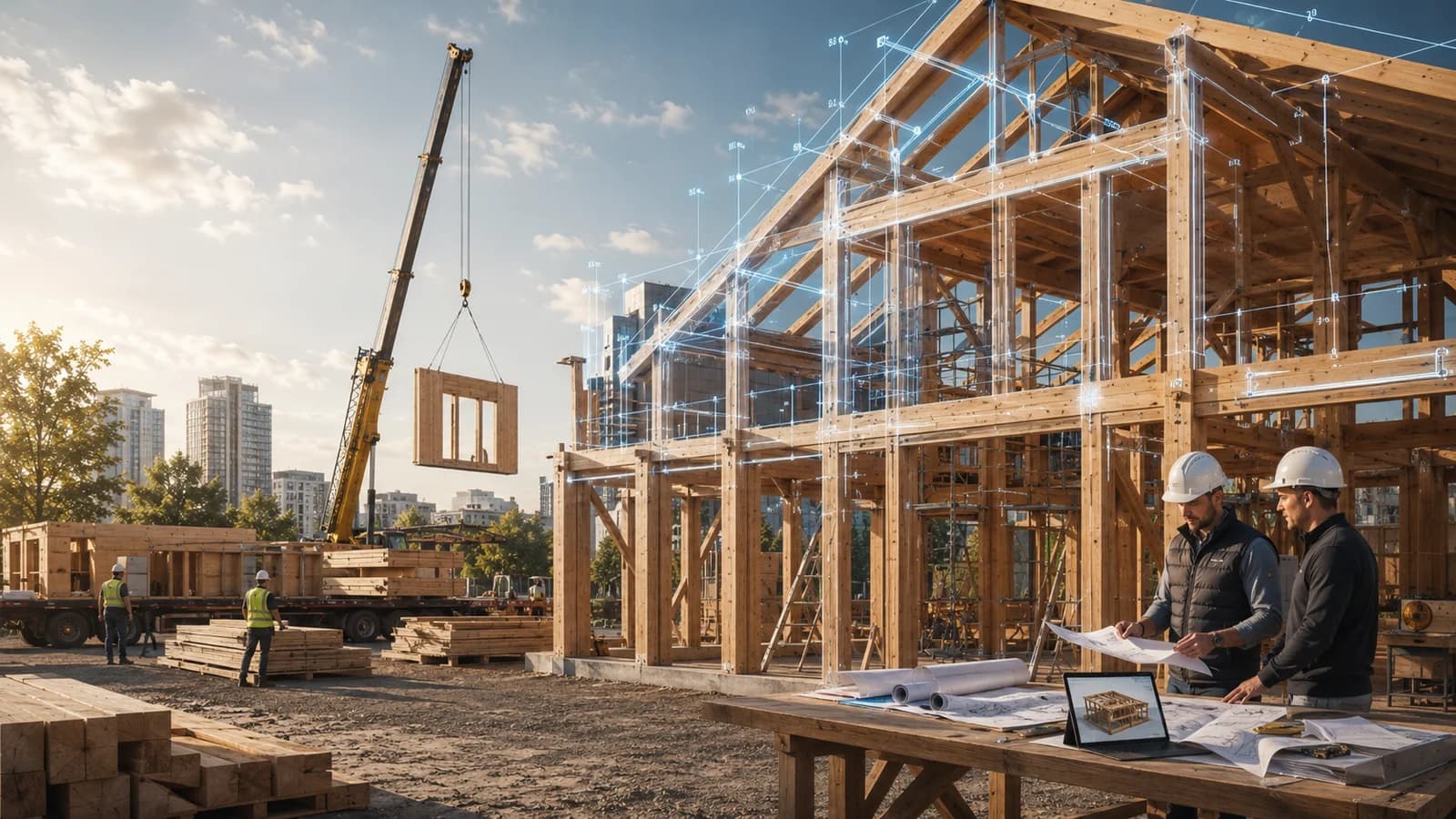
Timber: The Original Local Material
Long before “local sourcing” was a Pinterest board, timber was just… normal.
Your great-great-grandparents didn’t import beams from three continents. They used:
- The trees that grew on the property
- The species that handled local weather
- The details their neighbors knew worked
Modern timber homes are rediscovering that logic – with better tools.
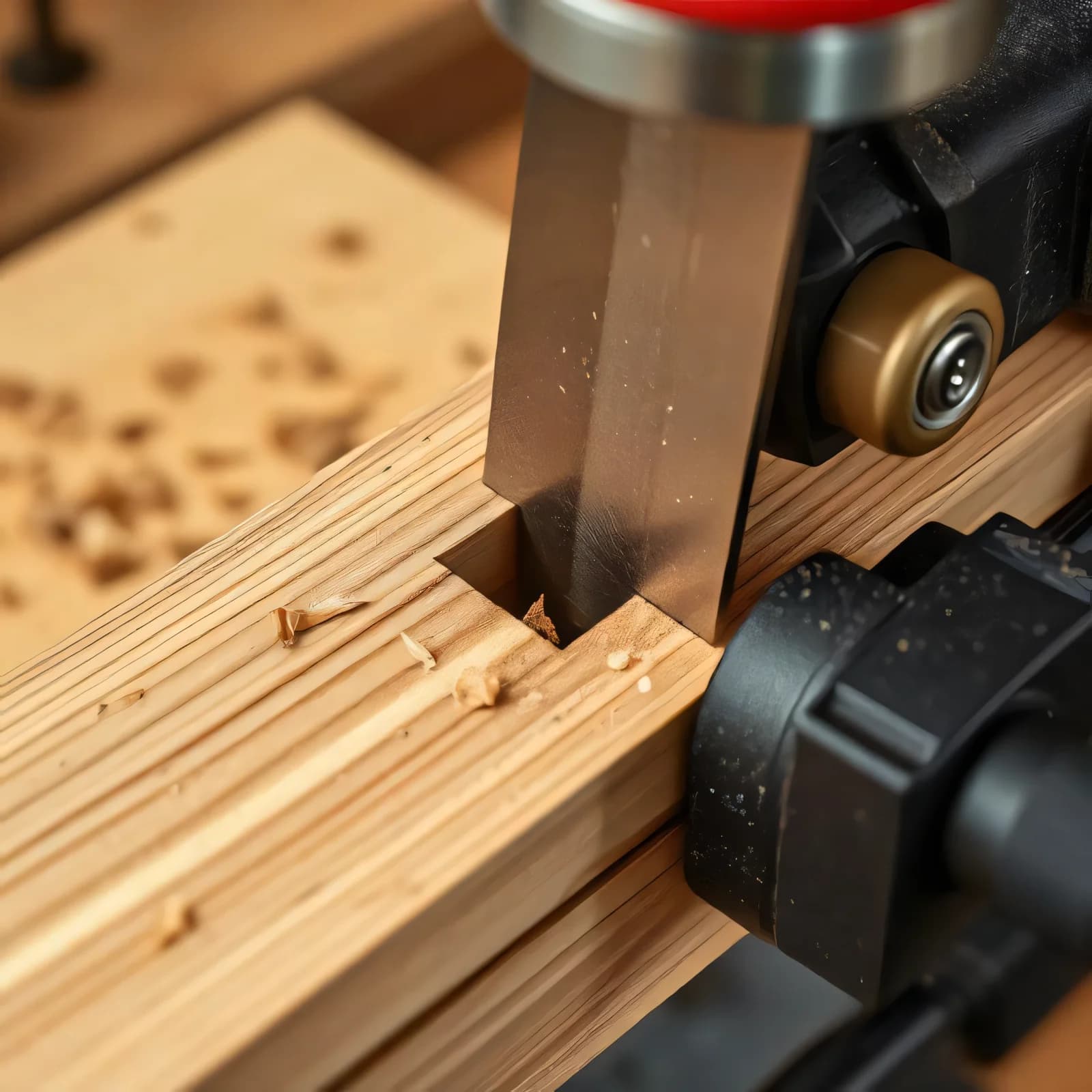
It’s like upgrading from a flip phone to a smartphone that still remembers how to make phone calls. Mass timber, CNC-cut joinery, and modern engineering exist, but the core idea is still simple: use the right wood in the right place.
A good example: instead of staining fresh timber to look “distressed,” you let it age naturally. Sun, rain and time will silver the wood anyway. No fake patina, no costume – just material doing what material does.
George Clooney aging? Yes.
Midlife-crisis sports car? No.
Why “Tourist Houses” Feel So Wrong
Here’s a hot take: a Swiss chalet in the Arizona desert isn’t charming. It’s lost.
It’s architectural jet lag:
- Steep roofs for heavy snow… in a place that gets three flakes per decade
- Tiny alpine windows where you actually need shade and cross-ventilation
- Faux rustic details that don’t match the climate, history or culture
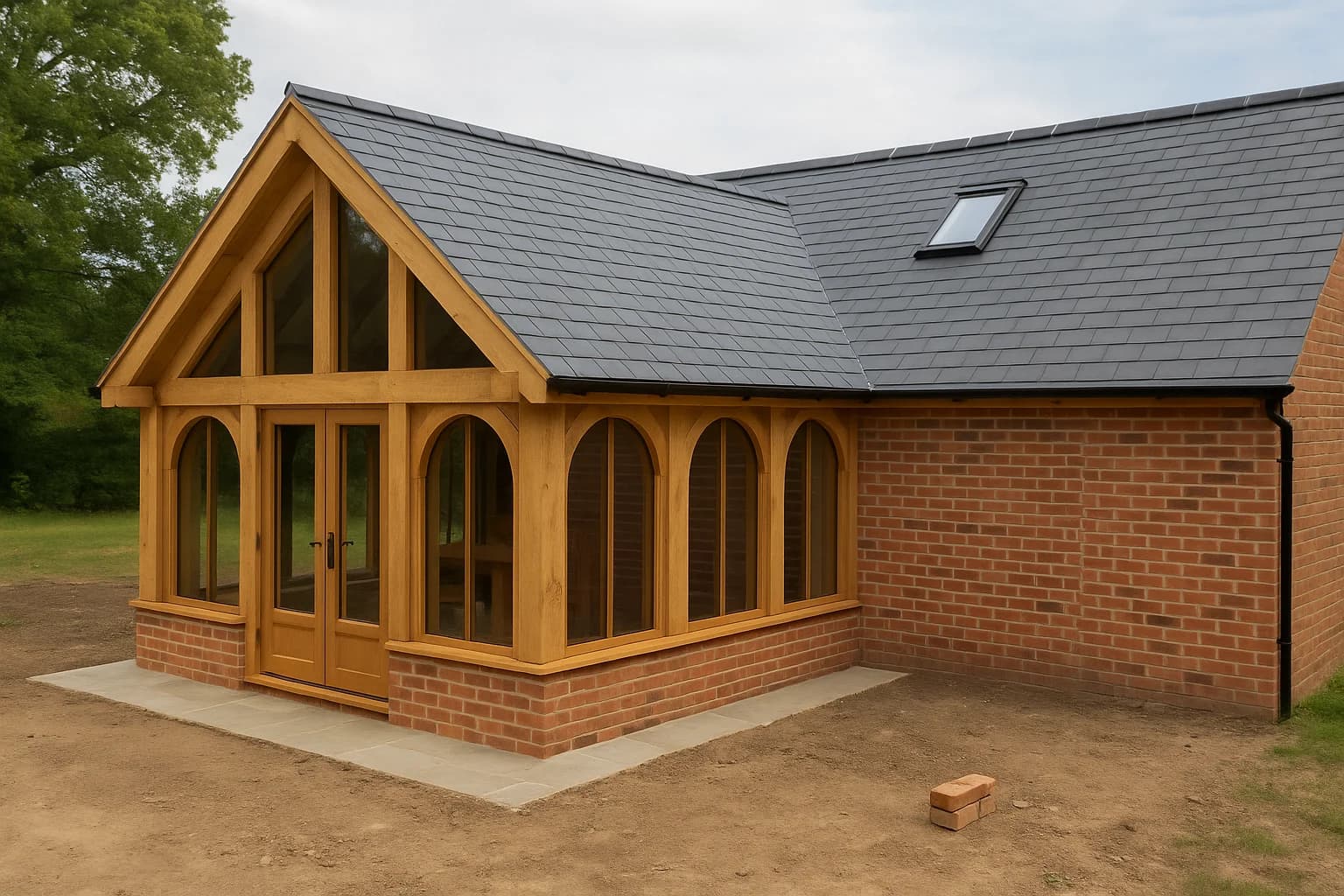
Great timber homes avoid this by speaking the local dialect of architecture.
- In the Pacific Northwest: heavy timber frames, deep overhangs, sometimes charred cedar that stands up to rain and moss.
- In New England: white pine frames, darker cladding, proportions that nod quietly to old farmhouses and shingle-style homes.
- In dry climates: shaded courtyards, covered porches, and verandas that make sense with scorching sun and sudden storms.
The magic happens when the home doesn’t just sit on the land… it feels like it grew out of it.
Timber’s Superpowers (No Cape, Just Good Bones)
Why is timber so good at “belonging”? Three big reasons.
- Material Honesty
Wood tells the truth. It doesn’t weather the same in Oregon and in Georgia – and that’s the point. It records the climate, the orientation, the years. A local species will look right because it is right. - Structure You Can Actually Read
Remember playing with Lincoln Logs? Timber frames bring that joy into adult scale. Posts, beams, braces – all visible. The house shows how it stands up instead of hiding everything behind drywall like it’s ashamed of its own skeleton. - Eco-Cred Without the Lecture
Local timber means lower transport emissions and support for nearby forests and mills. You don’t have to announce it on a giant greenwashing poster. The building quietly does the work while you enjoy the view.
How to Design a House That Belongs (Not Pretends)
You don’t need to be a famous architect to apply this. You just need curiosity and a bit of humility.
- Be a Local Tourist
Walk the oldest streets in your town. Notice roof angles, porches, window patterns, materials near the ground vs under the eaves. Those buildings survived decades of weather and fashion – they’re your best textbook. - Choose Wood With a Local Accent
Look for timber species that are common in your region: spruce, pine, oak, Douglas fir, larch. Reclaimed beams from barns, local sawmills, or certified nearby forests beat imported “exotic” wood 99% of the time. - Design Like a Farm, Not a Museum
Vernacular buildings evolved over time. Start simple, plan for extensions, porches, sheds and future needs. Let the house be a bit flexible instead of a frozen “perfect concept” that falls apart once real life moves in. - Let the Structure Show Off (Politely)
Exposed beams, braces and joinery are not just pretty—they’re honest. When the structure is visible, the building feels more trustworthy. You can literally see what’s holding the roof above your head. - Respond to Real Climate, Not Render Climate
Shade the sun where it burns, open up to it where it heals. Catch breezes, block cold winds, protect entrances. A house that responds well to weather will always feel more at home than a generic design with nice furniture.
The Real Luxury: Belonging
In a world obsessed with marble countertops, black faucets and whatever TikTok calls “aesthetic” this week, the rarest luxury isn’t a material.
It’s belonging.
A timber home that belongs:
- Feels calm instead of loud
- Ages with the landscape instead of fighting it
- Connects you to local stories, craftspeople and forests
- Makes your morning coffee taste better (probably psychological, but still)
It’s like that perfectly worn-in flannel shirt that’s survived breakups, job changes and questionable life choices. It doesn’t shout. It just fits.
So the next time you see a timber home that looks like it grew from the ground instead of falling from a helicopter, give it a small nod of respect. Someone took the time to listen—to the land, the climate, the neighbors, the old barns down the road.
And honestly? In a noisy, copy-paste world, a house that listens might be the most radical thing you can build. 🌲