Canada Backs Prairie Mass Timber With a $4.4 Million Forest-Sector Package
Ten federal investments connect automated timber manufacturing, Indigenous forestry, market development and research intended to support future building-code updates.
Canada’s March 2026 forest-sector announcement is easy to misread as a modest grant list. The federal government committed more than C$4.4 million across ten projects in Alberta and Manitoba, with activity also framed around the wider Prairie region. Look more closely and the package sketches a supply chain: forest management, Indigenous economic development, product manufacturing, market access and technical research for mass-timber codes.
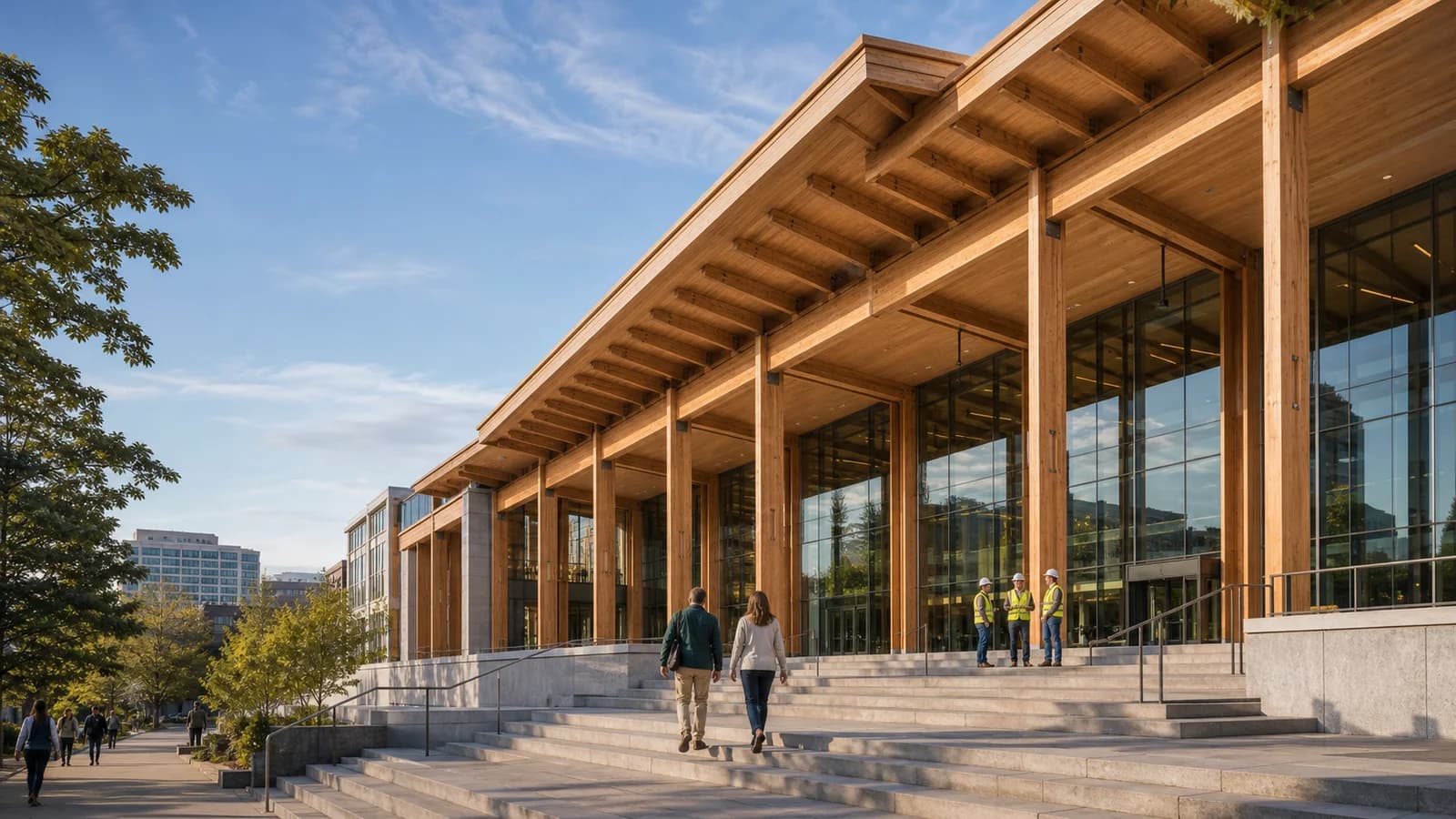
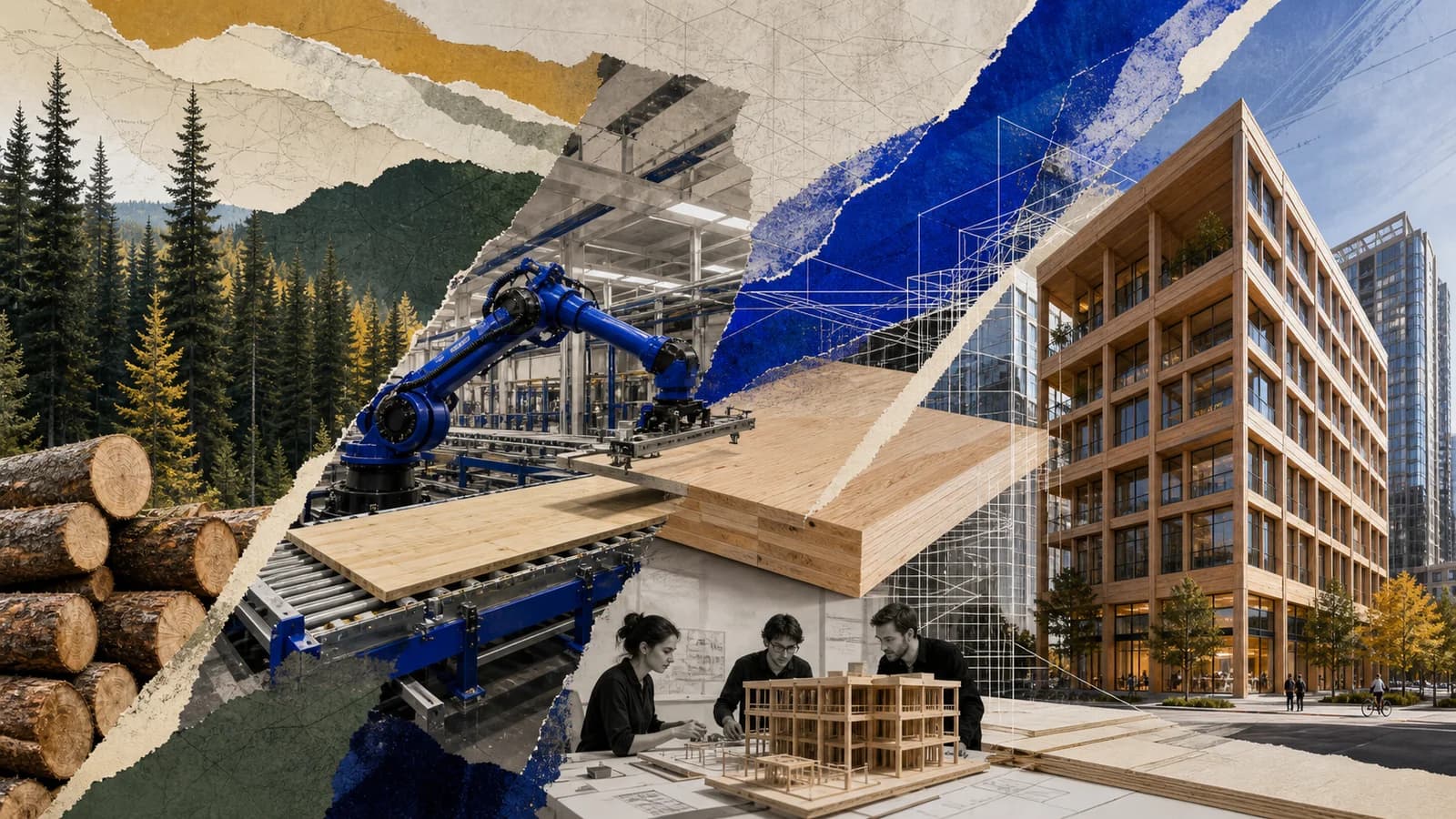
The largest individual award is C$2.3 million for Western Archrib Enterprises to commission a 160,000-square-foot mass-timber plant in Sturgeon County, Alberta. The company says the wider facility represents more than C$80 million in capital investment and will move production from manual processes toward a highly automated line.
From 12 million to as much as 35 million board feet
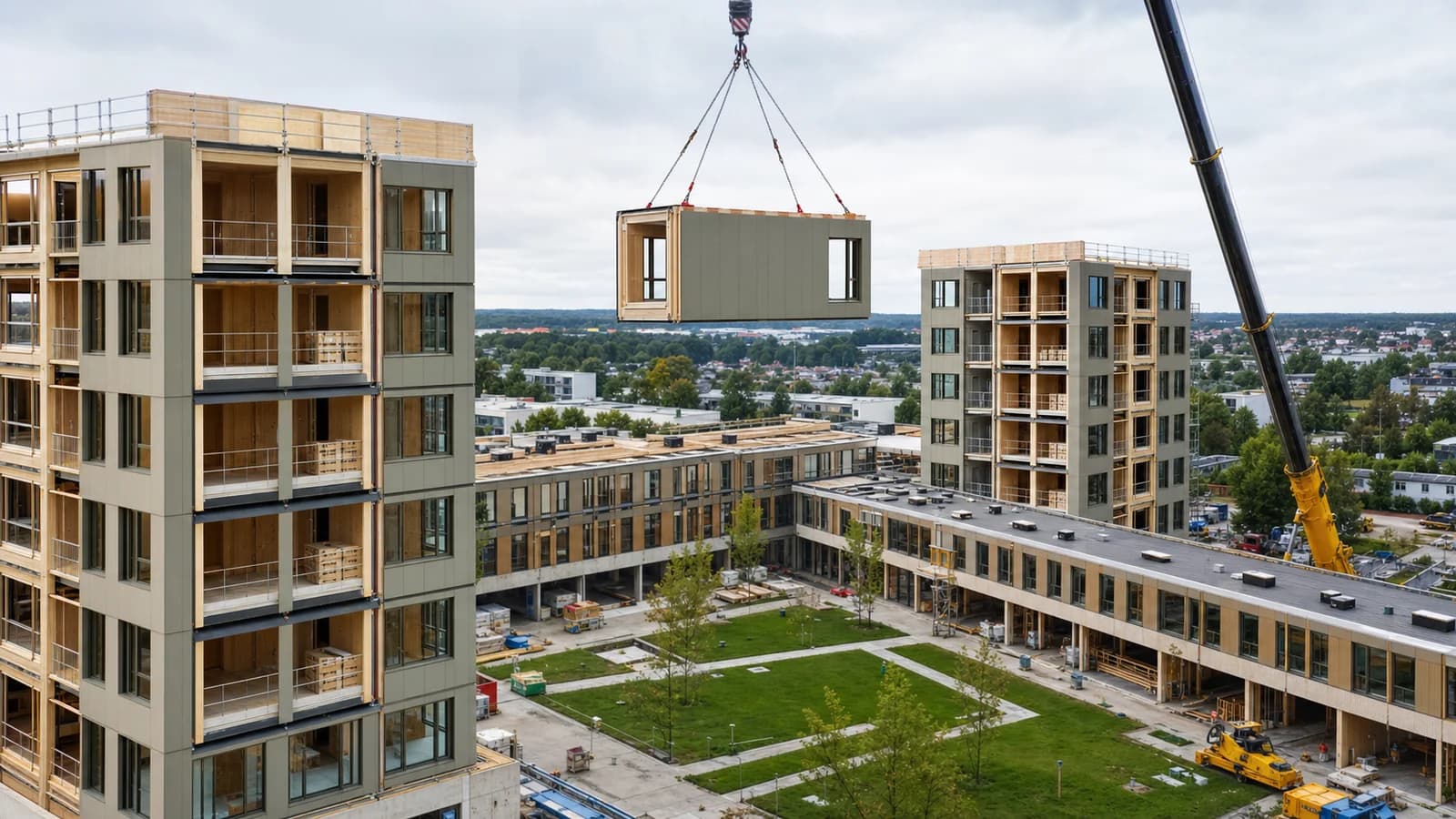
Natural Resources Canada says the expansion is expected to increase Western Archrib’s annual production capacity from about 12 million board feet to between 30 million and 35 million board feet. That is not merely more timber leaving a factory. Automation can improve machining consistency, traceability and production planning, all of which matter when engineered wood components arrive on site as finished structural parts.
For designers, increased capacity is meaningful only if it is paired with predictable lead times and usable technical data. Mass timber is not ordered like generic concrete. Panel dimensions, layups, appearance grades, connection zones, transport limits and CNC operations influence the building geometry from an early stage.
A larger plant can support more projects, but it can also reward standardisation. Repeated grids and verified details reduce engineering effort and production uncertainty. The risk is that standardisation becomes rigidity; the opportunity is a flexible kit of parts with well-defined limits.
The package is broader than one factory
The federal backgrounder lists projects involving market development, Indigenous participation, forest-sector planning and research. This matters because a mass-timber factory cannot operate in isolation. It needs reliable fibre supply, trained workers, engineering demand, transport routes and building regulations that allow the resulting products to be used.
One funded research stream is intended to coordinate wood-construction research across Canadian universities and generate technical information for building codes and standards. The C$450,000 contribution is small beside a new production line, but its leverage could be significant. Code provisions, test data and accepted design methods determine how quickly engineers and authorities can move from “interesting material” to repeatable approval.
Canada has already been influential in tall-timber research, but the next stage is less glamorous: harmonised details, quality assurance, inspection procedures and clear rules for common building types. A market grows when ordinary projects stop requiring extraordinary permission.
Forest policy meets housing policy
The government framed the investments partly as a response to pressure on Canada’s forest sector and the need to diversify products and export markets. Mass timber offers a route from commodity lumber toward higher-value engineered components. It can also connect rural manufacturing to urban housing and public-building demand.
That link should not be romanticised. A timber building is not automatically sustainable because its beams came from a forest. Credible claims require responsible forest management, transparent chain of custody, efficient manufacturing and whole-building carbon assessment. Transport, adhesives, protective layers, concrete foundations and end-of-life assumptions all belong in the calculation.
The same caution applies to wildfire arguments. Using smaller-diameter or lower-value material can contribute to forest-management economics in some regions, but the relationship between harvesting and fire risk is site-specific. A construction article should not turn a complex ecosystem into a slogan.
What automation changes
An automated mass-timber line makes digital information operational. A panel model can drive optimisation, cutting, drilling, labelling and quality checks. Errors in the model can therefore be reproduced very efficiently — which is not the kind of productivity anyone wants.
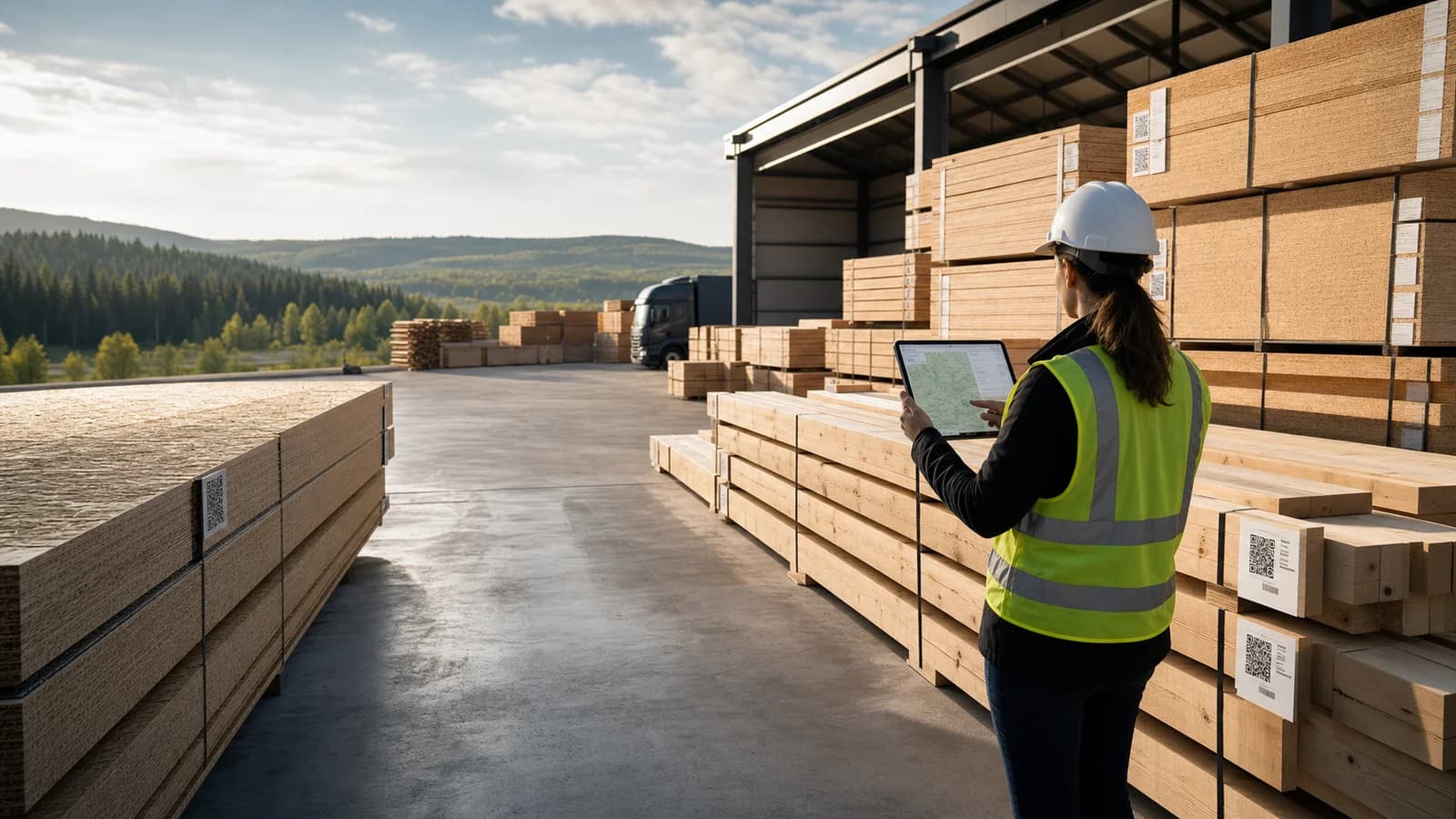
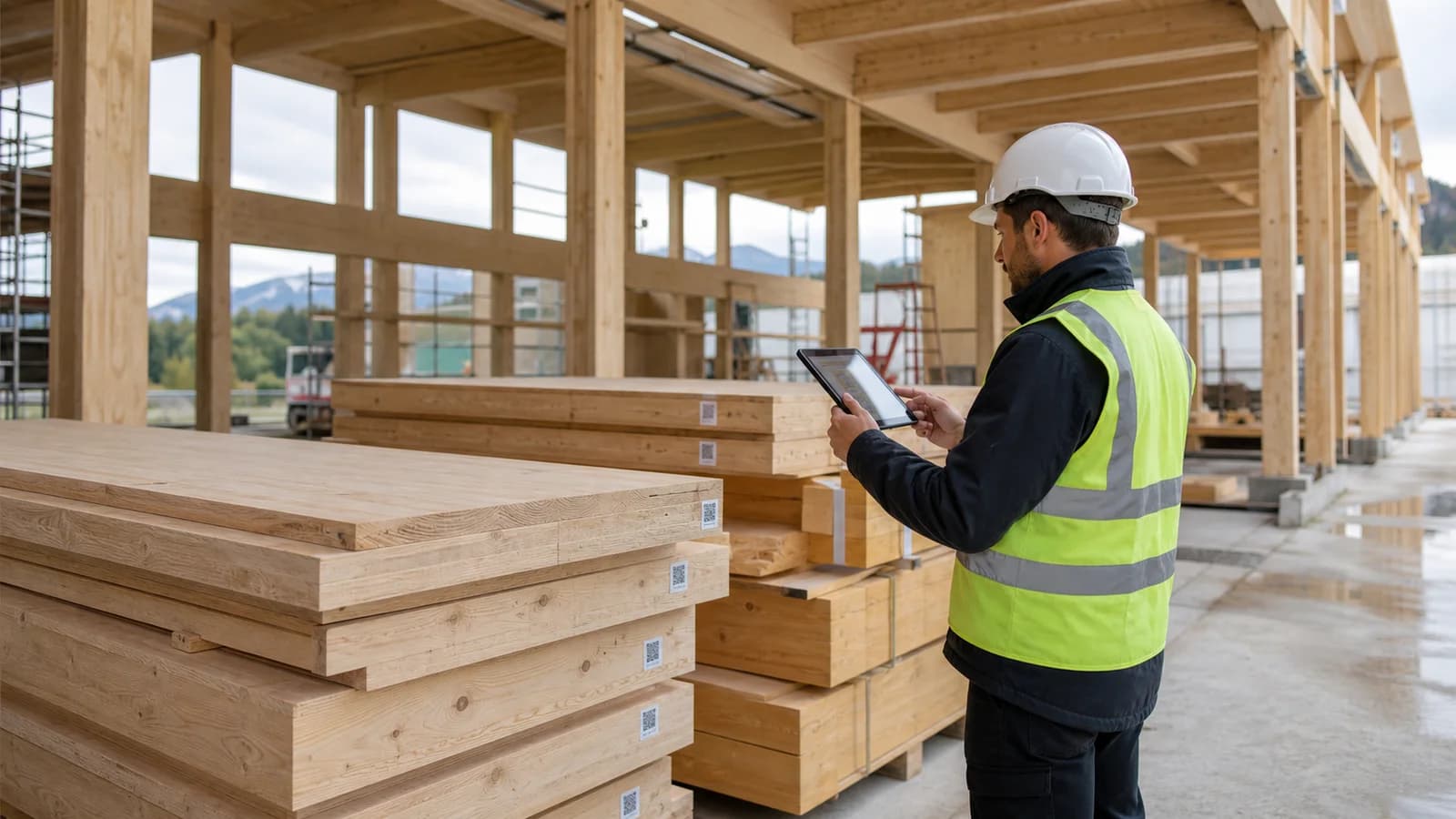
The necessary response is a controlled digital thread. Design revisions need approval states. Connection clearances need machine-readable rules. Openings need ownership. Material certificates and production batches need to remain linked to the final building component.
This is especially relevant when design teams use several software platforms. Geometry that looks identical on screen can lose identifiers, tolerances or fabrication metadata during exchange. A useful workflow validates both shape and meaning: this is panel P-214, made from this layup, with these approved openings, in this erection sequence.
Research as market infrastructure
The funded university coordination work could help close the gap between laboratory knowledge and everyday design. Fire resistance, seismic behaviour, vibration, acoustics, durability and connection performance are not separate specialist curiosities. Together they determine whether a school board, housing provider or insurer sees timber as manageable.
Open, well-documented results are particularly valuable. Proprietary solutions can enable individual projects, while shared design methods allow an ecosystem of engineers, manufacturers and contractors to compete. Canada’s investment package therefore supports two kinds of infrastructure: physical capacity in factories and knowledge capacity in standards.
The Prairie advantage — and its constraints
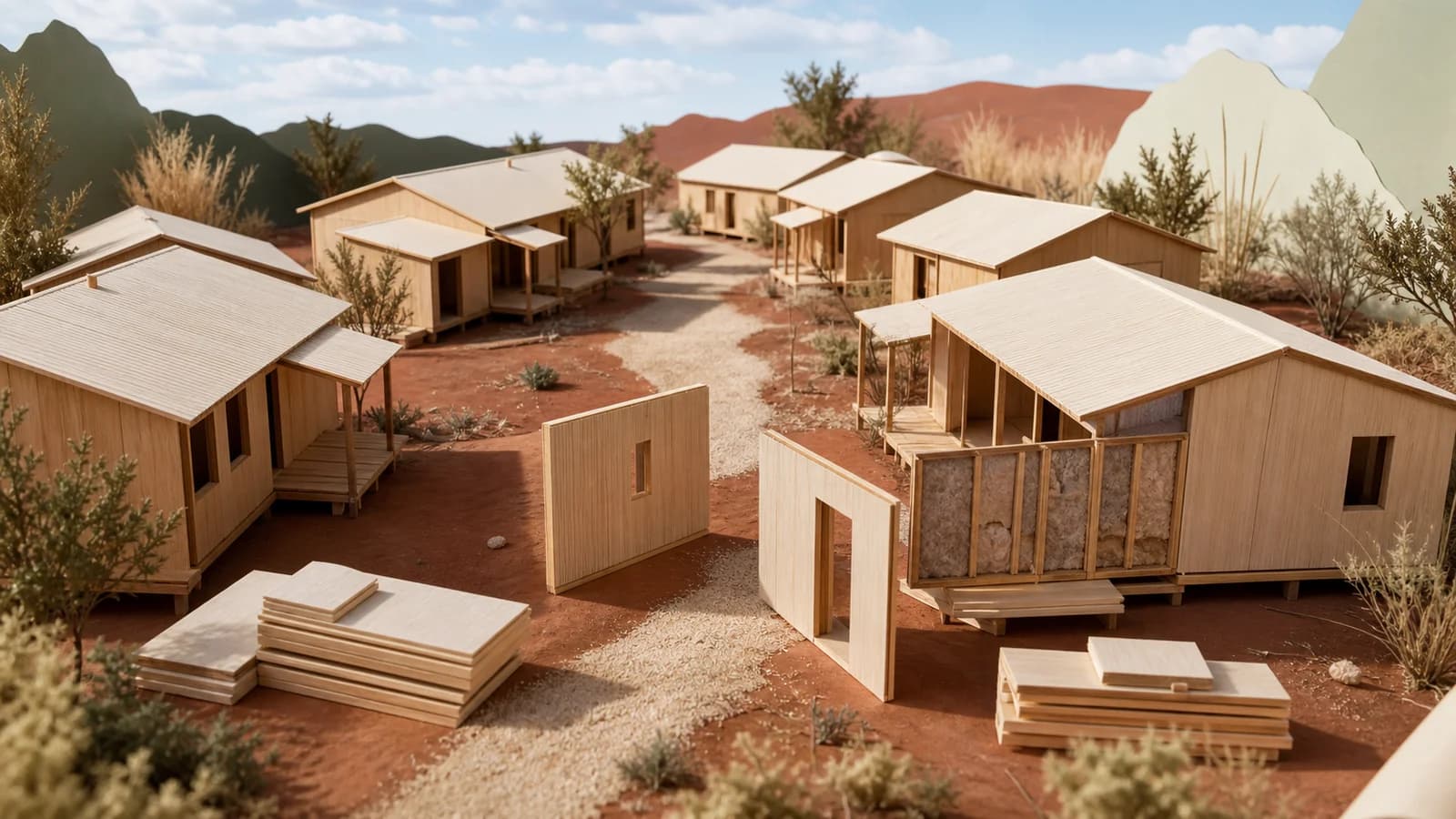
Alberta and the neighbouring provinces have forest resources, industrial expertise and room for manufacturing. Sturgeon County also offers access to transport and a construction market with major public and private projects. But distance remains a central issue. Large timber components contain a lot of air relative to their value, and truck or rail limits shape panel sizes and project economics.
Regional capacity can reduce dependence on distant suppliers, yet it does not erase logistics. Plants need a pipeline of projects large enough to justify automation. Designers need early manufacturer engagement. Contractors need erection skills and moisture-control procedures. Education and procurement have to advance with production.
The jobs argument is similarly real but should be measured. Western Archrib says its wider expansion will increase employment and capacity, while the federal package supports several communities and organisations. The quality, durability and regional distribution of those jobs will be clearer after the facilities and programmes have operated.
Why the number is not the whole story
C$4.4 million is small compared with Canada’s housing needs or the capital required to transform the forest industry. It is better understood as targeted de-risking. Public funds help commission equipment, organise research and move early-stage projects toward commercial viability.
Success should therefore be judged by follow-on outcomes: production actually commissioned, contracts won, technical results incorporated into standards, Indigenous partners gaining durable capacity and buildings delivered with verified performance. Press-release totals are inputs, not impacts.
The FrameVerk view
For timber design software, the announcement points toward a more connected market. More automated capacity raises the value of fabrication-ready models. Code research raises the value of transparent calculation assumptions. Better chain-of-custody data raises the value of material-linked reports.
The strongest digital tools will not simply draw timber buildings faster. They will connect regulatory constraints, product availability, structural geometry, quantities, carbon factors and manufacturing output early enough to change a decision.
Canada’s Prairie package is not a timber revolution by itself. It is a set of practical links in a chain that still has weak points. But the direction is clear: manufacturing, research and market development are being treated as one system. That is how mass timber moves from a sequence of exceptional projects toward dependable construction capacity.
Sources
- Natural Resources Canada, “Government of Canada invests in strengthening the Prairies’ forest sector,” news release and backgrounder, 6 March 2026: https://www.canada.ca/en/natural-resources-canada/news/2026/03/government-of-canada-invests-in-strengthening-the-prairies-forest-sector.html - Invest Sturgeon, “Western Archrib Secures Federal Funding for Major Expansion,” April 2026: https://investsturgeon.ca/western-archrib-secures-federal-funding/ - Western Archrib, company and Sturgeon County expansion information: https://www.westernarchrib.com/ - InsightsWire, “Government of Canada backs Prairies forest transformation,” 6 March 2026: https://www.insightswire.com/news/19625/government-of-canada-backs-prairies-forest-transformation