Galicia Opens €2 Million Timber-Building Grants in 2026: What Projects Can Qualify
Galicia’s new 2026 funding round supports homes, apartment buildings and business premises that use wood structurally, turning material choice into a regional industrial policy.
Galicia is putting public money behind structural timber construction. A new 2026 funding round from the regional government offers €2 million for design work and building projects that use wood or wood-derived products as structural elements.
The call is more than a general sustainability subsidy. It is designed around an identifiable construction outcome: wood must become part of the load-bearing or otherwise qualifying building system, and applicants must document both the project and the final investment.
Applications for the two principal lines are scheduled to open on 30 July 2026. One line addresses companies and organisations; another is intended for individuals carrying out work on single-family homes. The published application window runs until 31 August, unless the available budget is exhausted earlier.
Two routes into the programme
Procedure MR502F, identified as Line 2.1, is aimed at small and medium-sized businesses, self-employed professionals, cooperatives, associations, foundations, non-profit organisations and recognised common-land communities operating in Galicia.
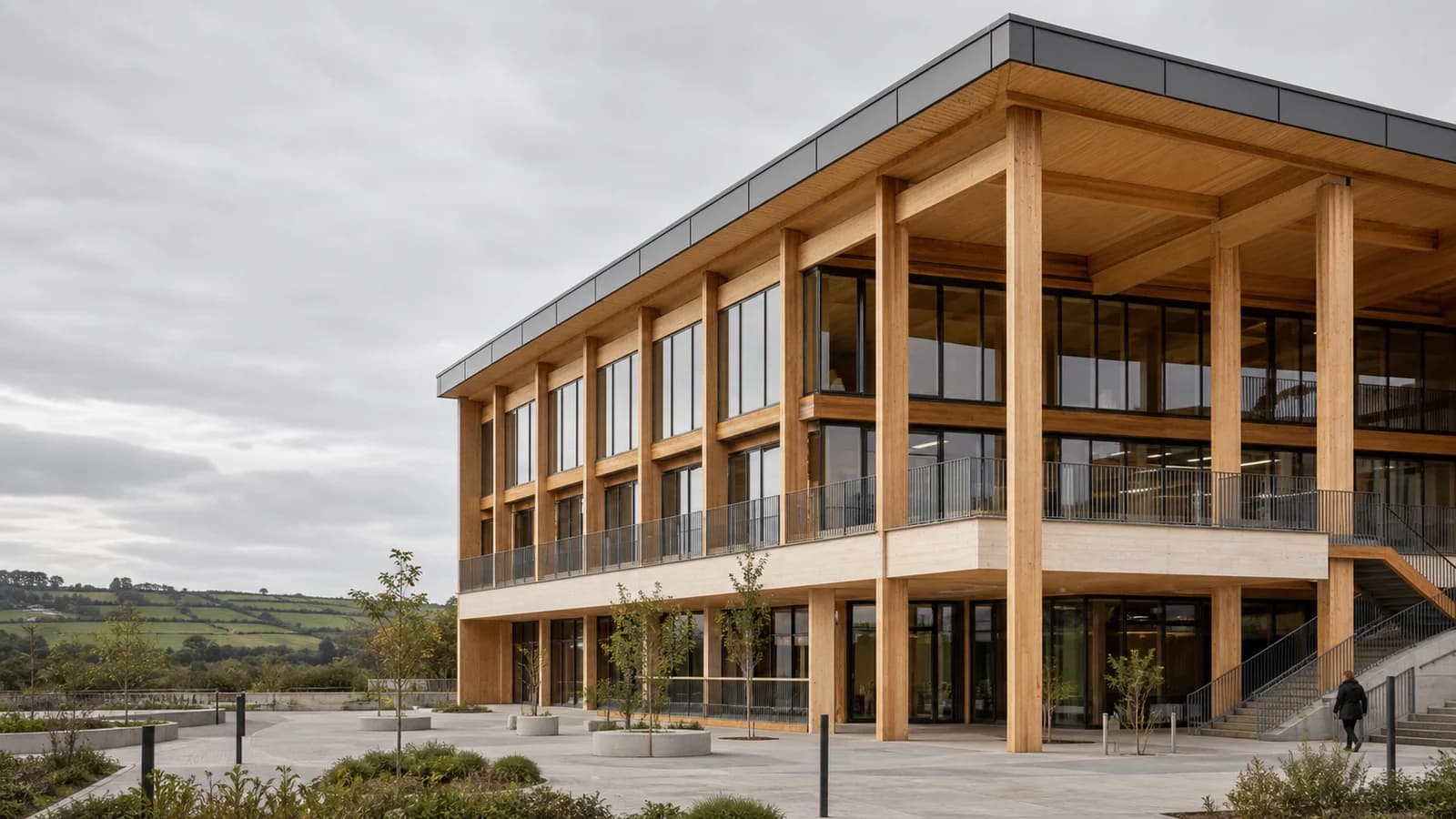
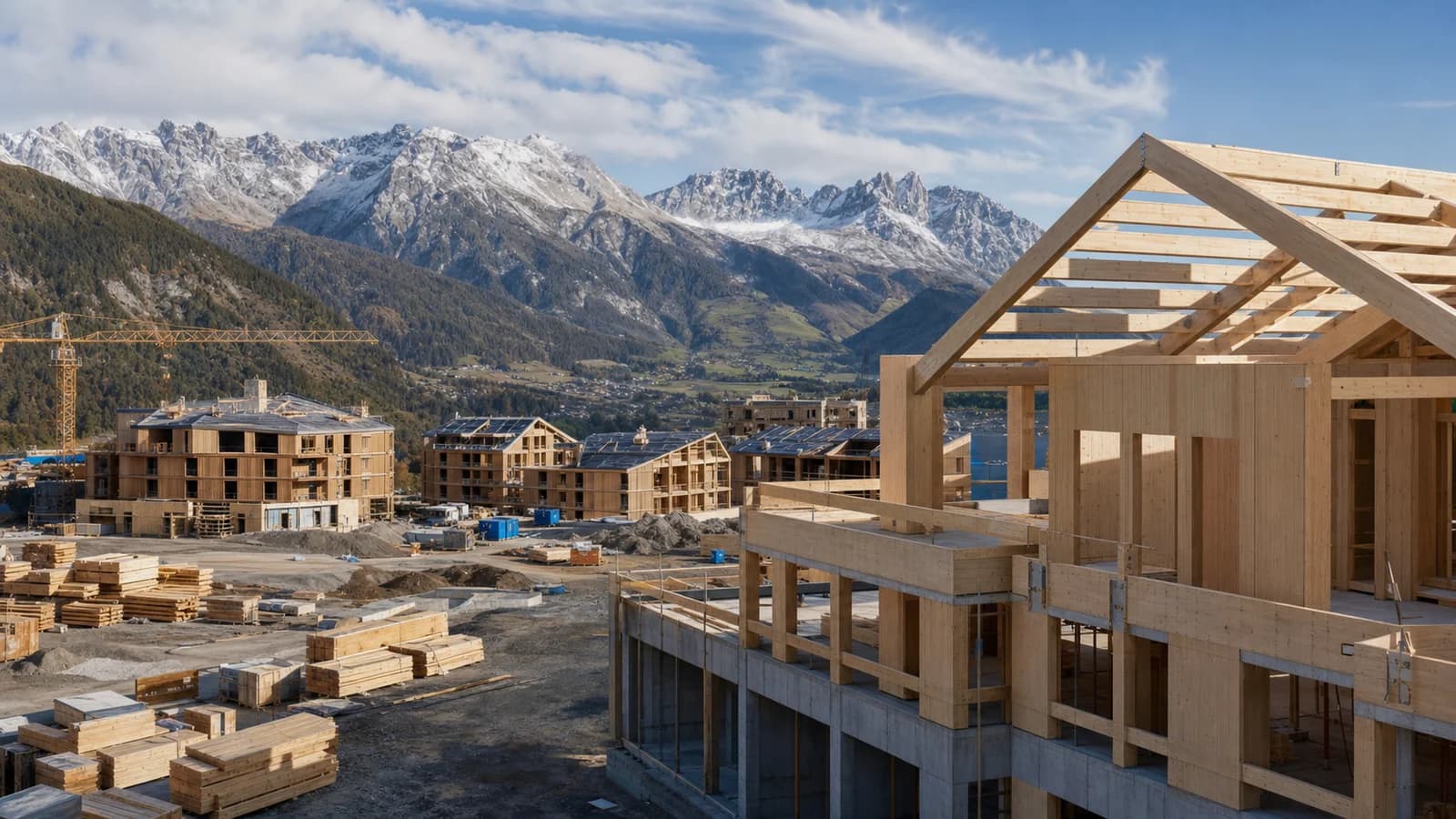
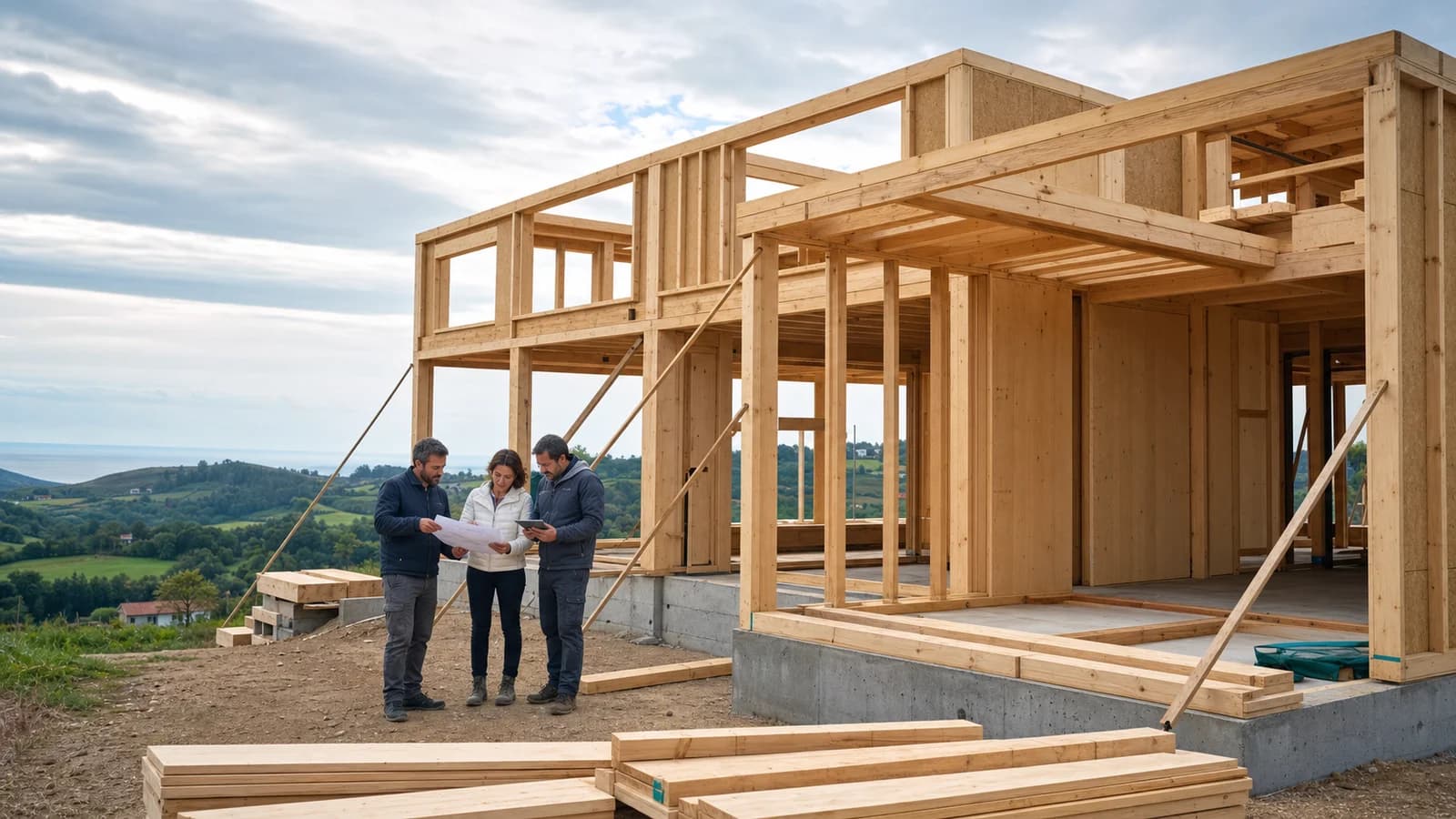
Eligible work can include new construction, rehabilitation or renovation of single-family and multi-family housing, industrial buildings and business premises. The structure must be built wholly or partly with wood products or derivatives.
Procedure MR502G, or Line 2.2, is aimed at individuals resident in Galicia. It covers new single-family homes as well as rehabilitation or renovation of existing houses. Here too, the structure must use wood fully or partially.
The distinction matters. A private homeowner planning a timber-frame extension does not apply through the same route as a developer, manufacturer or community organisation delivering a larger project.
The 20% material threshold
For the individual housing line, the published conditions require the combined cost of qualifying wood products and their installation to represent at least 20% of the final cost of the executed work.
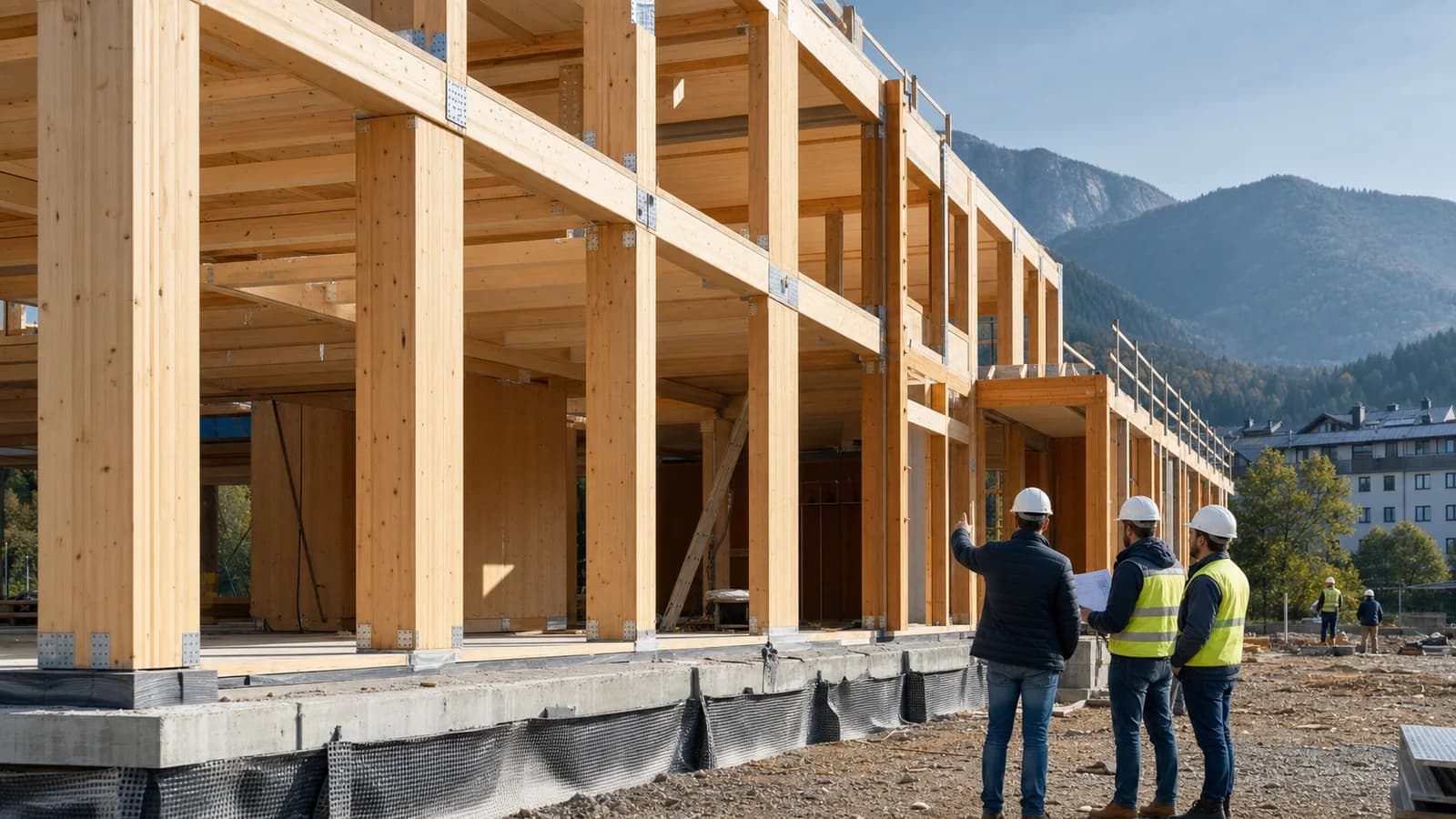
That threshold is intended to prevent a project from qualifying merely because it includes decorative timber. Structural frames, engineered panels, envelope systems and other eligible assemblies must form a material part of the investment.
For design teams, the condition makes quantity and cost information important from the beginning. A timber option cannot be added as a symbolic item at the end of the specification. The project must be organised around a credible wood system, with products, installation and documentation aligned.
Why Galicia is backing structural wood
Galicia has one of Spain’s most important forest and wood-processing economies. The regional government has increasingly treated construction as a higher-value destination for local forest resources.
In April, the Xunta said the 2026 construction grant would have a €2 million budget. It also reported that similar programmes had supported 589 beneficiaries with a combined €9 million since 2020.
The policy sits beside other industrial measures. In February, Galicia opened the Xera-savia and Xera-valor programmes, together worth €5 million, for forest and wood-sector companies and training. Xera-valor alone carries a €4.5 million budget and targets opportunities in second-stage processing, construction and contract manufacturing.
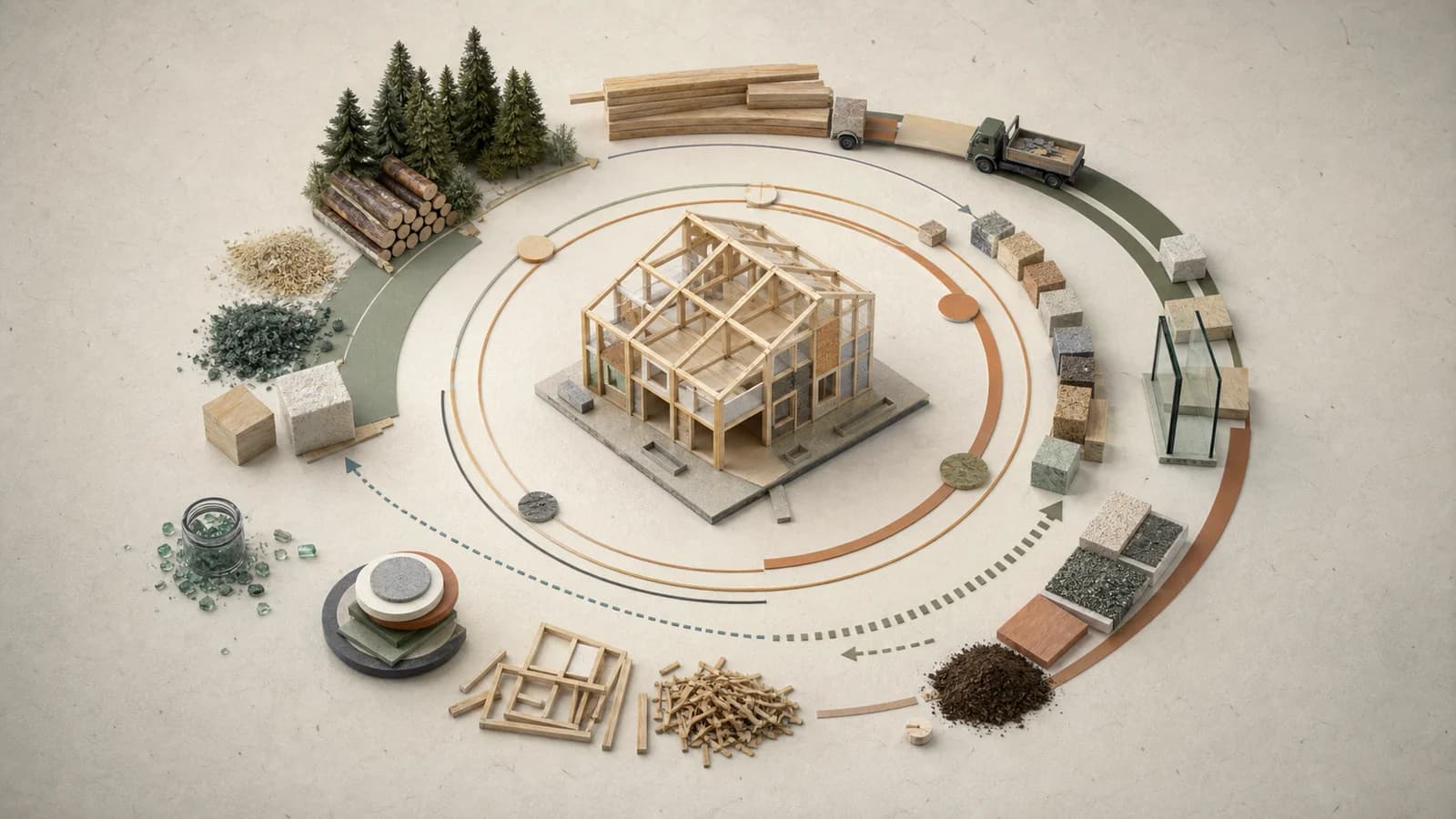
The strategic logic is clear: selling a cubic metre of raw material creates less regional value than converting it into graded timber, engineered components, prefabricated walls or finished building systems.
What applicants need to prove
Public support adds administrative work. Applicants must fit the eligibility rules, submit the correct technical and financial documents and demonstrate that the completed building matches the approved scope.
Projects should therefore establish a traceable bill of materials. Product descriptions, supplier information, invoices, installed quantities and the relationship between each item and the structural design need to remain consistent.
Changes during construction can become significant if they reduce the qualifying share of wood or replace an approved product with a different system. Cost plans should leave enough margin above the minimum threshold to avoid losing eligibility through ordinary adjustments.
Designers should also separate structural and eligible assemblies from interior finishes that do not satisfy the programme’s purpose. A timber floor finish may be valuable, but it is not equivalent to a timber floor structure.
A digital workflow can reduce the burden
Grant programmes expose a recurring weakness in construction: the design model, bill of quantities, purchase orders and final evidence often live in separate systems.
For timber projects, those records can be connected. Each wall, beam, floor or roof component can carry its product type, dimensions, material volume, supplier, certification and cost category. The same data can then support structural coordination, cutting lists, procurement and the funding report.
That is particularly useful for prefabricated timber frame and panelised construction. A design platform already knows how many studs, plates, joists and panels a building contains. Extending that model with sourcing and eligibility fields can make compliance a by-product of production planning rather than a separate spreadsheet exercise.
What the grants do not guarantee
The funding does not remove the need for engineering, fire safety, moisture control, acoustics, durability or code compliance. Nor does it make every timber solution cheaper than concrete, masonry or steel.
Applicants should compare complete systems, including design, fabrication, transport, lifting, weather protection and programme savings. The right material decision depends on the building and the available supply chain.
The call is also competitive in the practical sense that funds can run out. A technically eligible project is not automatically assured support.
A policy signal for Spain
Spain’s timber-building market is still smaller than those of northern and central Europe, but Galicia is creating a repeatable regional mechanism: help buyers choose structural wood, help companies invest in processing and use public documentation to build confidence.
For FrameVerk users, the lesson reaches beyond one grant. Regulations and incentives increasingly depend on structured project data. A model that knows what every component is, where it came from and how much it costs can support both fabrication and policy compliance.
The 2026 call turns that principle into a concrete deadline. Between 30 July and 31 August, qualifying Galician projects can seek support—but only if the timber is real, structural and properly documented.
Sources: Xunta de Galicia, MR502F – Line 2.1, 2026: https://sede.xunta.gal/detalle-procedemento?ano=2026&c=asociacions&codtram=MR502F&lang=gl&numpub=1
Xunta de Galicia, MR502G – Line 2.2, 2026: https://sede.xunta.gal/es/detalle-procedemento?codtram=MR502G
Xunta de Galicia, announcement of the €2 million 2026 timber-construction call: https://www.xunta.gal/notas-de-prensa/-/nova/023041/lorenzana-anuncia-que-xunta-aprobara-antes-veran-unha-nova-convocatoria-das-axudas