US Mass Timber in 2026: 2,833 Projects, New Volume Data and a Growing Technical Backbone
WoodWorks’ project count, USDA material-use data and a new technical reference guide together show a US market growing in scale—and in the infrastructure needed to deliver it.
Three 2026 signals describe the US mass-timber market from different angles. WoodWorks counted 2,833 multifamily, commercial or institutional projects in progress or built by June. The USDA Forest Products Laboratory published new material-use context in January. And WoodWorks launched a consolidated technical reference guide in March.
It is a powerful number and an excellent headline. It is also a number that deserves a user manual.
WoodWorks’ total covers projects at different stages and includes modern mass timber and post-and-beam structures. Its public market map focuses on projects under construction and completed, while the broader count also captures work in design. WoodWorks explicitly notes that not every tracked design becomes a built project and that details of in-design projects are not public.
So, no, the United States did not quietly complete 2,833 wooden skyscrapers while everyone was checking email. What it did build is a much larger pipeline of teams, suppliers, code experience and client interest than existed a decade ago.
What the count includes
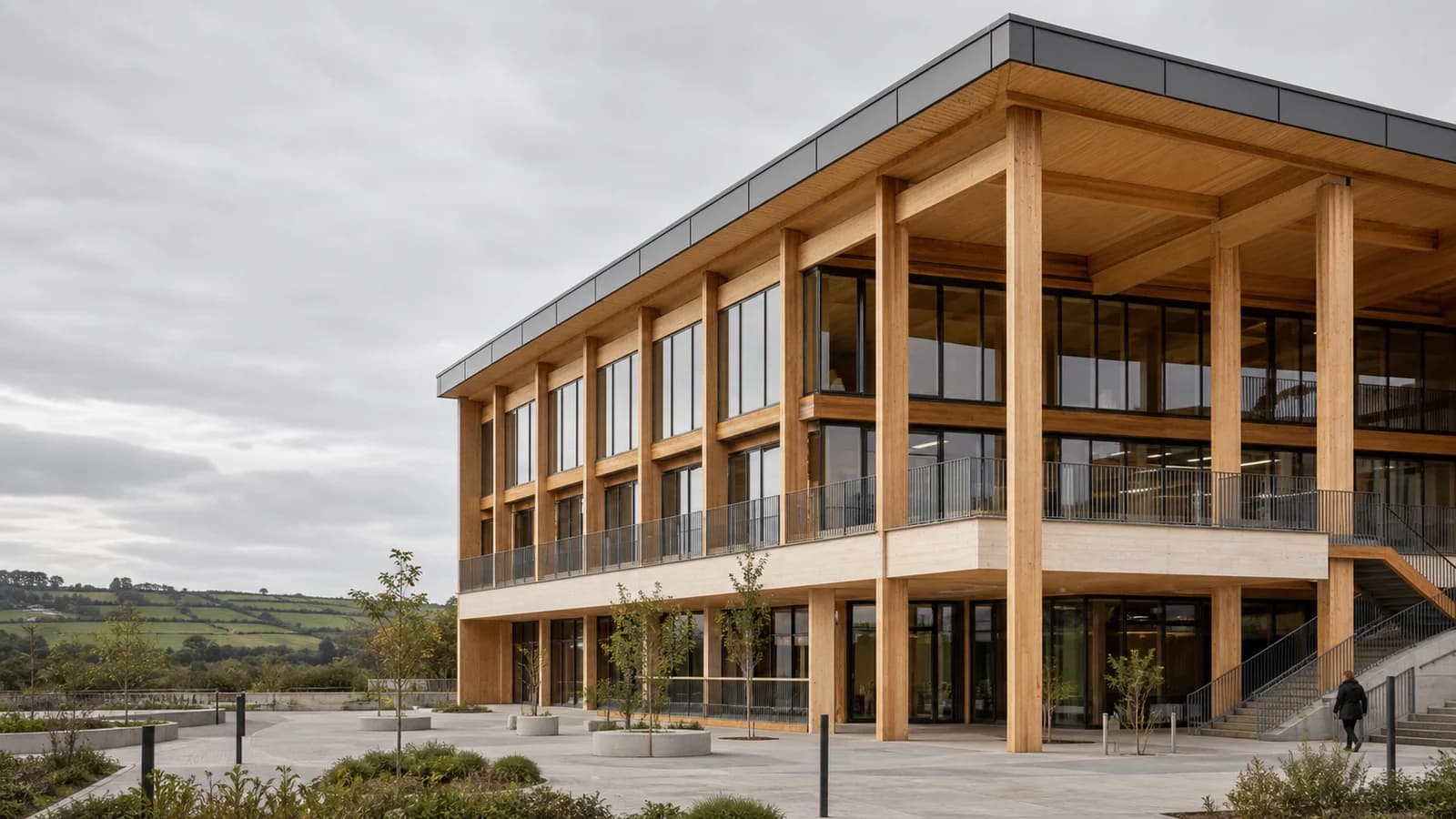
The headline covers multifamily, commercial and institutional buildings. It is not a census of single-family timber-frame homes, and it is not limited to tall buildings. The projects can include post-and-beam systems as well as contemporary mass-timber products such as cross-laminated timber, glue-laminated timber, mass plywood panels, nail-laminated timber and dowel-laminated timber.
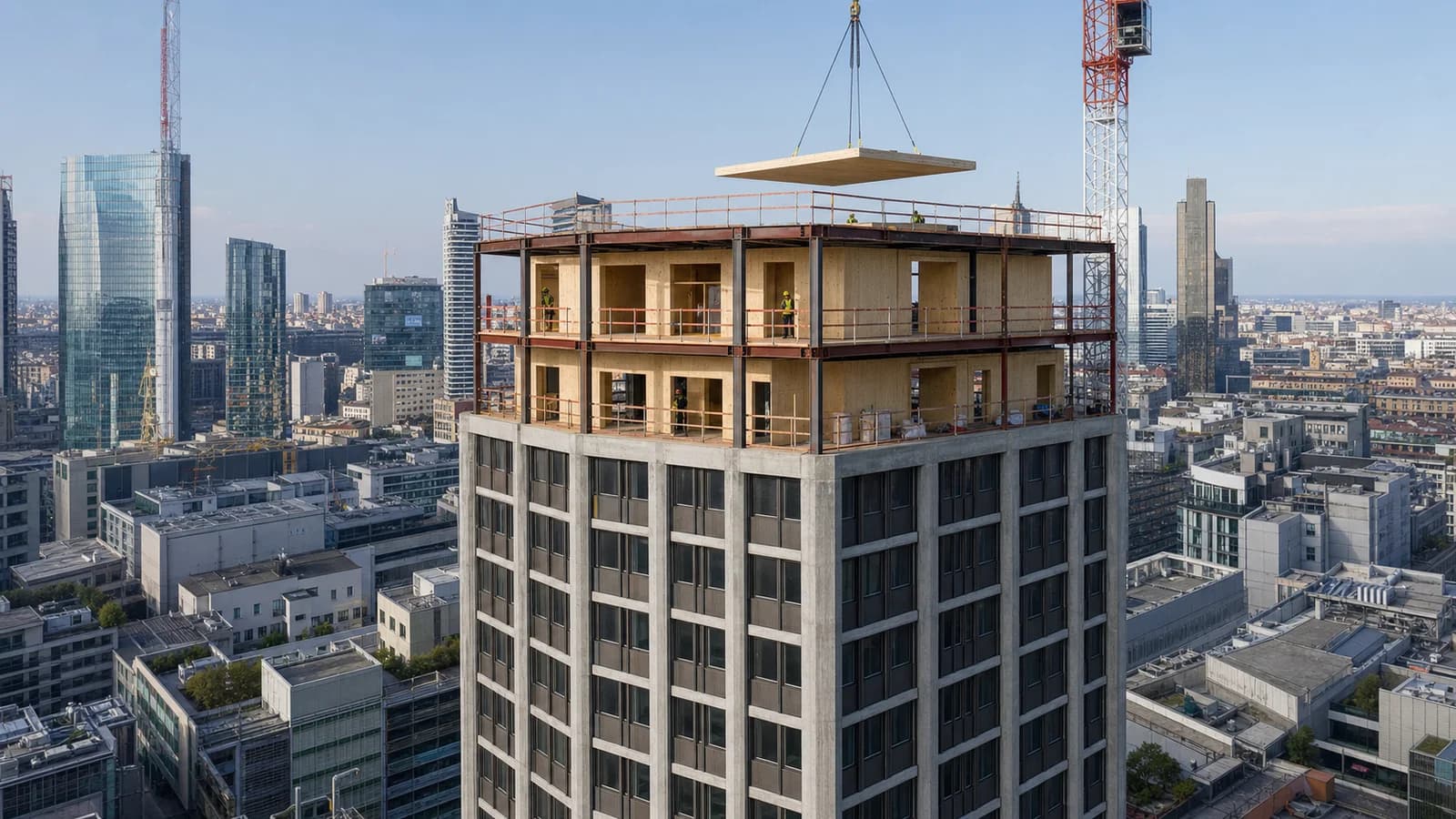
They also range from one storey to the tall timber types enabled by recent building codes. WoodWorks’ technical guidance covers US code pathways allowing some mass-timber construction up to 18 storeys under the 2021 International Building Code, but most projects in the dataset are not necessarily at that upper limit.
This breadth is a feature, not a flaw. Markets scale through repeatable schools, offices, apartment buildings and civic projects, not only through record-setting towers.
A trend line hiding behind the snapshot
An older US Forest Service workshop publication cited 1,934 projects in design or built as of September 2023, using WoodWorks data. The 2026 figure is not perfectly comparable without the underlying stage-by-stage dataset, but the direction is clear: the tracked pipeline has expanded substantially.
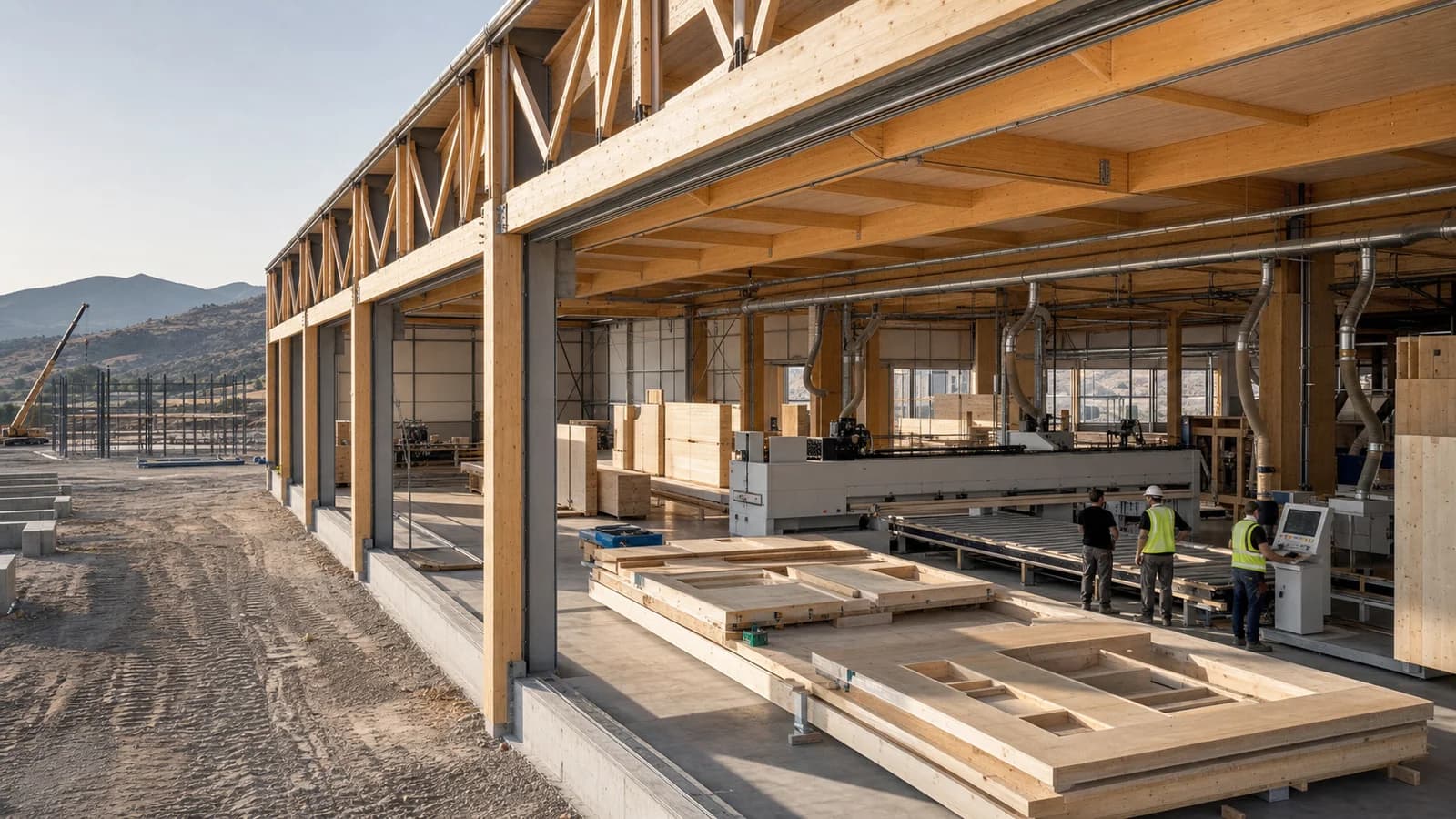
The USDA Forest Products Laboratory’s 2026 mass-timber overview adds a production clue. It reports that, in 2024, more than 179 million board feet of lumber were used in mass-timber construction, with another 48 million board feet used in hybrid light-frame and mass-timber work.
These figures describe two sides of market growth. Project counts reveal how often teams are considering or delivering the systems. Material volumes reveal demand moving through manufacturers and projects. Neither alone tells us revenue, completion rate or profitability.
Why projects in design still matter
A project that never breaks ground is not a building. Yet design-stage activity is not meaningless. Each serious proposal creates work for architects, engineers, cost planners, code consultants and suppliers. It tests grids, spans, fire strategies, procurement routes and product availability.
Some schemes will change materials, pause or disappear. Others will mature into tenders and contracts. A strong pipeline gives manufacturers more evidence for investment, encourages contractors to train teams and gives authorities more examples when reviewing unfamiliar systems.
The danger is treating pipeline as guaranteed demand. A factory cannot pay wages with a concept model. Businesses need to distinguish between early enquiries, funded designs, permitted work, contracted fabrication and completed buildings.
The geography matters as much as the total
WoodWorks’ map helps users examine projects by state. That matters because the United States is not one uniform timber market. Code adoption, forest resources, manufacturing capacity, seismic requirements, labour experience and transport distances vary significantly.
A state with many projects can develop a reinforcing ecosystem: experienced reviewers reduce approval uncertainty; engineers reuse verified approaches; contractors understand moisture planning and installation; and clients can visit completed examples. A region without those networks may face higher first-project costs even when the product itself is available.
This is why a national total should lead to more detailed questions. Where are projects reaching construction? Which building types repeat? How far do panels travel? Are local factories operating near capacity? Which jurisdictions have a reliable approval path?
Technical confidence is becoming infrastructure
In March 2026, WoodWorks launched a Mass Timber Technical Reference Guide organised around the actual decisions engineers and architects make: structural design, fire resistance, acoustics, vibration, durability, construction and specifications.
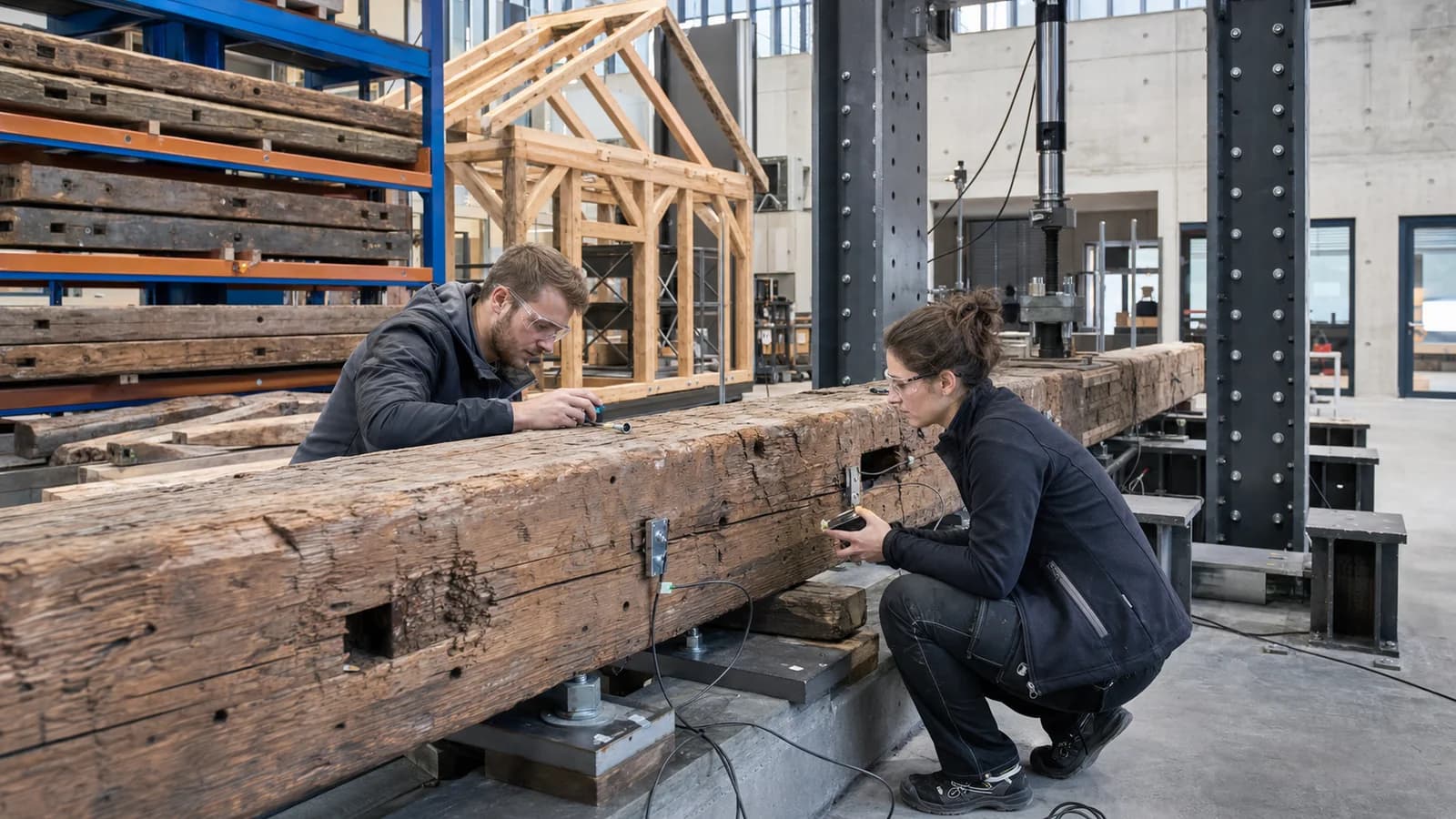
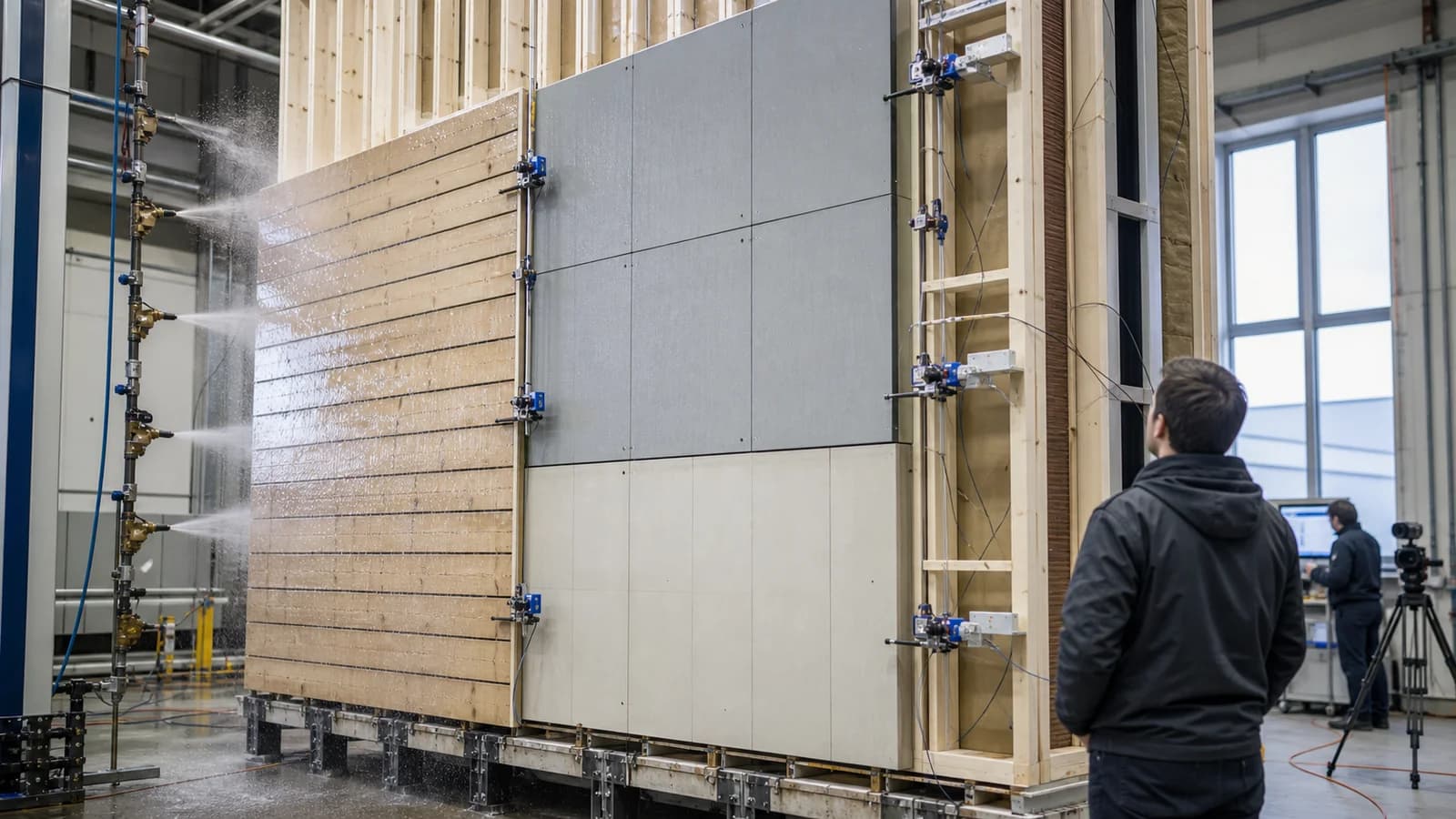
That publication is part of the market story. Growth is not only measured in buildings or cubic metres. It is also measured in the availability of standard details, calculation methods, tested assemblies and people who know when not to improvise.
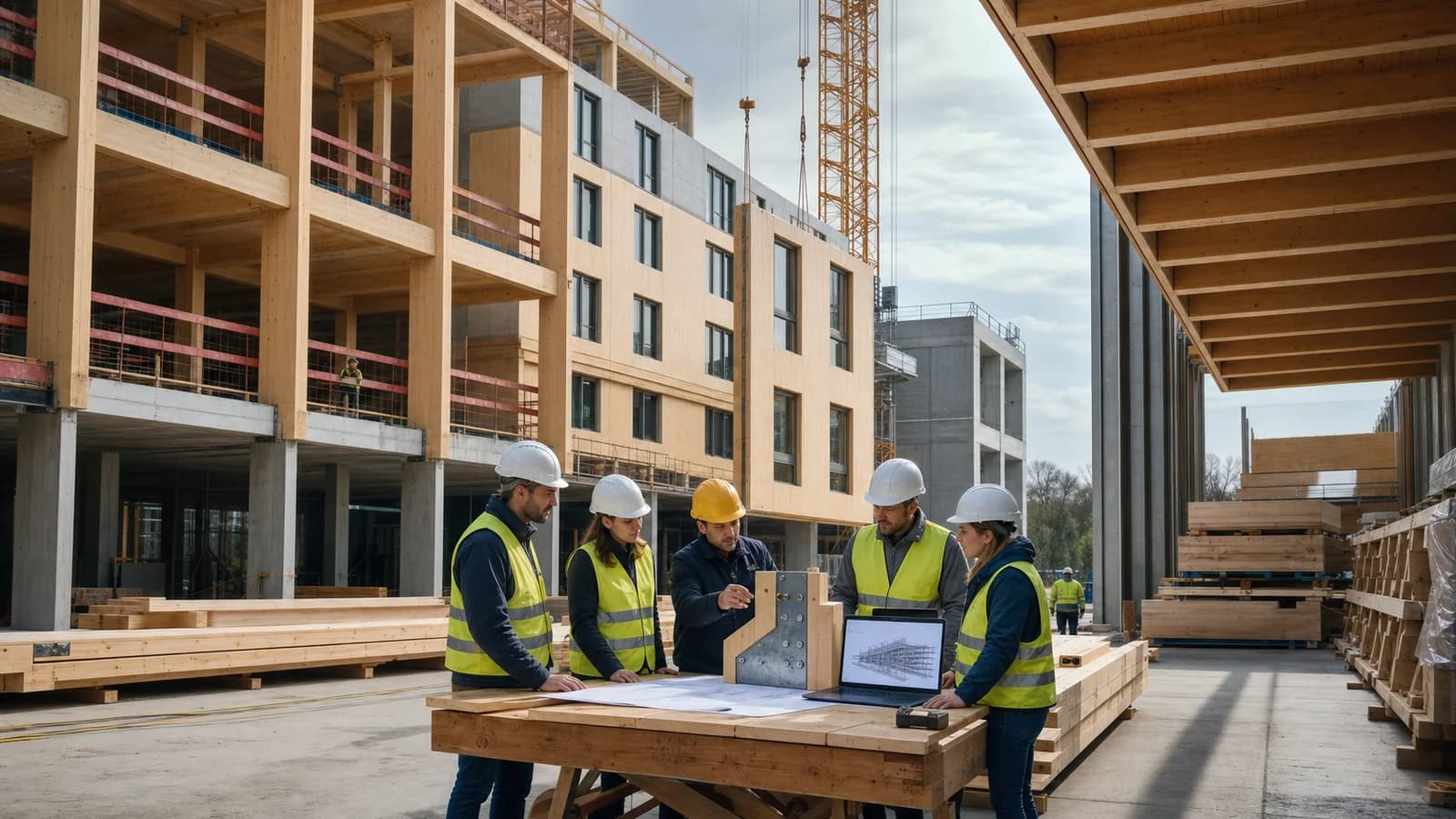
For digital design platforms, the same principle applies. A visually convincing timber model is not production infrastructure. A useful model must carry member sizes, grades, panel layups, openings, connections, tolerances, fire assumptions, acoustic build-ups and fabrication status. It should separate an early option from an issued-for-manufacture element.
When the project pipeline grows, weak information becomes expensive at scale. A wrong opening repeated across 200 panels is not a charming design variation.
What the milestone does not prove
The figure does not prove that mass timber is cheaper than conventional construction in every market. It does not establish the carbon result of any individual project. Carbon outcomes depend on design efficiency, sourcing, transport, biogenic-carbon accounting, substitution assumptions and end-of-life scenarios.
It also does not guarantee that a project labelled “mass timber” uses wood as its only structural material. Hybrid structures are common and often rational. Concrete can provide foundations, cores or toppings; steel can solve long spans, transfers and local connections.
Finally, project count does not measure quality. Moisture management, envelope detailing, fire engineering and commissioning remain project-specific responsibilities.
The more useful headline
The best interpretation of 2,833 is not that mass timber has finished its journey into the mainstream. It is that thousands of US teams have moved the conversation beyond a theoretical material swap.
There are now enough projects to compare building types, procurement strategies and regional ecosystems. There is enough demand to justify specialised software, fabrication capacity and professional training. There are also enough projects for the industry to stop excusing avoidable mistakes as the price of innovation.
The milestone is real, provided we keep its verbs accurate: projects were “in progress or built,” not all completed. That careful wording does not weaken the story. It makes the growth credible—and credibility is what a maturing construction market needs most.
Sources: WoodWorks, “Mapping Mass Timber,” updated June 2026: https://www.woodworks.org/resources/mapping-mass-timber/
USDA Forest Service, Forest Products Laboratory, “Mass Timber,” published 12 January 2026: https://research.fs.usda.gov/fpl/understory/forest-products-laboratory-mass-timber
WoodWorks, “Mass Timber Technical Reference Guide,” launched March 2026: https://www.woodworks.org/mass-timber-technical-reference-guide/