Germany Launches CIRCTimber to Reuse Load-Bearing Wood
TU Dresden’s new federally funded research project will test how structural timber can be dismantled, graded, reprocessed and designed into safe new buildings.
Germany has launched a three-year research project focused on one of circular construction’s hardest questions: how can a load-bearing timber component be safely used again?
CIRCTimber began on 1 April 2026 and runs until March 2029. Led in part by the Chair of Timber Engineering at TU Dresden and funded by Germany’s Federal Ministry of Research, Technology and Space, the project will build and test a complete reuse chain for structural wood.
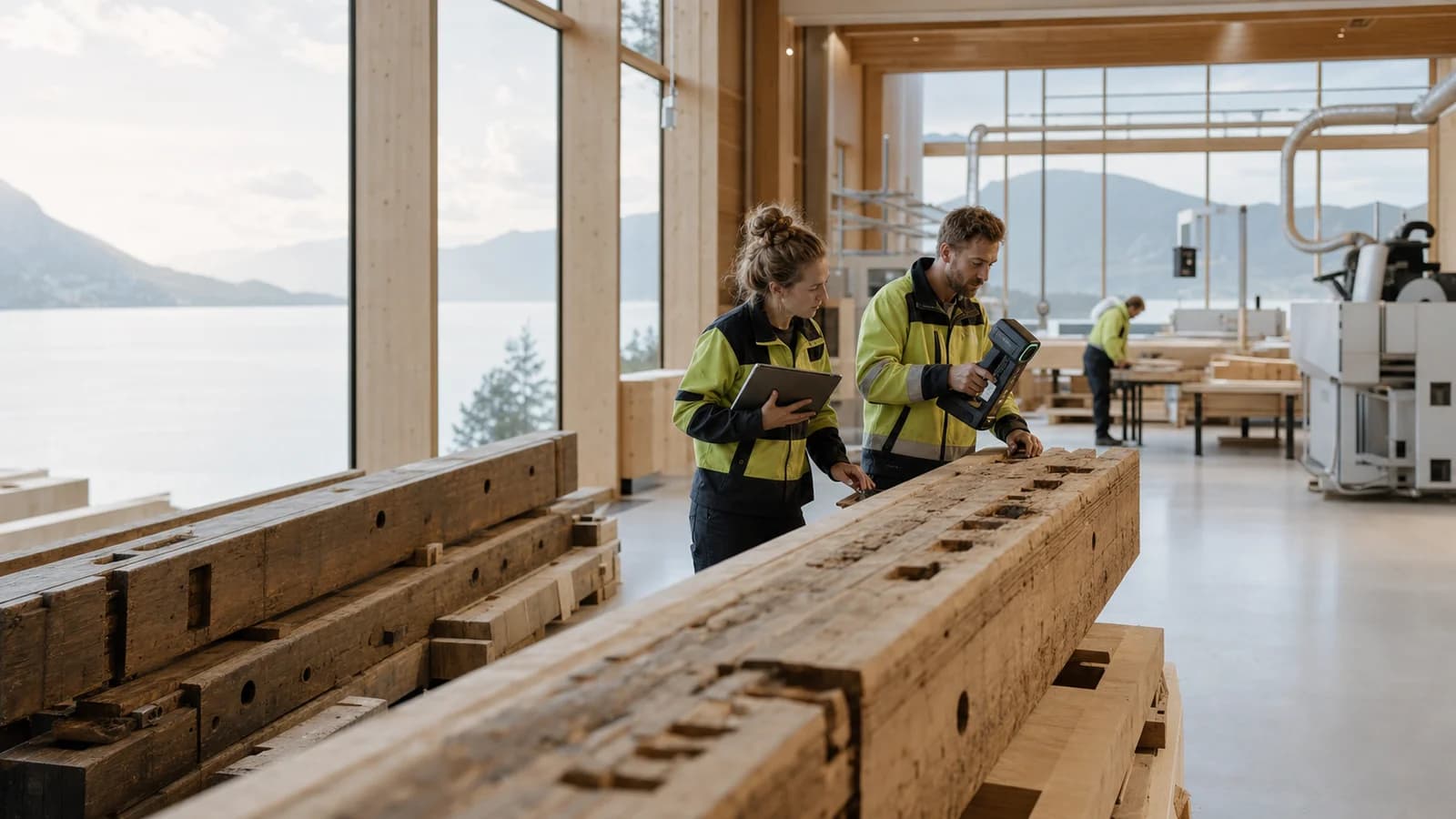
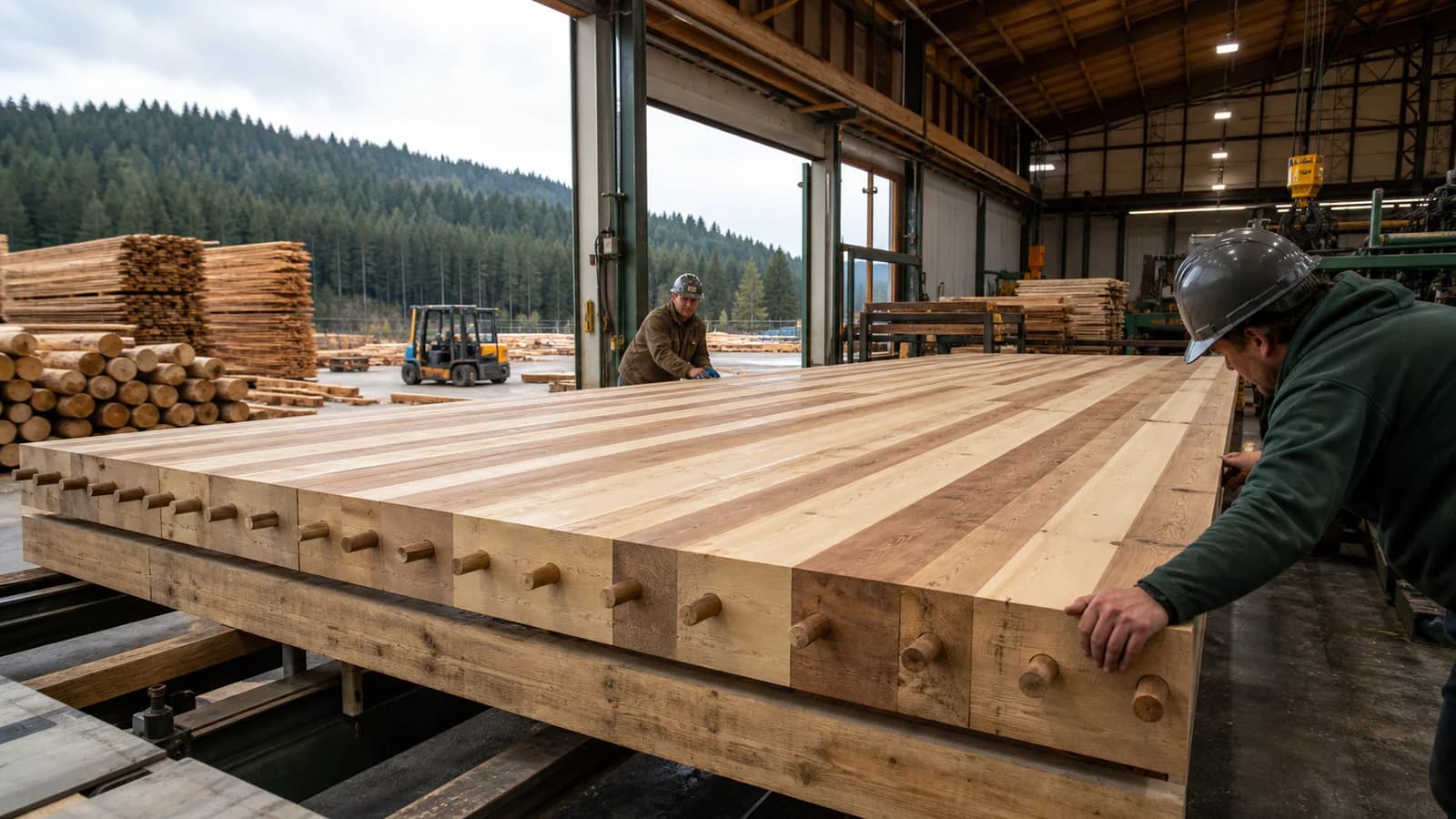
The research covers dismantling, transport, storage, inspection, reprocessing and reuse. A living lab will put the workflow into practice, followed by a demonstrator made from reclaimed timber.
Structural reuse needs evidence
Reusing a door or floorboard is relatively easy because its future role may not be load-bearing. A beam or column is different. Engineers need dependable information about material properties, condition, geometry and residual capacity.
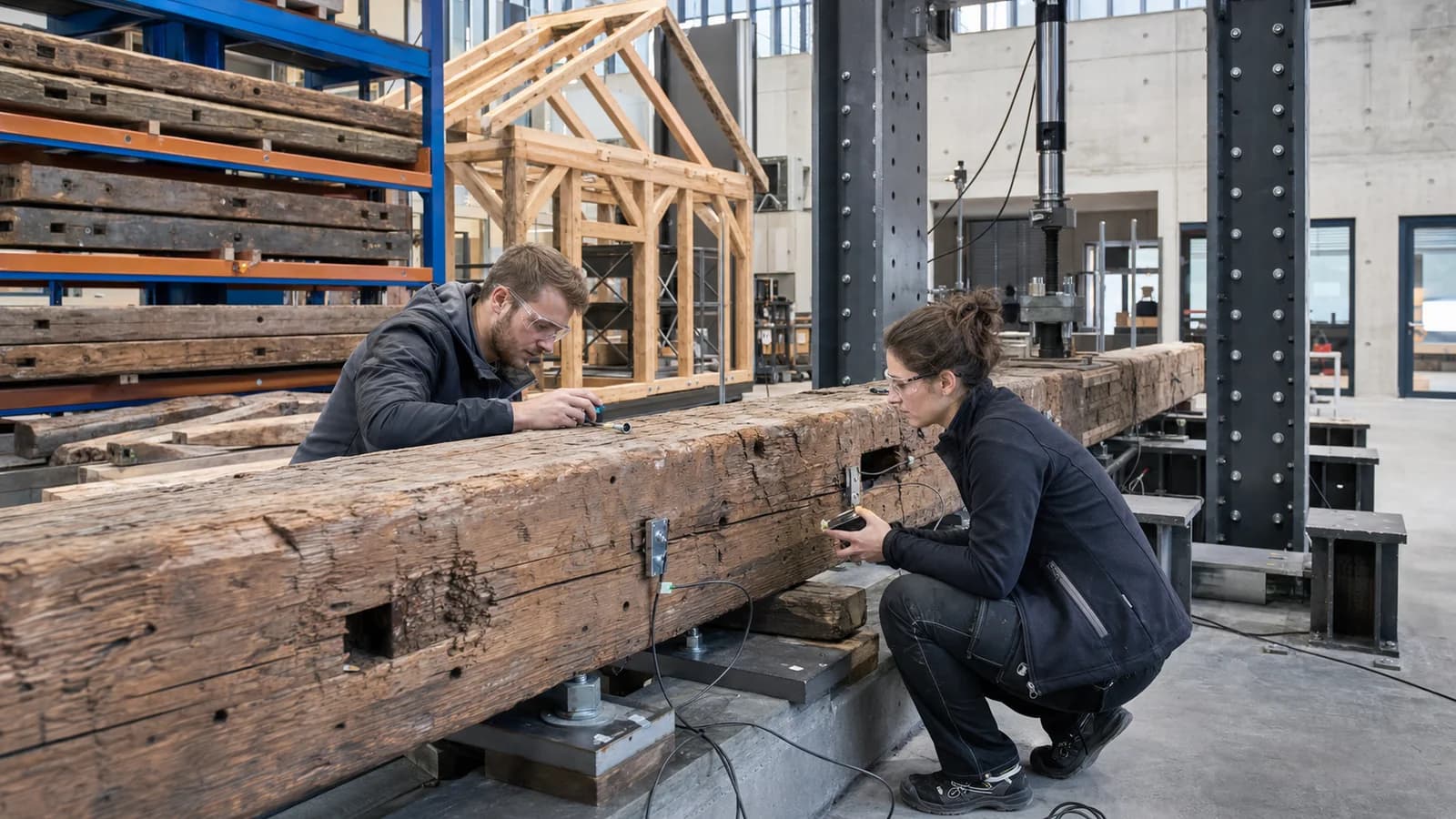
Existing timber may include holes, notches, fastener damage, cracks or moisture-related deterioration. Original grading records may be missing. Service history and load duration can be uncertain. Rejecting every imperfect member wastes valuable material; accepting it without evidence creates unacceptable risk.
TU Dresden’s structural-engineering work therefore includes assessment of new and reclaimed timber, probabilistic reliability analysis, investigation of testing methods and the development of design approaches for reused components. The aim is to use existing capacity while maintaining an appropriate safety level.
Probability is particularly relevant because reclaimed stock contains more variability and incomplete information than a standard new product. A rigorous method must translate inspection and testing data into design values and permissible uses—not simply produce a general sustainability label.
The whole chain is the experiment
CIRCTimber is not studying an isolated beam in a laboratory and assuming the market will solve everything else. Its living lab spans the operational chain from dismantling to the next structure.
That wider view matters. Selective dismantling must protect components. Transport and storage must prevent moisture damage. Inspection needs to be fast enough for real projects. Reprocessing has to remove or accommodate old connections. Designers need a known inventory early enough to use it. Contractors and clients need clear responsibility and documentation.
The project also considers economic and psychological conditions. Reclaimed timber can face resistance even when it is technically suitable. Clients may associate variation with poor quality, while engineers and insurers may prefer familiar standard products. A viable business model must make quality visible and allocate liability clearly.
A digital material passport is only the beginning
Digital traceability can support reuse, but a passport alone does not prove structural performance. Useful data must connect identity, location, dimensions, species, inspection results, modifications and approved future applications.
For design software, CIRCTimber points toward inventory-driven modelling. Instead of requesting unlimited identical sections, an engineer may work with a finite set of unique members. Optimisation must match those pieces to positions while respecting capacity, span, connection and fabrication constraints.
That workflow also needs a strict audit trail. If a reclaimed beam is shortened or a damaged zone is removed, its digital record and available capacity must change. Drawings, CNC files, schedules and structural checks must reference the same component identity.
What the demonstrator can prove
The planned reclaimed-timber demonstrator will show technical feasibility under controlled project conditions. It will not, by itself, establish universal design values or immediate code acceptance for every source of used timber.
The most valuable outcome will be a repeatable assessment and decision process: what can be reused directly, what requires reprocessing, what belongs in a less demanding application and what must be rejected. That hierarchy can prevent both unsafe optimism and unnecessary disposal.
CIRCTimber gives Germany a practical 2026 test bed for circular structural timber. If the project can combine dependable engineering with workable logistics and trusted documentation, reuse may move from bespoke experiments toward a normal option in timber design.
Sources: https://tu-dresden.de/bu/bauingenieurwesen/ish/holzbau/forschung/forschungsprojekte/circtimber