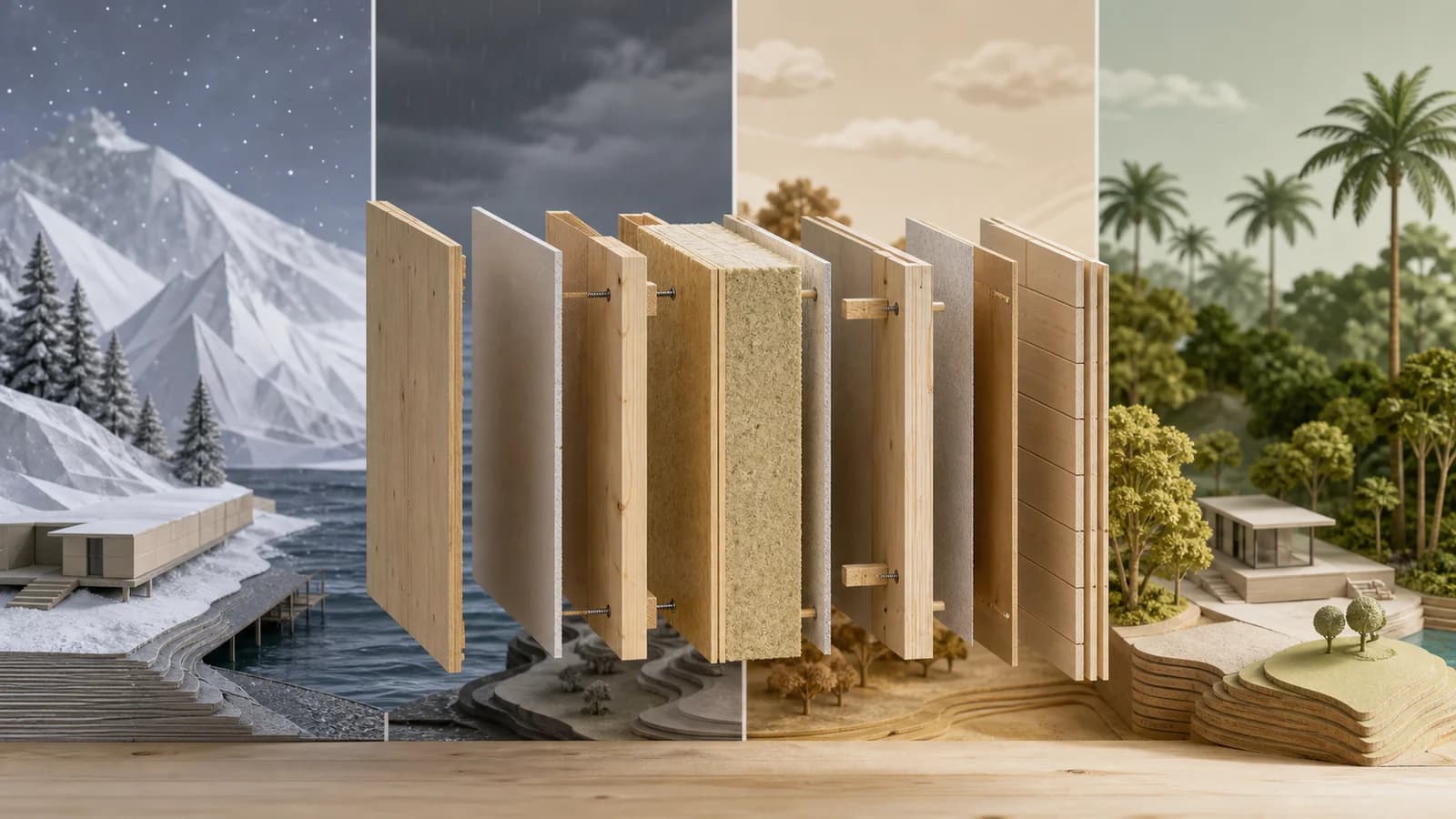
Wood-Fibre Panels vs Conventional Envelopes Across North American Climates
A new modelling study tests whether prefabricated wood-fibre insulated panels save energy from cold Canada to hot-humid regions.
A study published on 1 July 2026 compares the energy performance of wood-fibre insulated panels across multiple North American climates and energy-code generations. The headline result is encouraging but conditional: the panel systems improved efficiency in every case considered, while the magnitude depended on climate, baseline construction and assembly design.
What was compared
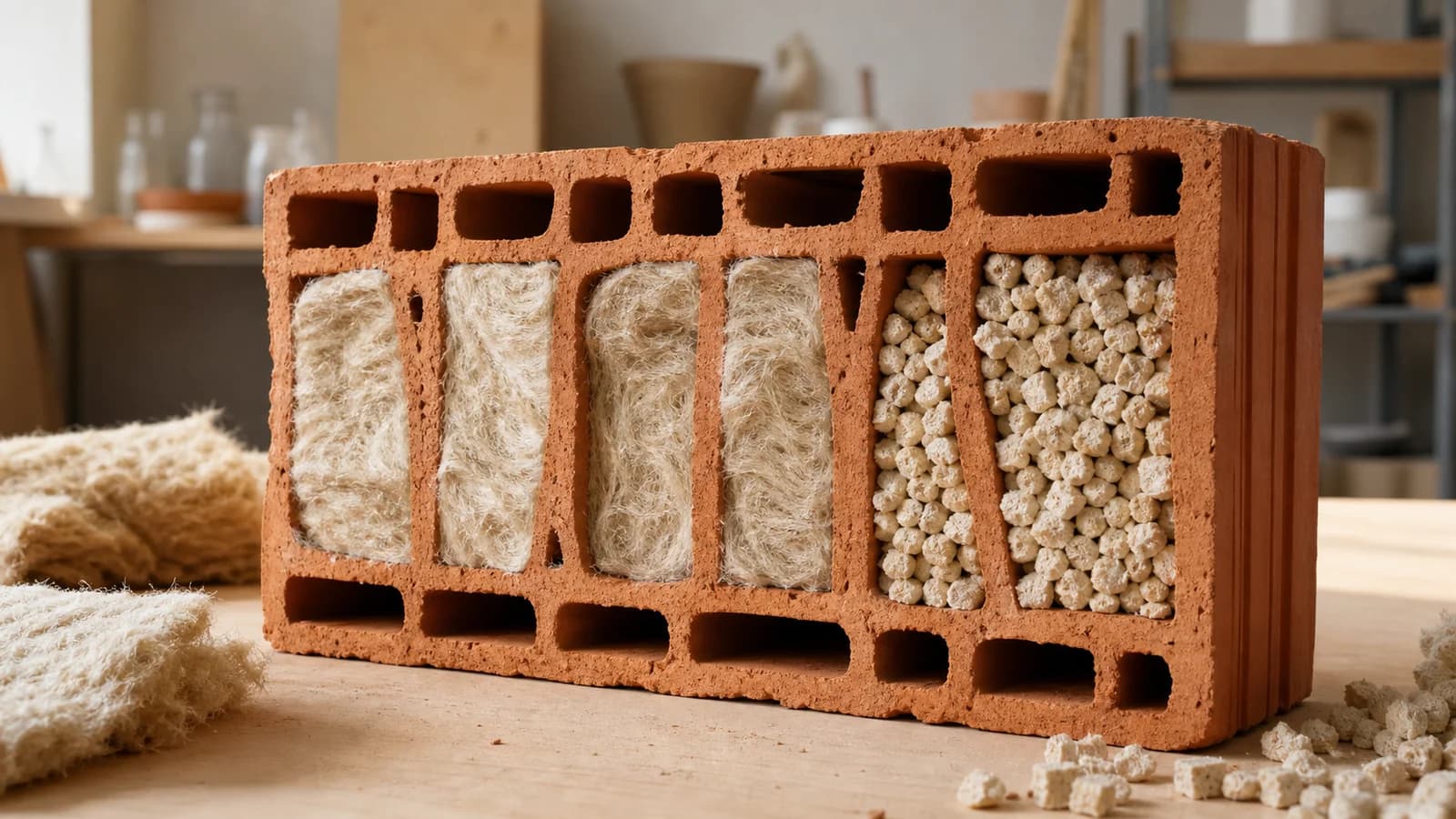
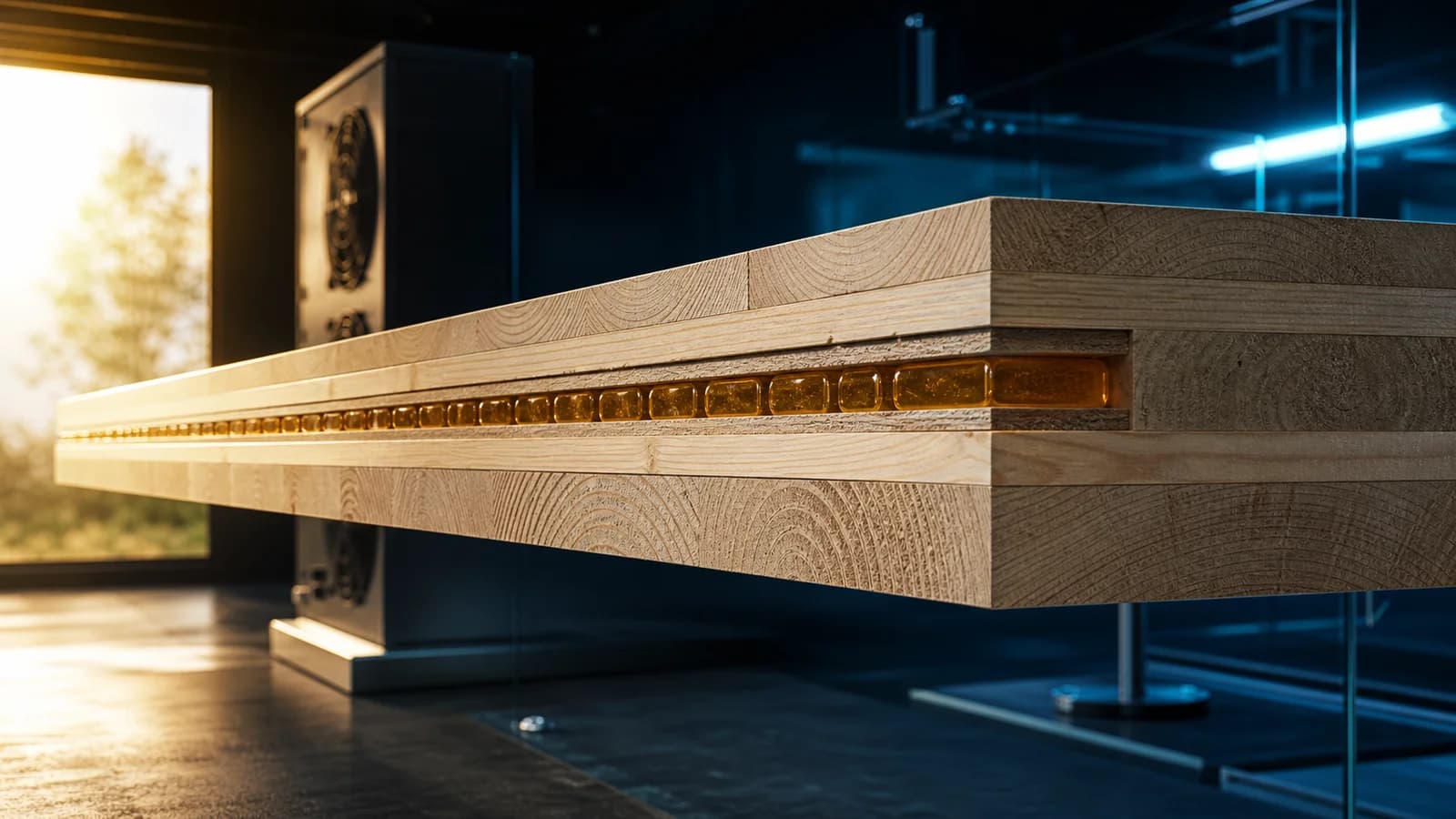
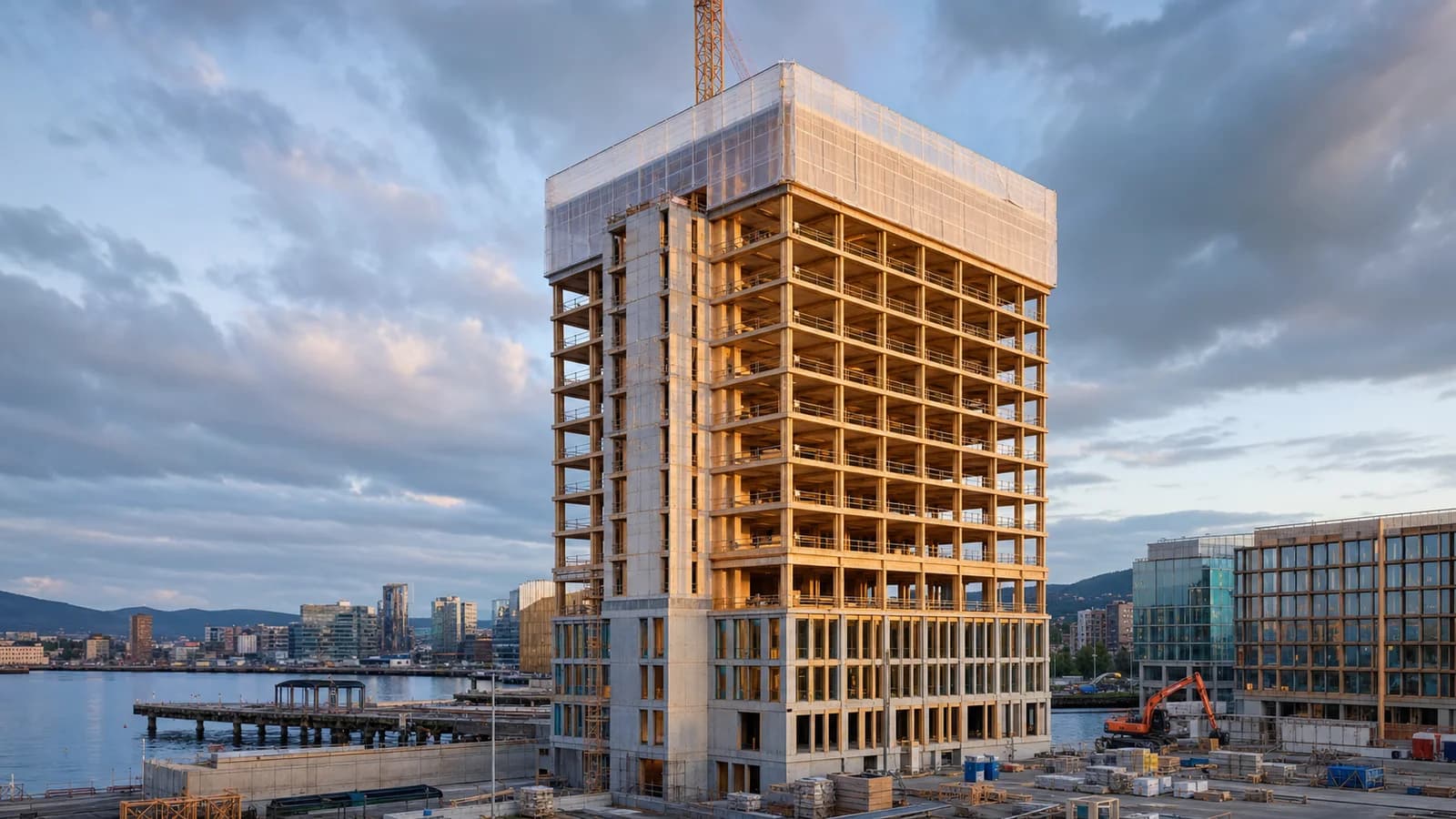
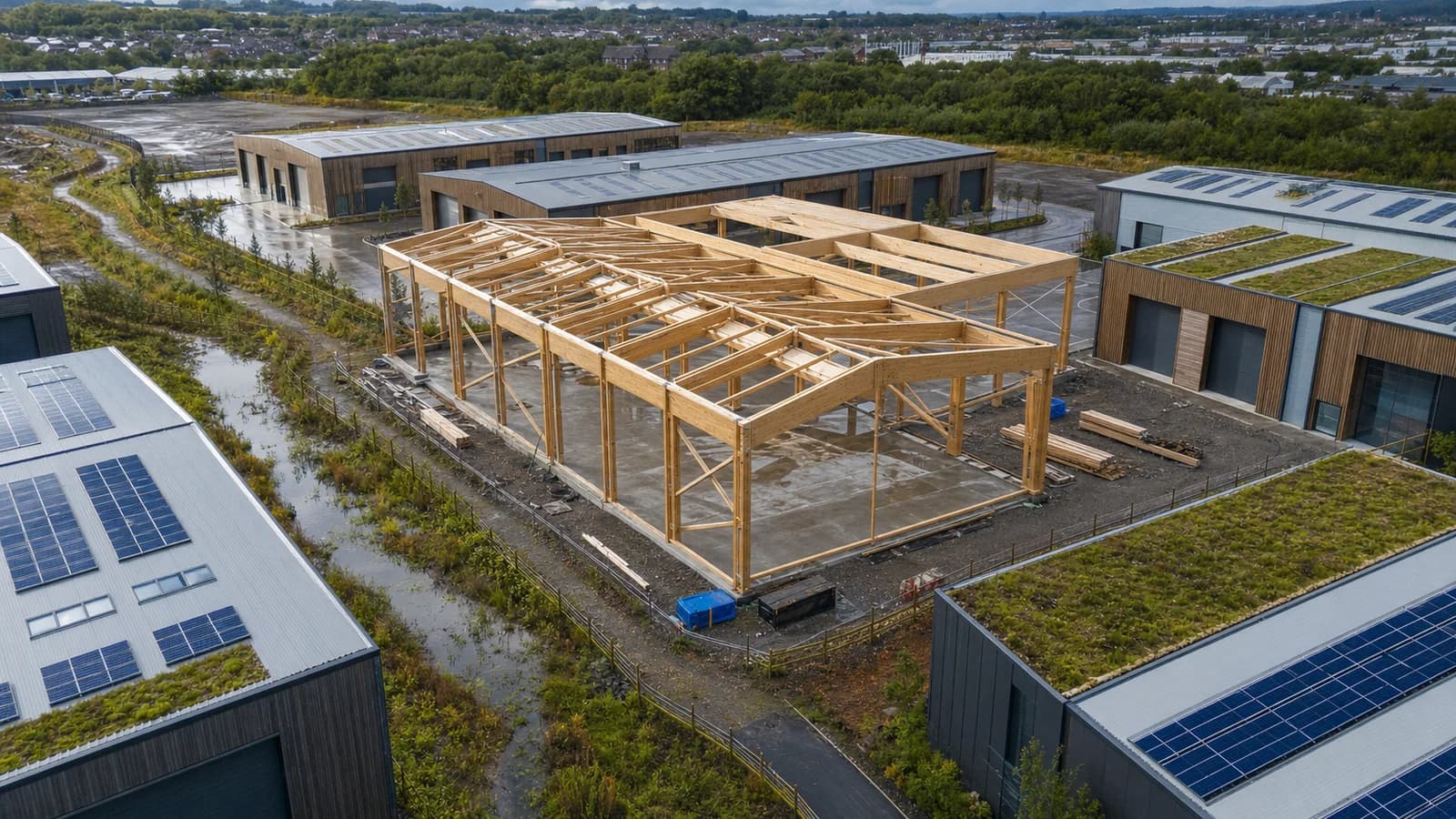
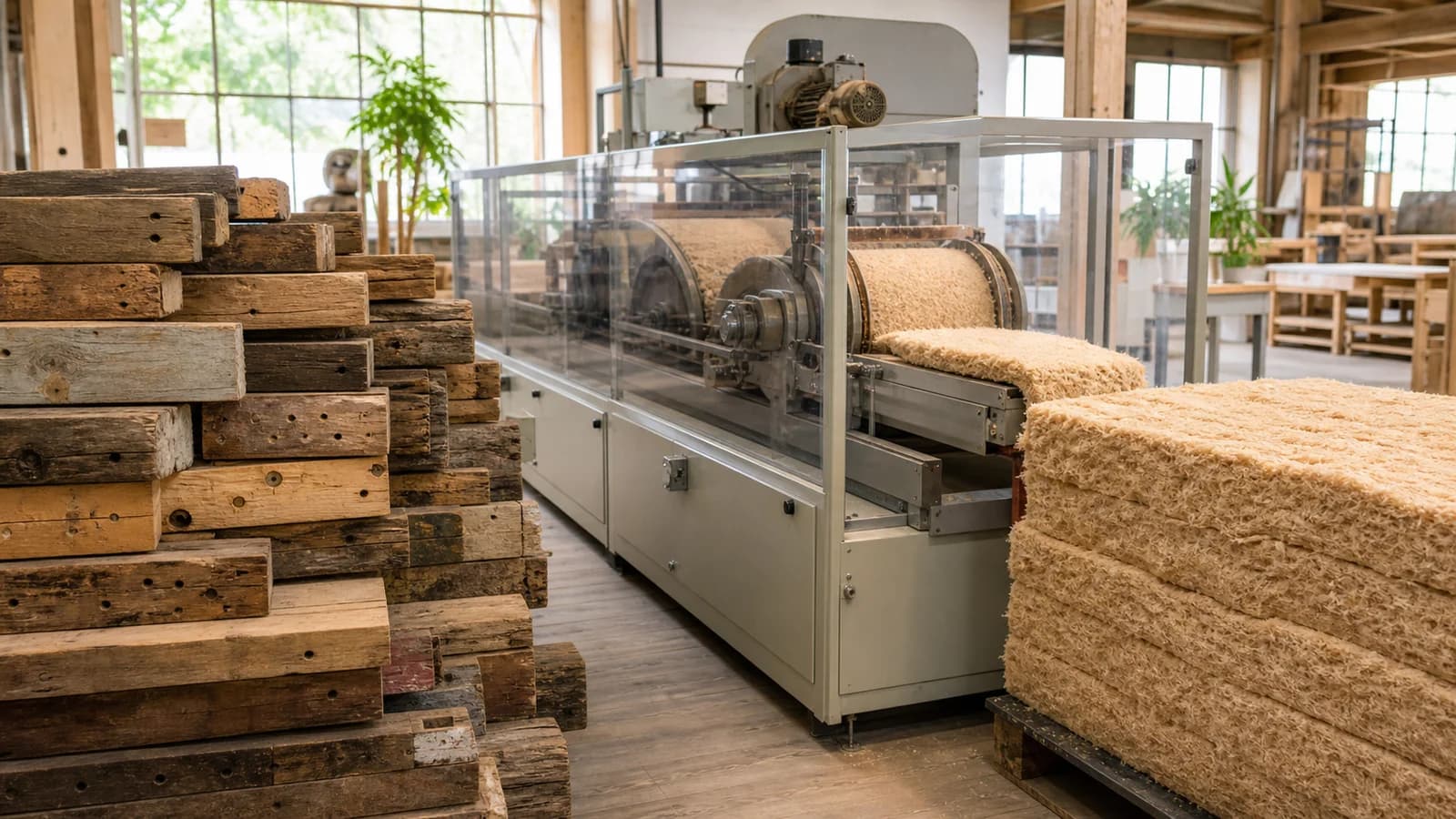
Wood-fibre insulated panels are prefabricated wall or roof assemblies with a wood-fibre insulation core bonded to engineered-wood faces. They can serve new modular construction or exterior retrofit. The researchers used a consistent whole-building modelling framework rather than comparing unrelated case studies.
That consistency matters. Climate, geometry, occupancy, equipment and code baseline can otherwise overwhelm the effect of one envelope material. The study evaluates the panel option against conventional reference envelopes while changing climate zones and code vintages.
Why climate changes the answer
Insulation slows heat flow, but annual benefit depends on the temperature and humidity outside, internal loads, solar gains and heating or cooling system. A panel that reduces winter heat loss in a cold region may influence peak cooling differently in a hot-humid location.
Wood fibre also has moisture-storage and heat-capacity characteristics that simple R-value comparisons may not fully capture. Those properties can help moderate short temperature swings, but moisture exposure, rain control and drying potential must be designed for each climate. Bio-based does not mean building-physics rules take a holiday.
Earlier full-scale research in Edmonton and Vancouver examined highly insulated wood-frame walls with wood-fibre panels in cold continental and humid coastal conditions. The new modelling study expands the question across a wider set of North American contexts.
Panels are systems, not a single material
Performance depends on the full assembly: faces, core density, joints, membranes, fasteners, windows and transitions. Prefabrication can improve consistency, but only if factory quality continues through transport and site installation. A narrow gap or poorly sealed service penetration can bypass a generous insulation layer.
Adhesives and engineered-wood faces also belong in environmental assessment. Operational savings should be compared with manufacturing impacts, service life, repairability and end-of-life routes. The correct question is not whether wood fibre is universally “better,” but where a specific panel produces the best whole-life result.
What the study does not prove
The work is modelling, not a guarantee for every building. Energy models depend on schedules, weather files, workmanship assumptions and system efficiencies. Real performance must be checked through enclosure testing, commissioning and metered operation.
Nor does the study establish one universal percentage saving. Its value is the pattern across cases: the panel option improved modelled efficiency throughout the tested set, but local context determined the amount.
The FrameVerk view
Early design software should treat climate zone and wall build-up as linked inputs. Changing the project location should update insulation targets, vapour strategy, rain-screen logic and predicted loads. Panel dimensions and joints should remain visible, because a continuous U-value is not the same as a constructed envelope.
For comparison, teams need more than one energy number. Show annual demand, peak load, thermal-bridge assumptions, airtightness target and embodied impacts. Attach each value to a version of the assembly. That makes a cross-climate study usable rather than decorative.
The 2026 research supports wood-fibre panels as a serious energy-efficiency option. It also gives the industry the less glamorous instruction that matters most: design the system for the climate, then verify the built joints.
Sources
- Energy and Buildings, “Comparative analysis of the energetic performance of wood-fiber insulated panels in North American climates,” 1 July 2026: https://www.sciencedirect.com/science/article/pii/S0378778826006092
- Journal of Building Engineering, “Thermal resistance of multi-functional panels in cold-climate regions,” 2020: https://www.sciencedirect.com/science/article/pii/S2352710220334719
- Energy and Buildings, “Wood fiber insulation reinforced with phase change materials for advanced hygrothermal control,” 1 March 2026: https://www.sciencedirect.com/science/article/pii/S037877882600040X