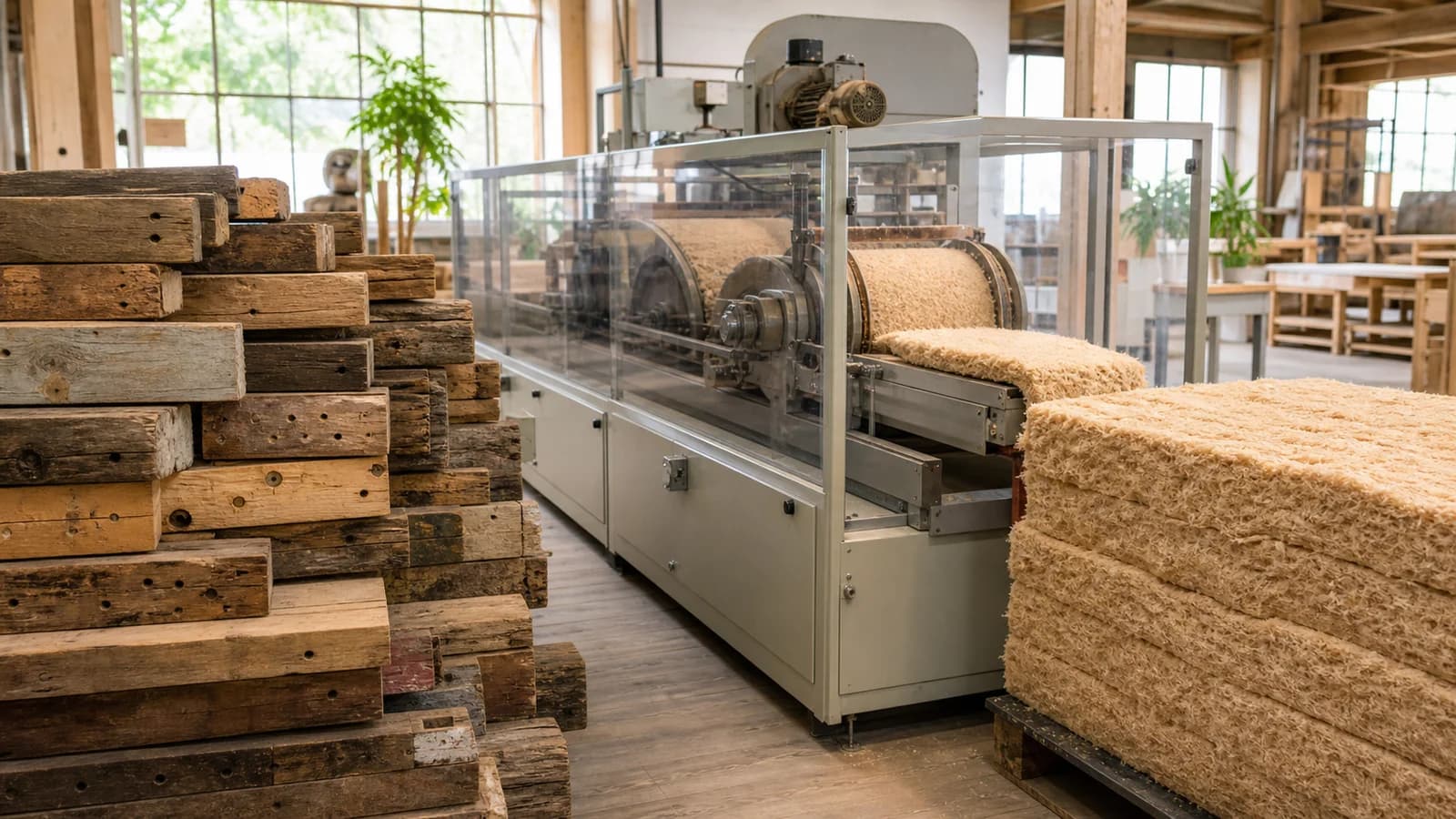
Old Demolition Wood, New Insulation: The Circular Route Researchers Are Testing
A June 2026 study asks whether clean construction and demolition wood can become wood-fibre insulation instead of waste.
A study published on 17 June 2026 examines a circular route for construction and demolition wood: process selected waste timber into fibre for thermal insulation. Combining a literature review with a Metro Vancouver case, the researchers identify solid wood, plywood and oriented strand board as potentially usable feedstocks under controlled conditions. The idea could preserve material value after direct reuse is no longer practical, but it is a sorting and evidence problem before it is a manufacturing opportunity.
Why insulation may suit recovered fibre
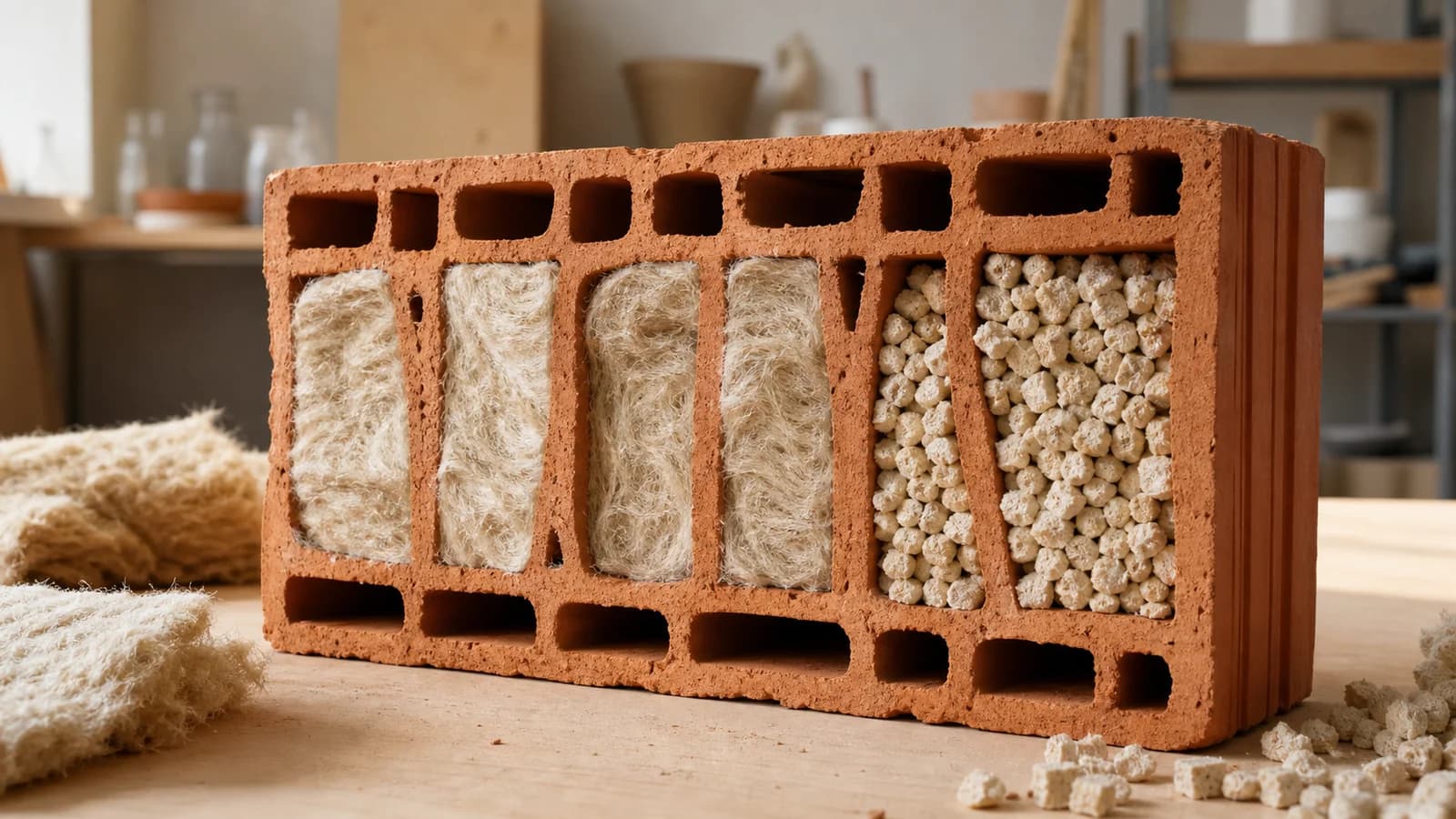
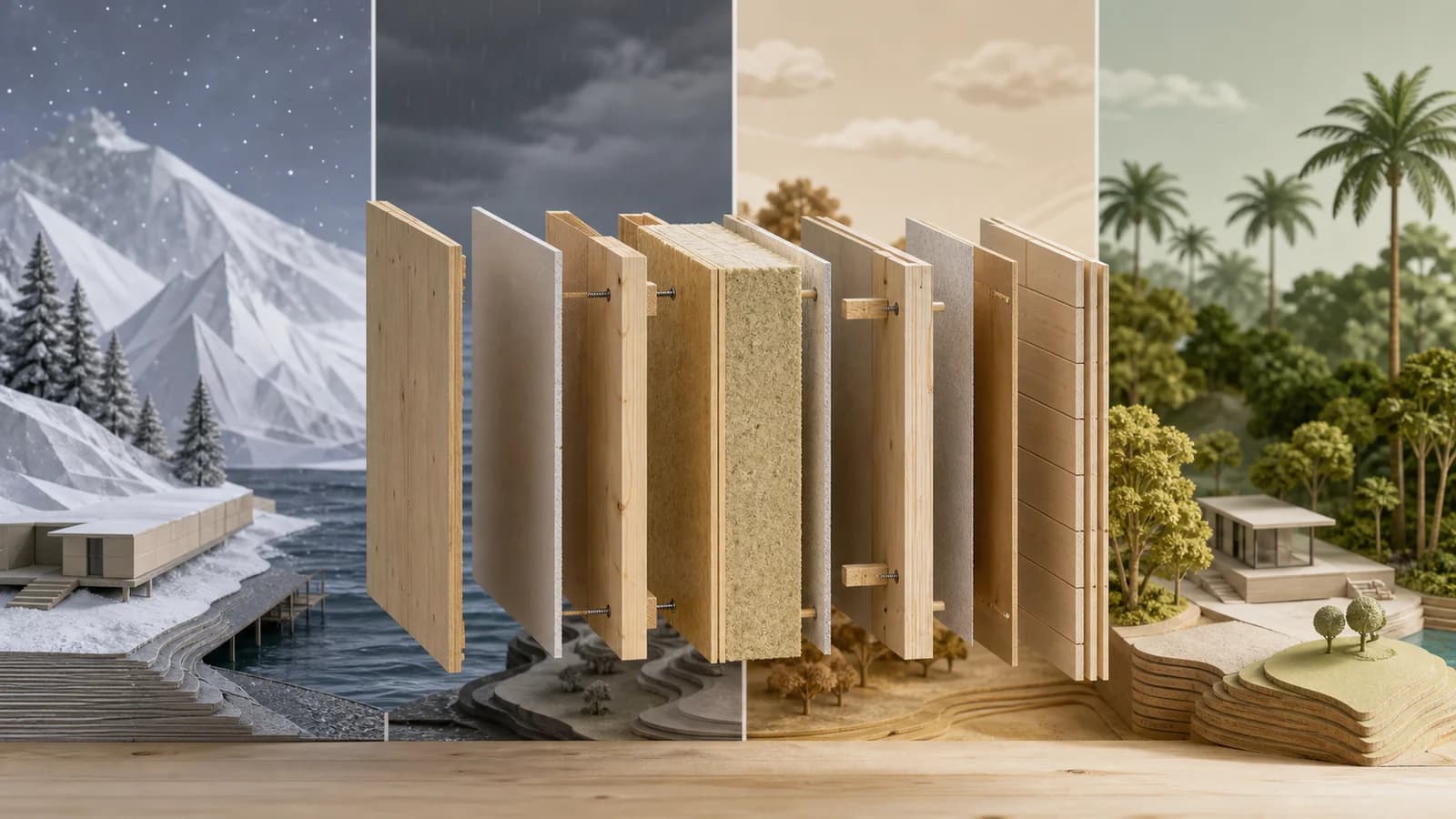
Finished boards and visible joinery demand consistent appearance and predictable large sections. Wood-fibre insulation can accept coarser, lower-grade fibres because its job is to create a low-density, air-trapping layer. The study discusses thermomechanical pulping, refiner mechanical pulping, steam explosion and mechanical refining as possible processing routes.
That flexibility makes insulation an interesting cascading use. A sound beam should still be reused as a beam when feasible; turning it immediately into fibre destroys more of its remaining value. But shorter pieces, damaged sheets and clean offcuts that fail reuse criteria may fit a fibre route better than combustion or disposal.
The gatekeeper is the incoming material
“Demolition wood” is not one uniform commodity. It may contain nails, coatings, adhesives, preservatives, gypsum, dirt, moisture or mixed species. Some engineered panels already contain binders. These differences affect worker safety, processing equipment, emissions, fire performance and the quality of the final insulation.
A viable system therefore begins with deconstruction, separation and traceability. Each incoming batch needs origin, product type, treatment history where known, contamination screening and moisture condition. Fasteners must be removed and incompatible fractions rejected. A circular claim without this gate can move a waste problem into a building envelope.
Energy efficiency needs new test data
Recovered wood fibre may be capable of trapping air like virgin fibre, but similarity is not a declared thermal value. Density distribution, fibre geometry, additives, settlement and moisture response influence conductivity. Recycled content could also change fire and biological durability.
The June study identifies feedstock availability and technical pathways; it does not certify a universal insulation product. Further testing is needed for thermal and physical performance, emissions, fire, ageing and full assembly behaviour. Pilot production must be followed by repeatable quality control, not only a successful first sample.
A comparison with the current waste route
Environmental value depends on the counterfactual. If local waste wood is currently landfilled or burned without useful energy recovery, insulation may extend carbon storage and displace virgin material. If clean members already have a strong reuse market, fibre production may be a lower-value option. Transport and processing energy also matter.
The right decision is therefore a hierarchy, not a slogan: preserve in place, reuse components, remanufacture, then recycle to fibre when higher uses fail and the material is safe. Only after those options should energy recovery or disposal enter.
The FrameVerk view
Digital material passports could make this route practical. A model can preserve product identity, treatments, dimensions and disassembly notes before renovation begins. At recovery, those records help route a member toward direct reuse, remanufacture, fibre or rejection.
For a recycled insulation product, the same model should carry recycled-content range, source class, thermal declaration, moisture limits, fire evidence and batch date. Circular construction becomes credible when the next use is designed, tested and traceable—not when waste simply receives a greener name.
Sources
- Clean Technologies and Environmental Policy, study published 17 June 2026 on construction and demolition wood for fibre insulation: https://doi.org/10.1007/s10098-026-03543-3
- Circular Construction in Regenerative Cities, “Processors & Remanufacturers,” April 2026, regional recovery context: https://circularconstructioncanada.ca/wp-content/uploads/2026/04/Processors-Remanufacturers-FINAL-EN.pdf
- Discover Sustainability, 2026 research on circular construction-material pathways and implementation limits: https://link.springer.com/article/10.1007/s43615-026-00801-w