Can Phase-Change Timber Cut Energy Demand? New CLT Tests Say Up to 11.8%
Researchers embedded a phase-change material inside timber and modelled how the modified CLT could steady temperatures and reduce annual demand.
A study posted online in June 2026 explores an unusual way to give cross-laminated timber more thermal inertia: impregnating wood with a phase-change material before placing it in the core of a CLT panel. Laboratory measurements and building simulation indicate modelled annual energy-demand reductions of up to 11.76% for the tested configurations.
What phase-change material does
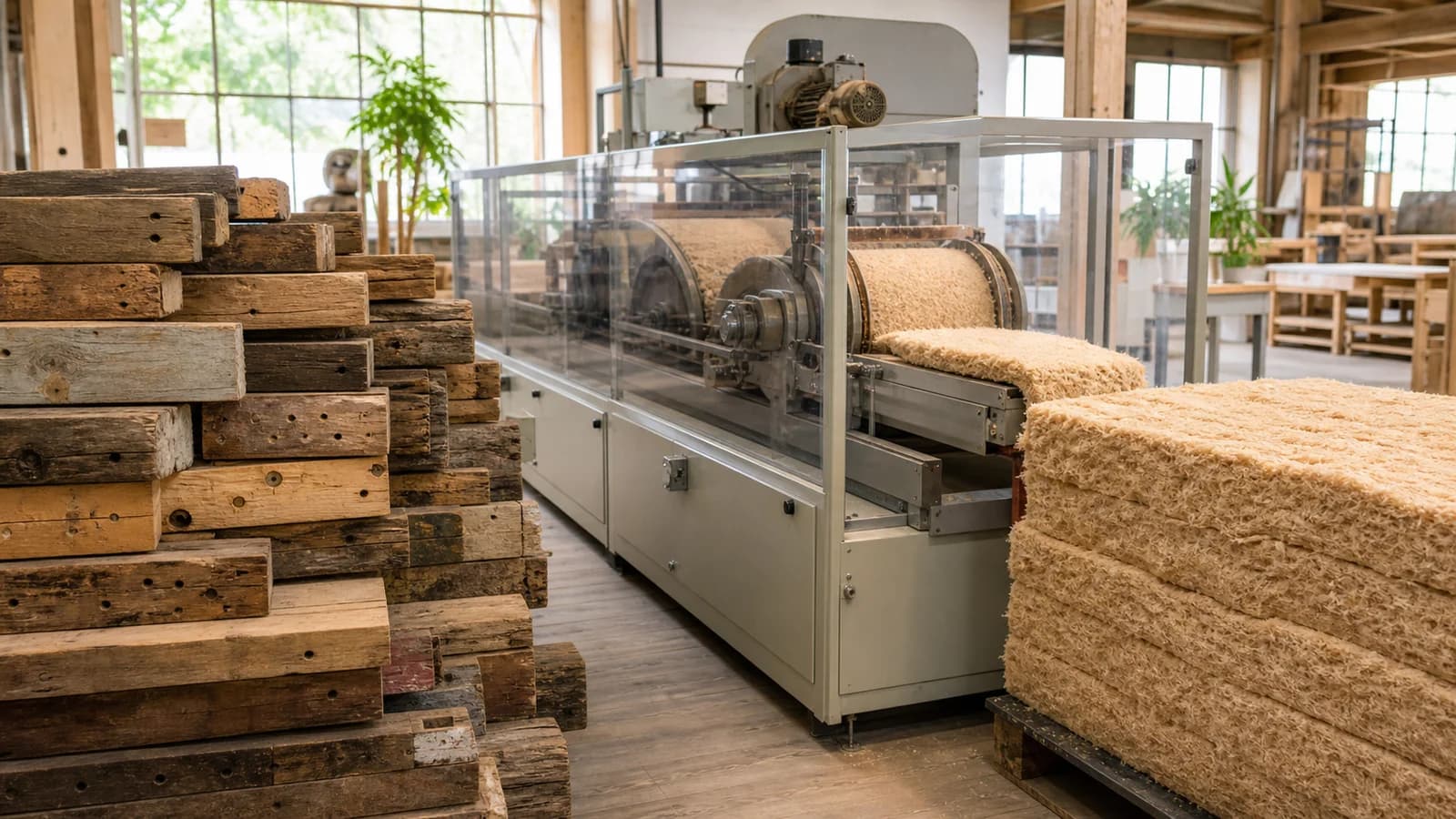
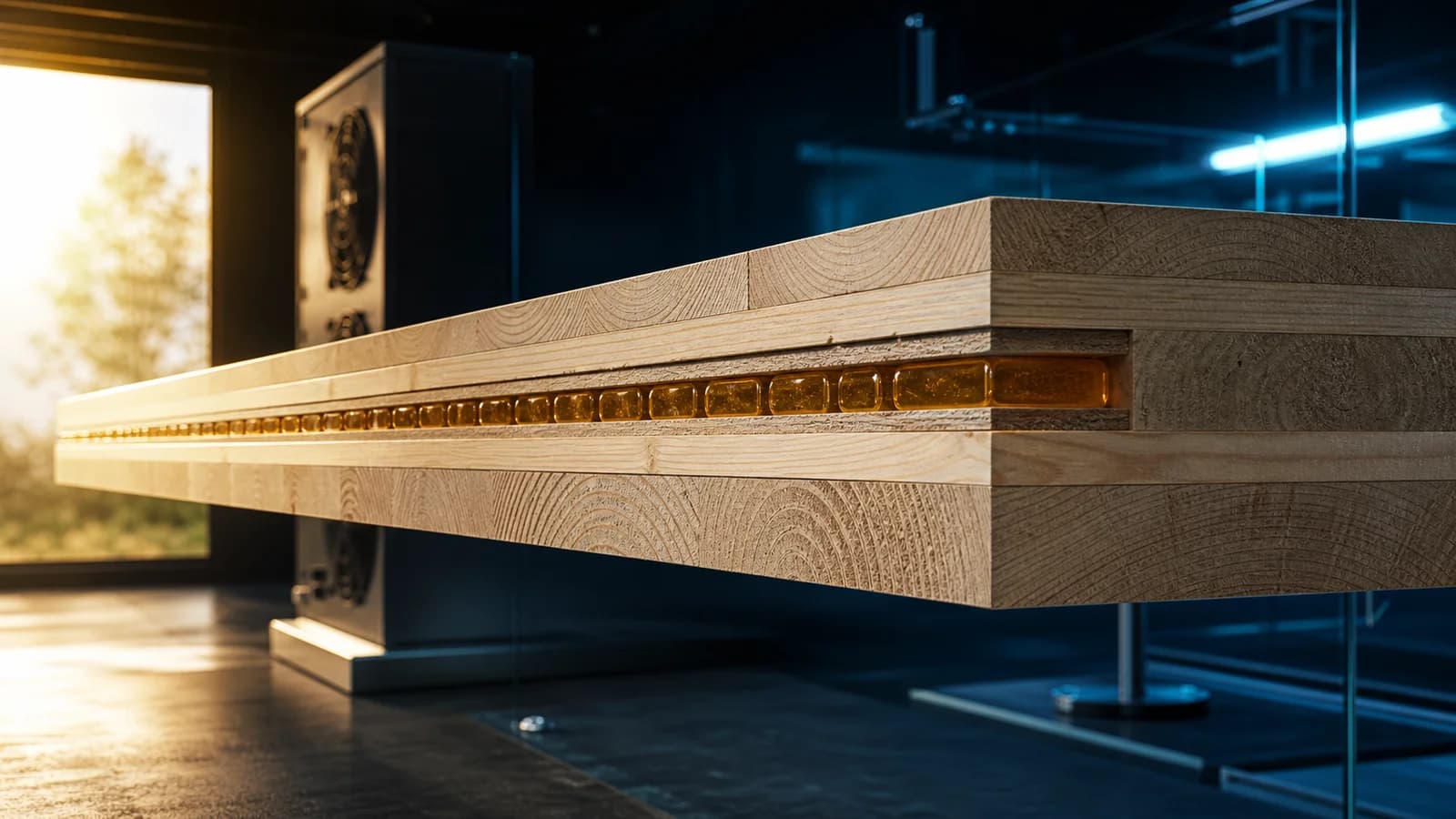
A phase-change material absorbs or releases latent heat while moving between solid and liquid states near a chosen temperature. The study used paraffin-based n-heptadecane, with a transition around 22.5°C. Instead of adding a separate board, the researchers introduced the material into the porous wood by vacuum impregnation.
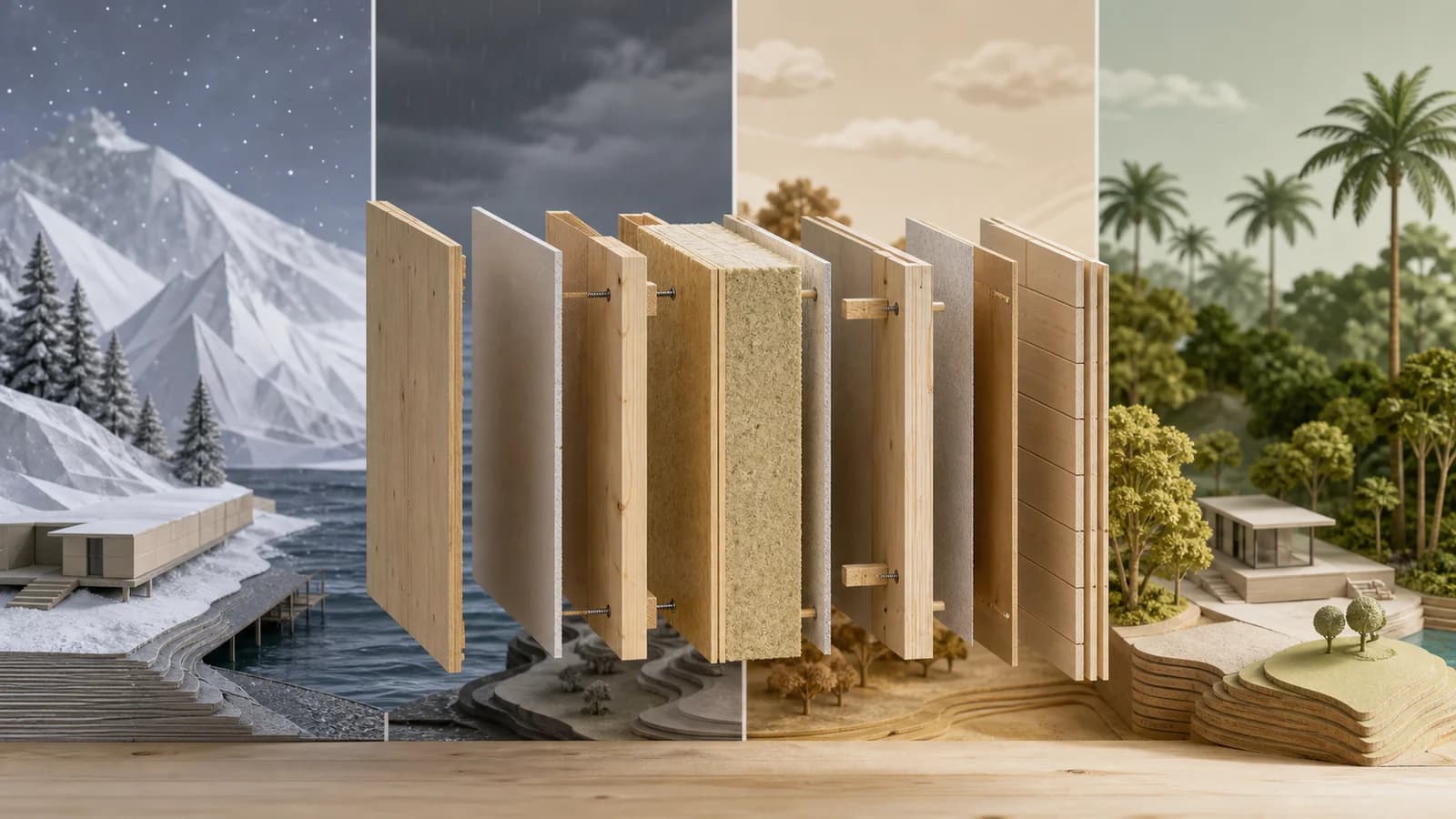
After drying, the modified wood was used in CLT core layers. The paper reports thermal conductivity close to conventional CLT, around 0.126 W/(m·K), while specific heat near the transition increased by 44.21%. In simple terms, the panel could temporarily absorb more heat near room temperature without becoming a fundamentally different insulator.
What the simulations found
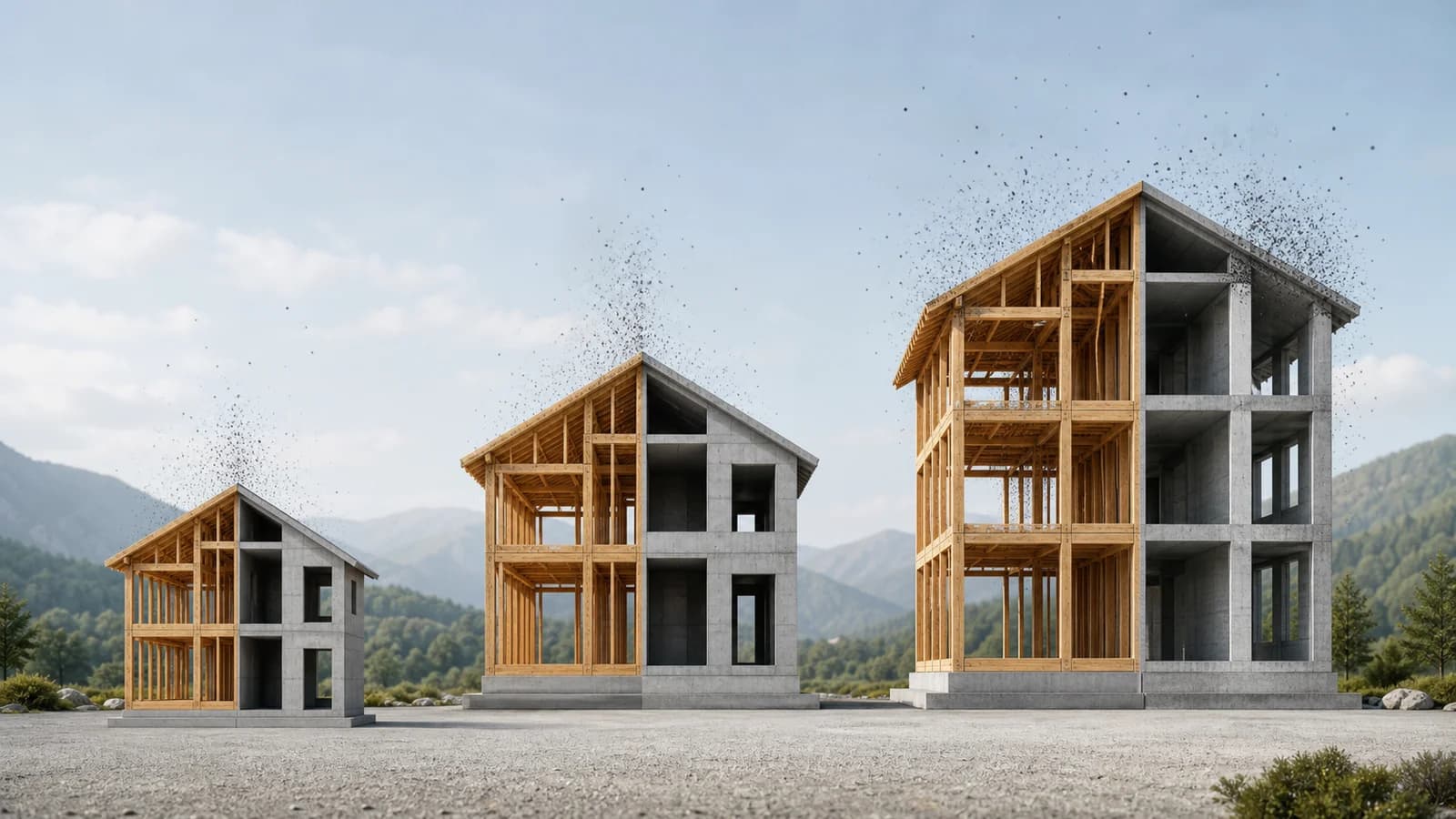
Building simulations tested several panel thicknesses and assemblies. Replacing standard walls with 125 mm PCM-integrated CLT produced the largest reported annual reduction within the direct CLT comparison, up to 11.76%. A 150 mm panel delivered the greatest total reduction against the masonry baseline used in the study.
These are modelled results, not measured savings from occupied buildings. Weather, orientation, internal gains, control settings and the amount and location of phase-change material influence the outcome. A transition temperature useful in one climate or building type may be poorly matched to another.
Thermal mass is not insulation
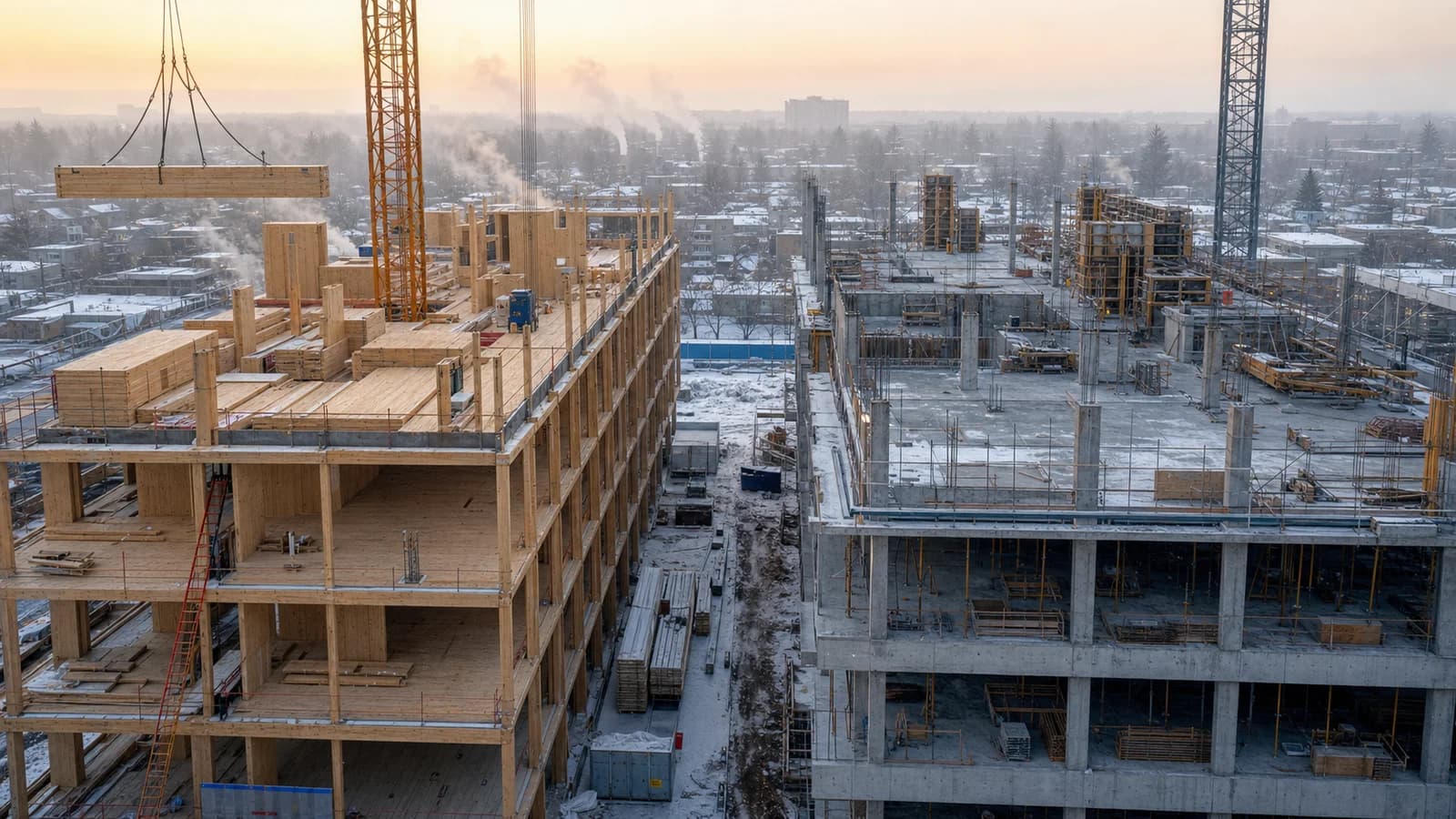
The research addresses a real limitation in lightweight buildings: indoor temperature can change quickly when external conditions or heating stop. Phase-change storage may flatten short peaks and delay heat flow. It does not replace continuous insulation, airtightness, shading or efficient systems.
The distinction is important for designers. Thermal conductivity describes steady heat flow; heat capacity describes how much energy is needed to change temperature. A wall can have good insulation but little storage, or considerable storage with inadequate insulation. Both properties belong in the model.
Questions before scaling
The study reports encouraging laboratory retention after drying, but commercialization requires more evidence. Repeated cycling, leakage over decades, fire behaviour, adhesives, moisture response, machining, recycling and worker exposure all need product-specific assessment. The petroleum-derived PCM also carries manufacturing impacts that must be compared with operational savings.
Independent 2026 work on a nearly zero-energy timber house with bio-based phase-change material shows the broader research direction: calibrate models, share datasets and test passive storage as part of a complete envelope.
The FrameVerk view
Digital tools should not offer “PCM timber” as a magic material switch. They need temperature-dependent properties, climate files, occupancy schedules and exact layer locations. A designer should be able to compare standard CLT, a separate PCM layer and modified timber under the same assumptions.
The fabrication model must also retain material provenance. A modified core layer affects cutting, waste routing, fire documentation and end-of-life decisions. If those differences disappear from the bill of materials, the energy model and production model no longer describe the same building.
This June research is a promising experiment, not a ready-made universal specification. Its contribution is to show that timber’s thermal behaviour can be engineered as well as calculated—and that the claimed 11.8% remains a tested-study maximum, not a guaranteed saving.
Sources
- Applied Thermal Engineering, “Enhancing thermal performance of cross-laminated timber using phase change materials for energy efficient building envelopes,” online June 2026: https://www.sciencedirect.com/science/article/pii/S1359431126019964
- University of Liège repository, “Development of an Energy Performance Model for a Nearly Zero-Energy Timber House with Integrated Phase Change Materials,” 3 March 2026: https://orbi.uliege.be/handle/2268/342476
- ResearchGate bibliographic record, “Enhancing thermal performance of cross-laminated timber using phase change materials for energy efficient building envelopes,” June 2026: https://www.researchgate.net/publication/405934792_Enhancing_thermal_performance_of_cross-laminated_timber_using_phase_change_materials_for_energy_efficient_building_envelopes