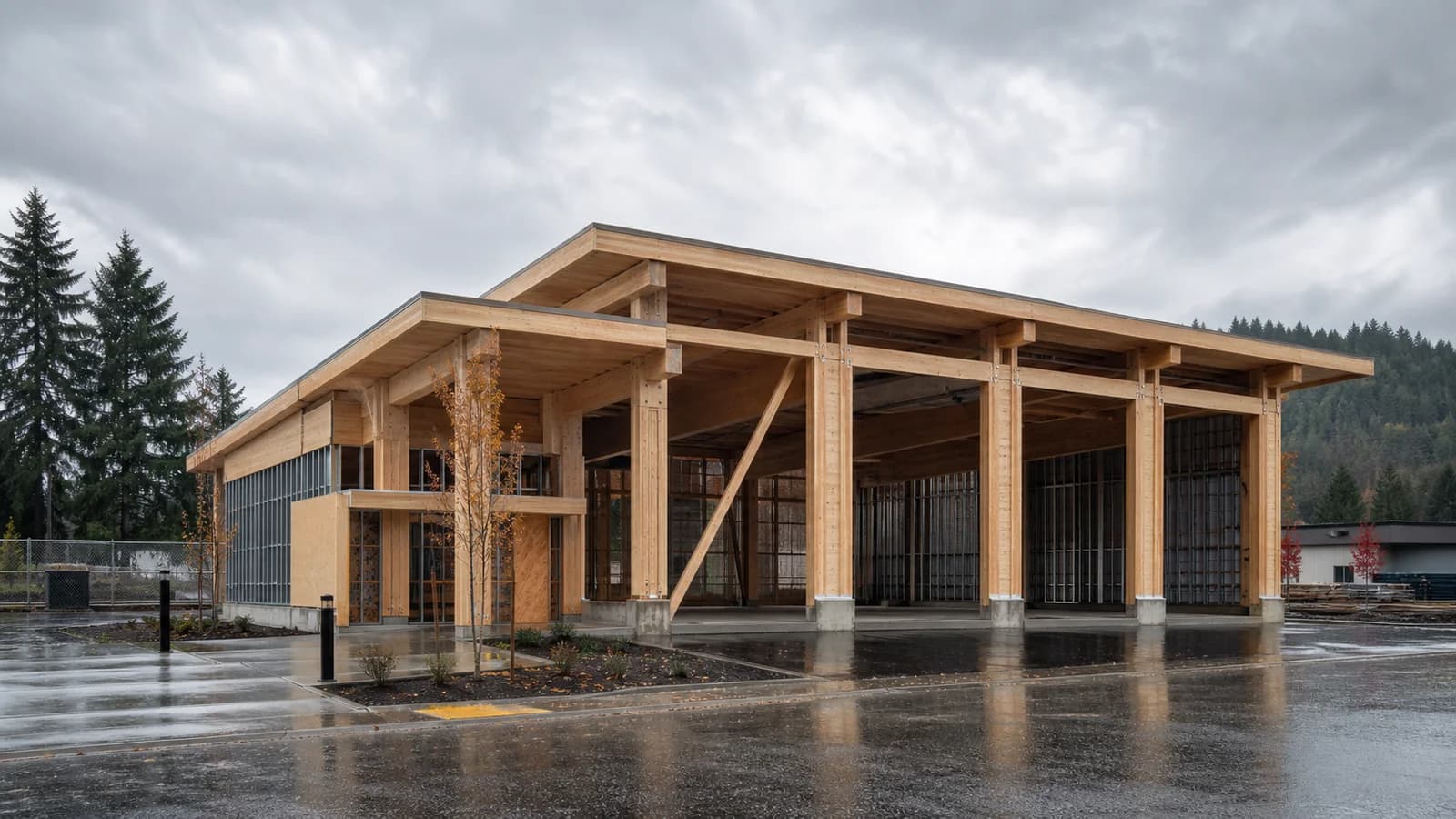
An 80-Year Cost Test Put Mass Timber $5 Million Ahead in Saanich
A municipal fire-station decision shows why whole-life cost can reverse the result of a first-price comparison.
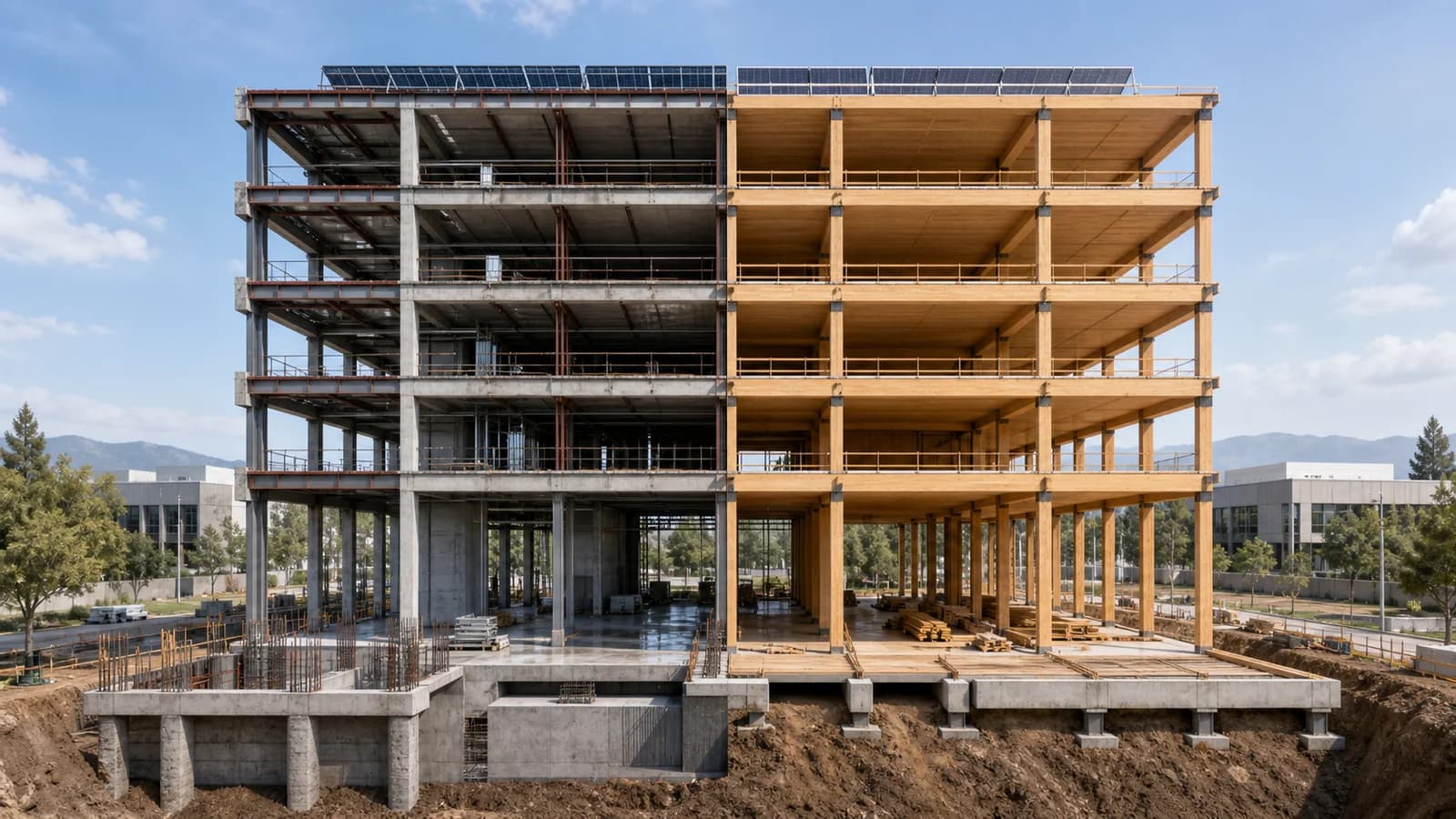
A British Columbia municipality selected a performance-led mass-timber design for Fire Station No. 2 after comparing options over an 80-year service period. Reporting published on 20 July 2026 says the chosen solution was calculated to be about C$5 million less expensive over that horizon. The case is a useful reminder: the cheapest tender line and the lowest-cost building are not always the same thing.
The comparison behind the decision
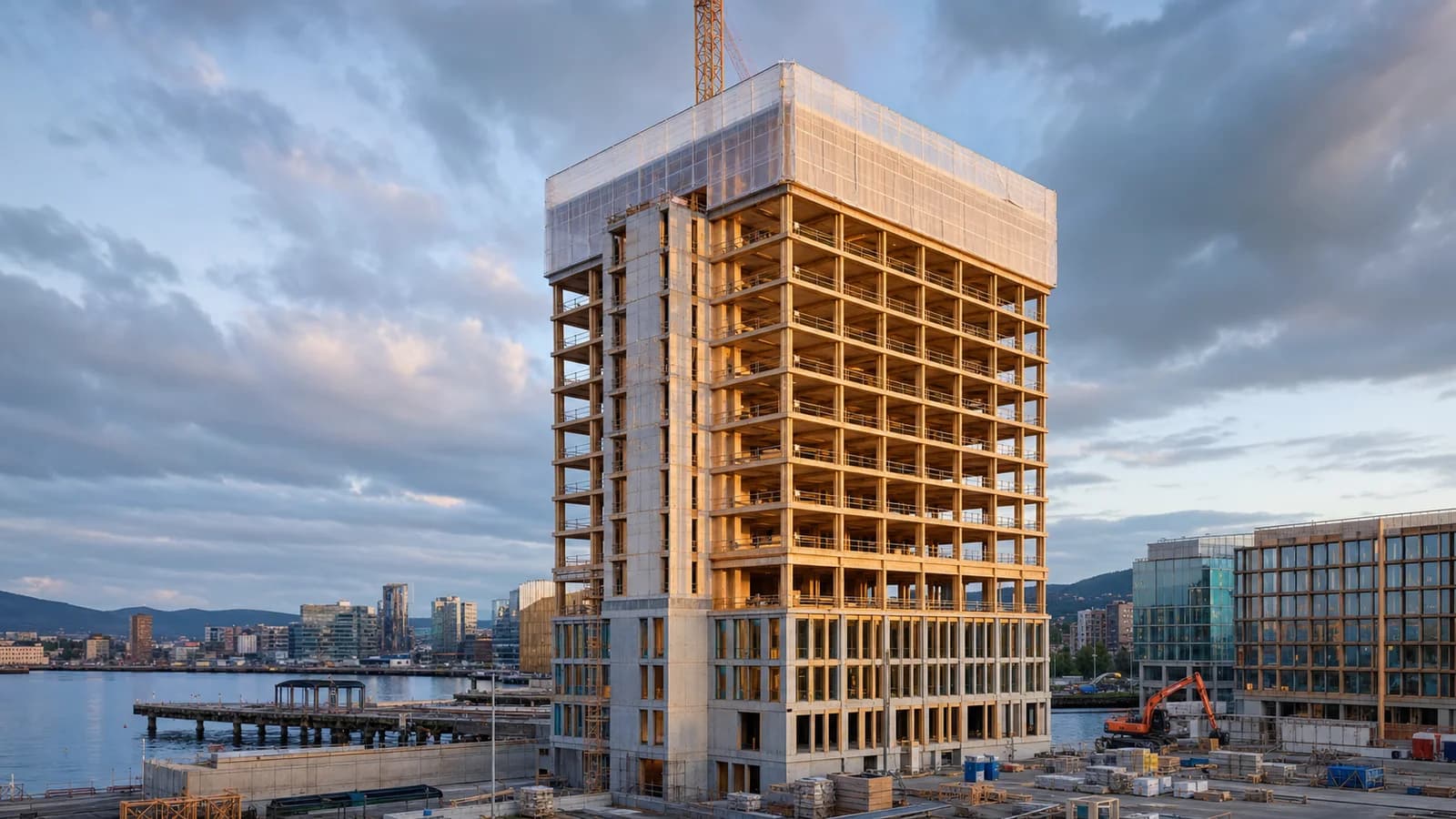
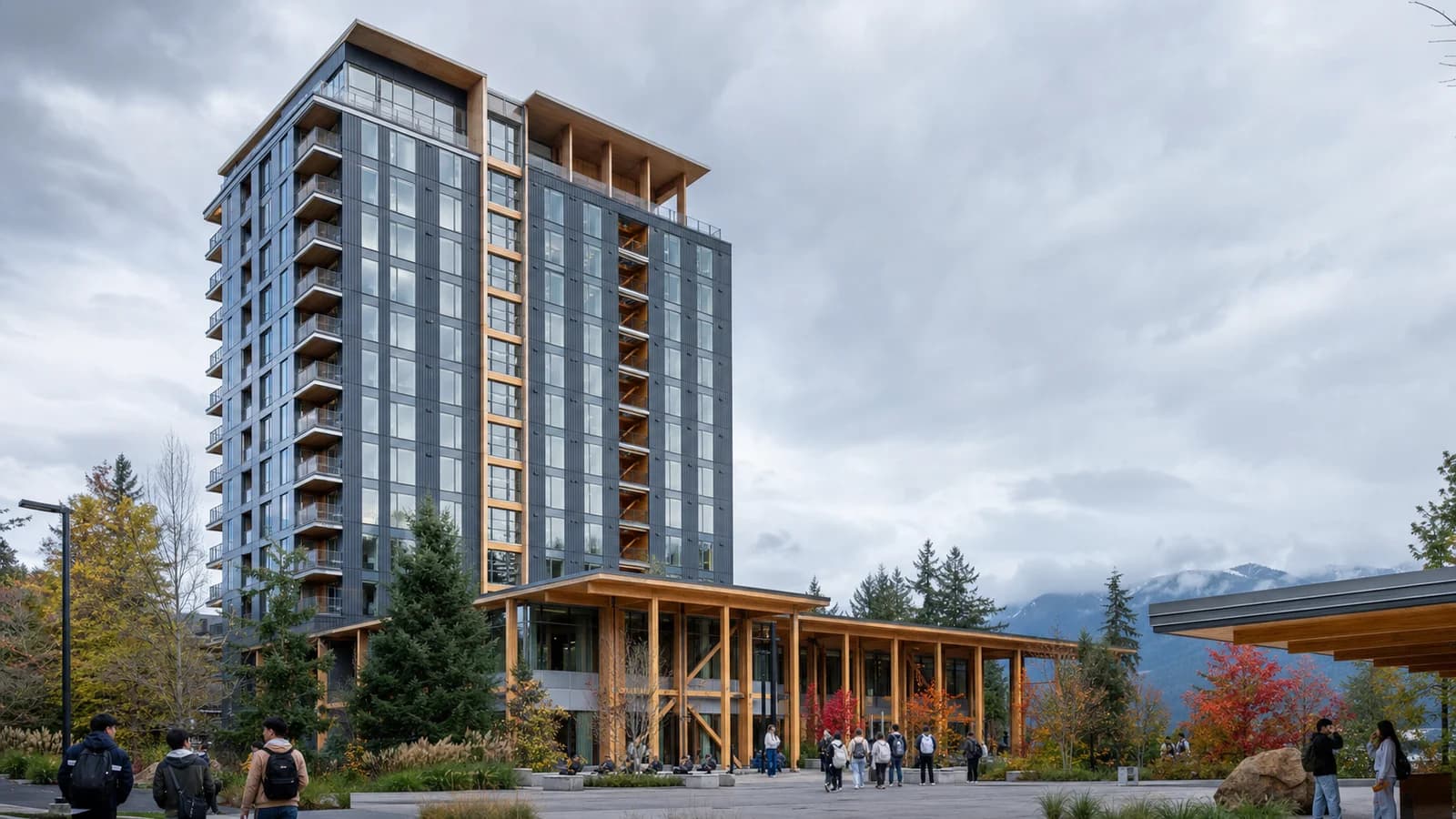
The public project replaces a much smaller 1978 station with a two-storey facility of roughly 22,000 square feet. Municipal documents identify mass timber as a central structural choice, alongside energy and environmental targets. The 2026 report says the pre-design team considered retaining the existing facility, choosing a lowest-initial-cost option, or pursuing a performance-based building.
The municipality selected the performance route after an 80-year life-cycle calculation. The reported difference of approximately C$5 million belongs to that analysis, with its maintenance, replacement, energy and financing assumptions. It is not simply a discount on the timber frame.
Why a long time horizon changes the answer
Public buildings often remain in service for decades. Over that period, operating energy, planned renewal, maintenance access, durability and resilience can outweigh a relatively small difference in construction cost. Discount rates and energy-price scenarios also affect the present value of future spending.
The Saanich example therefore matters less as a universal number than as a procurement method. If teams compare only capital cost, they optimize the invoice at hand. If they compare defined performance over a realistic service life, the design discussion expands to the envelope, systems, replacement cycles and operational data.
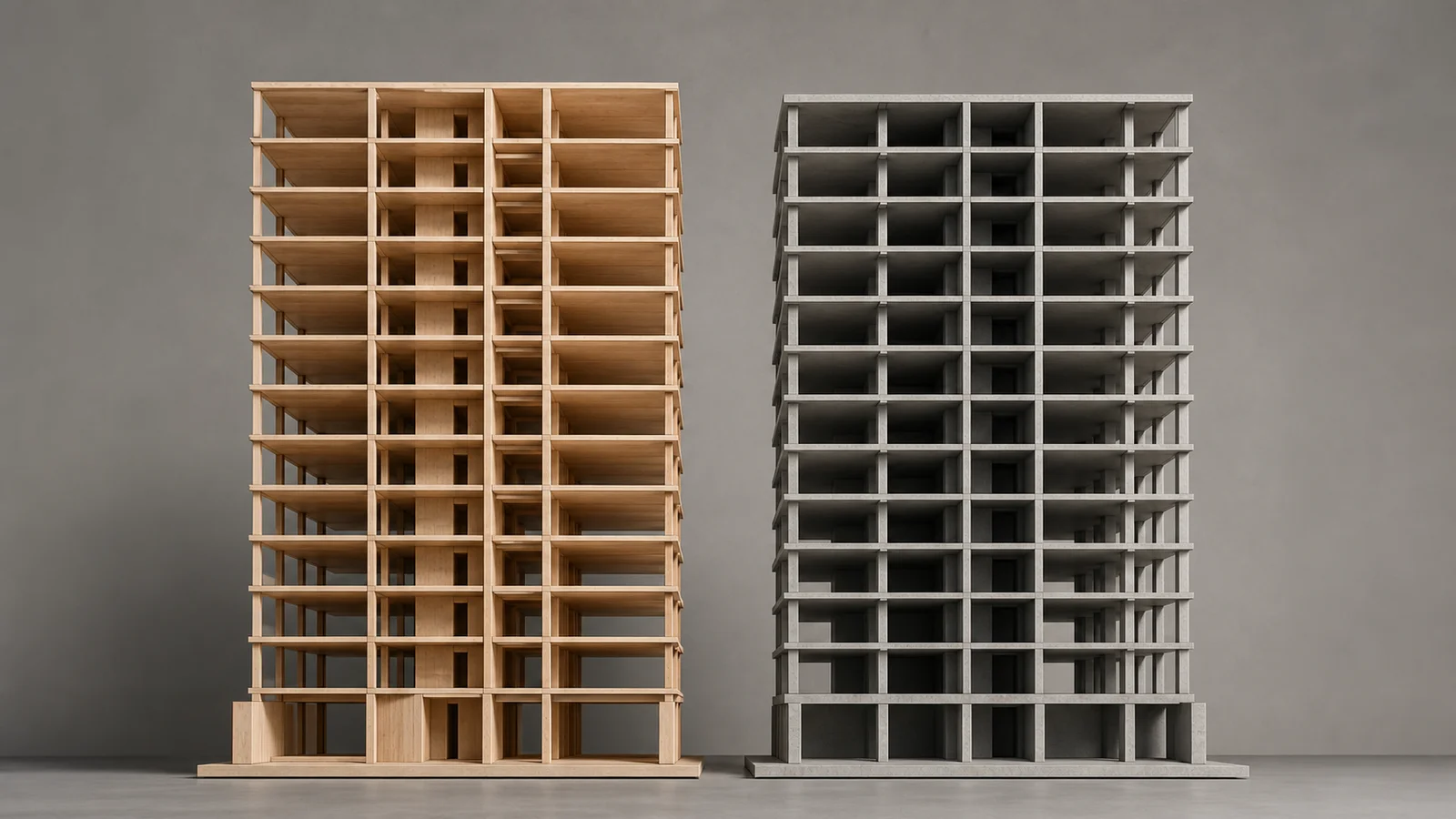
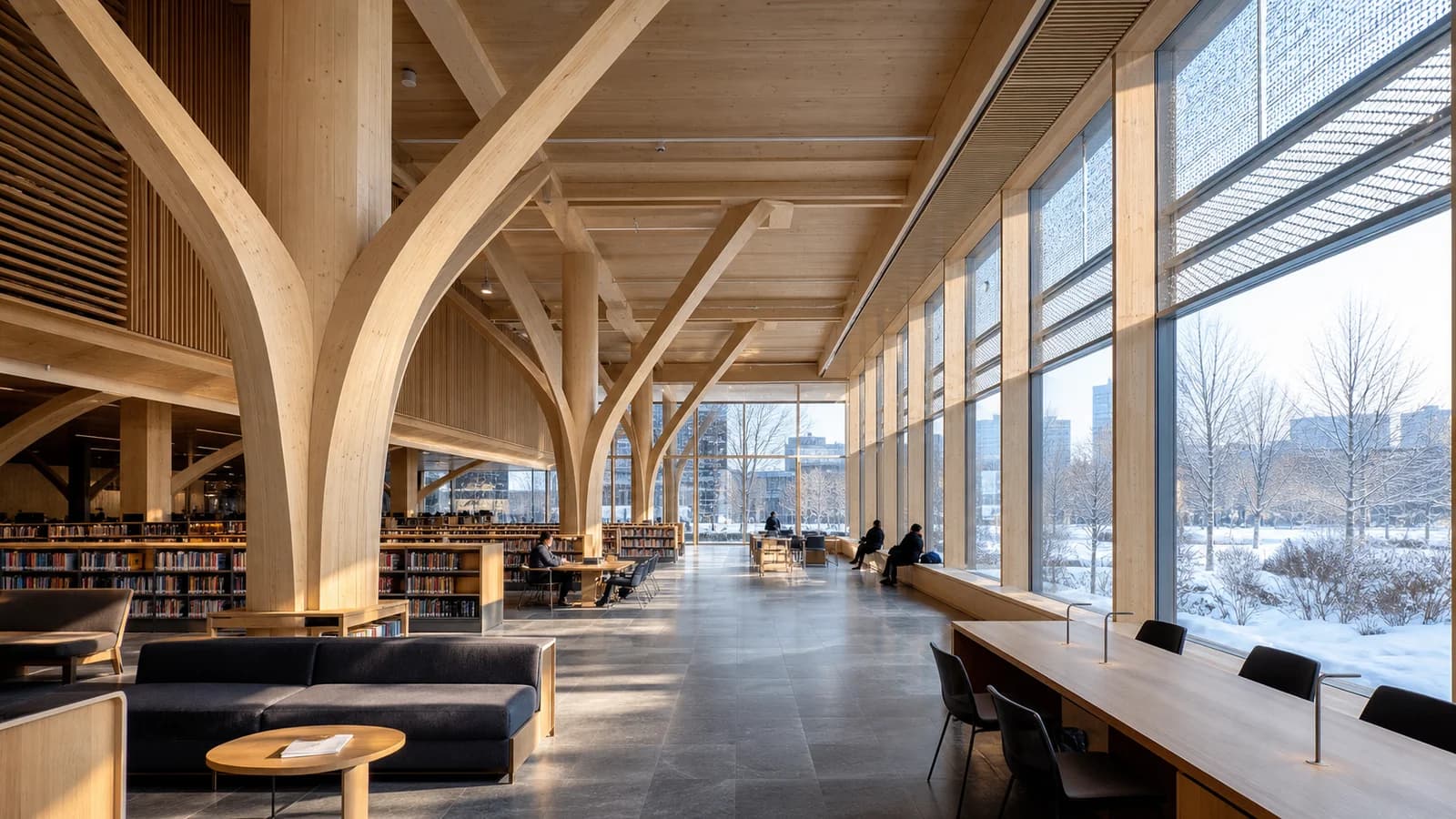
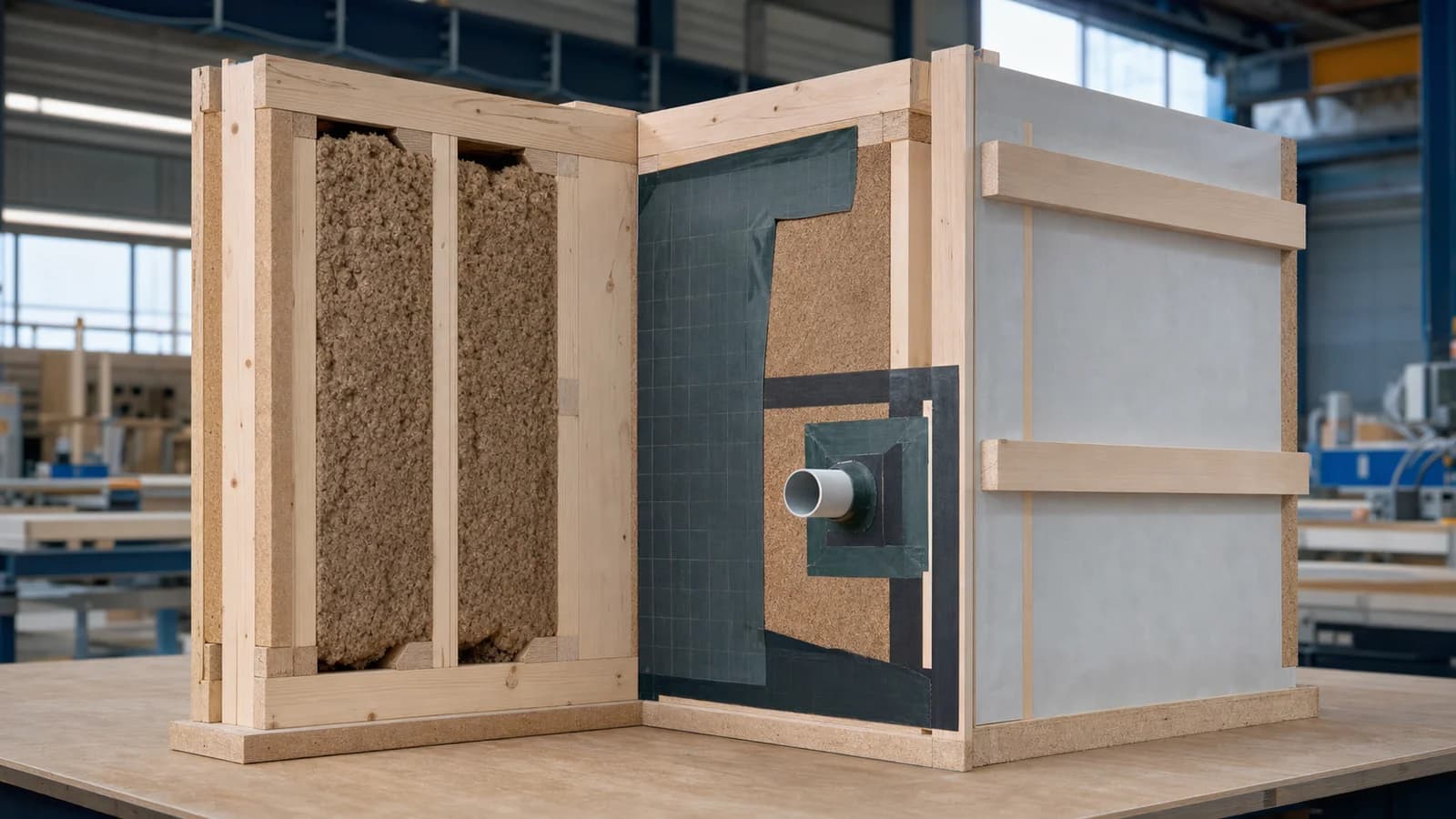
Mass timber can contribute to this equation through prefabrication, structural efficiency and lower embodied-carbon potential. It does not automatically deliver low energy use. Airtightness, insulation continuity, controls and commissioning still determine much of operational performance.
What the figure does not prove
The C$5 million result does not mean every mass-timber civic building will beat a conventional alternative by the same amount. The source describes one project, one service-life model and one set of local assumptions. The building is also still a live project, so long-term operating results are not yet available.
The responsible next step is post-occupancy evaluation. Actual energy, maintenance, indoor conditions and user feedback should be compared with the model after the station has operated through several seasons. That closes the loop between procurement promise and building performance.
The FrameVerk view
Whole-life comparison needs a connected information model. Structural quantities, envelope areas, equipment, replacement intervals and energy assumptions should not sit in separate spreadsheets that drift apart. When a wall build-up or structural grid changes, cost, carbon and maintenance scenarios should change with it.
For public clients, the most valuable dashboard may be the least glamorous one: a clear record of assumptions, versions and sensitivity ranges. An 80-year answer without an audit trail is only a large number. With traceable quantities and scenarios, it becomes a decision that future teams can test.
The model should also separate measured facts from forecasts. Capital cost can be tied to a dated estimate; energy, maintenance and replacement remain scenarios until operation produces evidence. Showing that distinction prevents a precise-looking life-cycle total from creating false certainty and makes later updates straightforward. That makes uncertainty visible before approval.
Saanich’s lesson is practical. Timber earned its place not through a material slogan, but through a broader definition of value.
Sources
- ConstructConnect Journal of Commerce, “Mass timber gains ground in B.C. as municipalities weigh cost and carbon for public projects,” 20 July 2026: https://canada.constructconnect.com/joc/news/government/2026/07/mass-timber-gains-ground-in-b-c-as-municipalities-weigh-cost-and-carbon-for-public-projects
- District of Saanich, “2026 Combined Capital Works Book,” 2026: https://www.saanich.ca/assets/Local~Government/Documents/Engineering/2026%20Combined%20Capital%20Works%20Book.pdf
- District of Saanich, “Development of Fire Station #2 reaches important milestone,” 2025: https://www.saanich.ca/EN/main/news-events/news-archives/2025-news/development-of-fire-station-2-reaches-important-milestone.html