Can You Cut That I-Joist? A Beginner’s Guide to Service Openings
July 2026 tests show why the shape, size and location of service openings change the capacity and failure mode of wood I-joists.
Can You Cut That I-Joist?
An I-joist looks as if its thin web was made for pipes and ducts. It often is—but only inside verified limits. Research published on 11 July 2026 tested rectangular web openings and found that size and location substantially changed load capacity, deflection and failure mechanisms.
How an I-joist works
The top and bottom flanges carry much of the bending tension and compression. The web keeps them apart and transfers shear. Cutting a flange is therefore normally prohibited unless a specifically engineered repair says otherwise. Web openings can be permitted because demand varies along the span, but “web” does not mean “cut anywhere.”
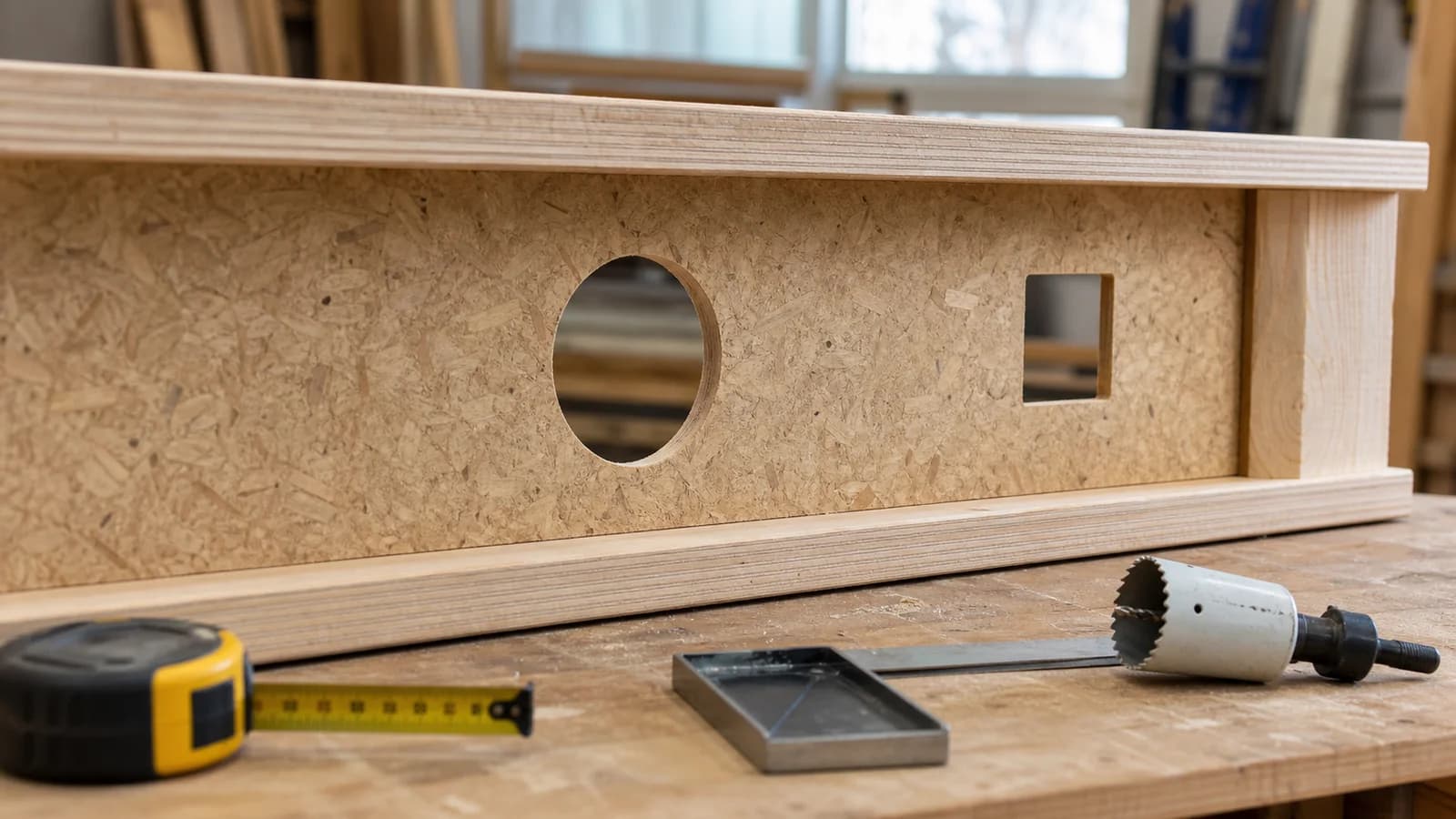
Openings near bearings or concentrated loads can enter high-shear zones. Large or poorly proportioned holes remove more web and concentrate stress at corners. The 2026 experiments found rectangular openings more damaging than comparable circular ones, and showed that location is as important as size.
The beginner’s rule
Identify the exact joist manufacturer, series, depth, span and loading. Use that product’s current hole chart or calculator. It normally defines maximum round and rectangular openings, distance from supports, spacing between holes and protected zones. If the proposed opening falls outside it, stop and obtain a written engineered solution.
Do not copy a rule from another brand or a generic internet diagram. Engineered joists have product-specific capacities. Do not cut, notch or drill the flanges. Do not enlarge an existing opening because the duct is “only slightly bigger.”
Coordinate services before the saw
Model ducts, drains and major cable routes with the joist layout. Reserve openings before fabrication where possible. Check falls for drainage, insulation, fire protection, ceiling zones and access. Moving one duct may avoid dozens of repairs.
If a site cut is wrong, keep the area unloaded and visible. Record the joist identity, opening dimensions, position from supports and nearby holes, then ask the manufacturer or structural engineer for a repair. A plywood patch invented on site is not evidence.
Fire and handover
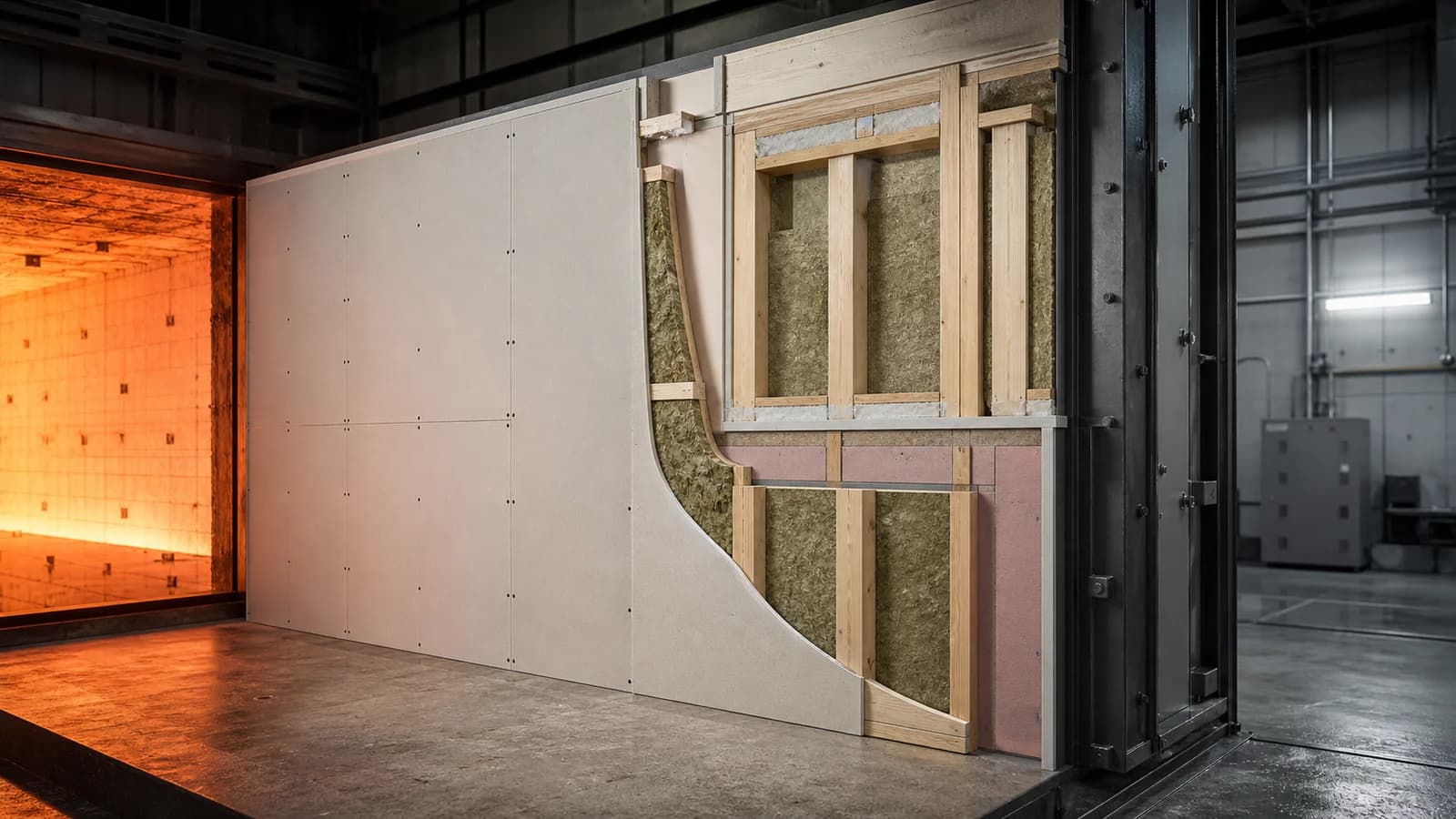
I-joists may be part of a fire-rated floor or roof. Openings, services and repairs must also preserve the tested protection and fire stopping. The structural hole chart does not replace the fire strategy.
At handover, retain joist layouts, approved openings, repairs and photographs. Later renovations need this record because a ceiling can hide both the engineered product and the limits that protect it.
The FrameVerk view
A useful digital joist knows its series, span, bearings and no-hole zones. Service openings should be checked against product rules and collisions before a cut reaches site. When the geometry is outside verified limits, software should fail closed and request engineering—not draw a reassuring circle.
A five-minute check before cutting
First, read the stamp on the joist and confirm that the drawing refers to the same product. Measure the opening in both directions, its distance from the nearest bearing and the clear distance to every other opening. Check both sides: a pipe can hide a previous hole.
Next, mark the permitted outline on the web without touching either flange. A round hole should be made with the specified tool and a rectangular opening needs the corner radius required by the product guidance. Sharp internal corners amplify local stress.
Finally, photograph the marked location and the completed opening, then update the coordinated service model. This record connects design intent to site reality and gives a future installer a clear answer instead of inviting another exploratory cut through a concealed engineered member.
If the published chart, the construction drawing and the actual joist disagree, do not choose the most convenient answer. Record the conflict and have the responsible designer resolve it before work resumes.
Sources
- Construction and Building Materials, “Wood I-joists with rectangular openings: The influence of opening size and location on load-carrying capacity and failure mechanisms,” 11 July 2026: https://www.sciencedirect.com/science/article/pii/S0950061826016557
- Wood I-Joist Manufacturers Association, “Policies & Publications”: https://i-joist.org/policies-publications-3-2/
- Wood I-Joist Manufacturers Association, “Establishing Shear Capacities for Prefabricated Wood I-Joists with Holes”: https://i-joist.org/wp-content/uploads/2018/05/shear-with-holes.pdf