Eight Buildings, One Material: The 2026 Wood in Architecture Awards Show How Broad Timber Has Become
WoodWorks’ 2026 winners range from an AI building and a radio station to schools, headquarters and workforce housing—evidence that timber is moving beyond a single architectural niche.
The 2026 Wood in Architecture Awards do not present one neat answer to the question “What is a timber building?” That may be their most useful result.
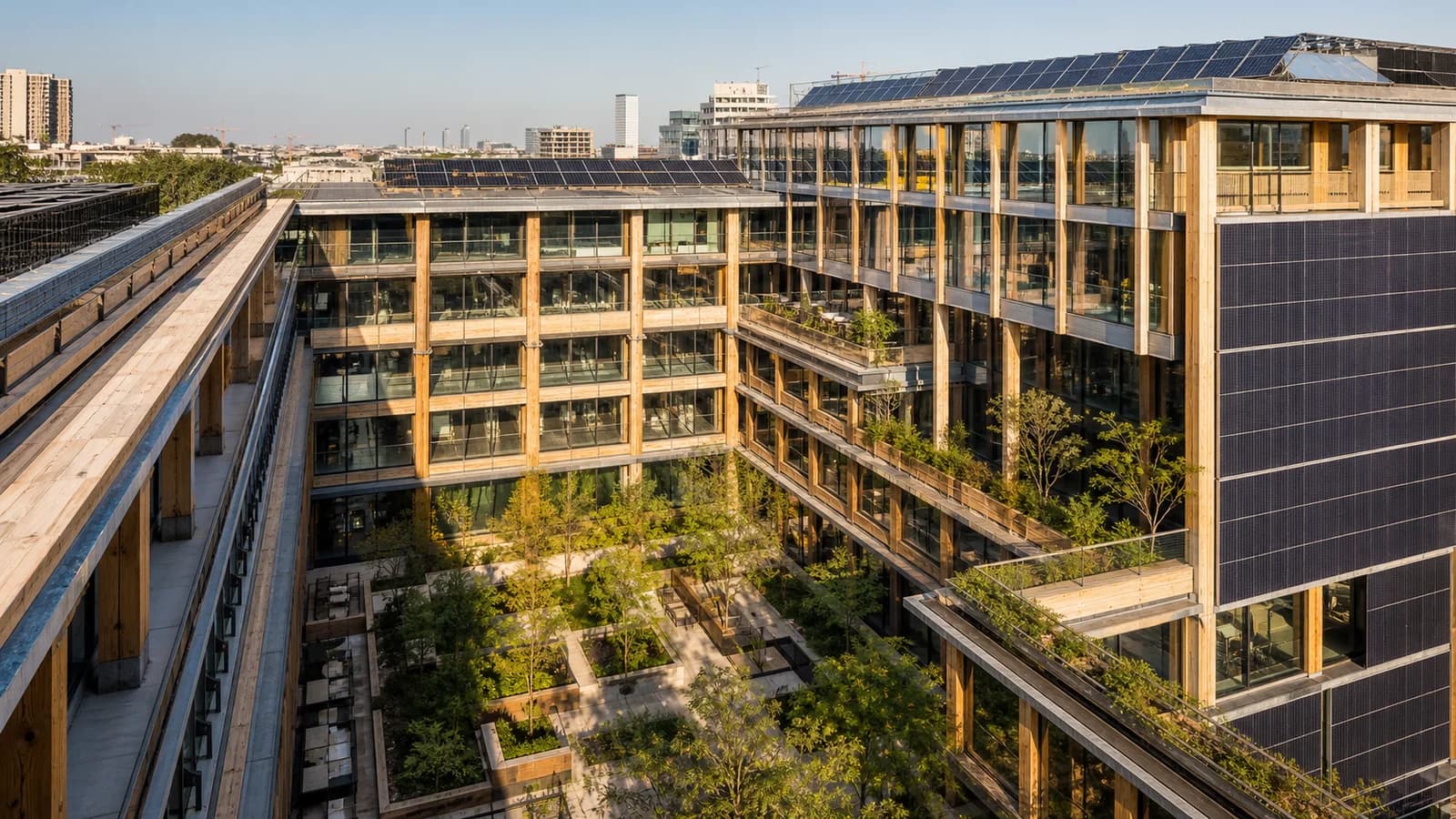
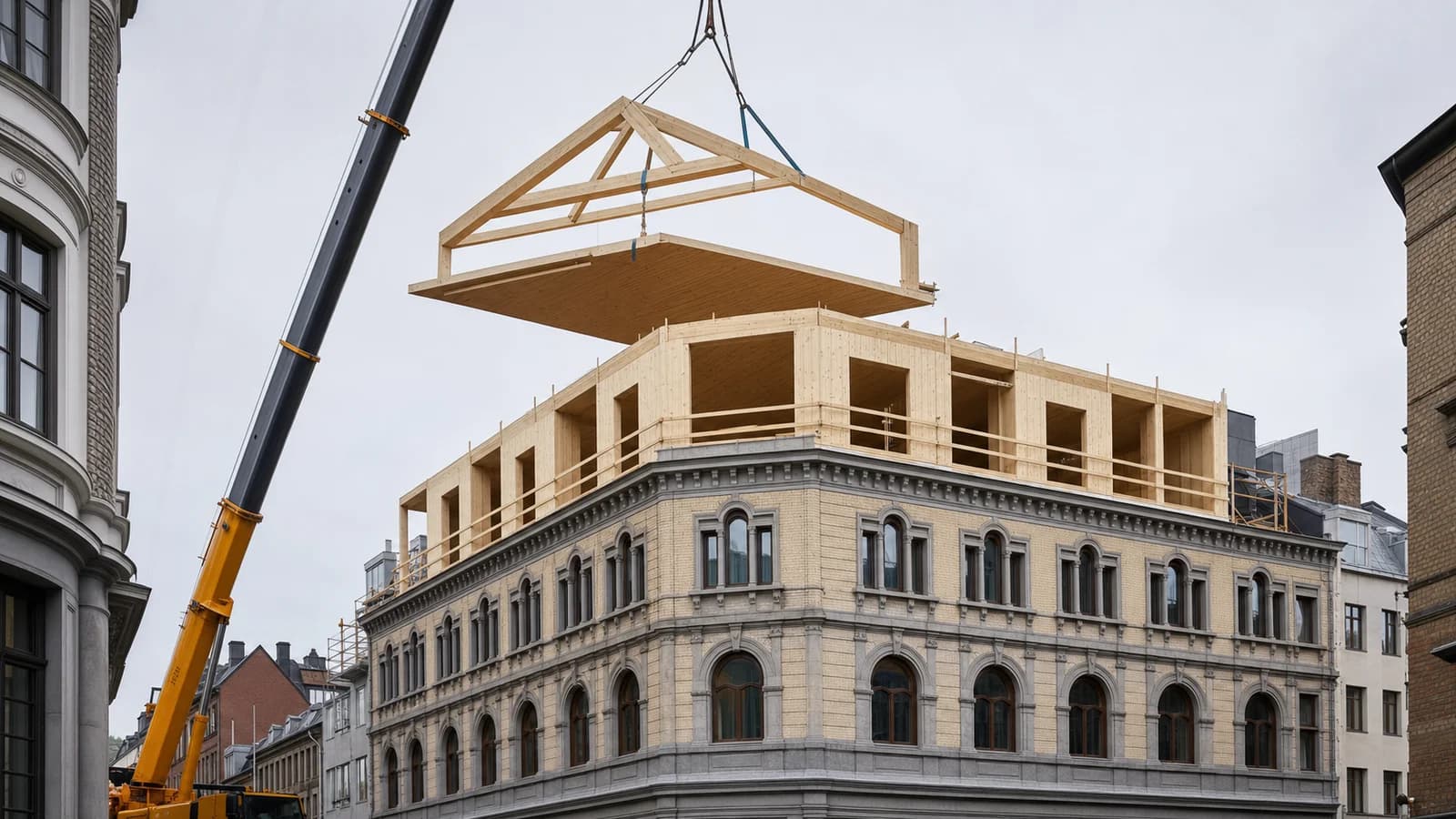
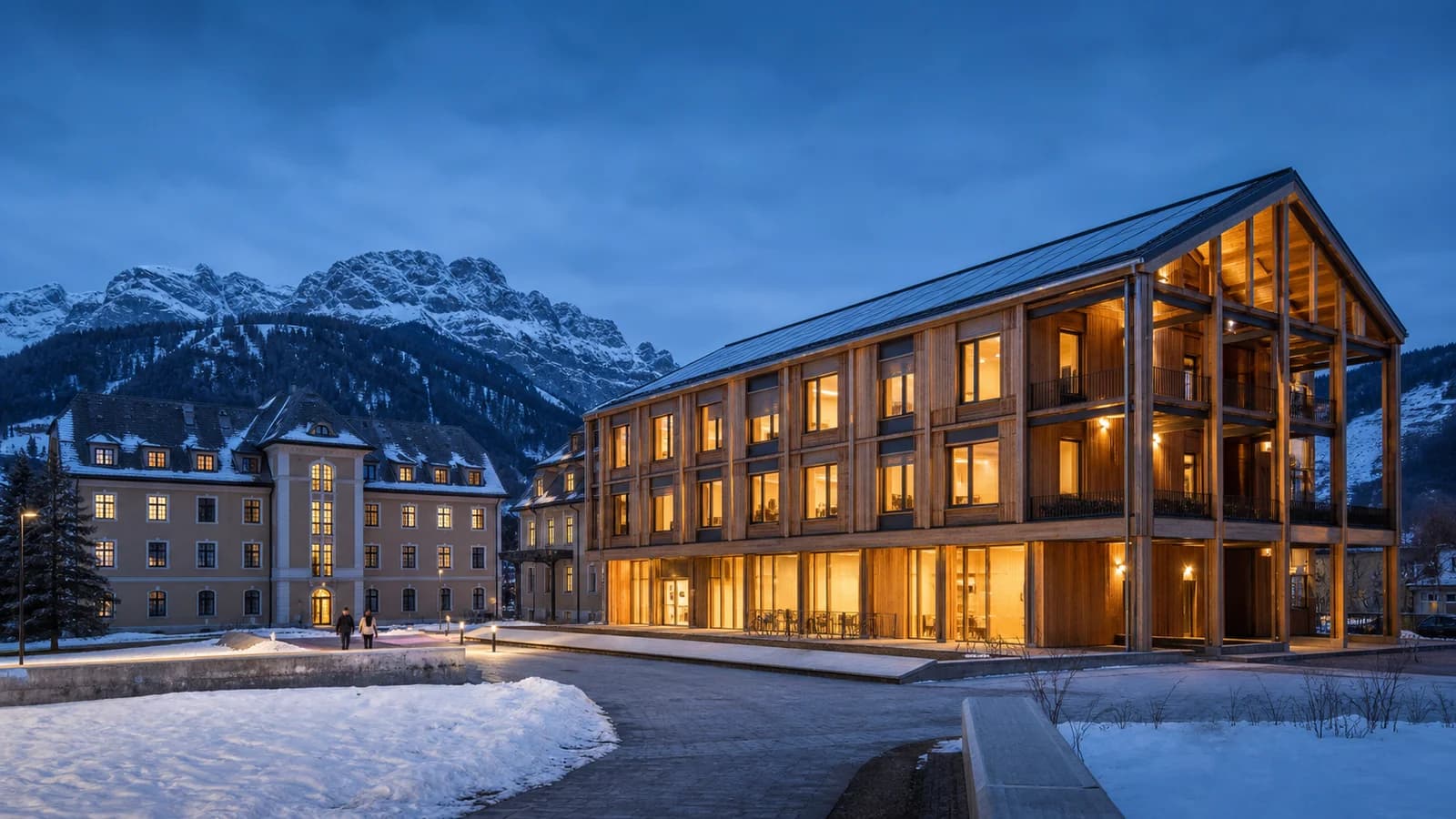
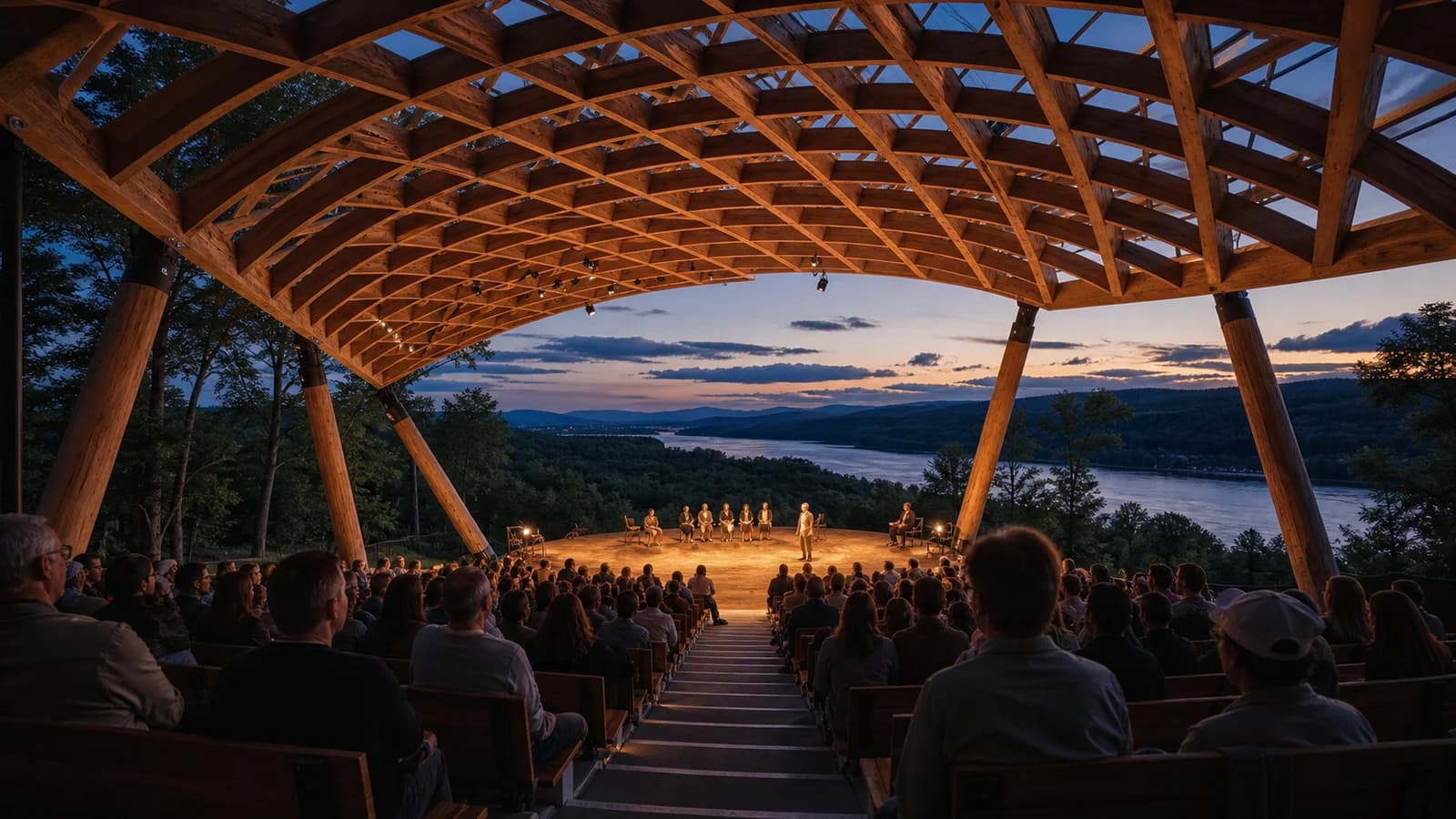
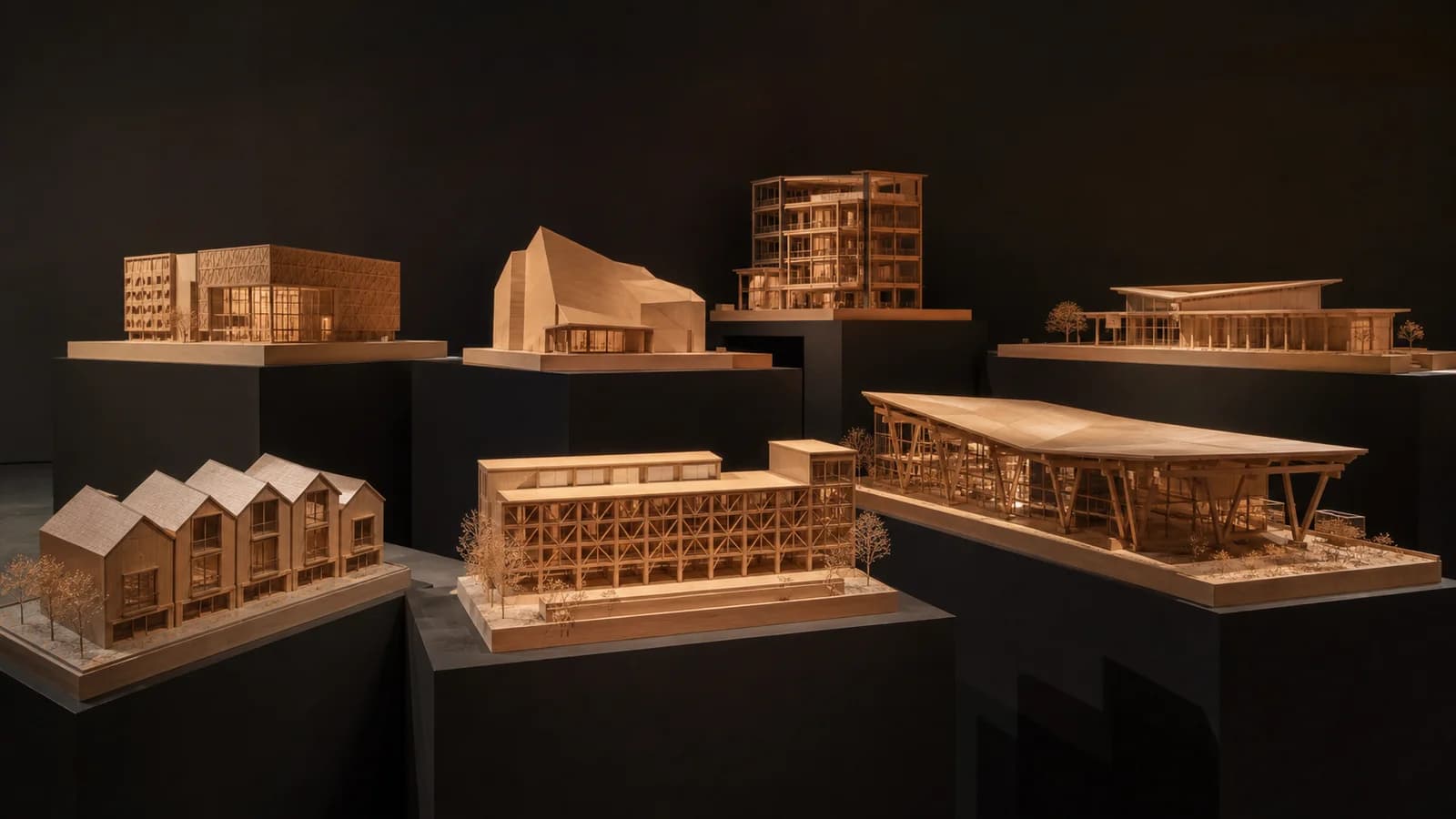
Announced by WoodWorks on 10 June during the AIA26 conference in San Diego, the eight winners include a data-science and artificial-intelligence building, a public-radio headquarters, a performing-arts centre, modular workforce housing, two educational projects, a sanitation-district headquarters and a global corporate campus. The structural palette spans mass timber, heavy timber, light-frame and hybrid systems.
In other words, wood did not win one category and go home early. It stayed for the whole evening.
Eight very different briefs
The winners are Amy Gutmann Hall at the University of Pennsylvania; Cincinnati Public Radio; the Doris Duke Theatre at Jacob’s Pillow in Massachusetts; the Knight Building in Big Sky, Montana; the Kreher Preserve & Nature Center Environmental Education Building at Auburn University; Mercer Middle School in Seattle; the Orange County Sanitation District Headquarters in California; and Under Armour’s Global Headquarters in Baltimore.
That list matters because it resists the familiar idea that engineered timber belongs mainly in boutique offices or photogenic rural retreats. These projects address laboratories and data science, broadcasting, performance, education, public infrastructure, housing and corporate workplaces.
WoodWorks says an independent jury assessed design excellence, innovative use of wood, sustainability and resilience, and market impact. Those criteria are broader than appearance. A handsome soffit is not enough; the material must help the building work.
The quiet technical story behind the photographs
The award announcement highlights high-performance envelopes, acoustic and vibration solutions, and hybrid structural systems. Those are precisely the subjects that determine whether timber travels from concept render to completed building.
A radio station and theatre need acoustic control. A school needs durability, robust circulation and predictable fire performance. A data-science building may require tightly coordinated services and floor behaviour. A large headquarters has programme, procurement and repetition at a different scale from a small civic pavilion.
The awards therefore function as a compact market survey. They show timber teams solving ordinary building problems, not only producing extraordinary wooden rooms.
What designers can learn
No award proves that wood is automatically the correct material for every project. Nor does a prize disclose the complete cost plan, procurement risk or operational performance of a building. Awards are curated evidence, not universal specifications.
They can, however, reveal repeatable patterns. Successful teams choose the structural system early, coordinate services with the timber grid, treat moisture and fire design as core engineering tasks, and use hybrid materials where they make sense. The winning set also shows that light-frame and heavy timber remain relevant beside CLT and glulam.
For digital timber workflows, the diversity is a reminder that “timber software” cannot mean one standard panel dropped into every brief. Models need to describe assemblies, interfaces, tolerances, penetrations, fasteners, sequencing and fabrication information. The glamorous final photograph depends on a large quantity of unglamorous data being correct.
A sign of confidence, not a victory lap
WoodWorks reported a strong volume of submissions and described it as evidence of expanding confidence. Architectural Record’s coverage likewise emphasised the geographic and typological spread of the winners.
Confidence is valuable, but the next stage is consistency: more projects delivered with reliable budgets, verified performance and supply chains that can scale. The 2026 winners suggest the industry is getting better at translating timber’s environmental and spatial appeal into buildings with demanding real-world programmes.
The message is less “wood can do anything” than “wood teams are learning to do many things well.” That is a better headline—and a much stronger foundation for the market.
Sources: WoodWorks, “Announcing the 2026 Wood in Architecture Awards,” 10 June 2026: https://www.woodworks.org/2026-wood-in-architecture-awards-announcement/
Architectural Record, “WoodWorks Announces Recipients of 2026 Wood in Architecture Award”: https://www.architecturalrecord.com/articles/18255-woodworks-announces-recipients-of-2026-wood-in-architecture-award
American Institute of Architects, “AIA Awards 2026 Winners Announced in 10 Project Categories,” 10 June 2026: https://www.aia.org/about-aia/press/aia-awards-2026-winners-announced-10-project-categories