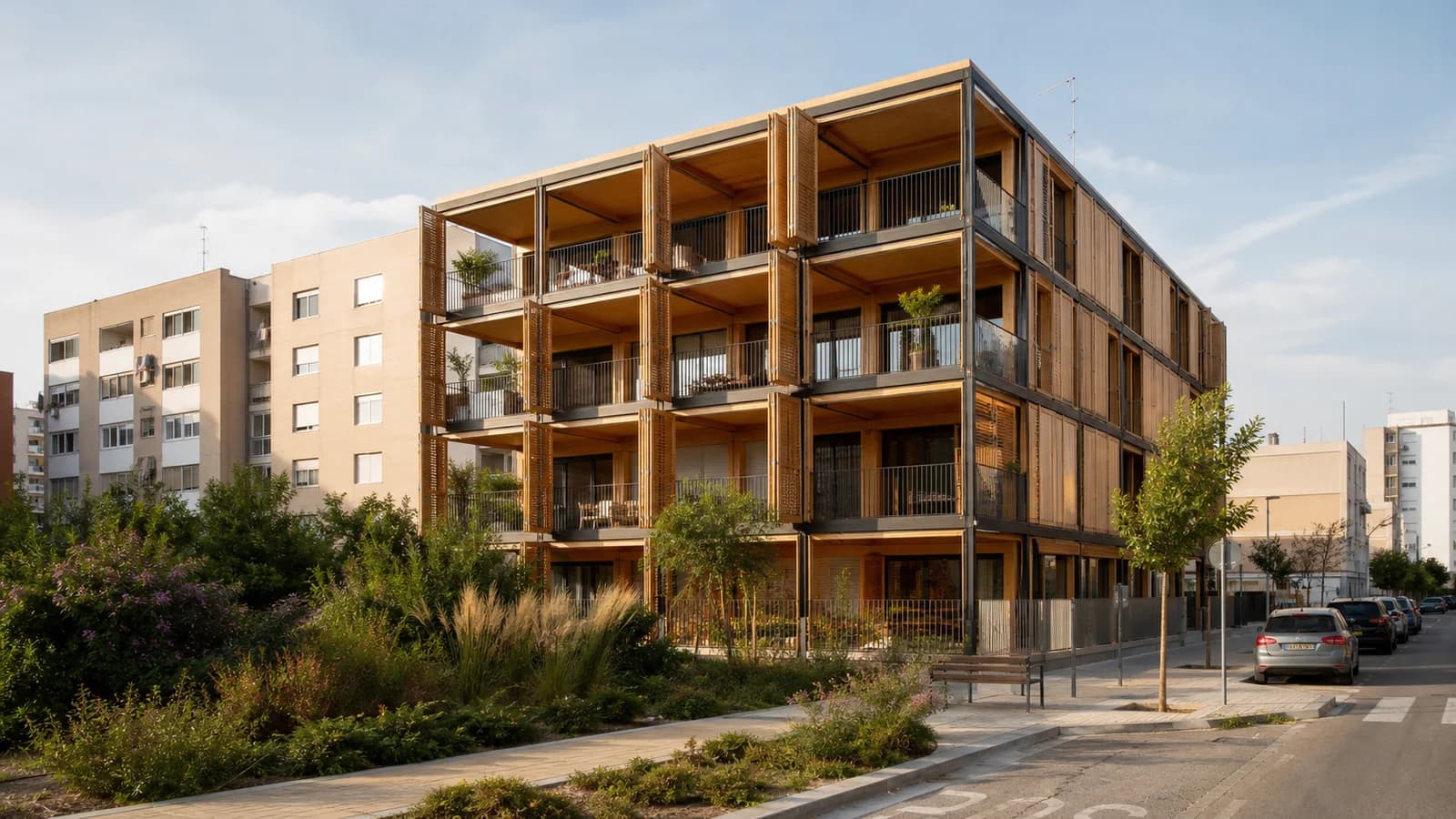
Madreselva Wins REBUILD 2026: Valencia’s First Mid-Rise Structural Timber Residence
The 14-home project in Burjassot combines certified engineered timber, off-site construction, Passivhaus strategies and high energy ratings.
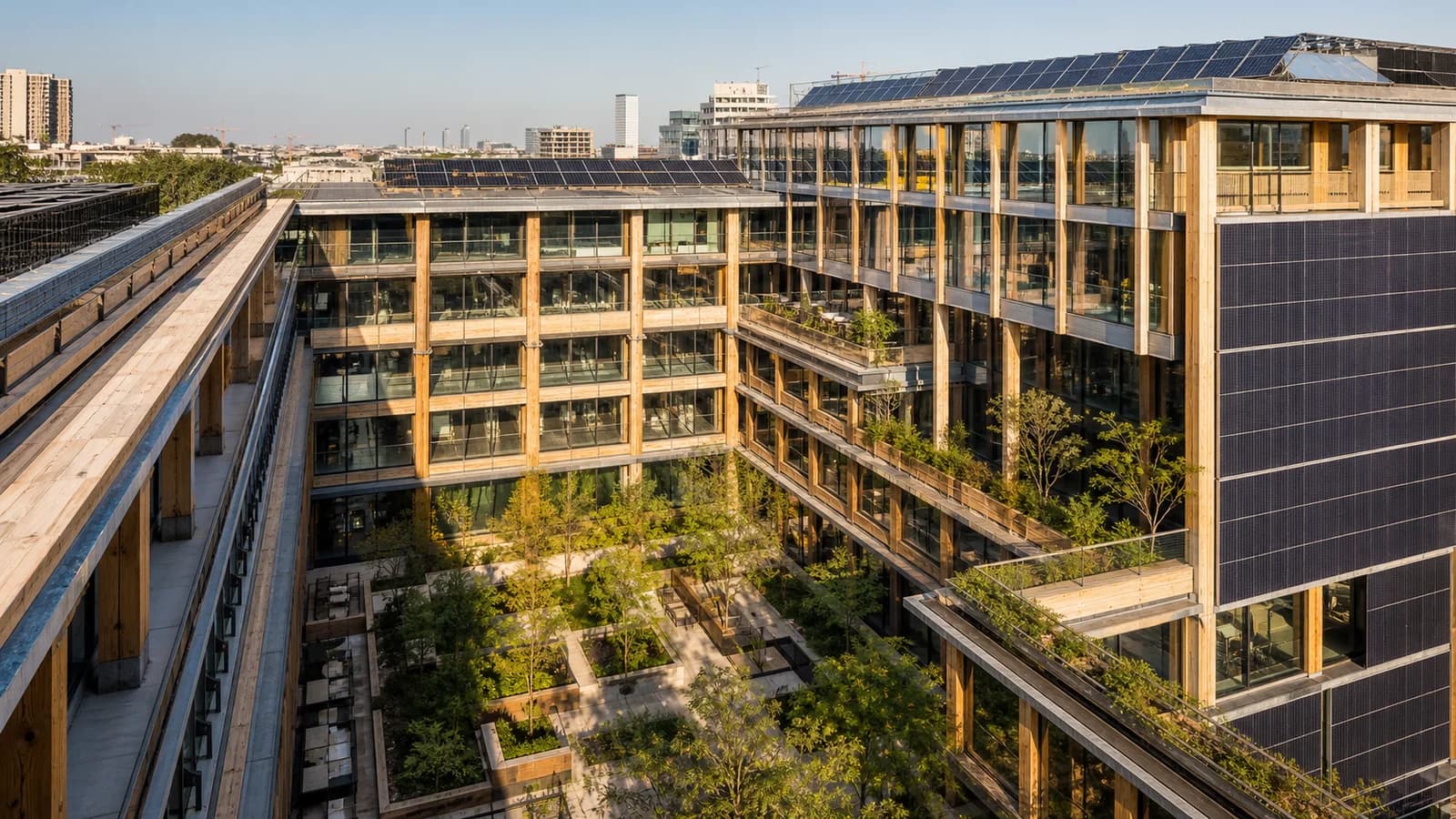
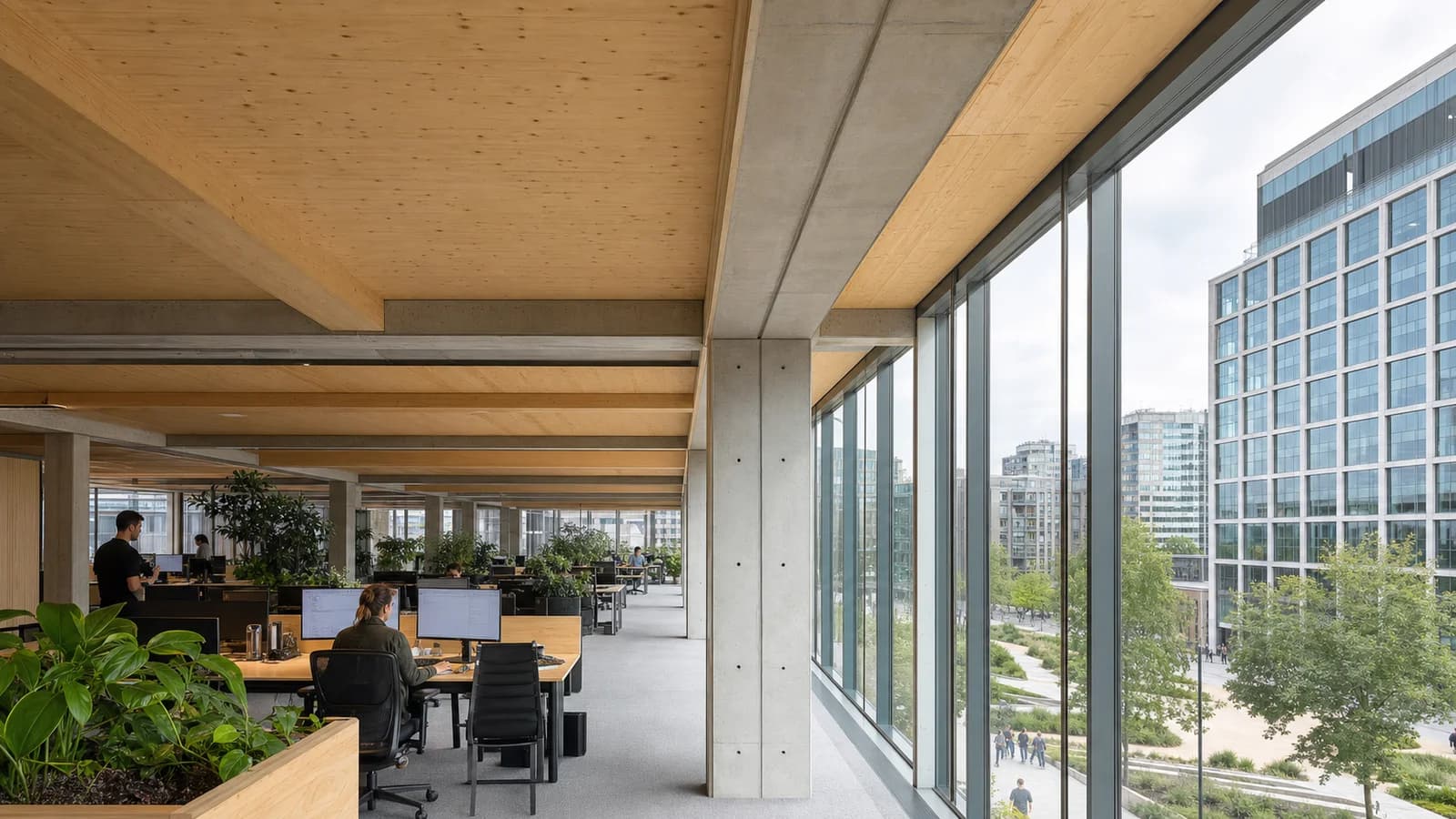
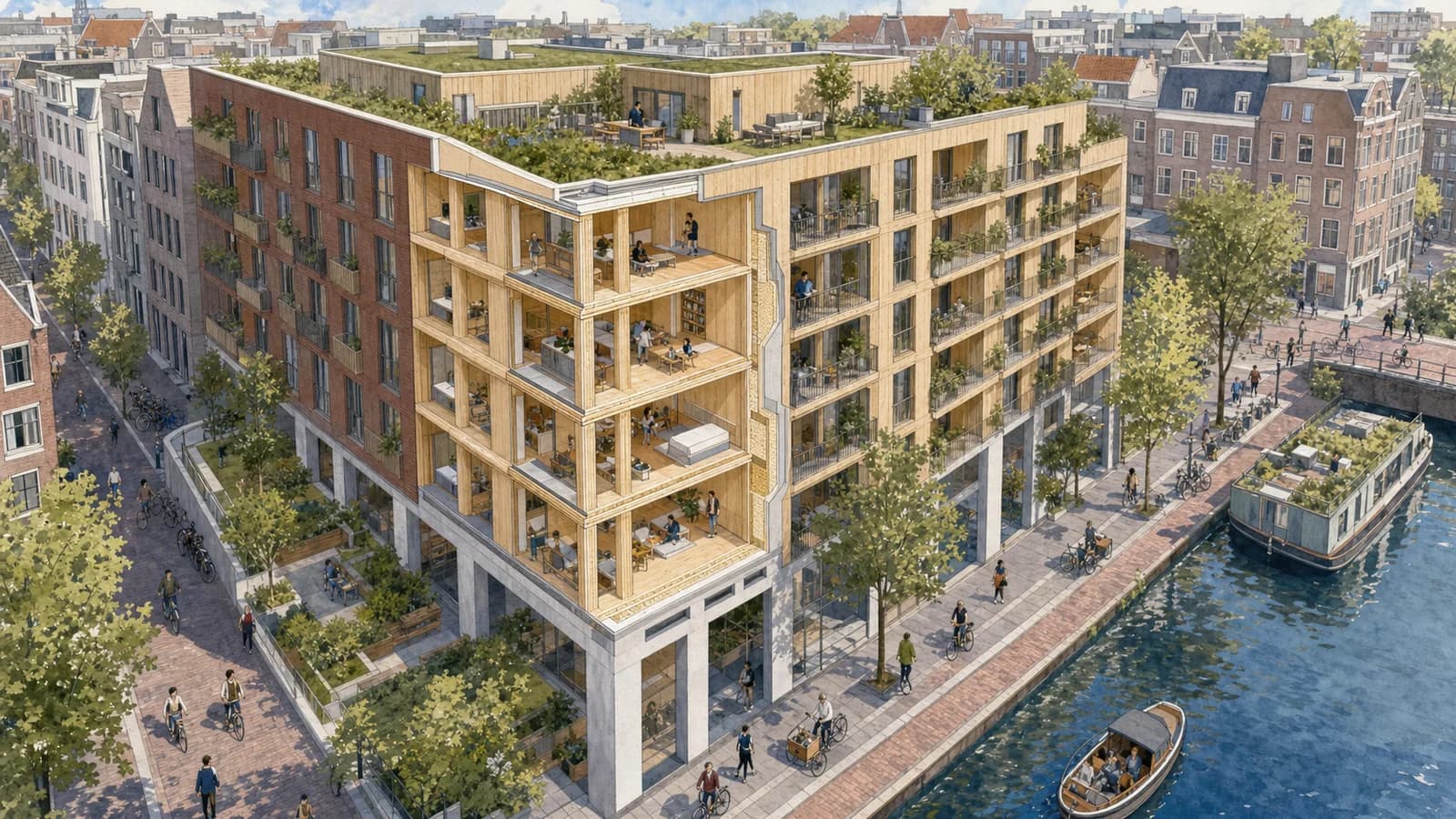
A small residential project near Valencia has become a national reference for industrialised timber construction. Madreselva, developed by Zubi Cities in Burjassot, received the Fundación Gómez-Pintado Award for Best Timber Construction Project at REBUILD 2026.
According to the project’s 2026 award coverage, it is the first mid-rise residential building with a timber structure in the province of Valencia. That makes its importance larger than its 14 apartments might suggest.
A compact project with several performance targets
Madreselva contains homes ranging from studios to three-bedroom units. Its structural system uses FSC-certified engineered timber, connecting material specification with responsible sourcing.
The project has achieved a four-leaf VERDE rating and an AA energy classification. Its environmental strategy includes double-flow ventilation, renewable-energy systems, low-consumption water measures, circular waste management and support for sustainable mobility.
Passivhaus principles reduce operational demand through an efficient envelope and controlled ventilation. The timber structure addresses a different part of the carbon equation: the materials used to create the building.
These two issues are sometimes confused. A building can be efficient in operation but carbon-intensive to construct, or use low-carbon materials while performing poorly after occupation. Madreselva’s relevance comes from treating both.
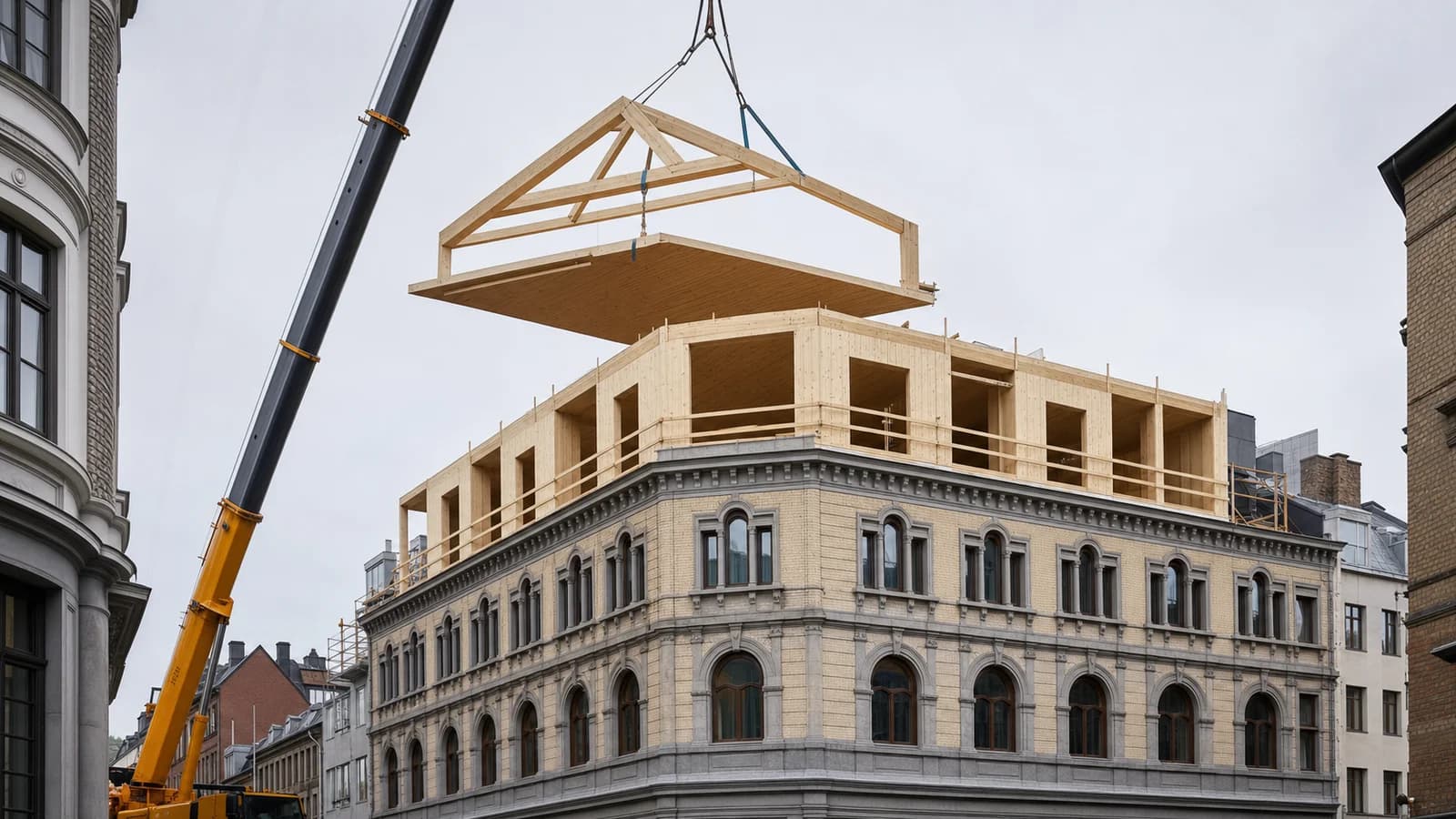
Off-site construction changes the sequence
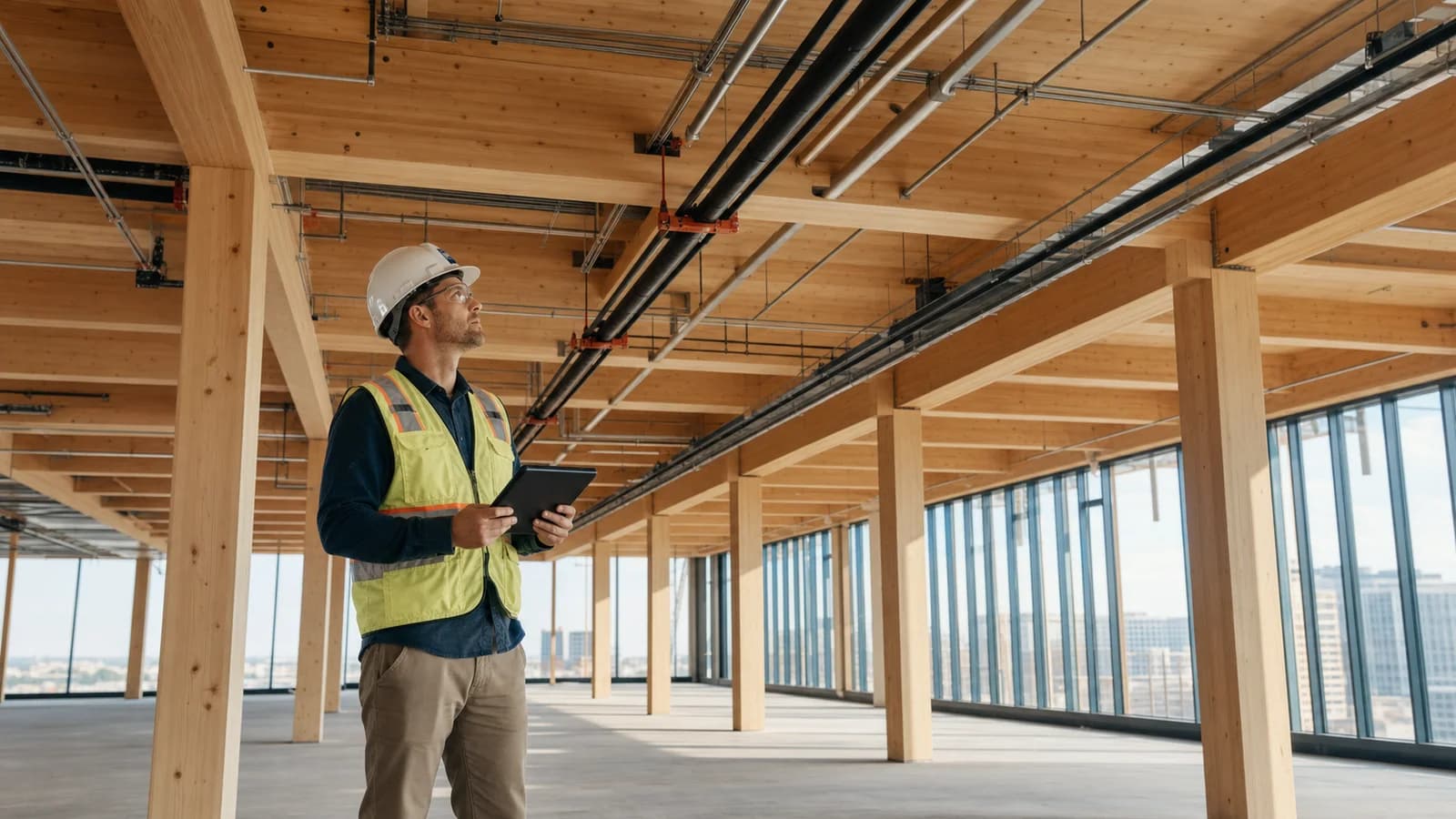
Engineered timber rewards early coordination. Openings, connections and service routes need to be resolved before fabrication. That shifts decisions forward compared with construction methods that allow more modification on site.
The benefit is a cleaner and potentially faster assembly process. The risk is that an unresolved model becomes a manufactured error.
For design software, the requirement is clear: the structural model, quantities, cutting information and installed components must describe the same physical building.
Certified material still needs project-level traceability
FSC certification establishes a sourcing framework, but a completed building also needs records connecting purchased products to installed components. Supplier declarations, delivery batches and quantities should align with the model and contractor evidence.
That connection is valuable beyond one environmental label. The same information can support life-cycle assessment, maintenance, insurance and future disassembly. For a developer, traceability reduces the risk of making a broad sustainability claim that cannot be demonstrated later. For a fabricator, it creates a feedback loop between stock, cutting optimisation and the final bill of materials.
What the award proves—and what it does not
The award was selected from more than 300 submissions to the Advanced Architecture Awards. It signals that timber has entered Spain’s mainstream discussion about digitalisation and decarbonisation.
It does not prove that every residential development in Valencia should use the same system. Cost, supply capacity, acoustics, fire strategy and contractor experience remain project-specific.
Nor should the building’s environmental claims be reduced to the statement that wood is automatically carbon-negative. Reliable conclusions require a defined life-cycle assessment, system boundaries and verified project data.
A replicable urban lesson
Madreselva shows that timber housing in Spain does not have to be a rural house or a spectacular tower. A 14-unit urban building can be a meaningful market step because it tests ordinary residential requirements: layouts, services, comfort, financing and repeatability.
For the Spanish timber sector, those mid-scale projects may matter most. They create work for regional engineering and fabrication teams while producing evidence that future developers, insurers and authorities can evaluate.
They also create reference details. Fire stopping around services, acoustic floor build-ups and balcony interfaces can be reviewed after occupation and improved in the next project. A market matures when teams can reuse verified knowledge rather than beginning every timber building as an exception.
The REBUILD 2026 award gives Madreselva visibility. Its longer-term value will be measured by whether the project helps timber construction become a repeatable option for Spanish urban housing.
Source: CAMBIUM, “Madreselva wins the Fundación Gómez-Pintado Award at REBUILD 2026”, 31 March 2026: https://cambium.gva.es/el-proyecto-madreselva-se-alza-con-el-premio-fundacion-gomez-pintado-en-rebuild-2026/