Predazzo’s Olympic Village Builds Its Legacy in Timber
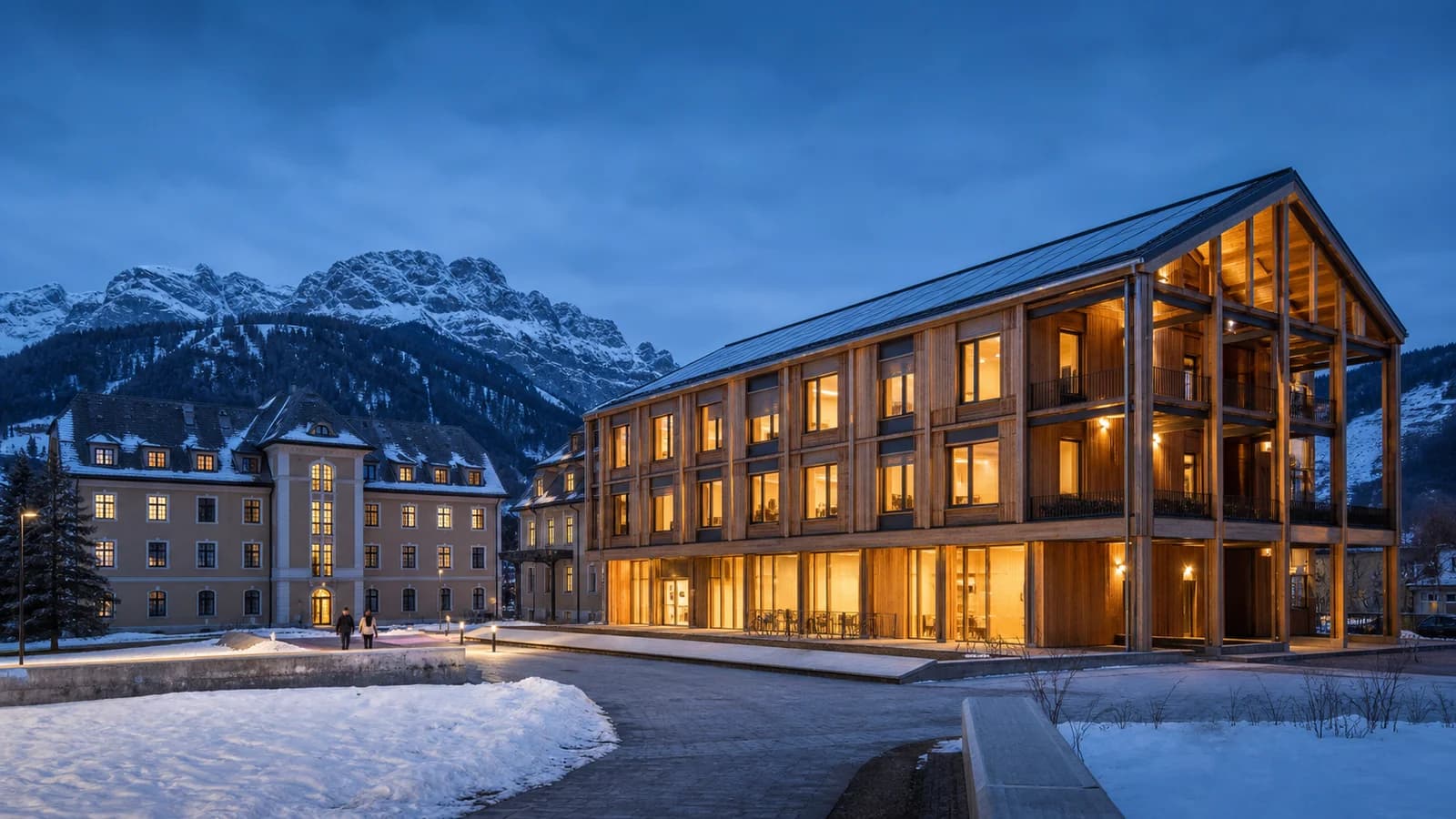
The 2026 Winter Games village in Predazzo combines new timber and steel accommodation with renovated historic buildings, then returns the permanent campus to the Guardia di Finanza after the athletes leave.
The Olympic and Paralympic Village at Predazzo offers a clear example of designing event infrastructure for permanent use. Built inside the Alpine School of the Guardia di Finanza in Trentino, the campus housed athletes competing in cross-country skiing and ski jumping during Milano Cortina 2026. After the Games, the upgraded buildings return to the school.
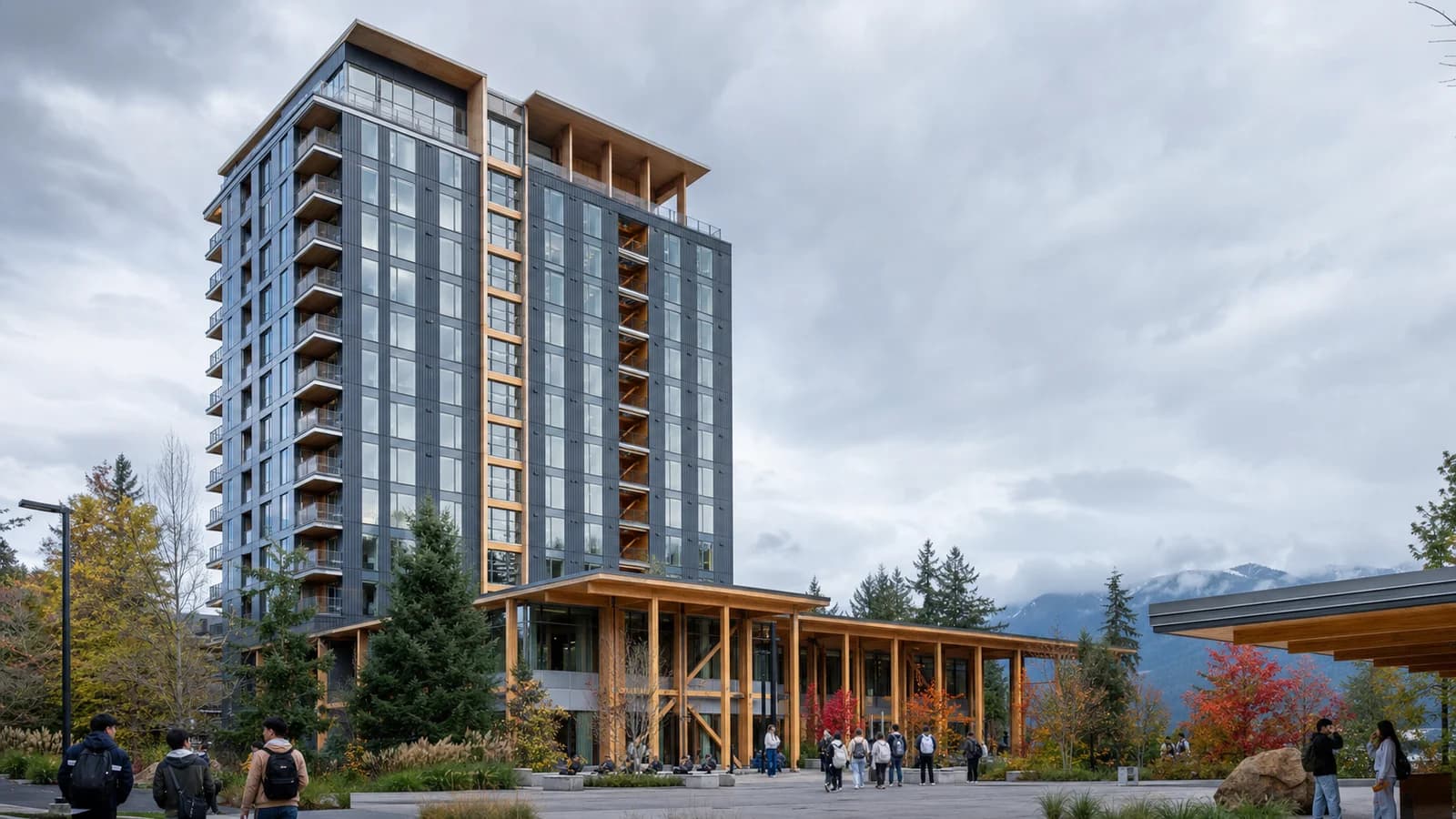
Timber plays a central role in the new accommodation. The main New Pavilion contains 192 bedrooms and up to 384 beds across four levels. The Province of Trento describes it as a timber-and-steel building, with reinforced concrete limited to the foundations and steel used in the central structural body. A 124.7 kWp photovoltaic array sits on the roof.
The Latemar Pavilion was demolished and rebuilt with 119 beds. Its first level uses reinforced concrete so it can be converted for future service functions, while the upper floors are built in timber. A 30 kWp photovoltaic installation was added to its roof.
Permanent rooms, not temporary scenery
Olympic construction is often criticised when facilities have no convincing use after the event. Predazzo’s strategy starts with an existing institution that already needs accommodation and training infrastructure. The new and refurbished spaces were configured for the Games but have an identified post-event operator.
The wider programme also included the restoration and seismic improvement of the protected early-20th-century Macchi Pavilion, accessibility upgrades to the Nicolaucich Pavilion and work on the Musto Pavilion. This combination of new construction and adaptive reuse avoids treating the campus as a blank site.
For timber designers, the project shows how system choice can follow future use. The Latemar building’s concrete service level and timber upper floors are a hybrid response rather than a symbolic all-wood statement. The New Pavilion uses timber extensively but retains steel where the central structure requires it.
Why the Alpine setting favours prefabrication
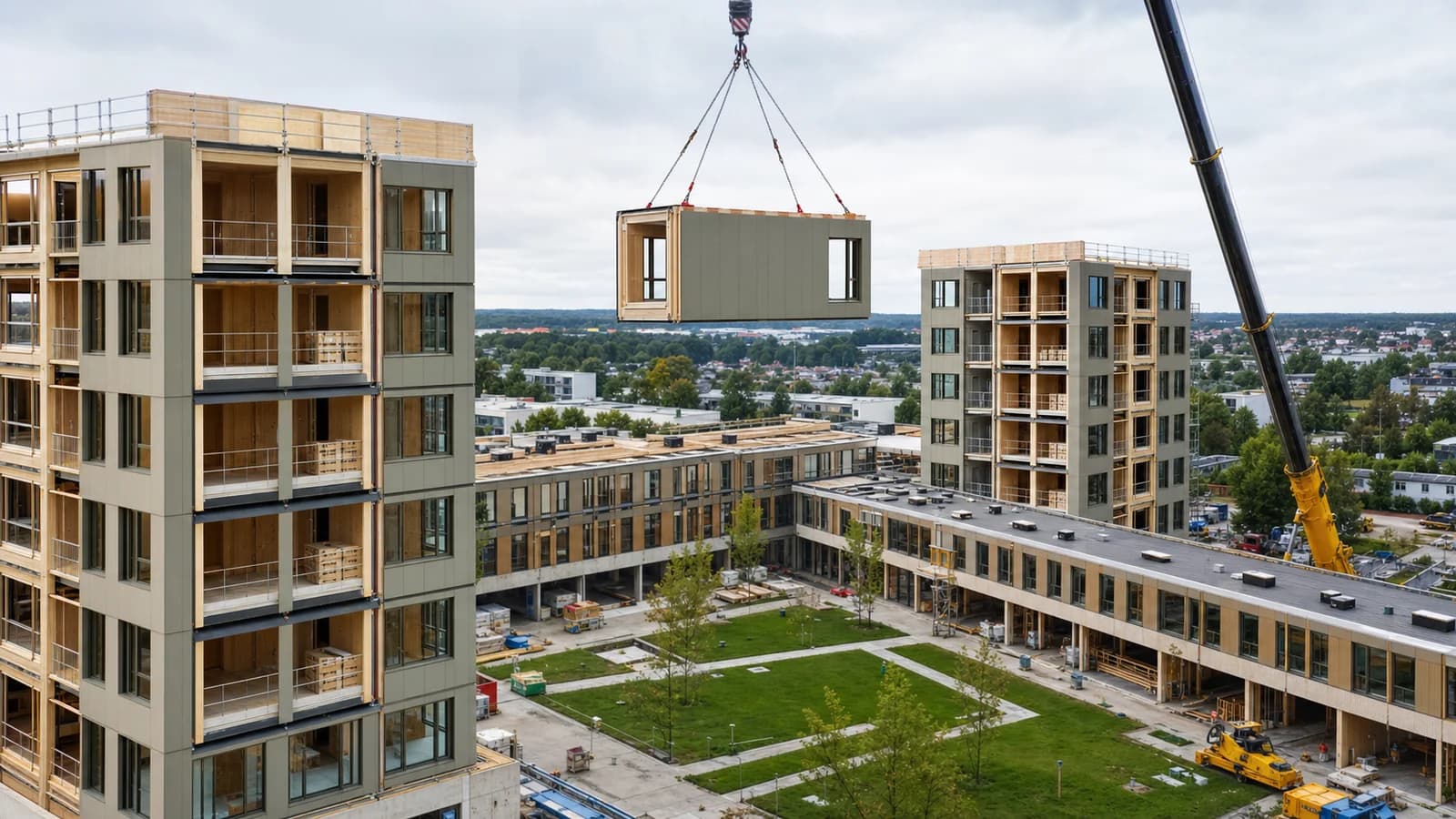
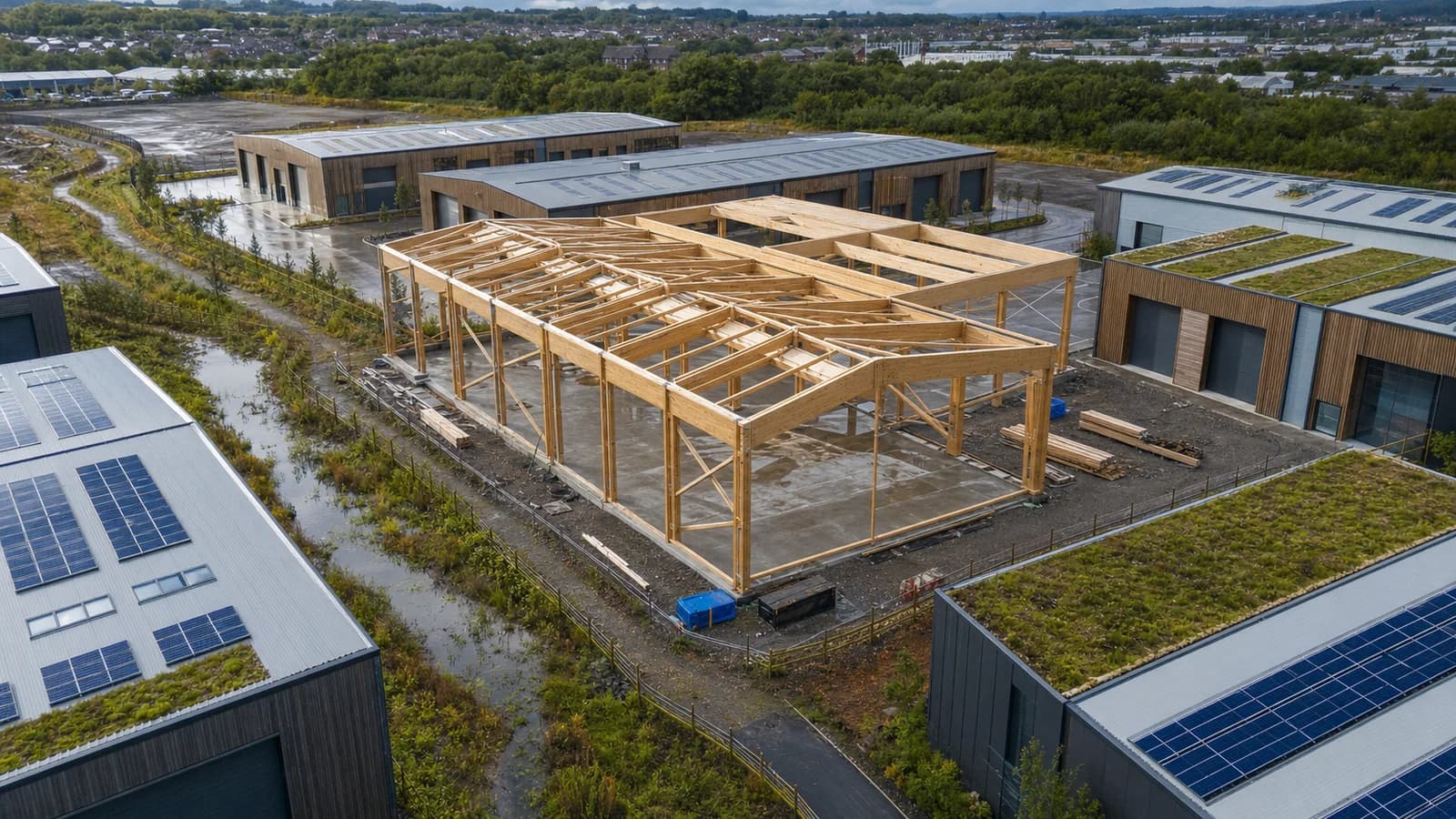
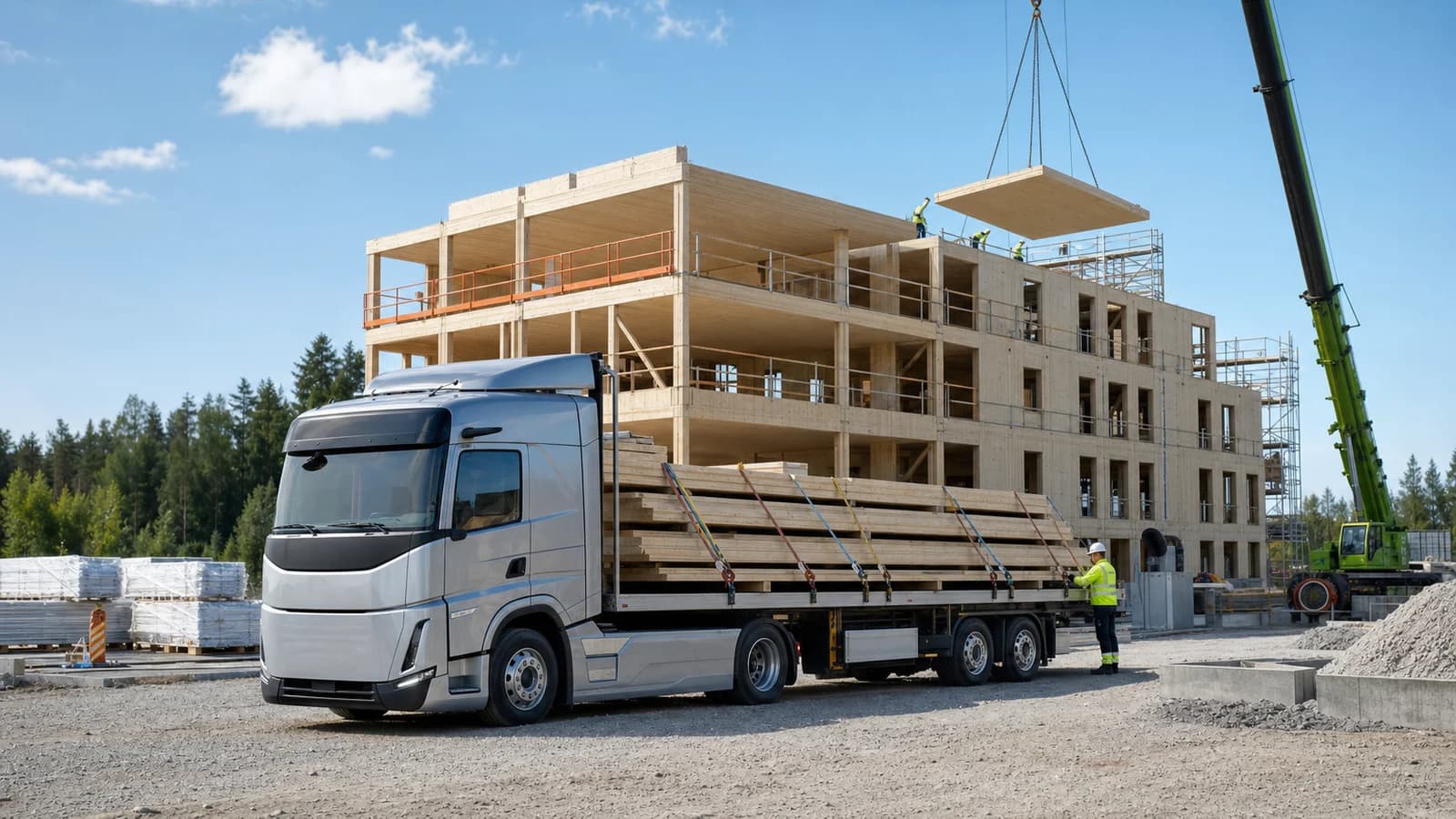
Mountain construction faces tight seasons, snow, difficult access and limited site space. Prefabricated timber elements can move a greater share of work into controlled factory conditions and allow rapid dry assembly. The benefit depends on accurate digital coordination: room layouts, service penetrations, panel geometry, fire stopping and façade interfaces must be resolved before production.
THEURL, one of the timber suppliers associated with the Alpine School project, emphasised the deadline imposed by the Winter Games. Olympic delivery dates cannot move easily, making predictable production and assembly especially valuable.
However, speed should not obscure moisture and durability planning. Timber components need protection during transport, storage and erection, particularly in an Alpine winter climate. Roof completion, temporary membranes, drainage and documented moisture checks are part of a successful prefabricated strategy.
A measurable 2026 case study
Predazzo is relevant beyond sports architecture because its numbers are specific. The New Pavilion represents a volume of almost 34,000 cubic metres; Latemar adds just over 11,000 cubic metres. Together they demonstrate timber in permanent, multi-level accommodation with accessibility, energy and legacy requirements.
Claims that the project is fully “eco-compatible” or recyclable should still be read critically. A building’s real environmental performance depends on material sourcing, hybrid components, operational energy, maintenance and end-of-life choices. The photovoltaic arrays and structural timber are useful features, but a complete judgement requires life-cycle data.
The strongest lesson is the legacy model. Predazzo did not build a disposable wooden village. It used the Games to upgrade a working Alpine campus, combining timber construction with rehabilitation and a defined long-term owner. That makes it a more credible reference for schools, dormitories and institutional housing than a temporary Olympic installation would have been.
Post-Games operation will provide the next test. Energy use, maintenance records and the performance of the timber envelopes in mountain conditions can turn a one-time delivery success into useful evidence for future public projects.
Sources: https://provincia.trento.it/milanocortina2026/sedi-di-gara/villaggio-olimpico-e-paralimpico/ https://www.agenziademanio.it/it/sala-stampa/notizie/notizia/Milano-Cortina-2026-avviati-i-cantieri-per-il-Villaggio-Olimpico-di-Predazzo-TN https://www.theurl-holz.at/en/references/scuola-alpina-guardia-di-finanza-predazzo/