California’s First DLT Producer Turns Underused Trees into Building Panels
Mad River Mass Timber is producing dowel-laminated timber in California, creating a potential market for underused local species without structural adhesives.
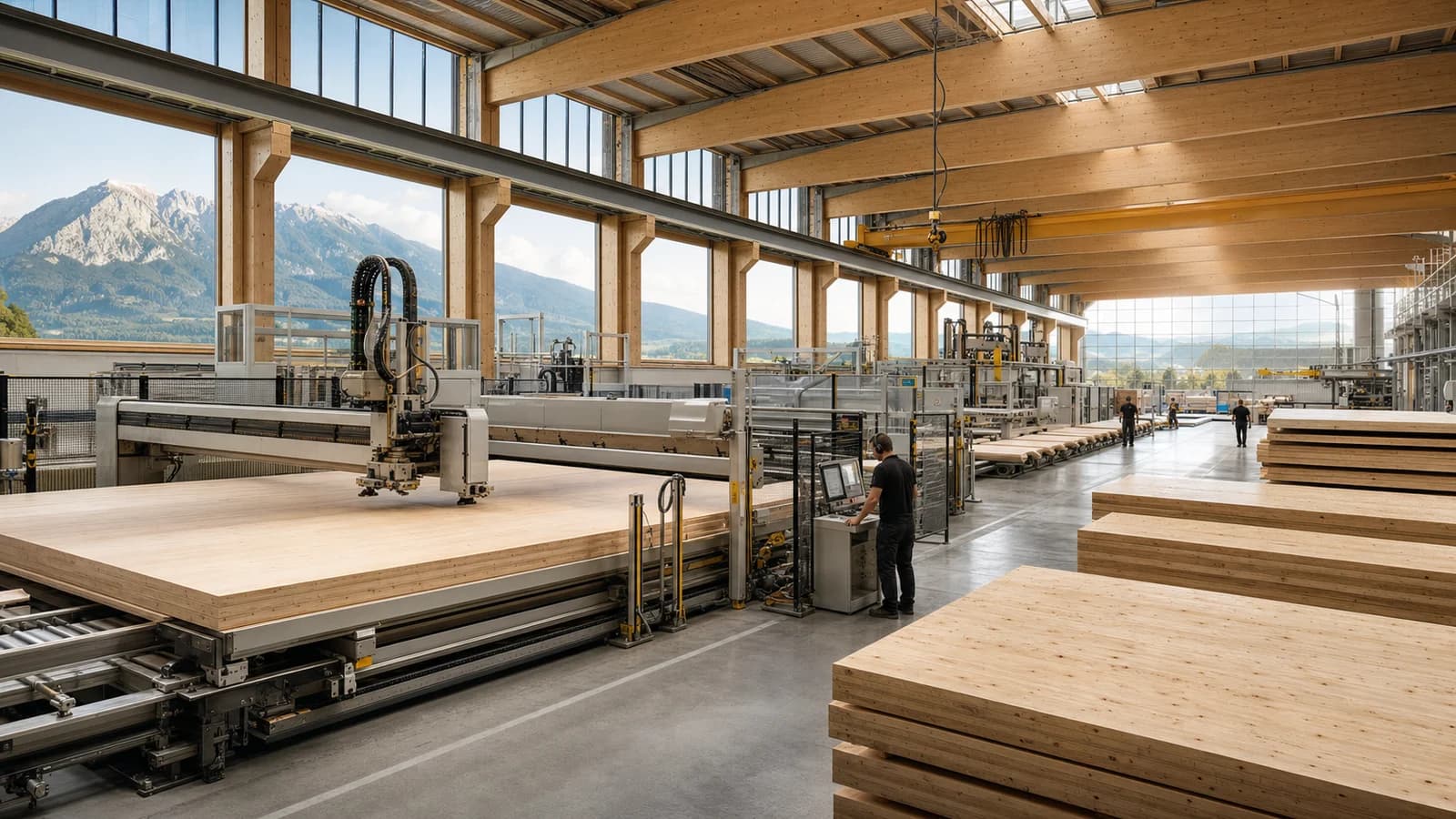
California now has its first commercial producer of dowel-laminated timber. Mad River Mass Timber is manufacturing DLT panels from regional wood, including species that have often been underused by the construction market.
The development grew from research and industry collaboration linked to the University of California, Berkeley. According to the University of California, the company is also the state’s first vertically integrated mass-timber producer.
Mass timber held together with wood
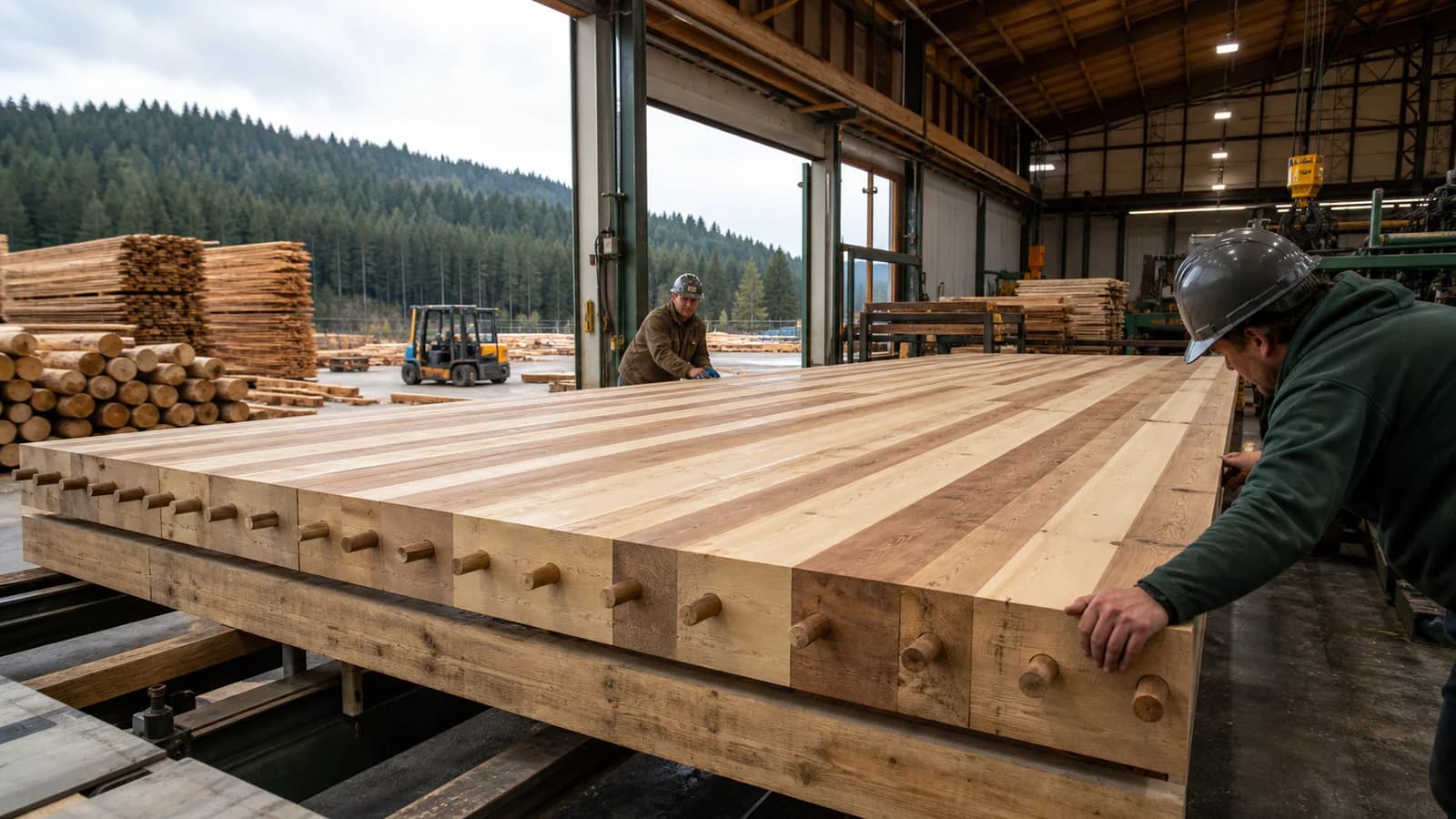
Dowel-laminated timber is made by placing boards side by side and joining them with hardwood dowels. The dowels have a different moisture content from the boards; as they equalize, they create a tight mechanical connection.
Unlike CLT, DLT does not require structural adhesive between the laminations. This can simplify material composition and makes the panel attractive to projects prioritizing low-toxicity or design-for-disassembly goals.
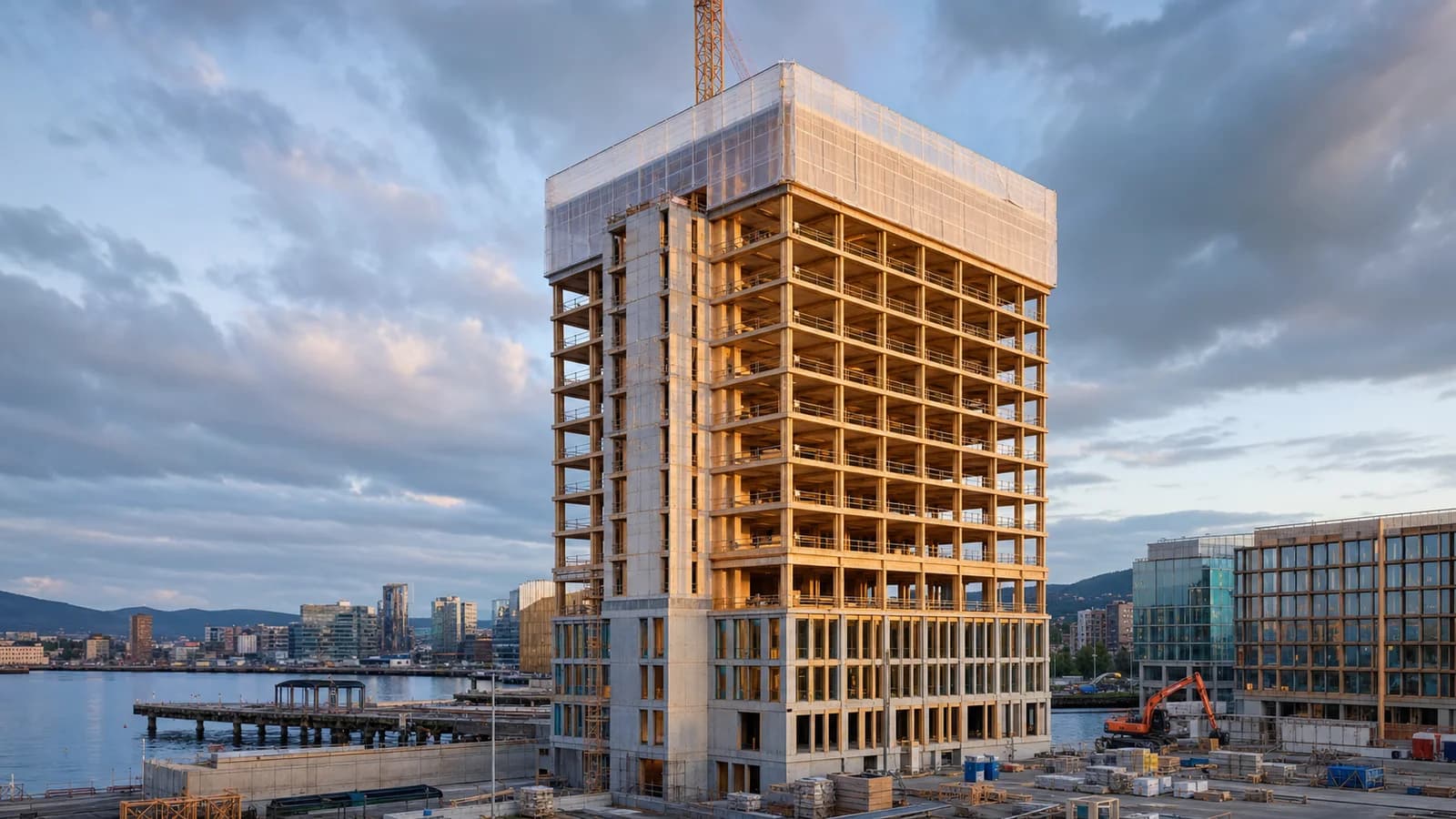
DLT can be used for floors, roofs and walls, depending on engineering, spans and code requirements. Its regular timber pattern can also remain exposed as an architectural finish.
Creating demand for California wood
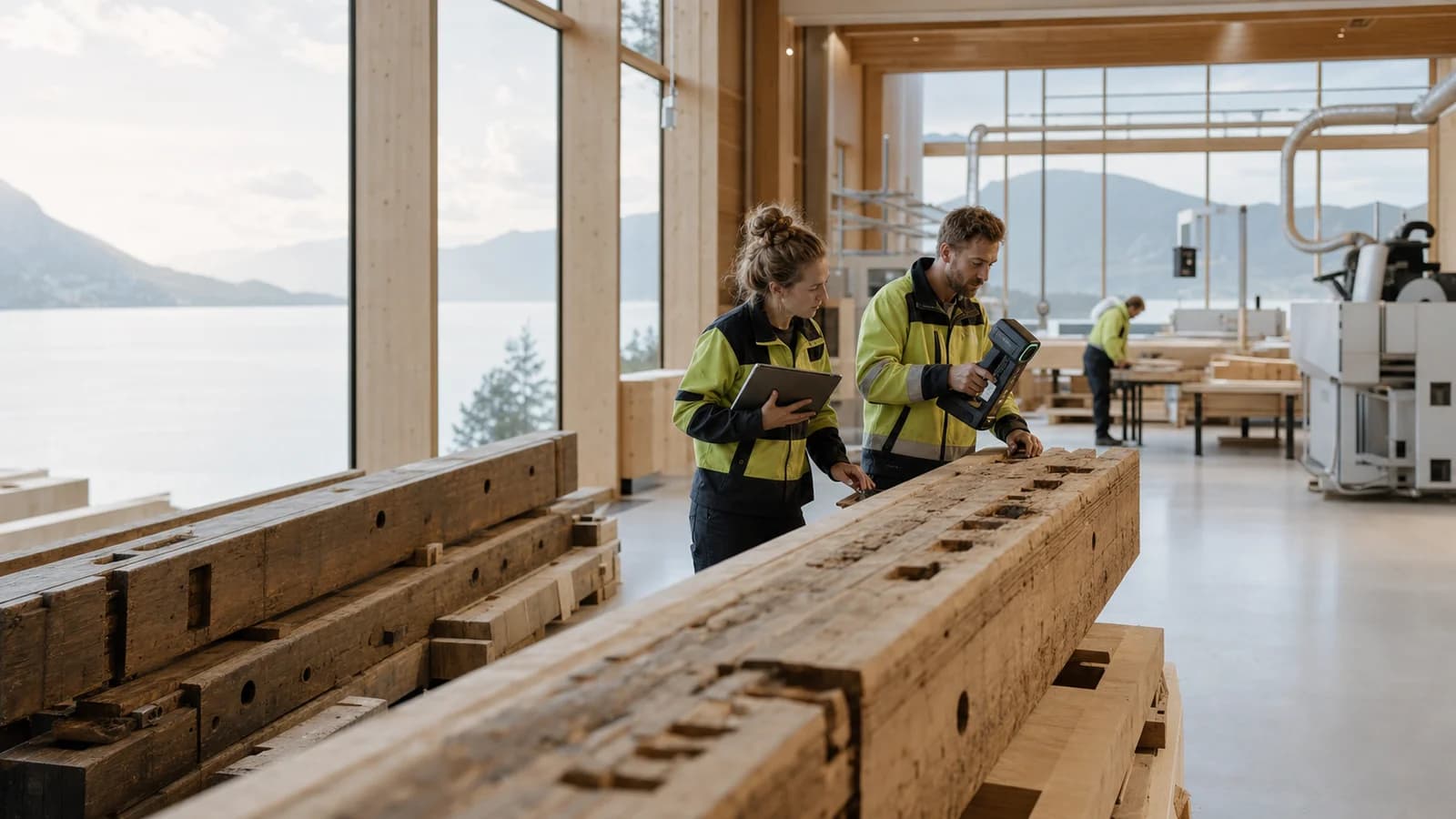
Mad River is working with species including red fir, hemlock and ponderosa pine. The company is also investigating how suitable fire-damaged or restoration material could enter higher-value building products.
That connection is important in a state facing severe wildfire risk. Forest treatments produce wood that may not fit conventional commodity markets. A local engineered-wood industry can create another outlet, although not every removed tree will meet structural grading and manufacturing requirements.
For digital construction, species and sourcing need to be treated as design inputs. Panel spans, layups, appearance and availability vary with the material supply. Software that connects engineering and fabrication data to regional inventory can help manufacturers use the right resource for the right component.
California’s DLT market is still young, and one plant will not transform forest management or housing supply on its own. But it establishes a missing link between local forests and modern timber buildings—and gives designers another mass-timber system produced inside the state.
Source: University of California, “UC Berkeley’s mass timber research is impacting decarbonization in California’s construction industry”, 5 February 2026: https://www.universityofcalifornia.edu/news/uc-berkeleys-mass-timber-research-impacting-decarbonization-californias-construction-industry