Norway Leads €4.2 Million Push to Turn Reclaimed Timber into New Buildings
The SINTEF-led ReCLAiMiT project starts in September 2026 with a European research programme for assessing, dismantling and remanufacturing structural timber instead of burning or downcycling it.
Norway is taking the lead in a new European effort to make reclaimed structural timber a dependable construction resource rather than an exceptional material used only in showcase projects. ReCLAiMiT, coordinated by Trondheim-based SINTEF, is scheduled to start on 1 September 2026 with an EU contribution of €4.2 million and a programme that runs until February 2030.
The headline is not simply that another research consortium will study circular construction. ReCLAiMiT is designed around the difficult links that currently break the reuse chain: identifying timber in existing buildings, dismantling it without destroying its value, grading uncertain material, moving it through a reverse supply chain, remanufacturing it close to demand and giving designers and clients enough evidence to specify it safely.
From demolition waste to structural inventory
Much of Europe’s wood economy remains linear. Trees are harvested, products are manufactured, buildings are assembled and, at the end of a relatively long service life, useful components are often crushed, downcycled or burned. That last step releases stored biogenic carbon and removes material that could have remained in use for another building cycle.
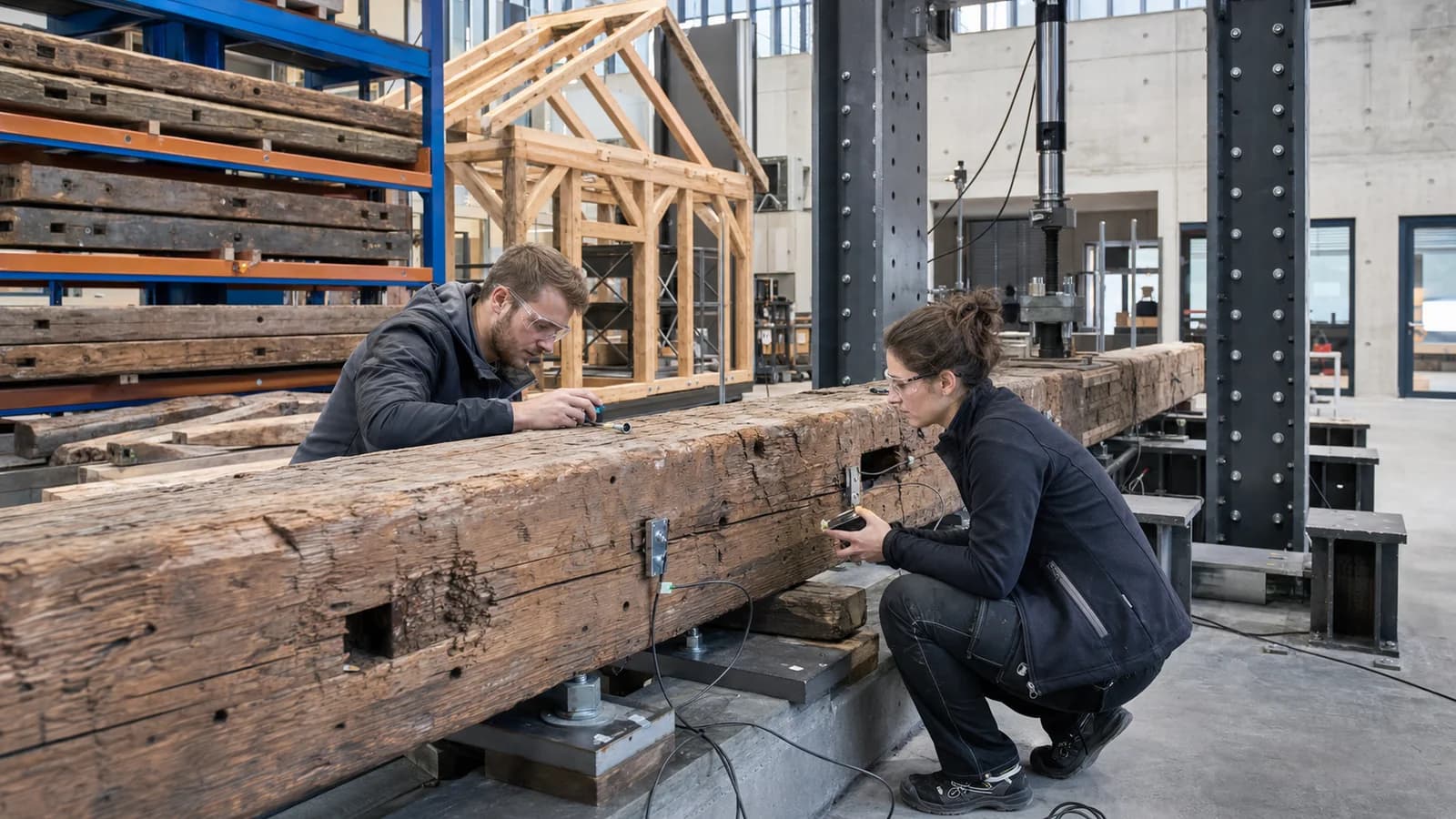
Reusing a beam is harder than recycling a homogeneous product. Its species, grade, moisture history, connections, coatings and damage may be imperfectly documented. Dimensions do not necessarily match a new project’s grid. Nails and screws complicate machining. Transporting a small quantity over a long distance can erase economic and environmental advantages. A credible reuse system therefore needs much more than a demolition contractor willing to save a few pieces.
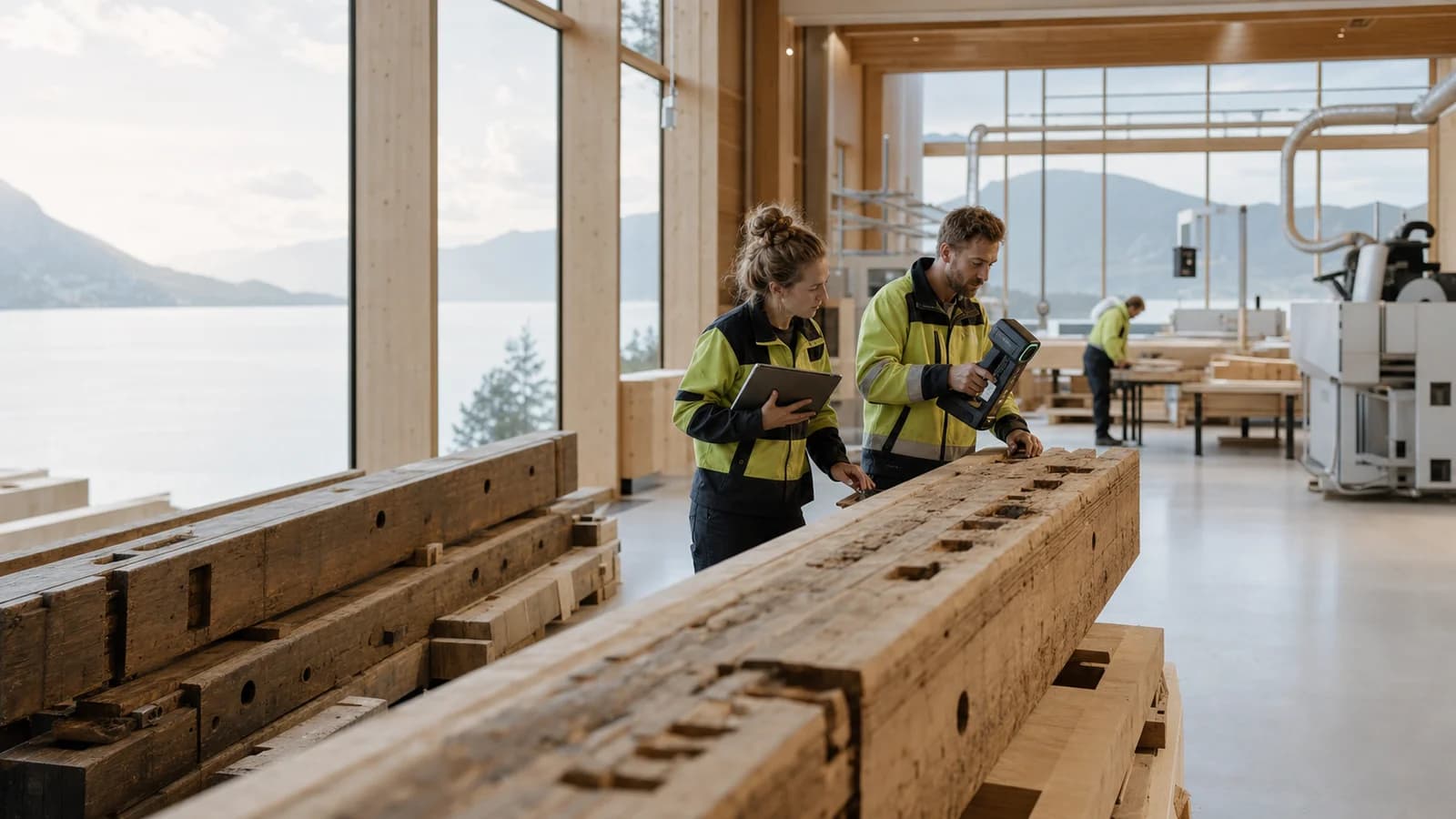
ReCLAiMiT treats the outgoing building as a source of components and data. Its research agenda includes reliable assessment methods for reclaimed wood, data-driven safety evaluation and reverse logistics. In practical terms, that points toward a workflow in which recovered members can be identified, inspected, classified and matched to realistic future uses.
For architects and timber engineers, this is a decisive issue. Digital inventories are useful only if the information can travel into design, structural verification, procurement and fabrication. A reclaimed member has to be represented with its actual section, length, condition, provenance and constraints—not as an idealised stock profile.
Remanufacturing close to the project
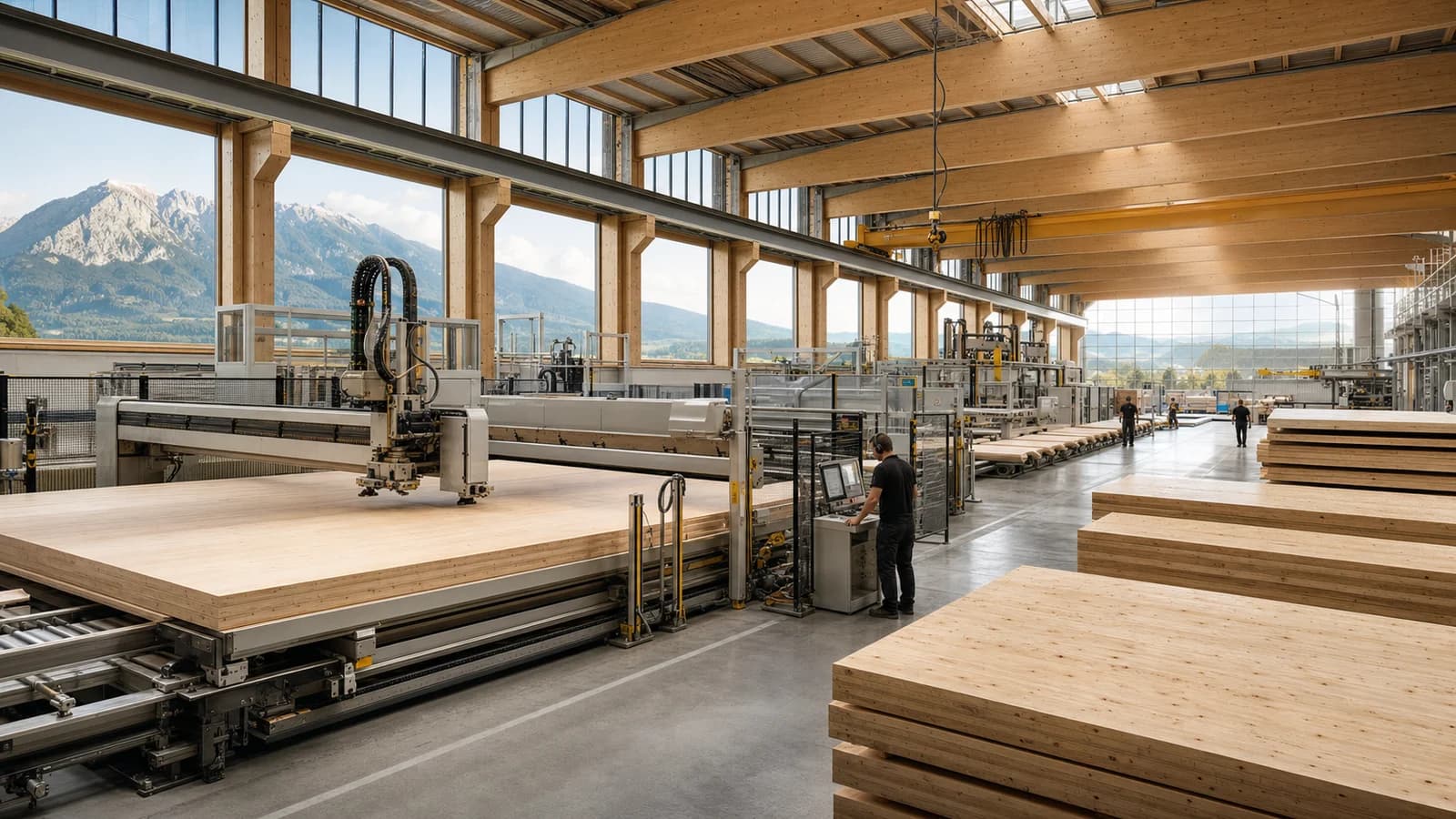
The project’s full title is “Fossil-Free Laminated Timber for Distributed Manufacturing.” That emphasis on distributed production is important. Today’s engineered-timber supply chains are highly optimised for standardised new material. Reclaimed components are more variable and are often scattered across cities and regions.
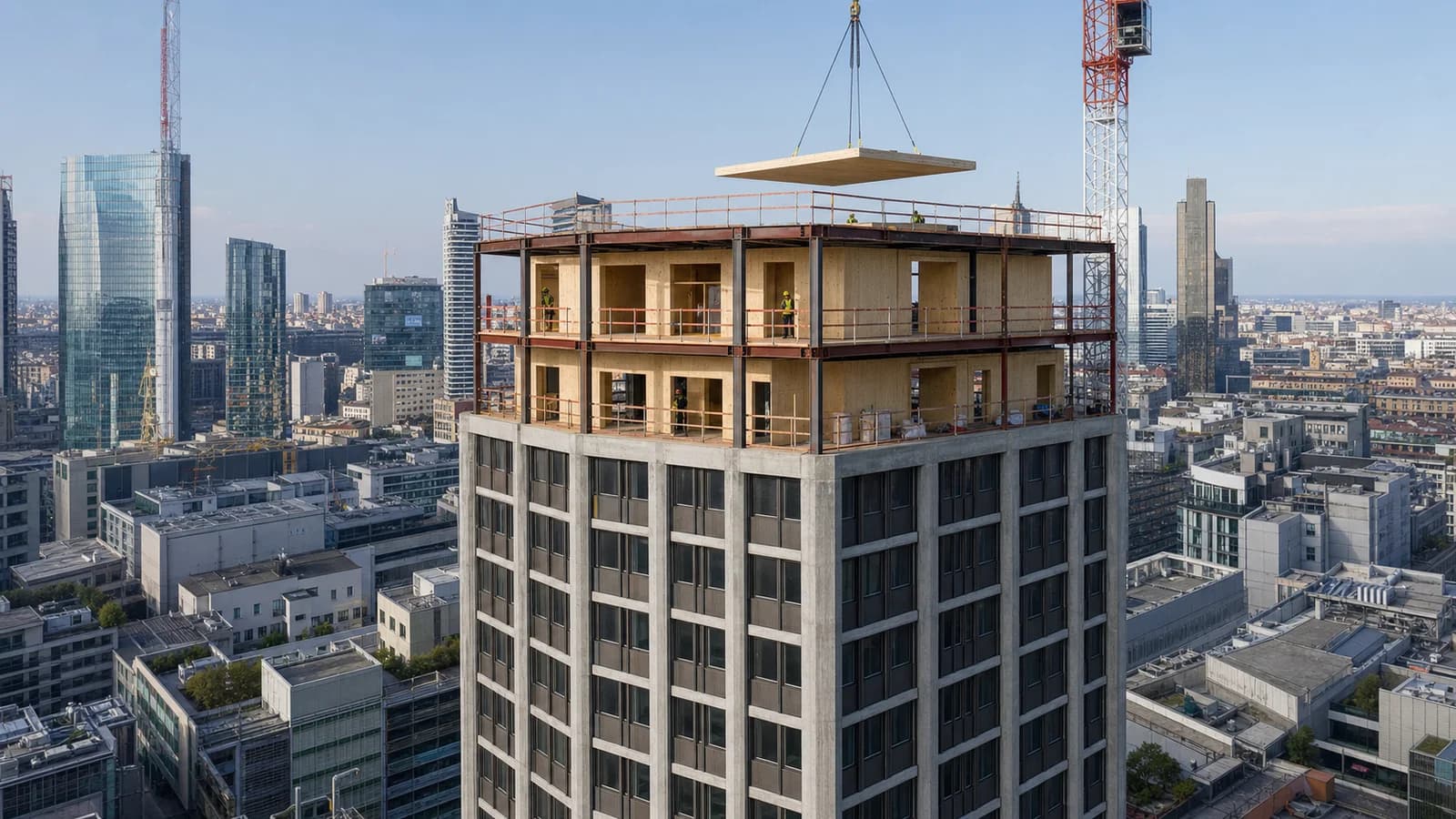
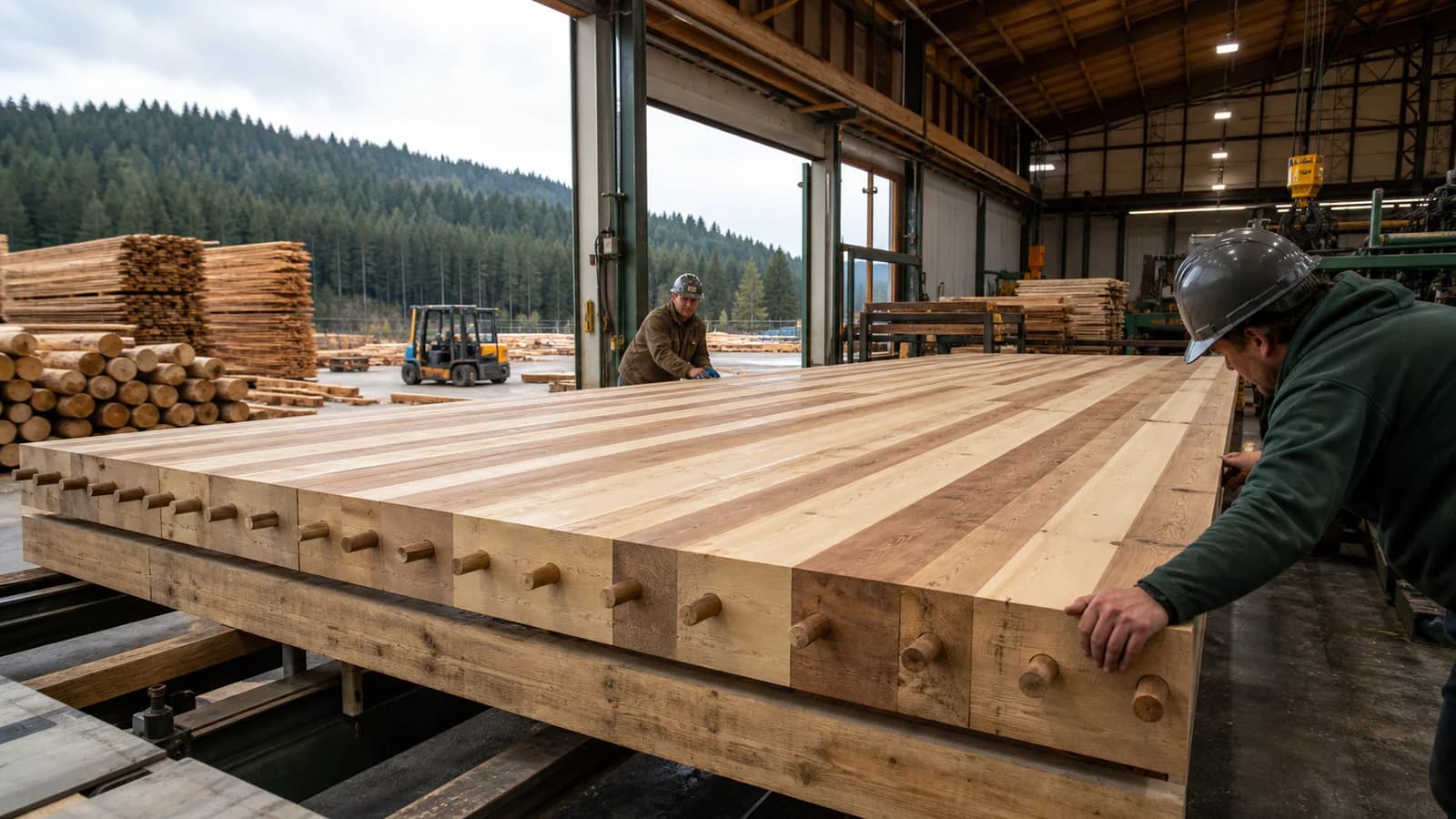
ReCLAiMiT proposes local manufacturing approaches that can turn this irregular supply into useful laminated products. The project will investigate bio-based, debondable binders and fossil-free joints, alongside computational design and manufacturing methods. Debonding matters because circularity should not end after one additional use: connections and adhesives must also allow future repair, separation and recovery.
Distributed manufacturing could reduce the distance between recovered material, processing equipment and the next building site. It could also open a role for smaller regional workshops, provided quality assurance and digital traceability remain consistent. The opportunity is attractive, but the project has not yet proved that this model is commercially competitive at scale. ReCLAiMiT is a research and innovation action, not a certified product system or a new building rule.
A computational design problem
Designing with reclaimed timber reverses the conventional process. In a normal project, the design defines the required pieces and suppliers manufacture them. In a reuse-led project, the available stock may influence spans, grids, member spacing and connection strategy.
The consortium plans a computational design tool aligned with New European Bauhaus principles. The larger ambition is to connect available components with design options that are technically credible, resource-efficient and architecturally valuable. This kind of “stock-constrained design” is highly relevant to digital timber platforms.
For FrameVerk’s field, the implication is clear: future design software may need to manage two parallel catalogues. One contains standard products with predictable grades and dimensions. The other contains unique recovered elements with individual identities, inspection records and permissible uses. Automated optimisation would then have to consider not only material quantity and cost, but also the probability that a recovered component can satisfy structural, fire, moisture and fabrication requirements.
Safety cannot be assumed
Circular construction sometimes suffers from optimistic language that jumps too quickly from “wood can be reused” to “this beam can be reused here.” ReCLAiMiT’s focus on reliable assessment and data-driven safety is therefore essential.
A component may look sound while carrying hidden decay, connection damage or a moisture history that affects its performance. Conversely, conservative assumptions can reject valuable timber unnecessarily. The challenge is to create inspection and grading routes that are rigorous without becoming so costly that reuse is impossible.
The project will validate innovations through case studies in several countries and examine environmental, economic and social impacts. That validation phase should reveal where reclaimed laminated timber makes the most sense: direct reuse, remanufactured products, non-critical applications or combinations of new and recovered wood.
Business models are as important as binders
Technical feasibility alone will not establish a reuse market. Ownership and liability must be clear. A building owner needs a reason to plan selective dismantling. A contractor needs predictable schedules. An engineer needs dependable data. A manufacturer needs enough material volume to operate efficiently. Insurers and authorities need evidence.
ReCLAiMiT therefore includes market frameworks and new business models. Possible models could involve material passports, take-back agreements, reuse hubs, component marketplaces or service contracts in which manufacturers retain responsibility for products across several life cycles. The final models will emerge from the research; they should not be treated as established outcomes today.
The consortium brings together 20 participating organisations listed by the European Commission, with SINTEF receiving just over €1 million of the EU contribution as coordinator. The project is classified as fully contributing to climate action and will run for three and a half years.
Why the 2026 start matters
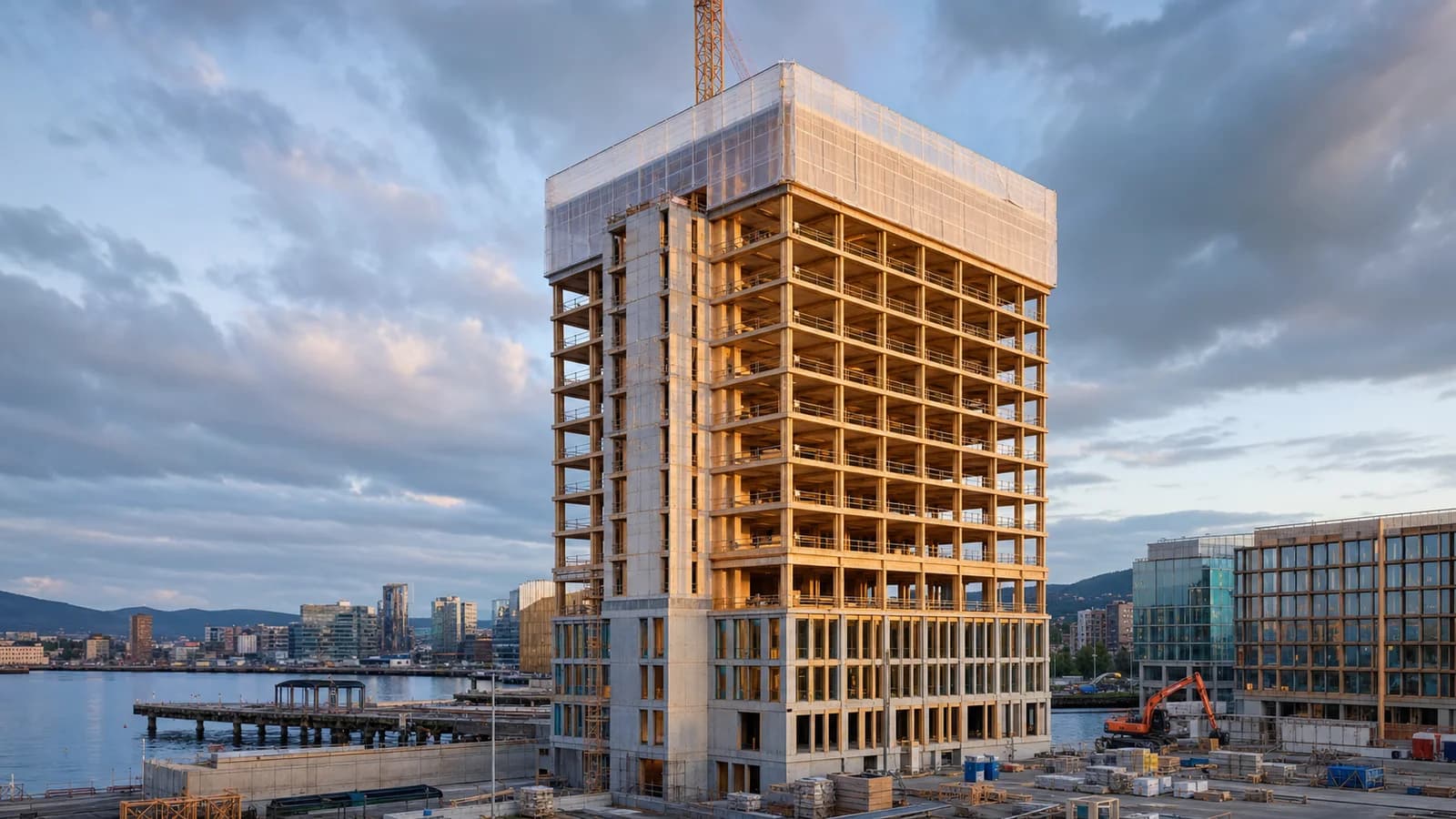
Europe’s construction sector is moving from broad circular-economy targets toward the operational questions of documentation, verification and procurement. Timber is well suited to disassembly when connections and layers are designed for it, but existing buildings were rarely created as future material banks.
ReCLAiMiT’s value will be measured by whether it closes that gap. If it can connect assessment, design, remanufacturing and business logic, reclaimed wood could become a planned input rather than a lucky discovery. If the process remains fragmented or too expensive, the sector will continue to favour new material and low-value end-of-life routes.
The project begins in 2026, so its promised tools and products are not yet market-ready. Even so, the direction is significant: Norway is placing itself at the centre of a European attempt to give structural timber more than one engineered life.
Sources: https://cordis.europa.eu/project/id/101309642 https://www.sintef.no/en/projects/2024/ti-rex/