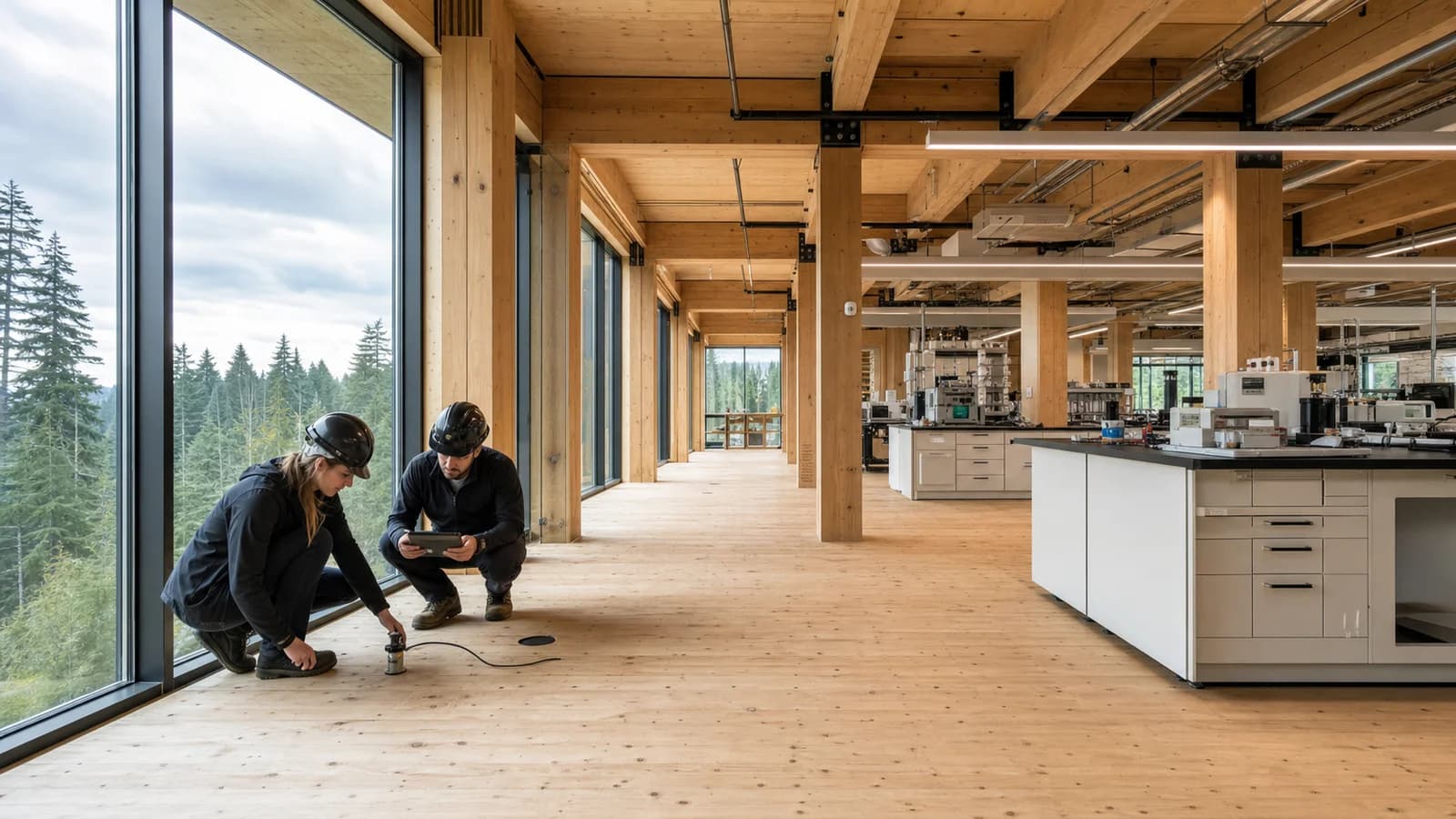
Mass Timber Laboratory Meets Demanding Vibration-Control Requirements
Oregon State University’s 143,000-square-foot research complex uses mass plywood panels in floors engineered for sensitive equipment, extending mass timber into a building type normally associated with concrete.
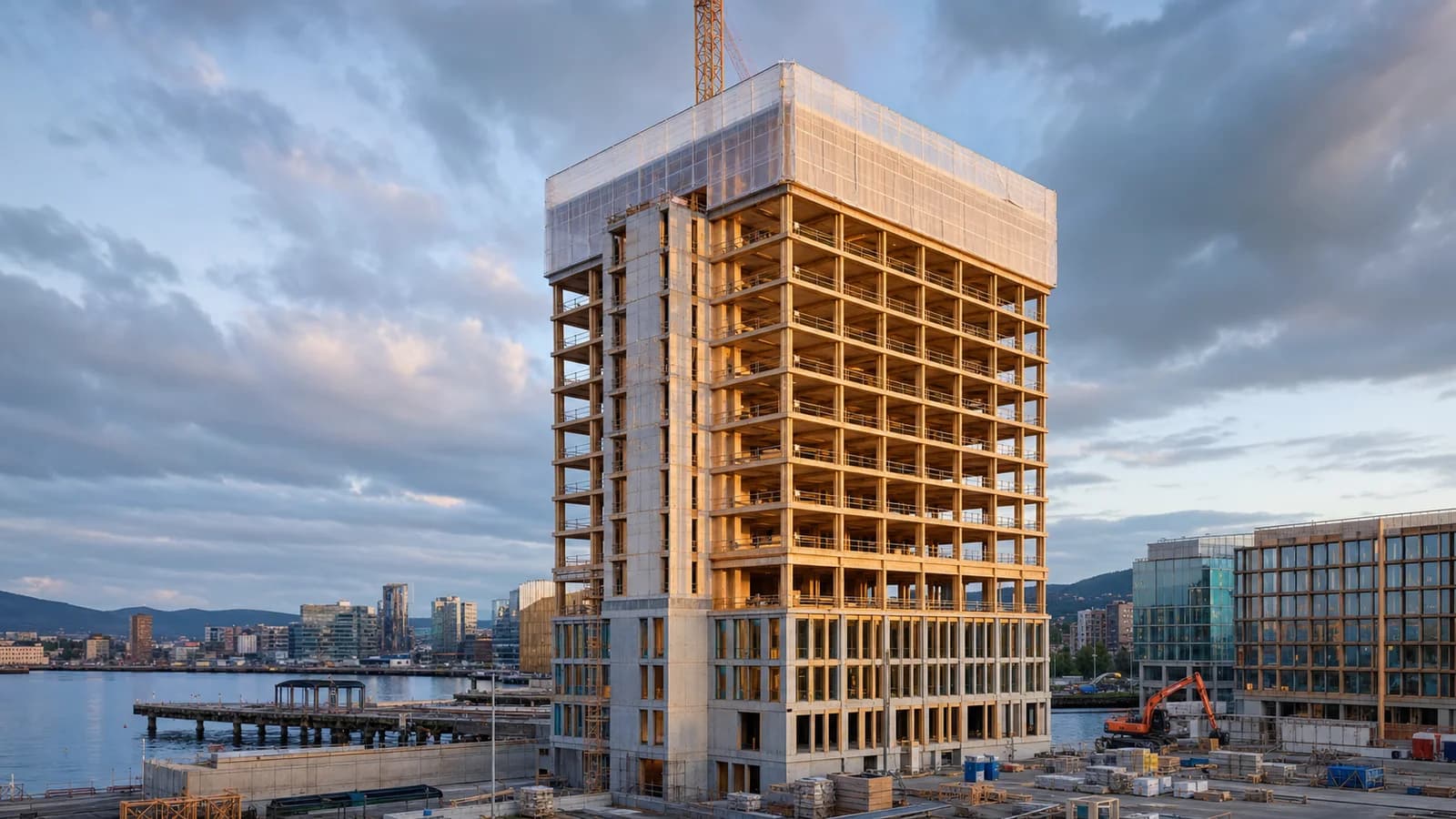
Oregon State University is demonstrating that mass timber can support more than offices and classrooms. The Huang Collaborative Innovation Complex, a research building of approximately 143,000 square feet, uses engineered wood—including mass plywood panels—in a laboratory environment with unusually strict vibration criteria.
Laboratories often default to concrete because microscopes, imaging systems and other precision equipment can be disturbed by movements that people barely perceive. At the Oregon project, the structural team designed floor zones to meet a 2,000 micro-inches-per-second vibration criterion, commonly expressed as 2,000 MIPS.
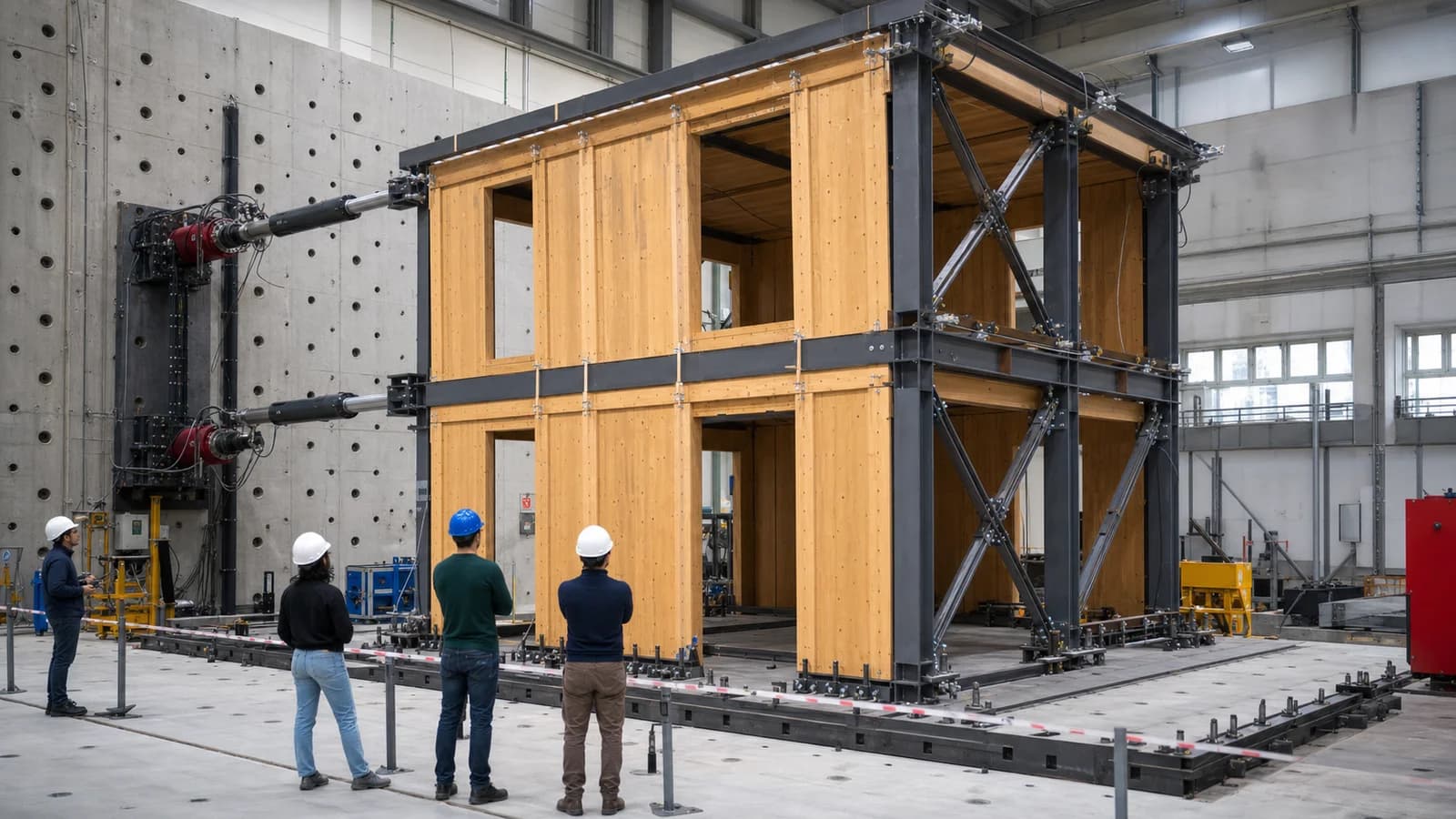
Meeting that target does not mean the floor never moves. It means dynamic response is controlled below an agreed velocity threshold for the equipment and activities planned in each space. The distinction is essential: vibration performance is measured, modelled and verified, not described by the vague claim that a structure is “vibration-free.”
How timber enters a demanding building type
Mass plywood panels can provide a stiff, prefabricated floor plate, while beams, columns and other structural elements complete the load path. Panel thickness, span, support spacing, connection stiffness, toppings, partitions and equipment placement all influence vibration response. The successful design is the whole assembly, not one product in isolation.
The project team used analysis and testing to reconcile structural efficiency with laboratory performance. Heavier or locally strengthened zones can be introduced where sensitive instruments require them, while other spaces use a more economical arrangement. This performance zoning avoids designing every square metre for the most demanding case.
The roughly $200-million complex is intended to bring together research in fields including materials science, robotics and artificial intelligence. Its planned 2027 opening will provide operational evidence for a sector watching whether timber can meet the requirements of science and technology buildings.
Why this matters beyond one university
Life-science and research projects are a large, technically conservative market. If timber systems can demonstrate predictable vibration, fire, acoustic and service-integration performance, they gain access to buildings previously considered unsuitable.
The lesson also applies to other equipment-intensive uses, but each case needs its own criteria. Data centres, for example, introduce different loads, redundancy, fire strategy, cooling and operational requirements. The Oregon laboratory is evidence of capability, not a universal approval for every sensitive facility.
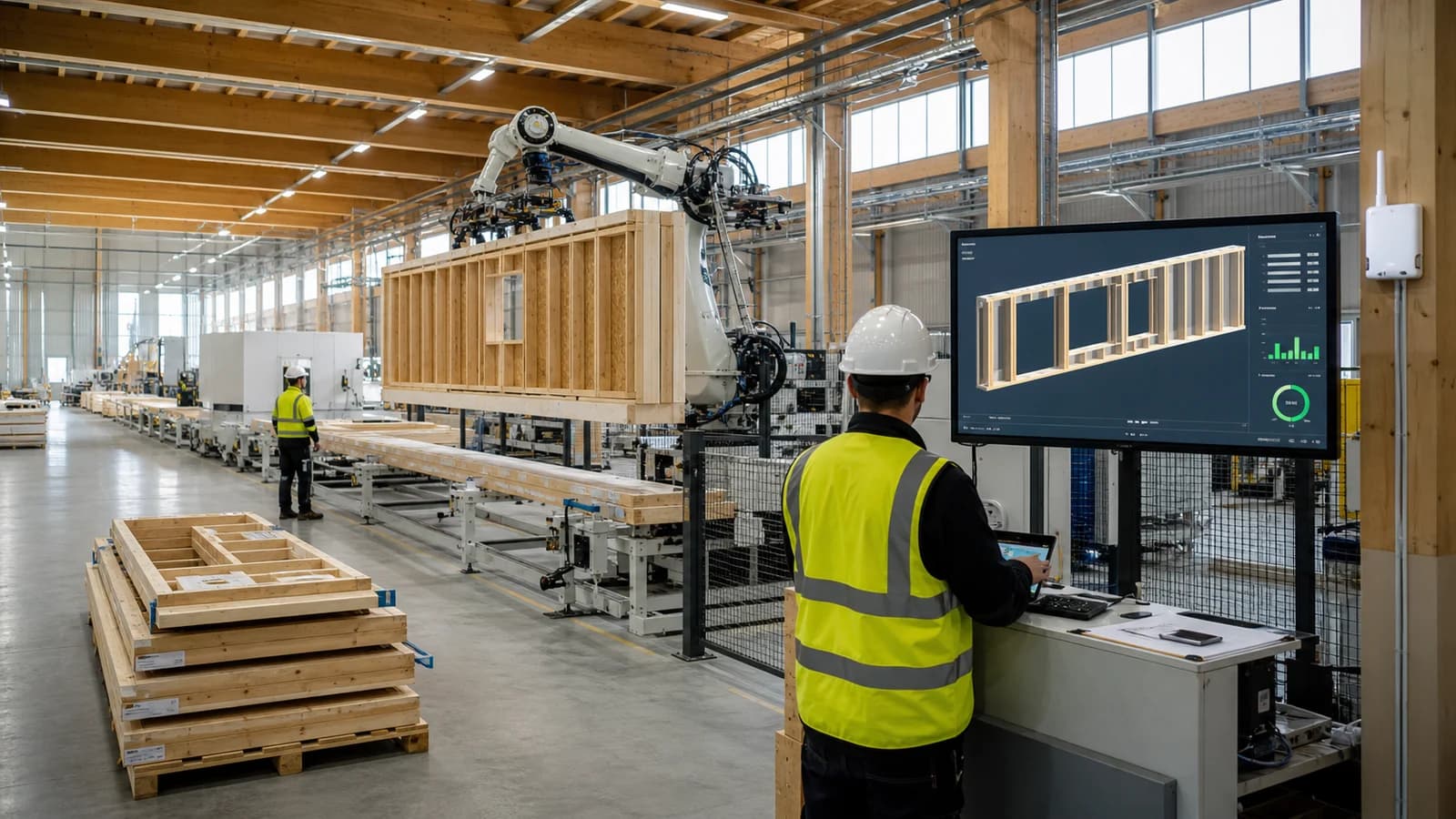
Digital coordination is central. Structural members, panel joints, equipment loads and service penetrations need to share one accurate model. Vibration assumptions should remain linked to spans and support conditions so that an architectural or MEP change does not silently invalidate performance.
For timber-focused software, the next step is connecting fabrication geometry with engineering metadata. Panels and beams should retain identity, support conditions and design zones through coordination, manufacture and installation.
The Oregon project expands the credible application range of mass timber. Its achievement is not simply that a laboratory contains wood, but that the structural system was engineered against a quantitative criterion normally used to justify heavier construction.
Sources: Engineering News-Record, “Mass Timber Breaks New Ground at Oregon Lab,” 2026; Oregon State University project information for the Huang Collaborative Innovation Complex; project-team information from ZGF, KPFF and Freres Engineered Wood.