Massachusetts Offers $40,000 Per Team for Mass Timber: A Beginner’s Guide
A public accelerator offers selected project teams up to $40,000 in technical support. Here is what early-stage mass-timber assistance can—and cannot—do.
Massachusetts opened a new round of mass-timber project support in July 2026, offering selected teams up to $40,000 in technical assistance. The money is not a blank construction subsidy and does not buy a building. It is designed to answer expensive early questions before a project commits to the wrong structural grid, procurement route or carbon assumption.
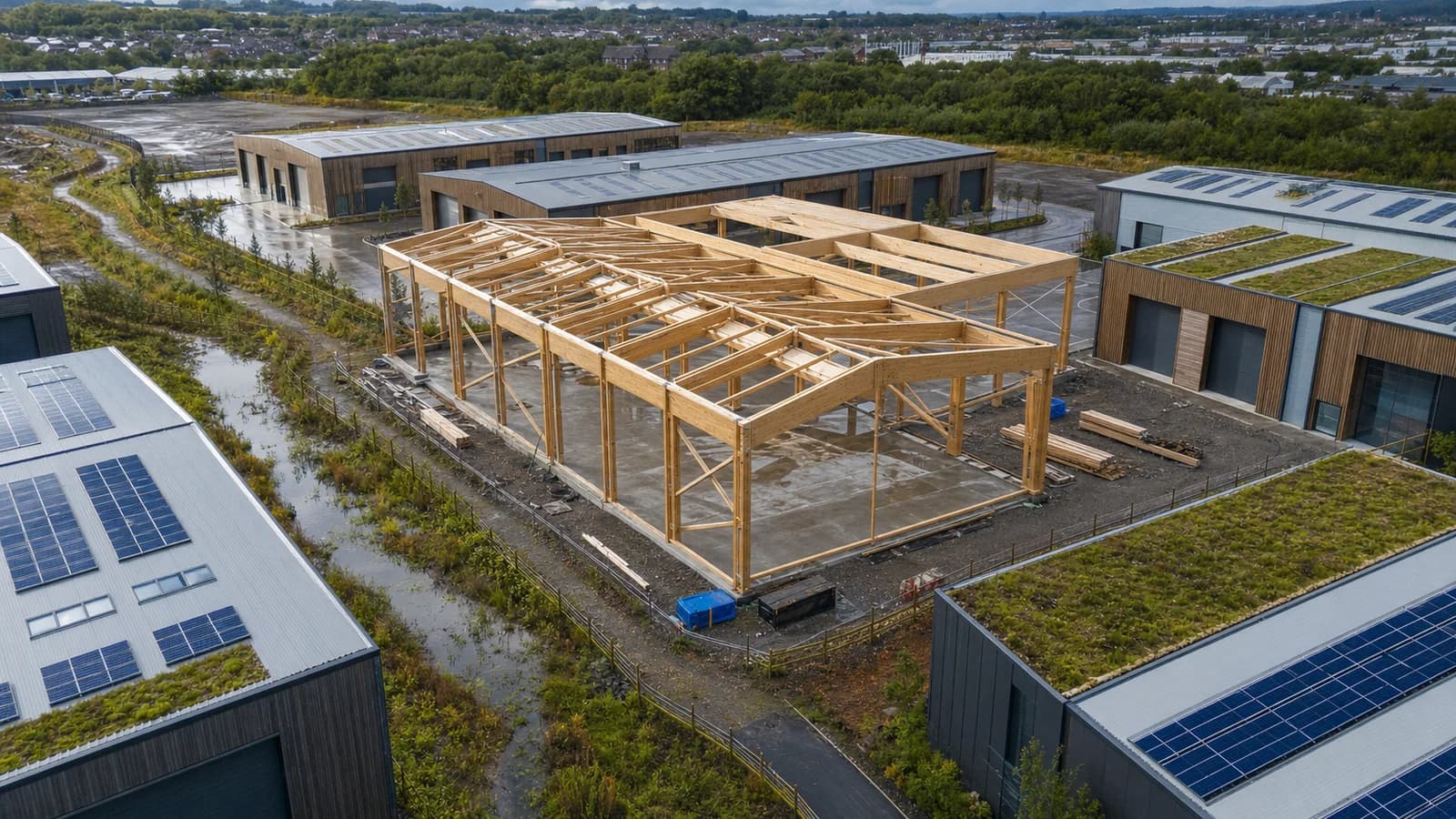
For beginners, that timing is the important part. Mass timber is a family of engineered products and systems, including cross-laminated timber panels and glued-laminated columns and beams. It is not simply conventional construction with steel or concrete swapped for wood at the end.
What early assistance can study
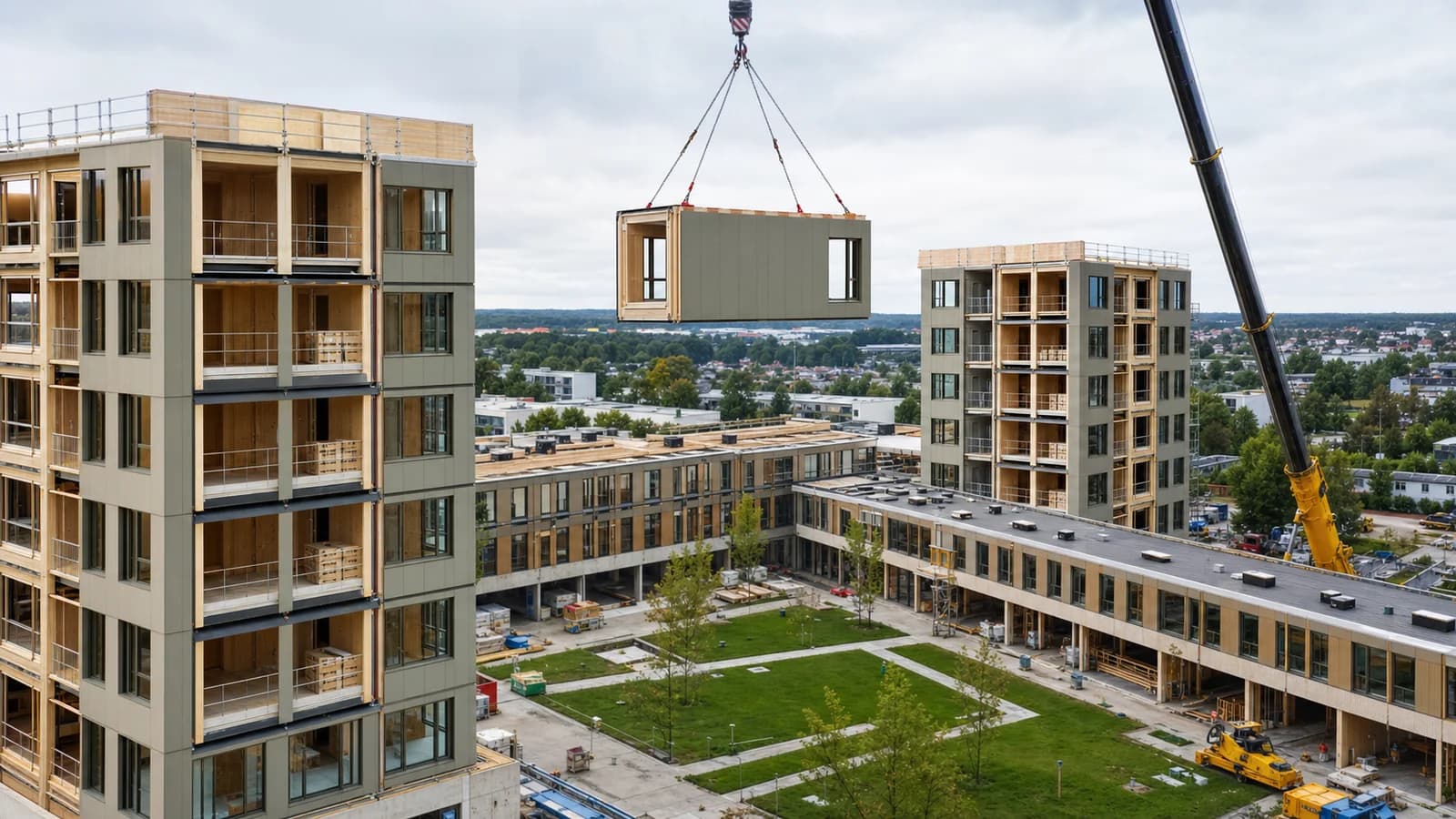
A useful feasibility study can compare structural schemes, column spacing, floor depth, vibration, fire strategy, acoustic build-ups, moisture protection and connection concepts. It can examine whether local suppliers can make and deliver the required panels, how cranes will reach the site, and whether a hybrid solution is more sensible than an all-timber one.
Cost work should distinguish product price from total installed cost. Timber can reduce structural weight and speed dry assembly, but engineering, fire protection, acoustic layers, transport, temporary weather protection and specialist connections all matter. A fair comparison uses the same building performance and includes schedule effects.
Carbon work needs equal discipline. The baseline should be an equivalent design, not a generic square metre of steel or concrete. The study must state life-cycle stages, product declarations, transport distances, biogenic-carbon treatment and major exclusions.
What the programme does not guarantee
Receiving technical support does not mean a project will be approved, funded or built. A feasibility result may show that another system is better for the site. That is still useful: finding a mismatch during concept design costs far less than finding it after tender.
Nor does an accelerator replace the architect, structural engineer, fire consultant, contractor or authority. It helps these roles make informed early decisions and produce evidence that can survive the next stage.
A beginner’s checklist
Before applying, a team should know the intended use, approximate area, site constraints, target programme and decision that the study must unlock. It should identify who owns the model, who can change the structural grid and who will validate fire, acoustic and envelope assumptions.
Good outputs are concrete: a recommended system with alternatives, a dimensional grid, outline connections, a risk register, cost and carbon ranges, procurement options and next-step responsibilities. A glossy image without these decisions is not feasibility.
End with a decision gate
The study should conclude with a clear choice: proceed with the preferred timber or hybrid scheme, redesign specific constraints, or stop the option. Each recommendation needs confidence level and evidence still required. Unknown fire details, unconfirmed supplier capacity or preliminary prices should remain visibly provisional.
That decision gate protects the later team from treating an early estimate as a finished design. It also helps public programmes compare outcomes across projects: not simply how many received support, but how many resolved a real barrier, advanced responsibly or avoided an unsuitable solution.
The FrameVerk view
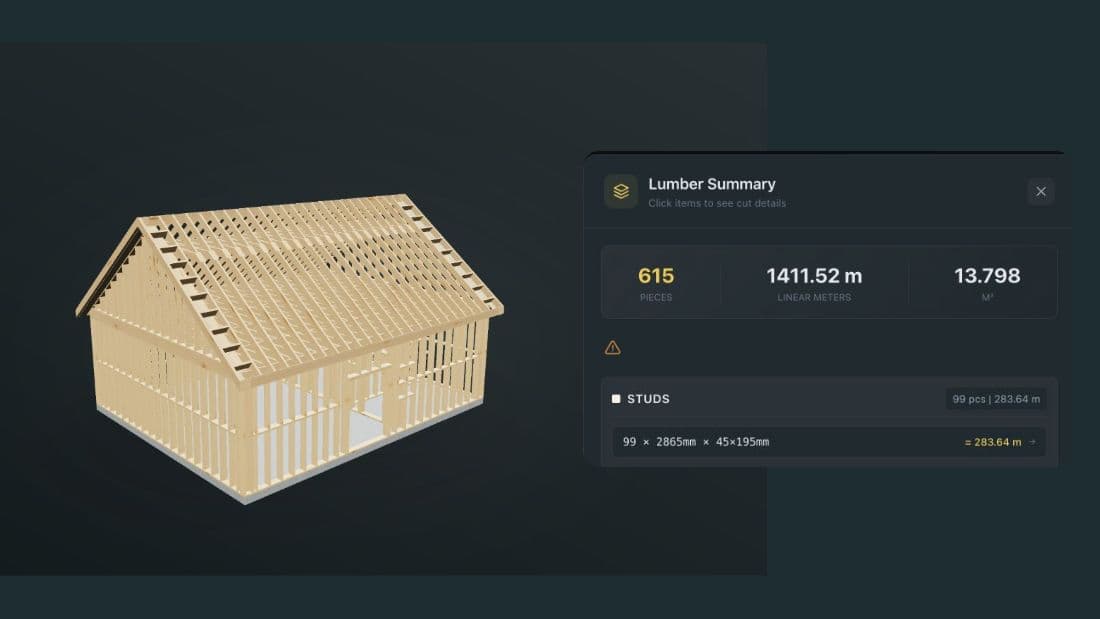
Early tools should make assumptions visible. When users change grid, span, floor system or material, they should see quantities, depth, weight, cost range and carbon range update together. Warnings should identify what remains unverified rather than presenting false precision.
The $40,000 headline matters because concept decisions lock in much of a building’s structure and supply chain. The best outcome is not more timber at any cost. It is more projects that know early where timber creates real value—and where it does not.
Sources
- Massachusetts Clean Energy Center, “Mass Timber Accelerator,” updated July 2026: https://www.masscec.com/program/mass-timber-assembly
- Public consultant request for proposals, accessed 30 July 2026: https://www.masscec.com/sites/default/files/documents/mass_timber_accelerator_consultant_rfp.pdf
- Commonwealth of Massachusetts, “Embodied Carbon Reduction Plan,” January 2026: https://www.mass.gov/doc/massachusetts-embodied-carbon-reduction-plan-january-2026/download