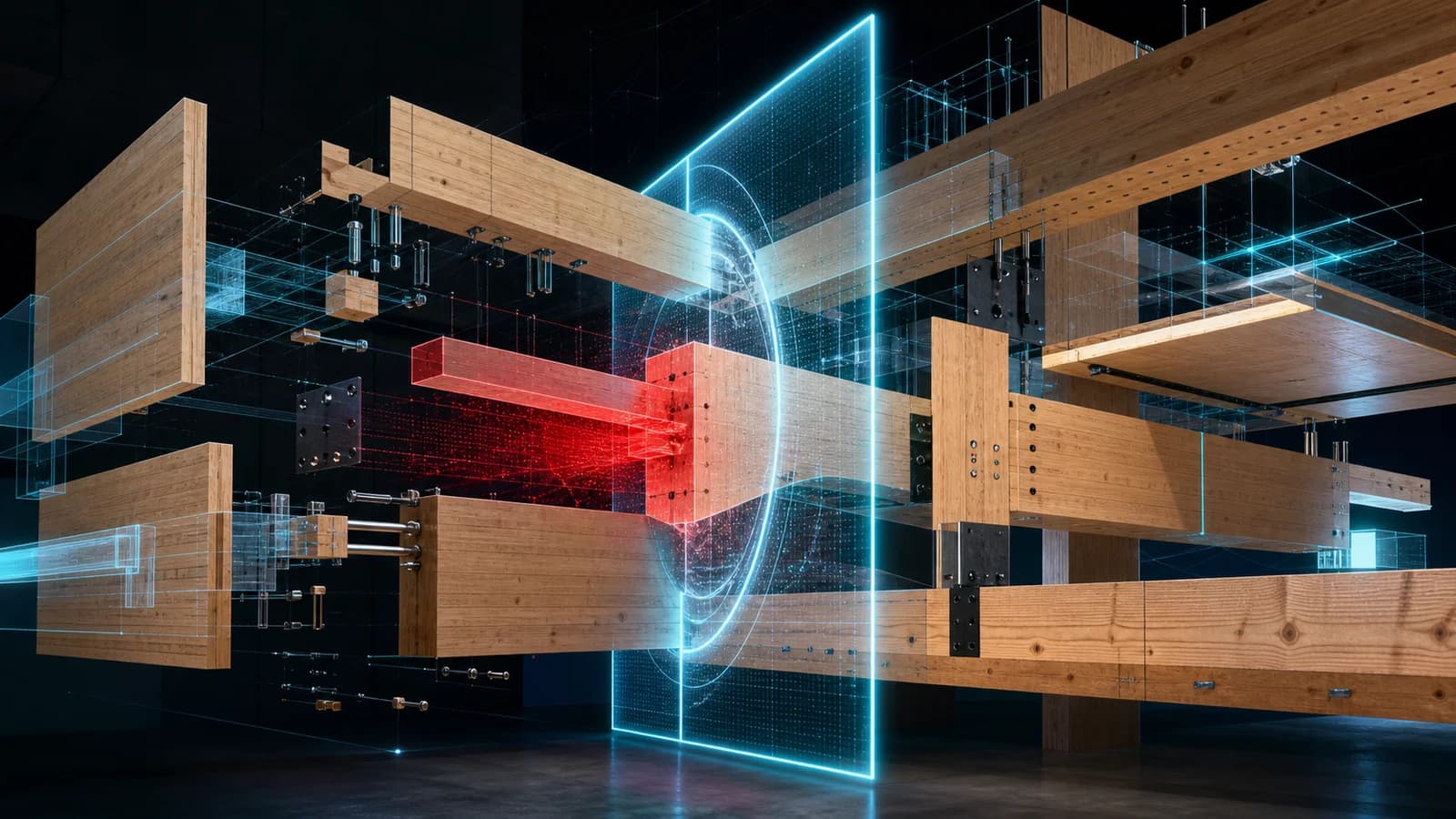
Solibri’s 2026 reset puts model checking before the expensive timber mistake
Solibri launched a new platform on 13 April 2026 with cloud-connected checking, point-cloud support and a browser-based WebChecker beta. Timber prefabrication gives those features unusually high stakes.
Solibri reorganised its product portfolio on 13 April 2026 around four tiers: Starter, Essential, Advanced and Premium. Previous offerings moved into legacy status, while the release connected desktop and cloud checking, added pre-release E57 point-cloud import and introduced a beta browser service called WebChecker.
For timber prefabrication, the important word is not cloud. It is checking.
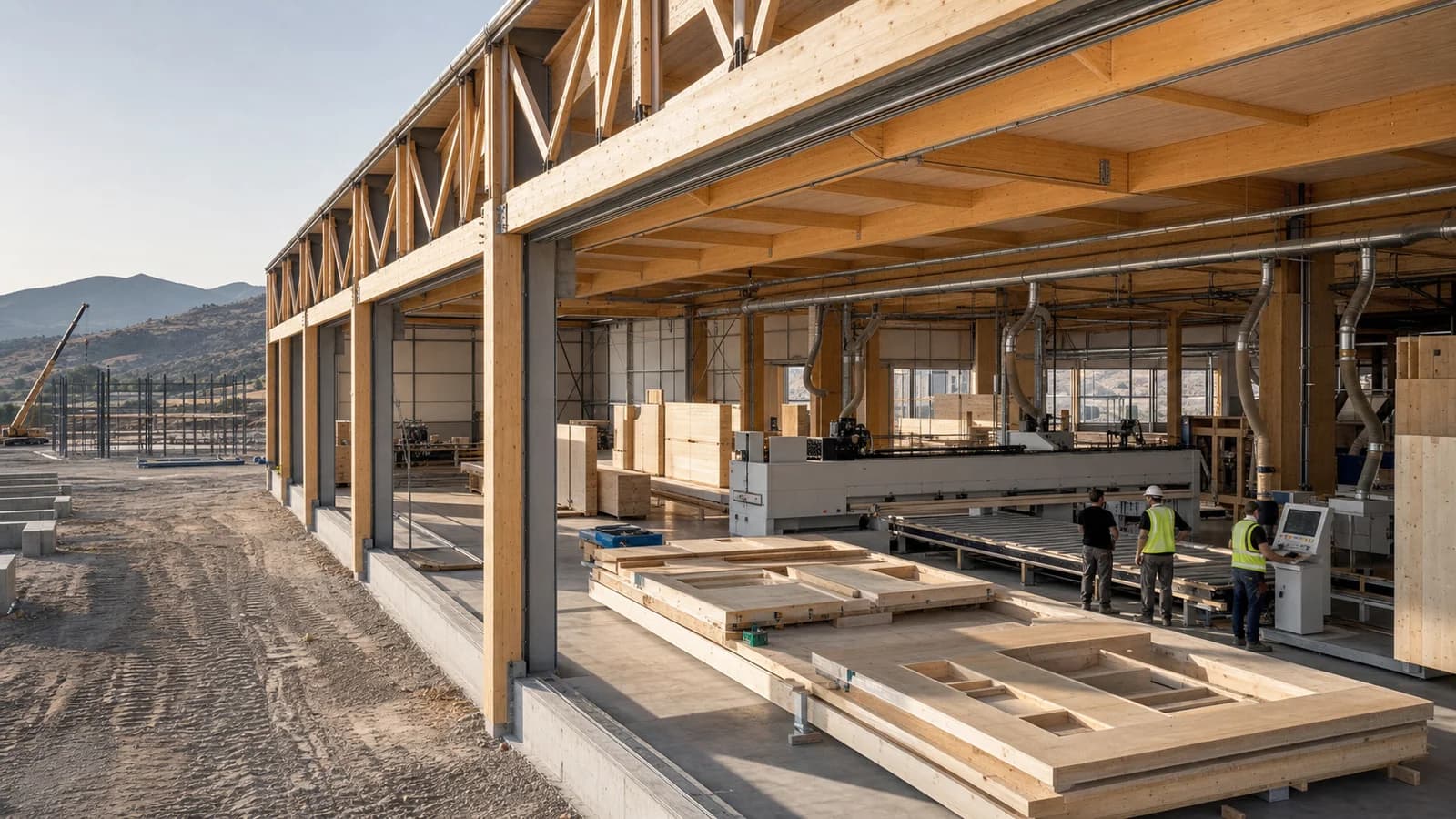
A clash in a conventional model can become rework on site. A clash in a fabrication-driven timber model can become a precisely manufactured error delivered by truck.
From coordination to validation
BIM coordination often asks whether two objects occupy the same space. Structured validation also asks whether the model contains the information the project requires.
The April release improves support for Information Delivery Specification workflows. IDS is a buildingSMART standard for expressing required properties, classifications and relationships in a machine-readable form.
IDS does not prove structural adequacy or code compliance. It can verify that agreed information exists in the expected form. A timber project might require each structural element to carry a stable identifier, product type, grade, fire status, fabrication revision and sourcing data.
That is less glamorous than an AI badge and more useful than discovering at handover that half the panels have no traceable grade.
WebChecker lowers the entry point
Solibri WebChecker entered beta as a browser service for quick IFC health checks. Users can run a built-in model-health ruleset or upload custom checking sets, review results and export findings.
This may let clients, subcontractors or authorities apply a common check without a complete desktop setup. The risk is false confidence. A clean report means the model passed the selected rules; it does not mean the building is safe, manufacturable or checked against requirements that were never encoded.
Reports should therefore state model version, ruleset, date, exclusions and unresolved warnings. “Passed Solibri” is not a technical conclusion until the reader knows what was tested.
Point clouds connect design to reality
Pre-release E57 point-cloud support can help compare installed conditions with the coordinated model. Timber applications include checking anchors before a frame arrives, surveying an existing building before an extension and verifying erection tolerance.
Scan accuracy, registration and coordinate systems still need control. A colourful cloud can look authoritative while being offset from the project origin.
Why open standards matter
Timber delivery may involve architectural authoring, structural analysis, specialist detailing, CNC preparation and site management. IFC provides an open exchange framework; IDS expresses information requirements. Neither guarantees perfect interoperability, but both create inspectable gates between organisations.
WoodWorks’ Mass Timber Technical Reference Guide, launched in March 2026, shows the range of domain questions a model must eventually serve: structure, fire, acoustics, vibration, durability and construction. A generic BIM check does not answer those questions, but it can confirm that the correct assembly and product references have survived exchange.
The FrameVerk opportunity is to produce clear timber semantics from the start: real members, dimensions, connections and documented uncertainty. An external checker can then test the exchange independently.
If automated software says “this looks fine,” the factory is entitled to ask which rule, which component and which version. The best use of Solibri’s 2026 platform is to stop the wrong hole or missing property while it is still a cheap digital problem.
Teams upgrading should also test legacy projects before changing production workflows. Solibri’s own release notes describe product transitions and rule updates; a recorded pilot model can reveal differences in licensing, results and exports before a live fabrication package depends on them.
Sources
- Solibri, “Solibri Release Notes — April 2026,” 13 April 2026: https://www.solibri.com/articles/solibri-release-notes-april-2026 - buildingSMART International, Information Delivery Specification (IDS): https://www.buildingsmart.org/standards/bsi-standards/information-delivery-specification-ids/ - buildingSMART International, Industry Foundation Classes (IFC): https://www.buildingsmart.org/standards/bsi-standards/industry-foundation-classes/ - WoodWorks, Mass Timber Technical Reference Guide, launched 6 March 2026: https://www.woodworks.org/mass-timber-technical-reference-guide/