Timber Buildings Do Not Have an Expiry Date: What a 2026 Durability Review Found
A June 2026 review found that moisture, maintenance and obsolescence matter more than a mythical fixed lifespan for timber buildings.
Timber Buildings Do Not Have an Expiry Date
A systematic review published on 4 June 2026 found that evidence for one physical lifespan of timber buildings is scarce. Moisture drives biological and physical deterioration, yet demolition is often linked to obsolescence or inadequate maintenance rather than structural failure.
In a reference assessment, the researchers estimated 100 years for an interior LVL beech column and 81 years for an exterior timber stud. These are conditional calculations, not guarantees. Species, exposure, drainage, drying, detailing, inspection and repair change the result.
What the review actually found
The researchers screened evidence on degradation mechanisms, reasons buildings are demolished, reference service-life values and prediction methods. Biological deterioration, physical weathering and mechanical effects are well described, but consistent data on the actual ages of demolished timber buildings are limited. Published reference values frequently depend on expert judgement and do not always declare their boundary conditions.
That gap matters. A service-life number without climate, exposure, maintenance, component function and failure criterion can look more certain than it is. The study therefore supports factor-based assessment rather than a universal countdown clock.
Moisture is the recurring variable
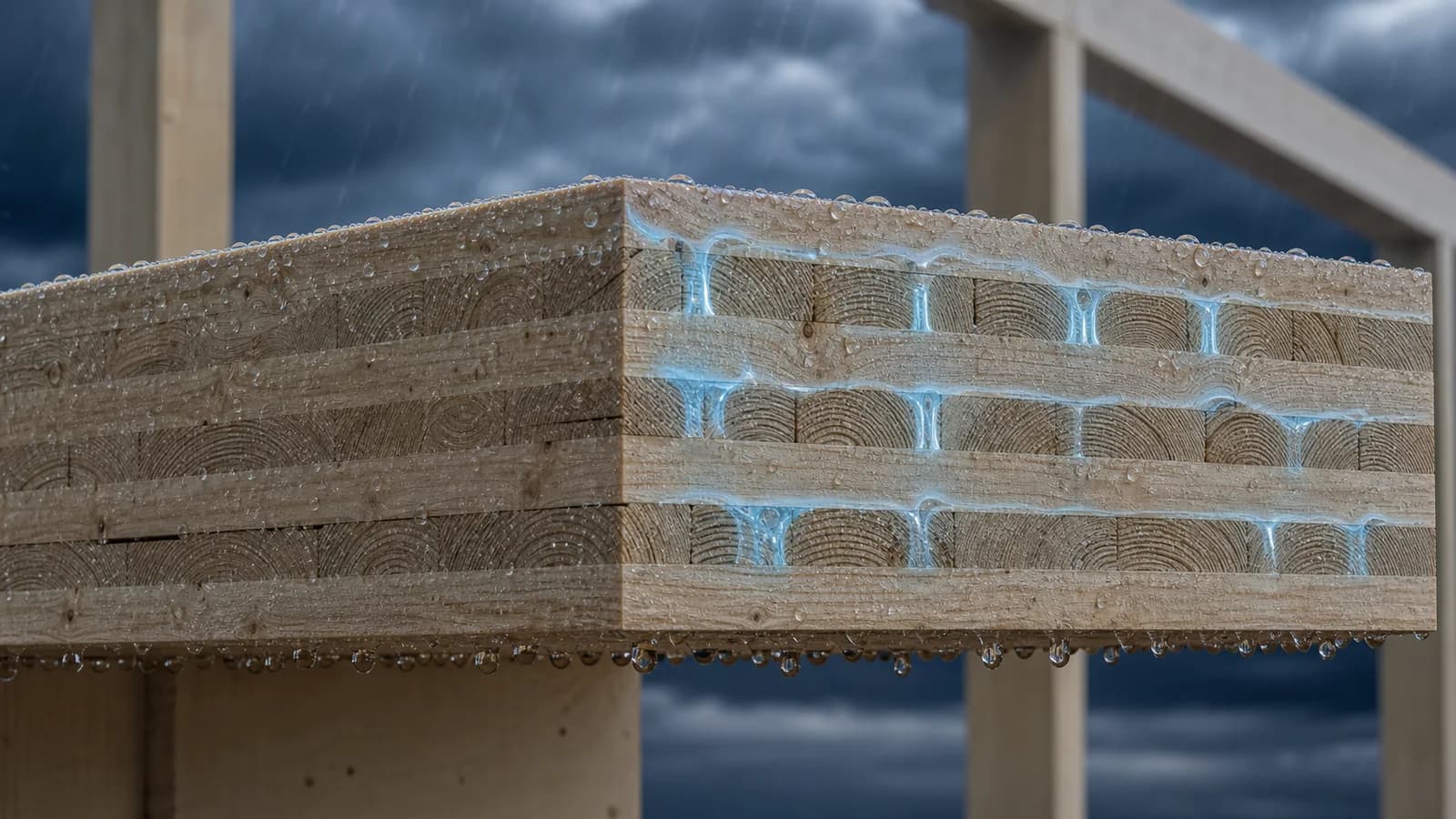
Wood-destroying fungi need suitable moisture and temperature conditions. Good durability design aims to prevent sustained wetting and allow rapid drying when incidental moisture occurs. Roof overhangs, drained and ventilated cavities, capillary breaks, protected end grain, durable base details and accessible flashings are not decorative extras; they control exposure.
Interior and exterior components live different lives. The reference interior column was protected from weather, whereas the exterior stud depended on its wall build-up and exposure assumptions. A hidden leak can be more serious than brief visible rain because it can persist without detection.
Material choice still matters. Natural durability varies by species and heartwood or sapwood, while modified or preservative-treated wood may suit particular hazard conditions. These choices must match the intended use, connections, coatings, adhesives and local requirements. “Use a durable species” cannot repair a detail that traps water.
Service life is not the same as warranty
A calculated service life is an engineering planning value under stated conditions. A product warranty is a contractual promise with its own exclusions. A design life is the period assumed for the asset or component in the project brief. These terms overlap in conversation but are not interchangeable.
Nor does the end of a reference period mean sudden collapse. A component may require inspection, maintenance, repair or replacement before or after the nominal value. The aim is to plan decisions and consequences, not to predict an exact birthday on which timber “expires.”
Why buildings are removed
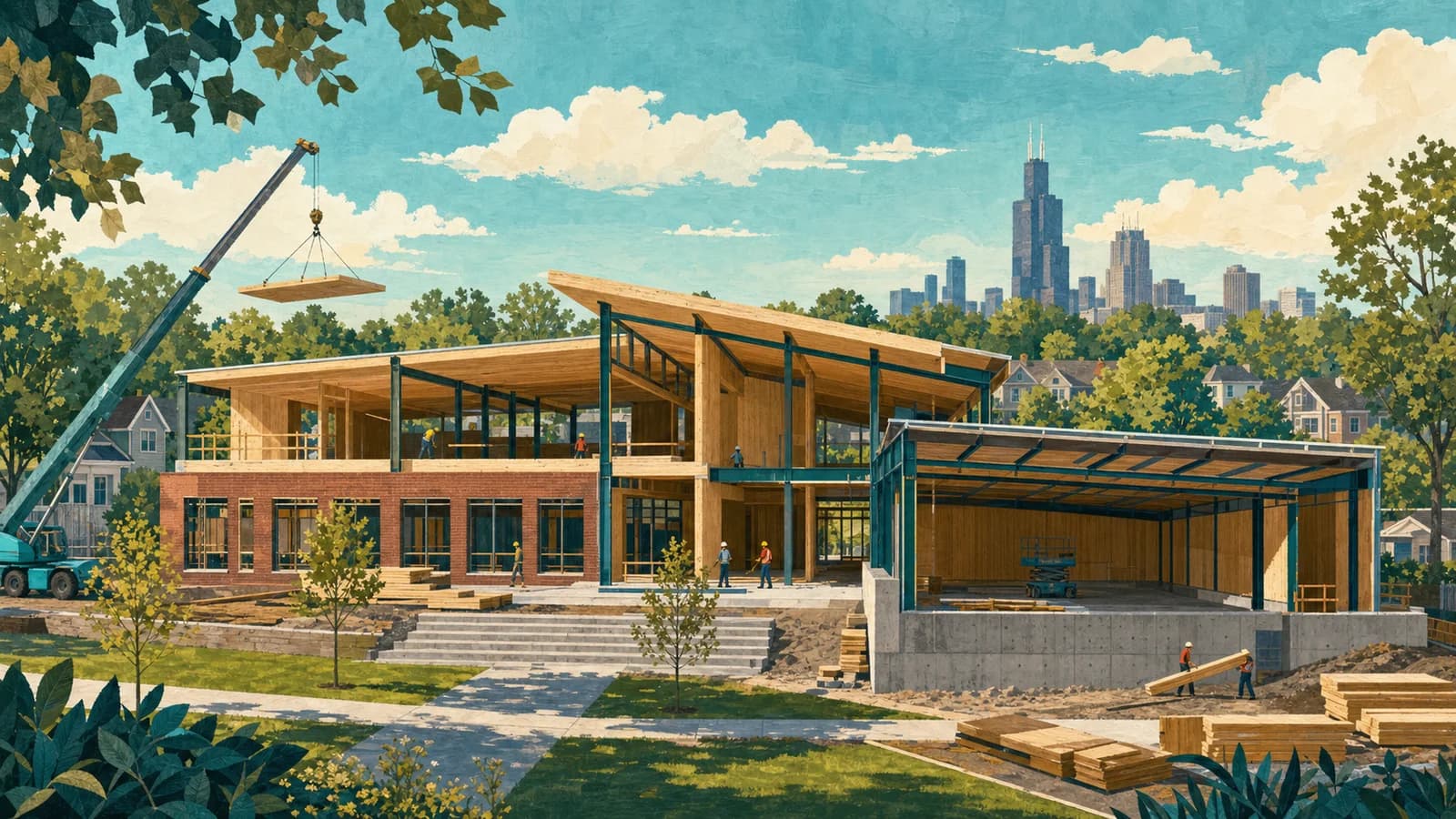
The review found that demolition can follow functional obsolescence, changing user expectations, redevelopment pressure or inadequate maintenance. A structurally sound building may be removed because its layout, energy performance or services no longer meet demand. That makes adaptability part of durability.
Regular grids, reversible connections, accessible service zones and documented components can make refurbishment easier. If the structure can accept new uses and damaged layers can be replaced without destroying healthy members, its useful life can extend beyond the first programme.
A practical durability checklist
- Define exposure and service conditions for every structural timber component.
- Keep water away with geometry first, then membranes, coatings and treatments.
- Provide drainage and drying paths, including at bases, edges and interfaces.
- Make high-risk junctions visible or accessible for inspection.
- Specify compatible materials and avoid moisture traps at connectors.
- Record inspection intervals, acceptable conditions and responsible parties.
- Design replaceable protective layers without sacrificing the primary structure.
- Preserve product, moisture and repair records at handover.
Maintenance should be specific. “Inspect façade periodically” is weak. A useful plan names locations, frequency, warning signs, measurement method and action thresholds.
The carbon connection
Longer service life can improve the value obtained from the resources and emissions invested in a building. But life-cycle claims must use transparent assumptions. Extending a modelled life while ignoring maintenance, replacements or operational changes can overstate benefit.
Reuse also depends on condition and information. Members with known identity, exposure, modifications and inspections are easier to assess than anonymous material hidden in an undocumented assembly. Durability data therefore supports circularity as well as maintenance.
What the headline does not mean
The 2026 review does not prove that every timber building lasts a century. Its component estimates came from a defined reference assessment, and the authors call for stronger empirical demolition data and clearer reference values.
It does show why the blanket claim that timber is temporary is misleading. Wood buildings do not share one lifespan. They have exposure conditions, details, maintenance histories and changing uses—exactly like buildings made from other materials.
Turn the model into a care plan
At handover, each high-risk location should have an identity, drawing reference, photograph, expected condition and inspection method. The record should distinguish routine visual checks from measurements that require a moisture meter, opening-up work or specialist assessment. It should also state who reviews the result and what triggers urgent action.
Repairs need the same traceability. Record the cause, affected components, moisture readings, removed material, drying evidence and replacement specification. A cosmetic patch without the cause can hide recurrence. Linking this history to model locations allows future teams to see patterns across a façade, roof or base rather than treating every symptom as isolated.
Finally, update the plan when use changes. More internal humidity, a new façade fixing, altered landscaping or a blocked drainage route can change exposure without changing the primary frame. Durability is therefore an operating relationship between material, detail, environment and people—not a one-time calculation filed away after completion.
The practical lesson is to design out trapped water, make vulnerable details inspectable and record maintenance. Service-life planning is a process, not a date stamped on wood.
The FrameVerk view
Models should retain exposure class, protective layers, inspection points and replacement assumptions. Durability becomes manageable when responsibilities remain visible after handover.
Sources
- Buildings, “Durability in Timber Construction: A Systematic Review of Status Quo and Perspectives,” 4 June 2026: https://www.mdpi.com/2075-5309/16/11/2269
- WoodWorks, “Durability and Service Life”: https://www.woodworks.org/resources/durability-and-service-life/
- ISO, “ISO 15686-1 Buildings and constructed assets — Service life planning”: https://www.iso.org/standard/61148.html