Timber Design Software Attracts A$3 Million: Why Investors Backed SPEC Toolbox
Australia’s SPEC Toolbox raised A$3 million in January 2026 to expand a structural-design platform that began with mass timber and now connects engineers with verified product data.
Timber engineering software moved into the investment headlines in January 2026 when Melbourne-based SPEC Toolbox raised A$3 million in a pre-Series A round.
Investible’s Climate Tech Fund and Black Nova co-led the financing, with participation from several other venture investors. Independent coverage by Startup Daily and funding databases confirmed the round and its January timing.
The company began as CLT Toolbox, focused on structural calculations for cross-laminated timber. It later rebranded as SPEC Toolbox as its product categories expanded beyond mass timber. The funding is intended to accelerate the roadmap, add suppliers and develop the technical platform.
The currency matters: the announced round was A$3 million, not US$3 million. Funding databases sometimes normalise or summarise venture rounds differently, so the investor announcement and contemporary Australian reporting are the clearest references for the deal value.
The spreadsheet problem is investable
Structural engineers frequently build custom spreadsheets or extract values from product PDFs. That can work, but it creates duplicated effort, difficult review and version-control risk when standards, products or assumptions change.
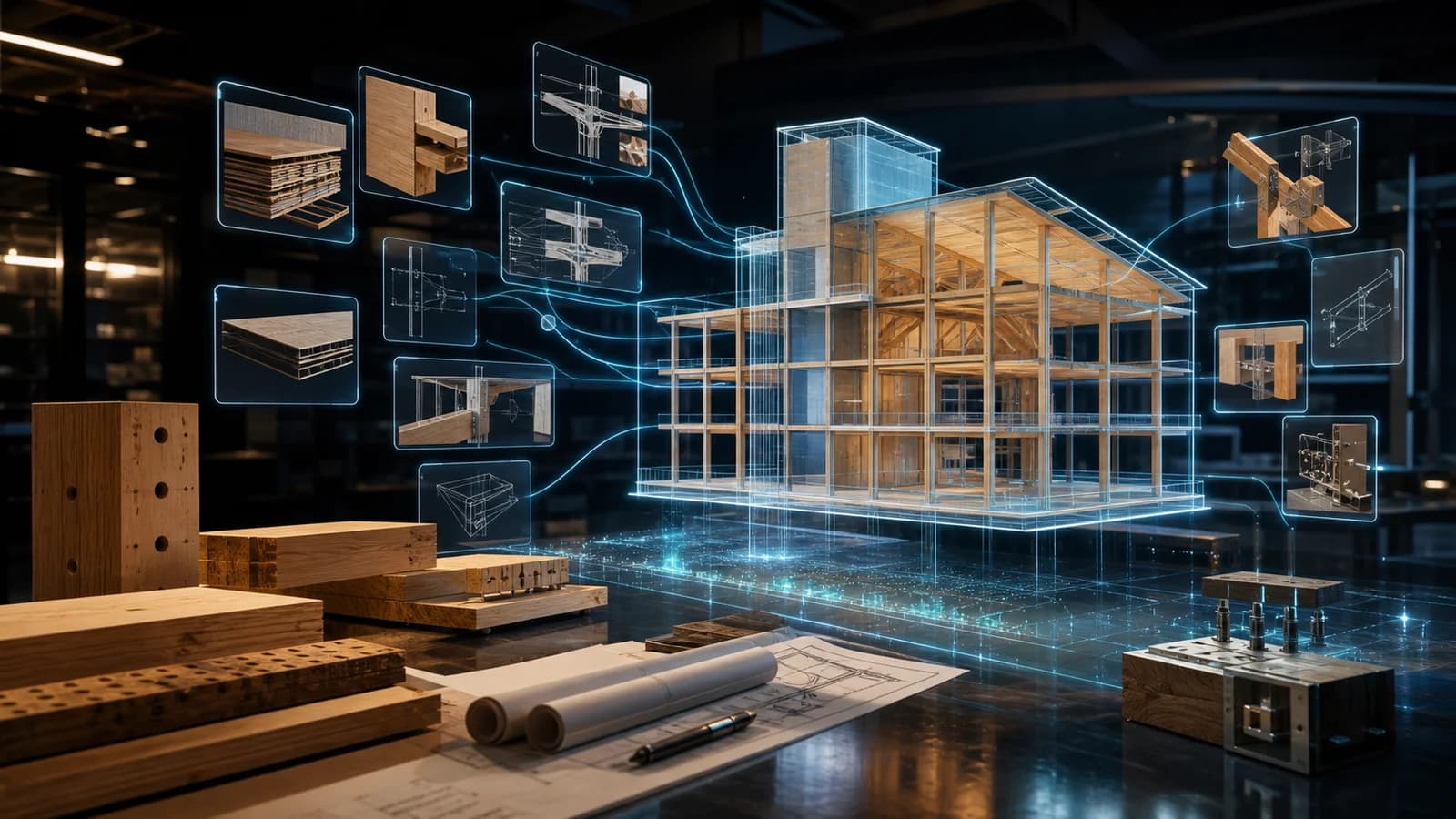
SPEC Toolbox’s proposition is to combine engineering calculators with supplier product information. Designers can assess manufactured systems using data connected to available products rather than translating every catalogue into a new private workbook.
Investible’s announcement says the platform had more than 5,000 user sign-ups, partnerships with 30 product suppliers and adoption by large engineering firms. Those figures come from an investor describing its portfolio company, so they should be read as reported company metrics rather than an independent market audit.
Why the timber origin matters
Mass timber exposes the specification problem clearly. CLT and glulam products vary by manufacturer, layup, grade, dimensions, approvals and region. Fire, vibration, acoustic and connection design can involve different tools and evidence.
A generic “CLT panel” in a model is insufficient when a project reaches procurement. Engineers need to know whether the designed product can be sourced and whether the calculation matches its declared properties.
The platform’s expansion beyond timber is logical because manufactured low-carbon products share the same obstacle: innovation is difficult to specify when technical data is scattered or incompatible with everyday design workflows.
What the capital is meant to change
The investors describe a roadmap built around more product categories, deeper technical infrastructure and additional supplier participation. That points to two forms of scale: more engineers using the calculators and more manufacturers placing verified product information inside the design environment.
Those goals are related but not identical. A broad catalogue is useful only when engineers trust its data, while sophisticated calculations have limited commercial effect if the specified products cannot be procured in the project’s region. The platform has to develop its technical and marketplace sides together.
The opportunity—and the risk
Connecting calculations to supplier data can reduce friction, but it also raises governance questions. Product information needs a source, revision date and jurisdictional scope. Engineers must be able to inspect equations and assumptions rather than treating software as an unchallengeable black box.
The A$3 million round does not prove that one platform will become the operating system for sustainable construction. It does show investors see value in the information layer between product manufacturers and designers.
For FrameVerk, the signal is particularly relevant. Geometry, structural checks, quantities, sourcing and fabrication should not live in disconnected files. A component can carry its physical dimensions and the evidence behind its specification.
The timber sector has spent years proving that engineered wood products can perform. The next software race is about making the correct product easy to calculate, compare, document and eventually manufacture—without asking every engineer to reinvent the same spreadsheet.
Sources: Investible, “Investment Notes: SPEC Toolbox,” 14 January 2026: https://www.investible.com/blog/investment-notes-spec-toolbox
Startup Daily, “Construction tech startup builds $3 million pre-Series A after rebrand,” 19 January 2026: https://www.startupdaily.net/topic/funding/construction-tech-startup-builds-3-million-pre-series-a-after-rebrand/
VCBacked, “SPEC Toolbox—Funding & Investors,” updated 15 January 2026: https://www.vcbacked.co/company/spec-toolbox