
Jul 30, 20263min
1The Big Viking Wood Puzzle
How Vikings invented timber framing—with no nails, just stubbornness, mead, and the mighty mortise-and-tenon.

Filtered by tag:
How Vikings invented timber framing—with no nails, just stubbornness, mead, and the mighty mortise-and-tenon.
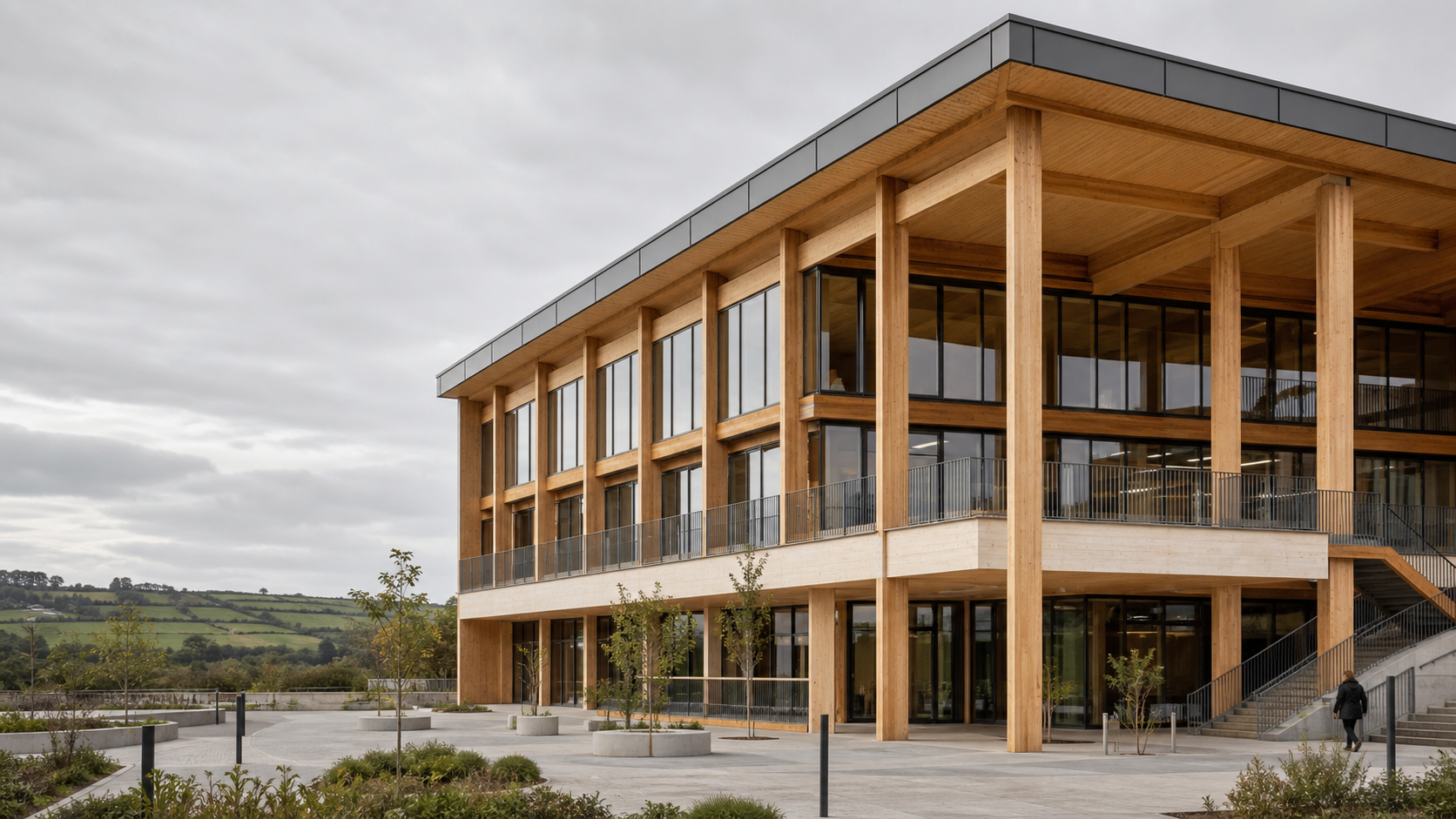
Ireland’s Timber in Construction Steering Group has delivered a seven-point roadmap covering regulation, procurement, carbon, skills and industry capacity. Its proposed “Wood First” approach would make timber the first material considered for public projects—not an automatic choice and not yet a nationwide mandate.
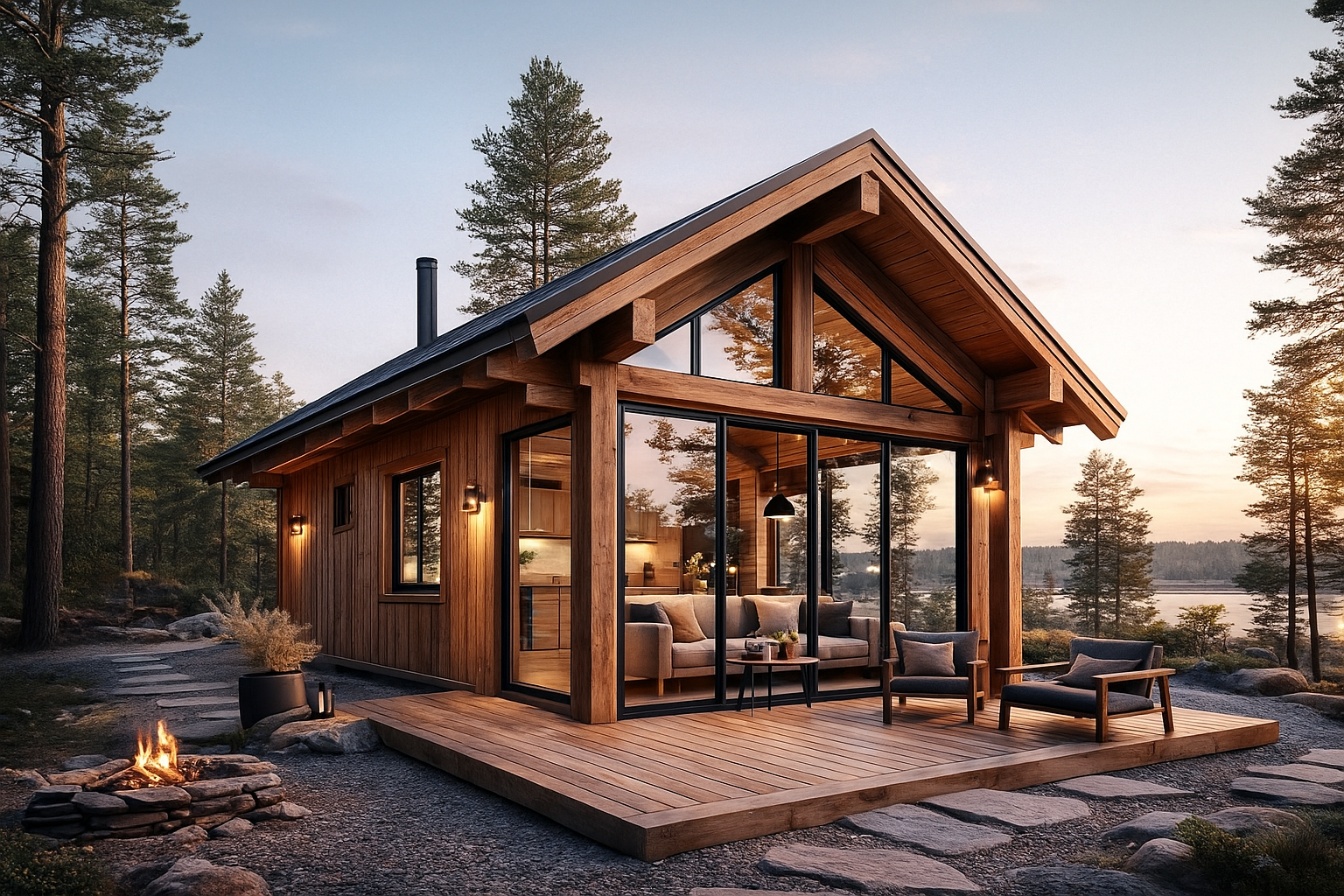
Small cabins, lower costs, big comfort. Why compact timberframe houses are dominating 2025.
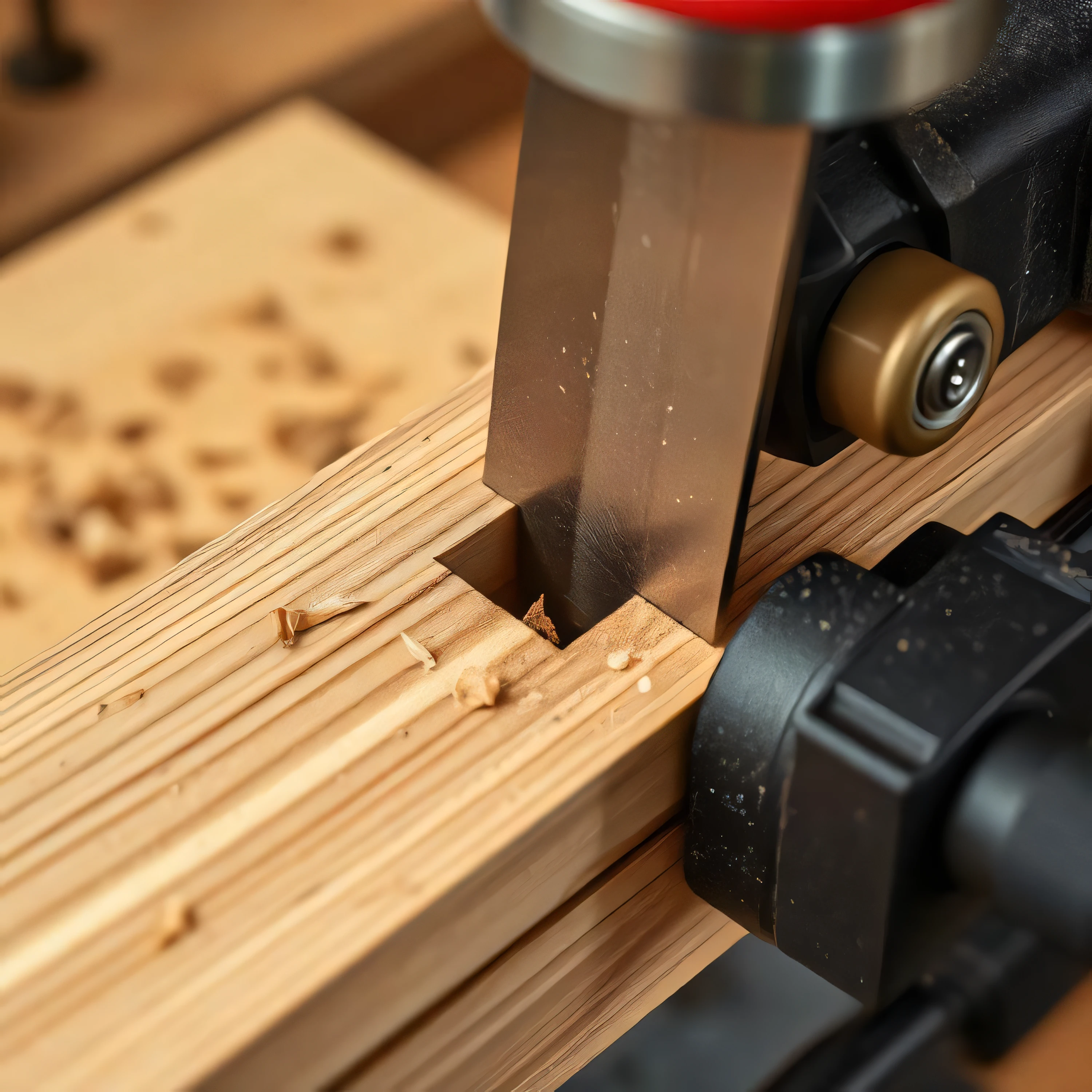
The hollow-chisel mortiser is the ultimate time-saving, precision-boosting tool for timber framers. Here’s why it beats hand-chopping in speed, accuracy, and sanity—featuring Sven & Olaf’s legendary woodworking wisdom.
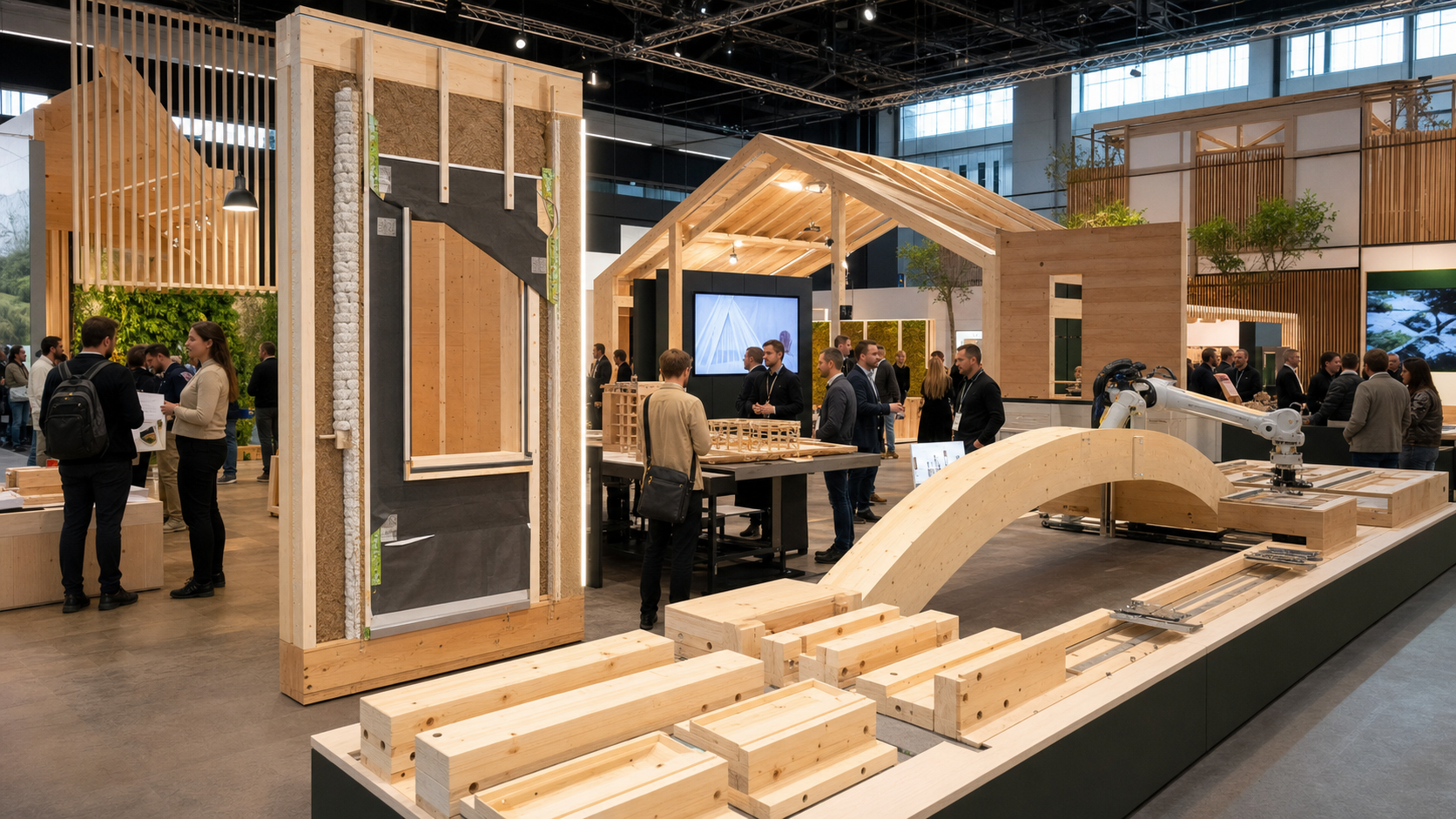
At nZEB Expo 2026 in Bucharest, the Wood Hub became the event’s dedicated Timber Partner. The expanded platform connected timber-frame manufacturers, engineered-wood specialists and energy-efficient construction audiences.
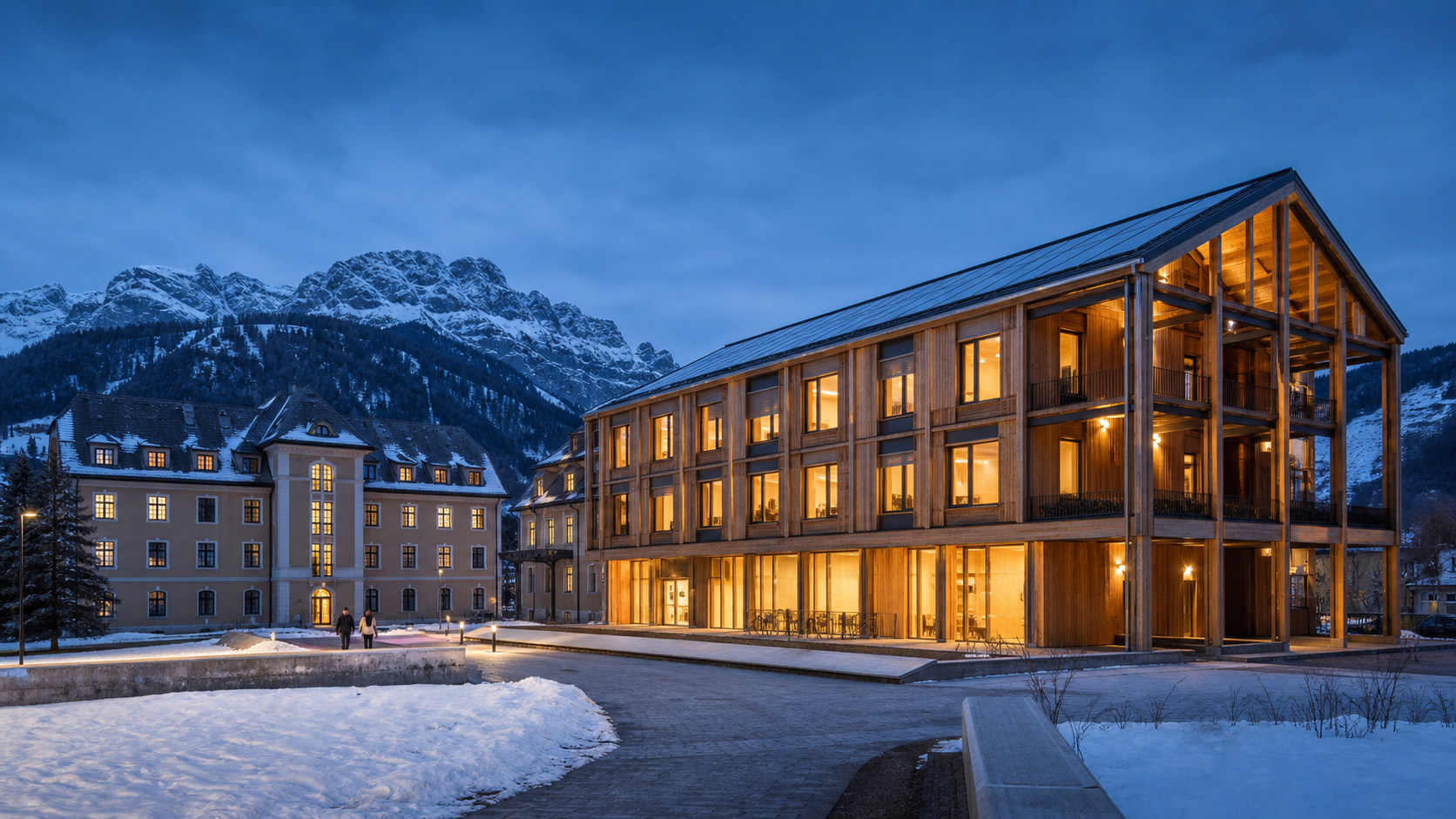
The 2026 Winter Games village in Predazzo combines new timber and steel accommodation with renovated historic buildings, then returns the permanent campus to the Guardia di Finanza after the athletes leave.
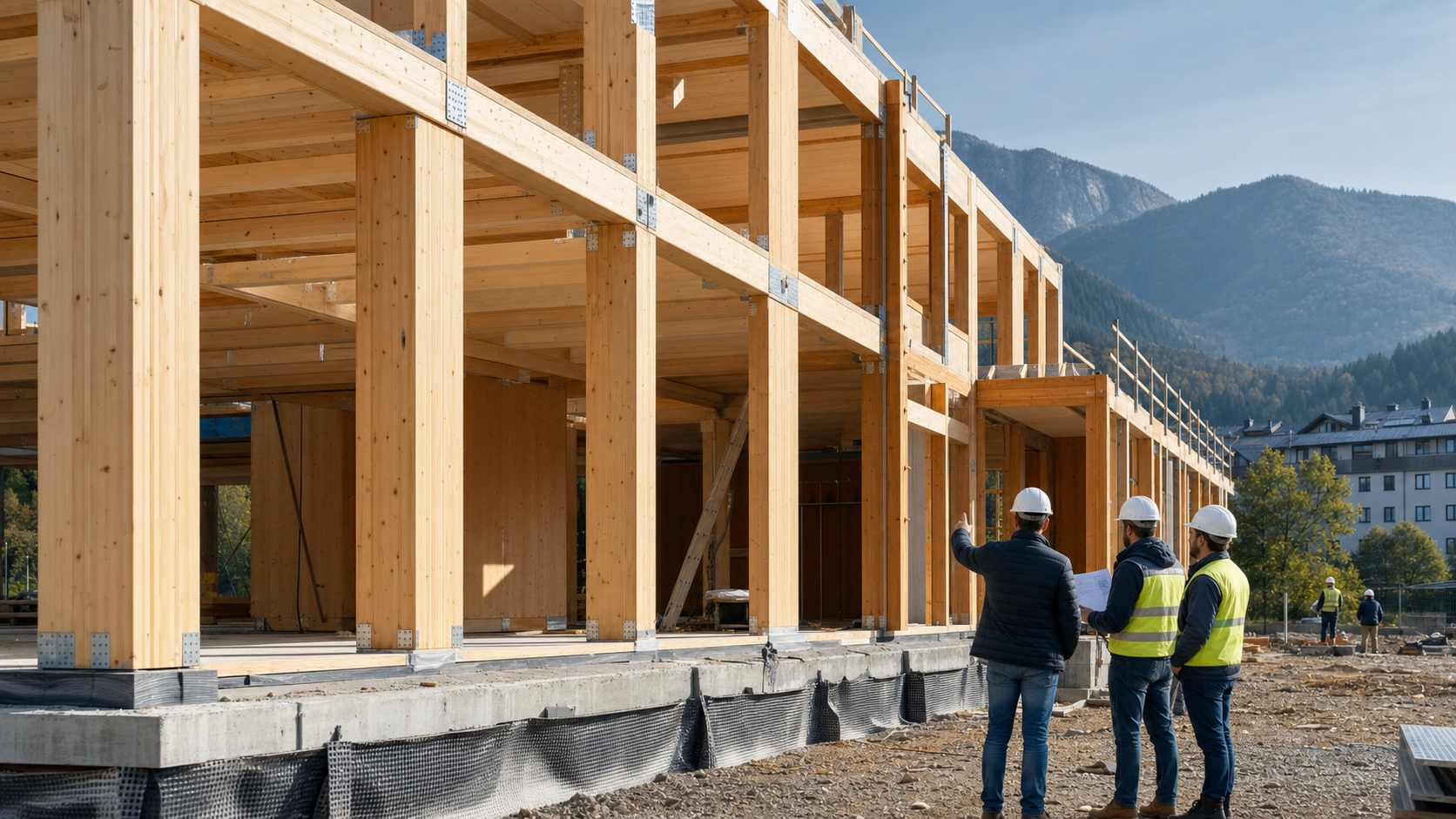
ASFOR is asking Romania to require wood products to represent at least 25% of the value of each new public building. The 2026 proposal could reshape procurement, but it is an industry position—not an adopted law.
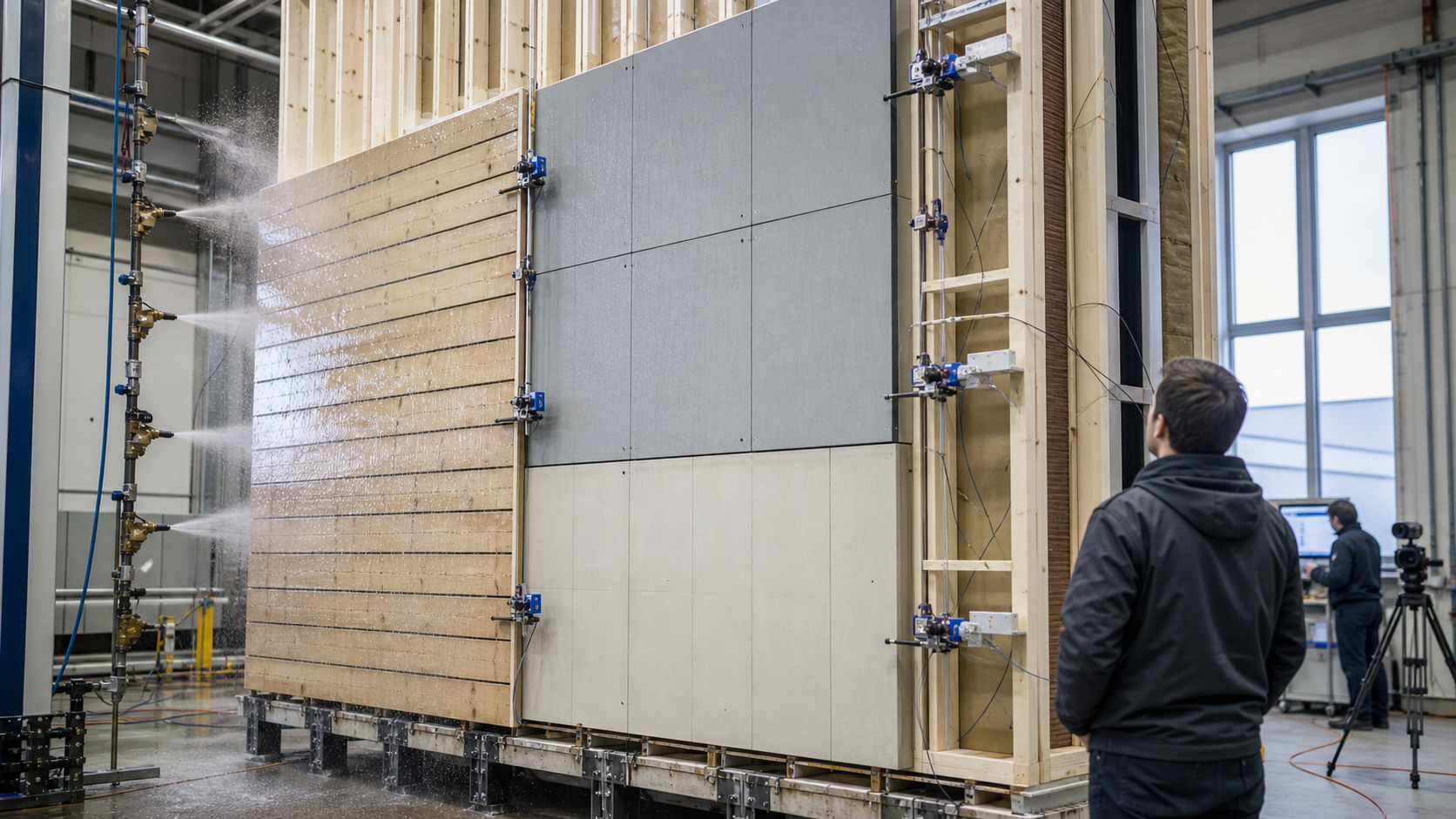
FCBA’s 2026 guidance gives manufacturers and project teams a clearer way to verify how external cladding behaves on timber-frame façades under deformation and wind-driven rain.
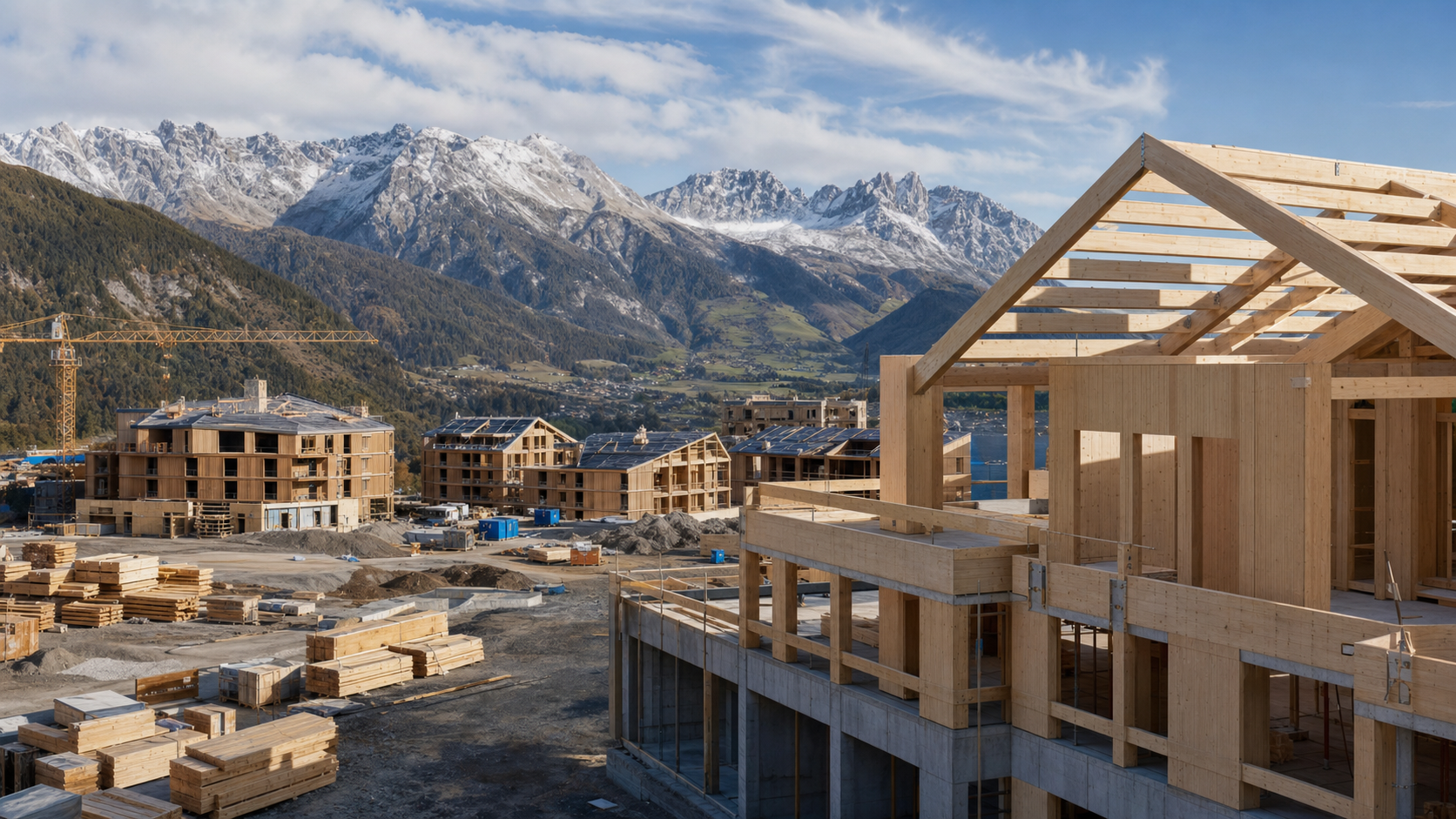
The France Bois 2030 mission is turning the French Alps Winter Games into a test of local timber supply, low-carbon procurement and long-term reuse. Launched in 2026, it aims to help project teams specify French wood without repeating avoidable mistakes from Paris 2024.
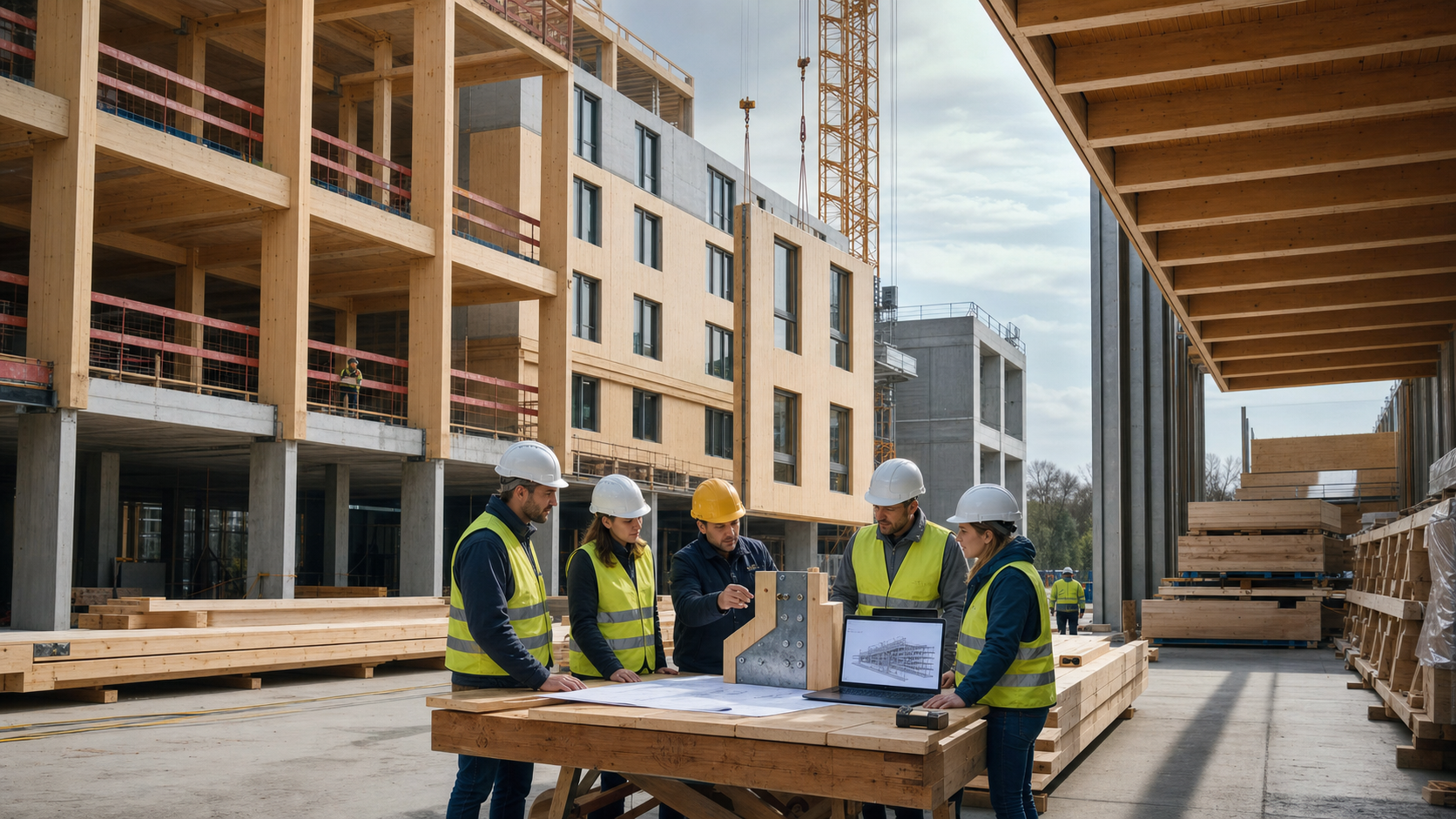
Bouygues Bâtiment France, Linkcity and FCBA have renewed their strategic partnership through 2029, targeting technical validation, regulation and the large-scale deployment of timber buildings.
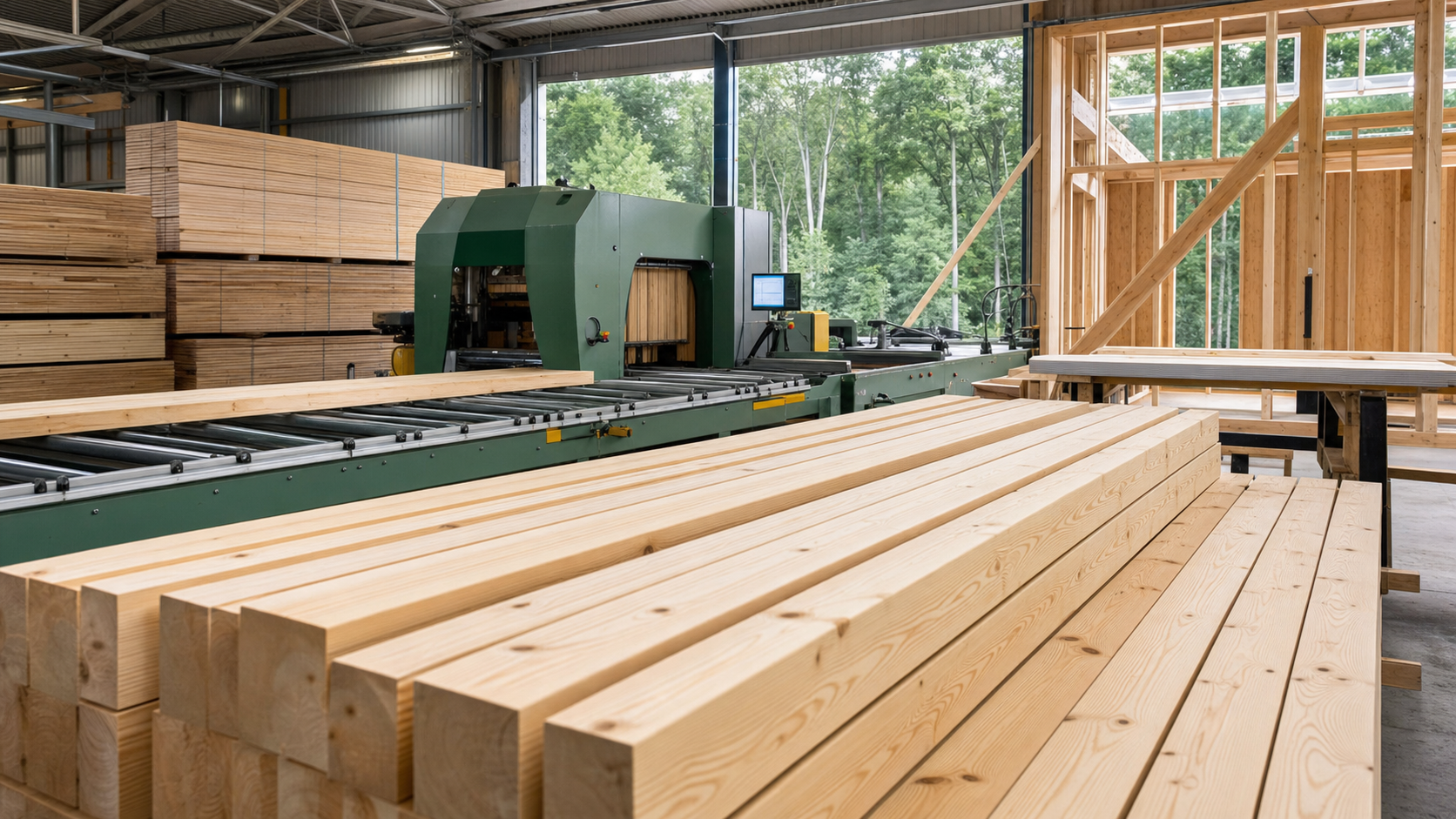
The Forestry Commission says roughly 75–80% of the timber consumed in the UK is imported. New 2026 guidance argues that homegrown C16 timber is suitable for many structural applications if it is specified early.
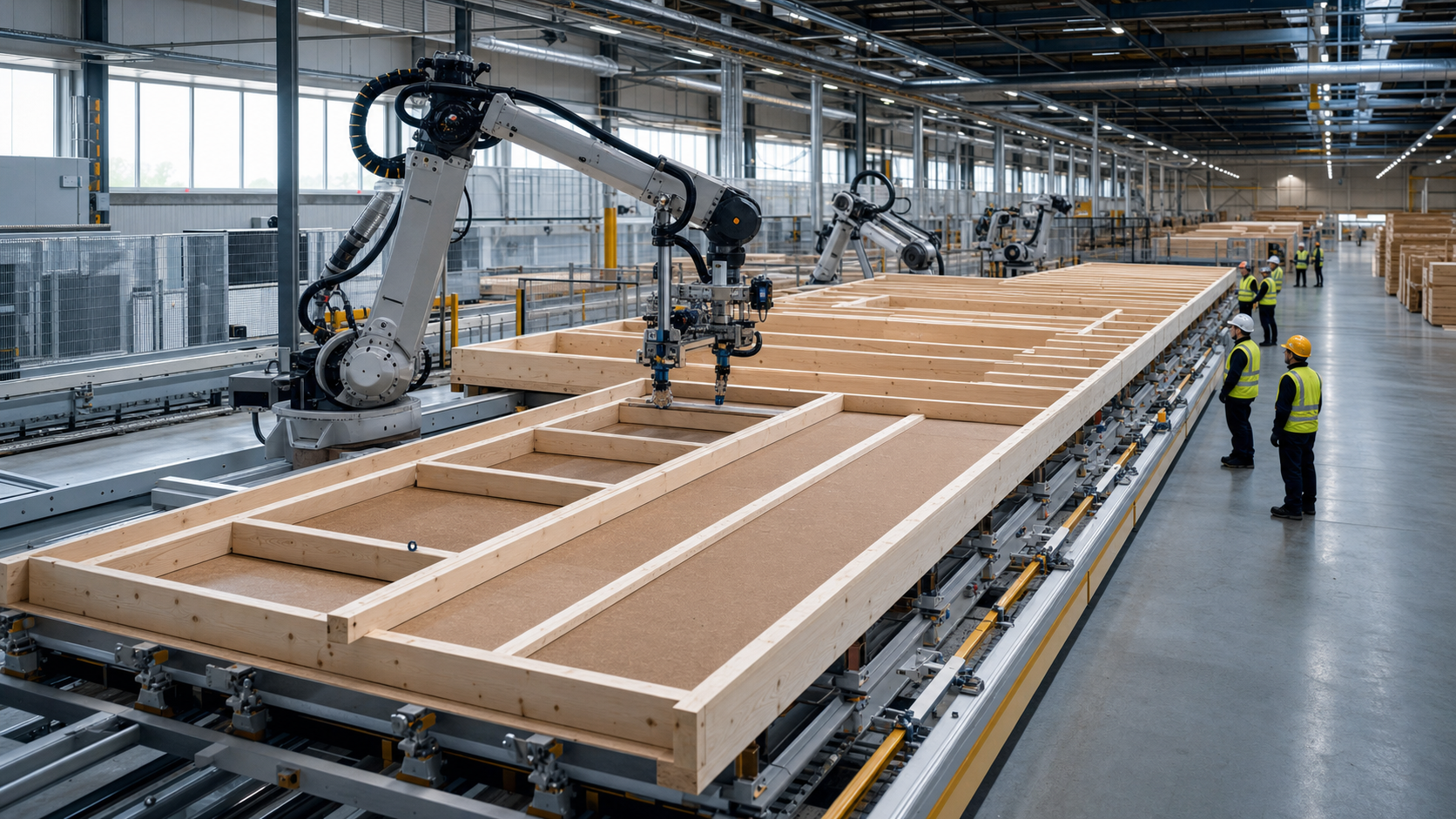
Bellway Home Space has begun supplying timber-frame kits from a 135,000-square-foot factory in Nottinghamshire. The housebuilder plans to scale output to around 3,000 homes annually by 2030, bringing robotic off-site manufacturing into its mainstream delivery model.
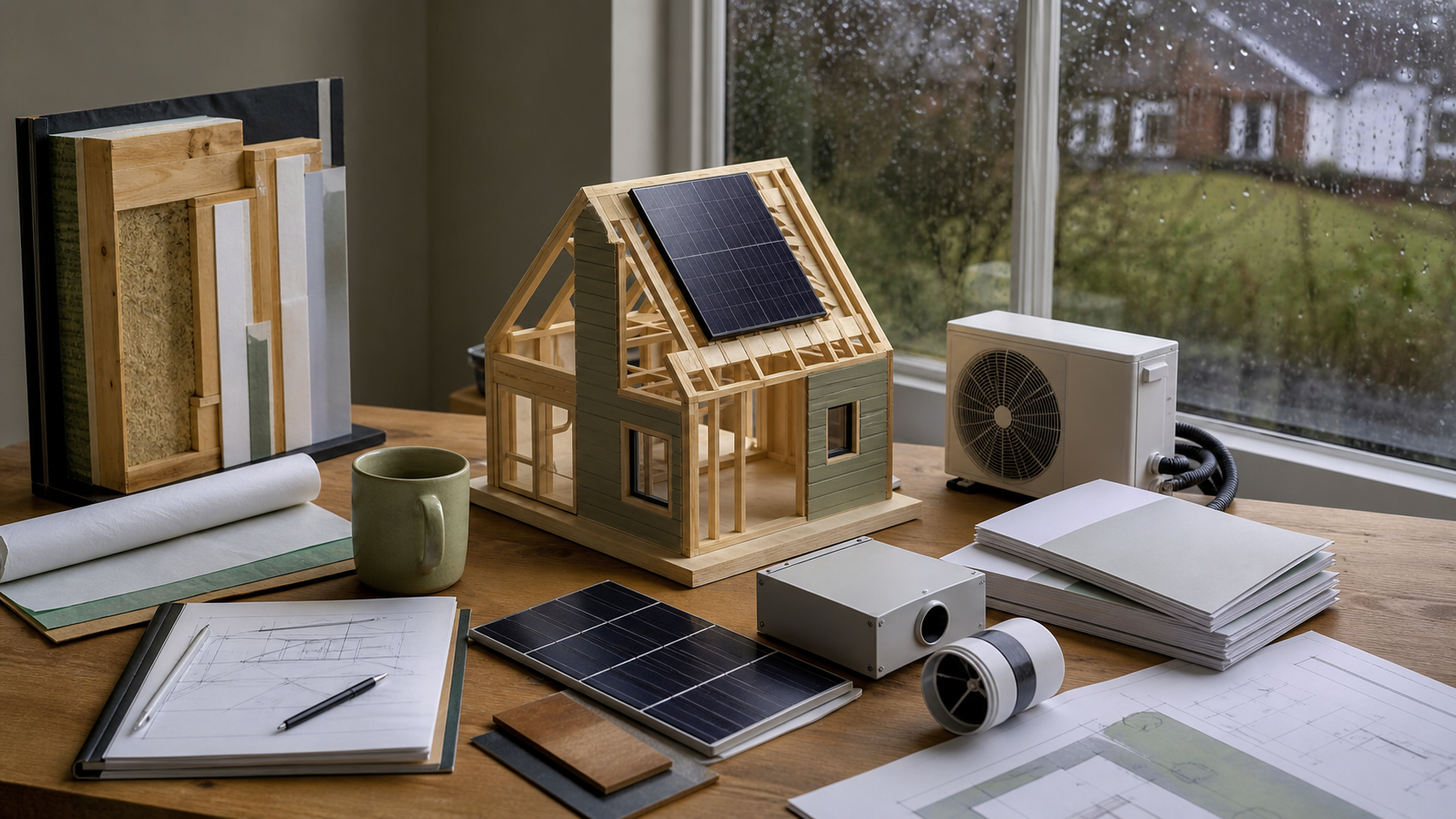
England published the Future Homes and Buildings Standards in March 2026. Heat pumps, solar generation and tighter performance rules put envelope quality and repeatable off-site construction under pressure.
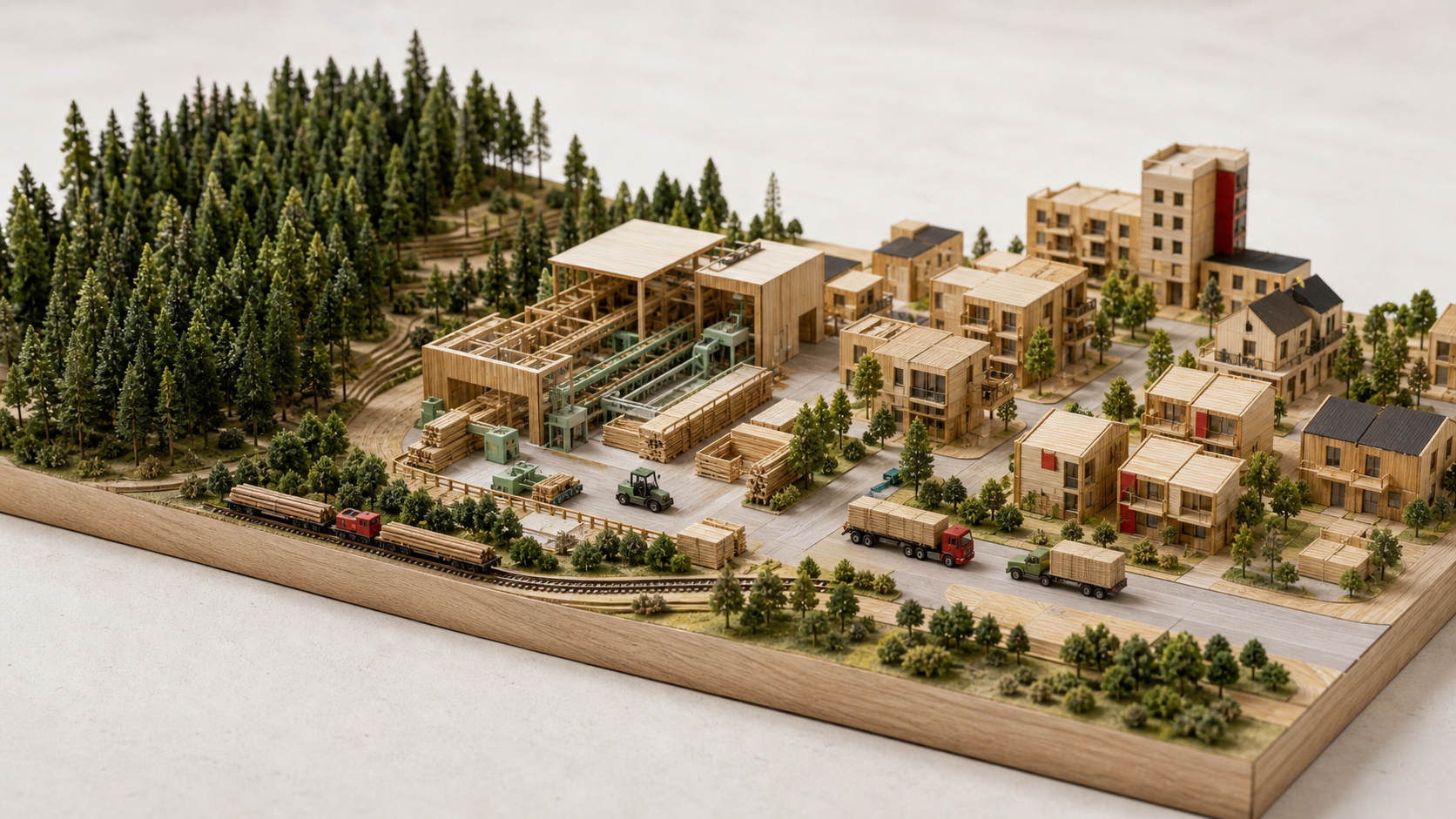
A federal transformation task force, new manufacturing investments and a renewed housing-focused wood programme place mass timber and prefabrication inside Canada’s industrial strategy—not just its architecture pages.
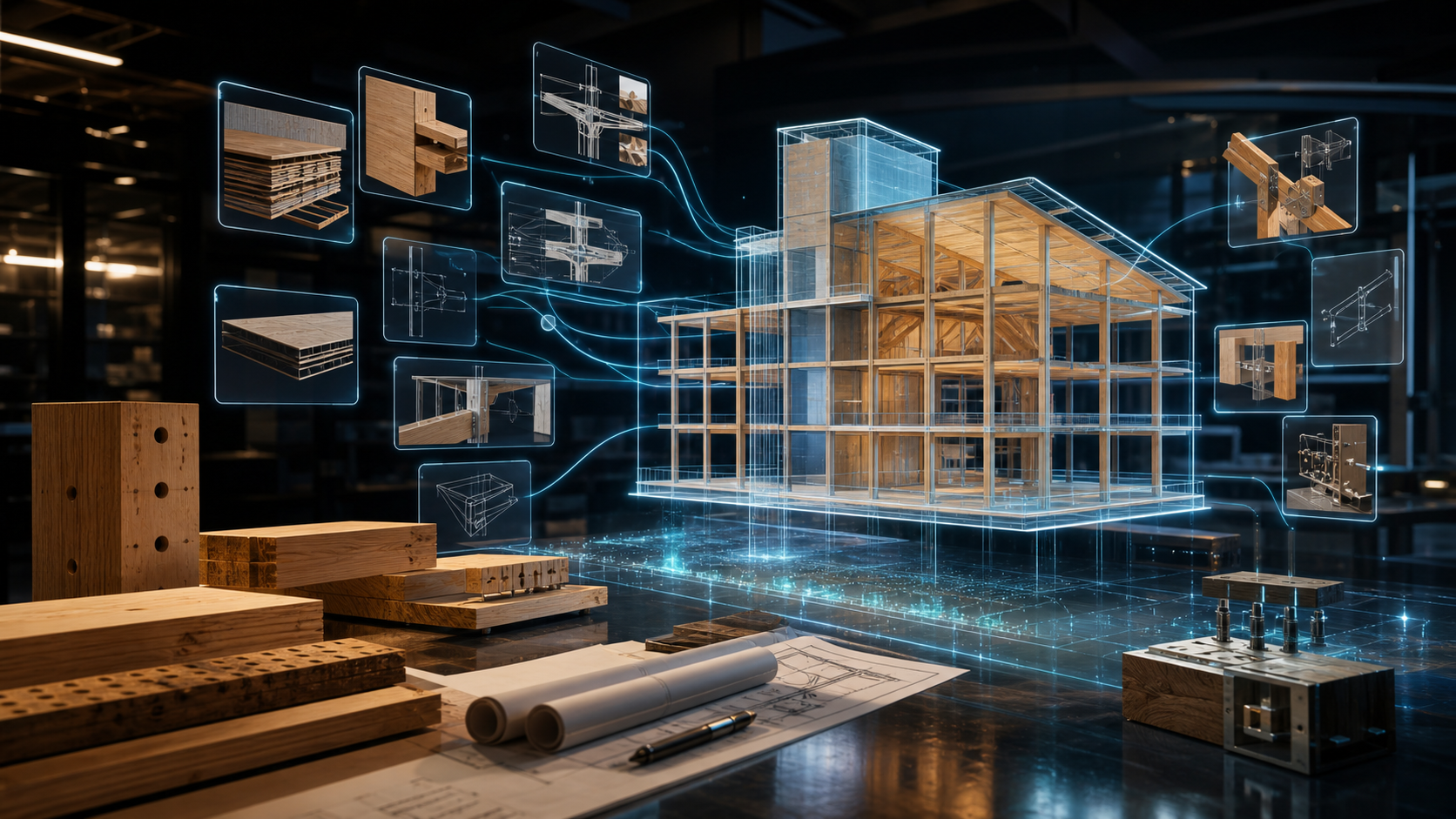
Australia’s SPEC Toolbox raised A$3 million in January 2026 to expand a structural-design platform that began with mass timber and now connects engineers with verified product data.
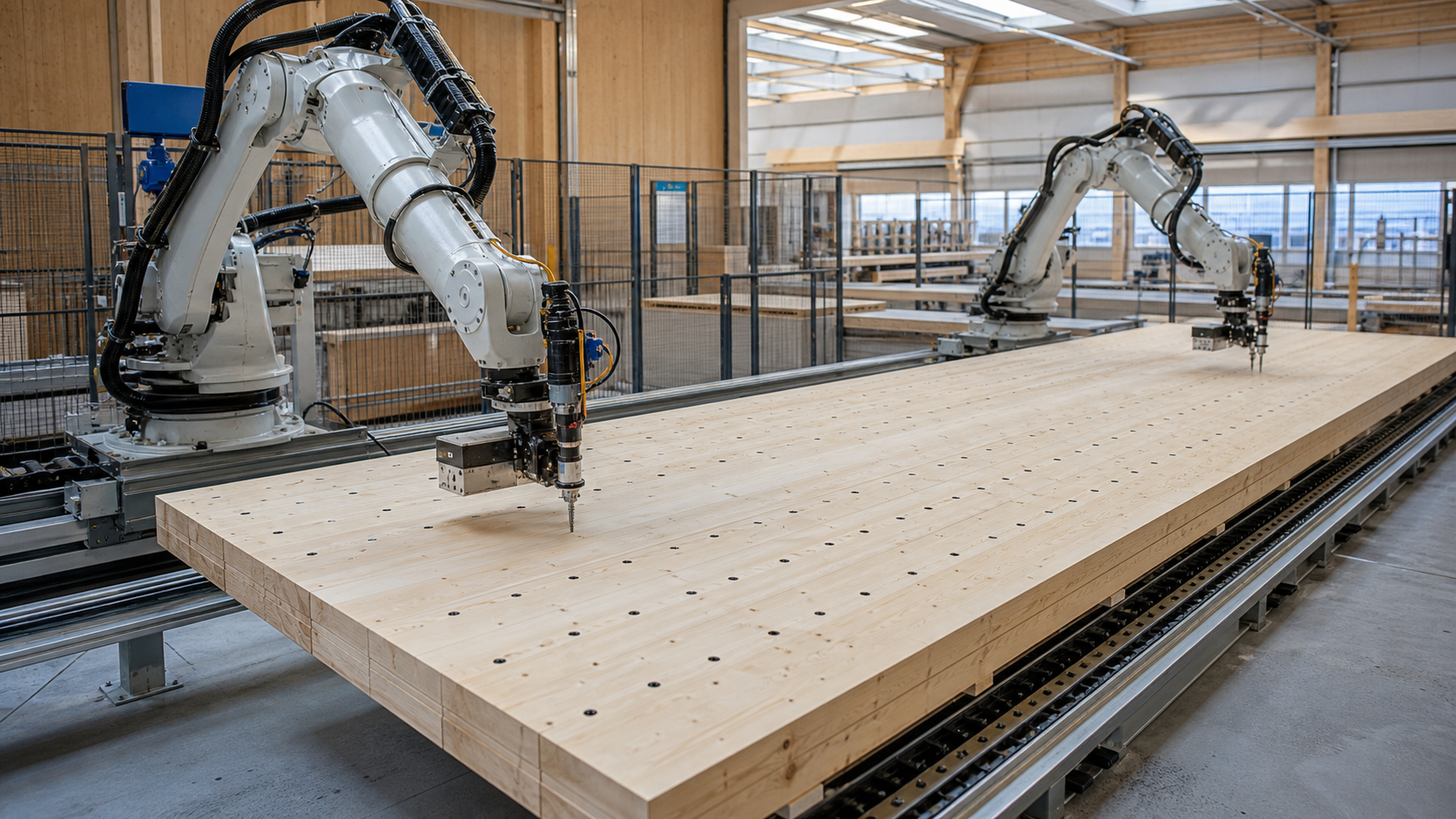
University of Stuttgart researchers coordinated two robots to assemble a 2.4-by-6-metre timber slab through 108 subroutines and 352 screws, while respecting collisions and adhesive time limits.
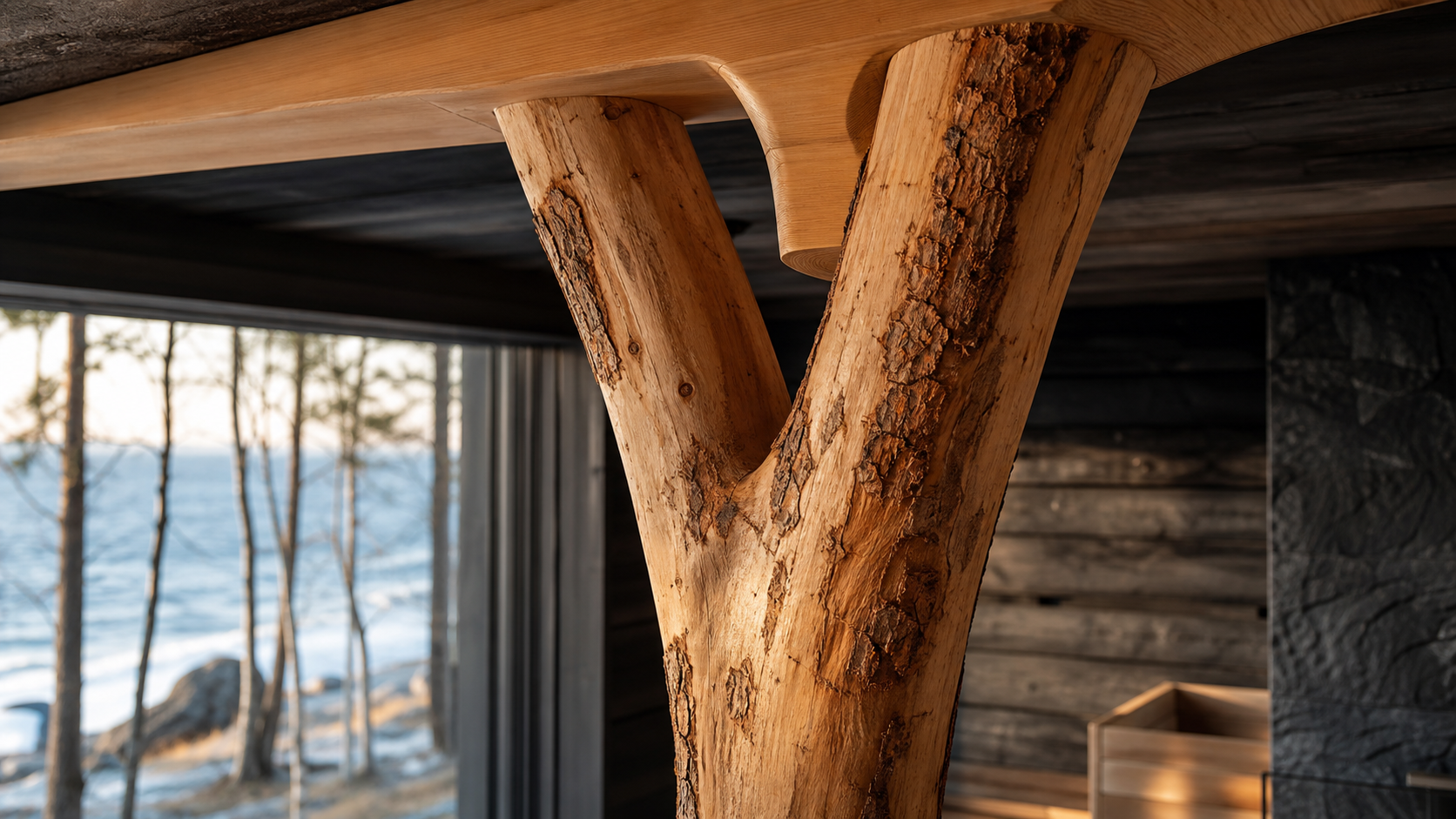
Jaakko Torvinen’s island sauna combines hand-hewn logs, CLT, glulam and minimally processed tree trunks in a structural experiment with crooked wood.
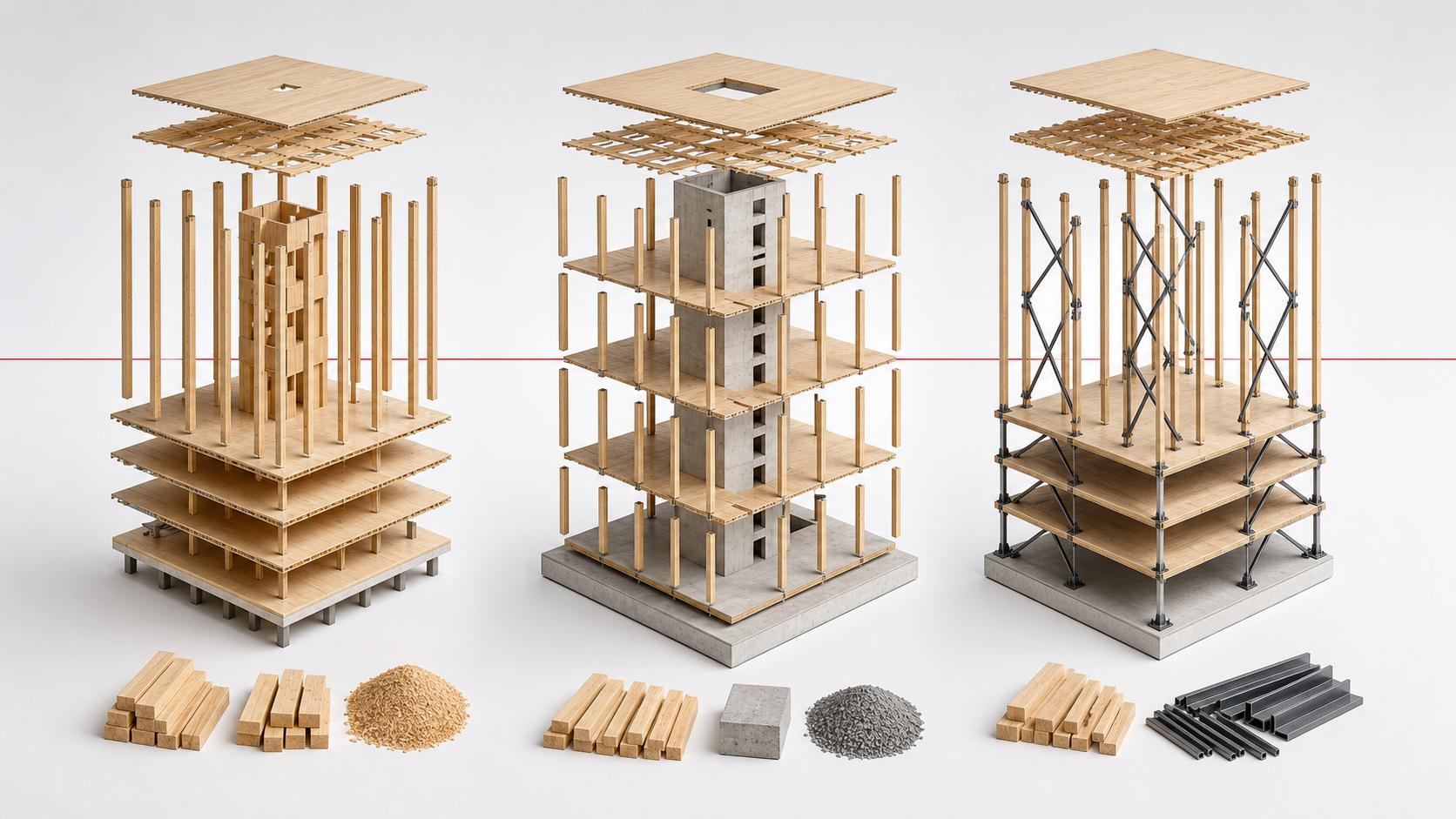
New datasets covering 56, 79 and 258 buildings quantify material intensity, structural systems and recurring tower types—replacing isolated records with a broader global picture.
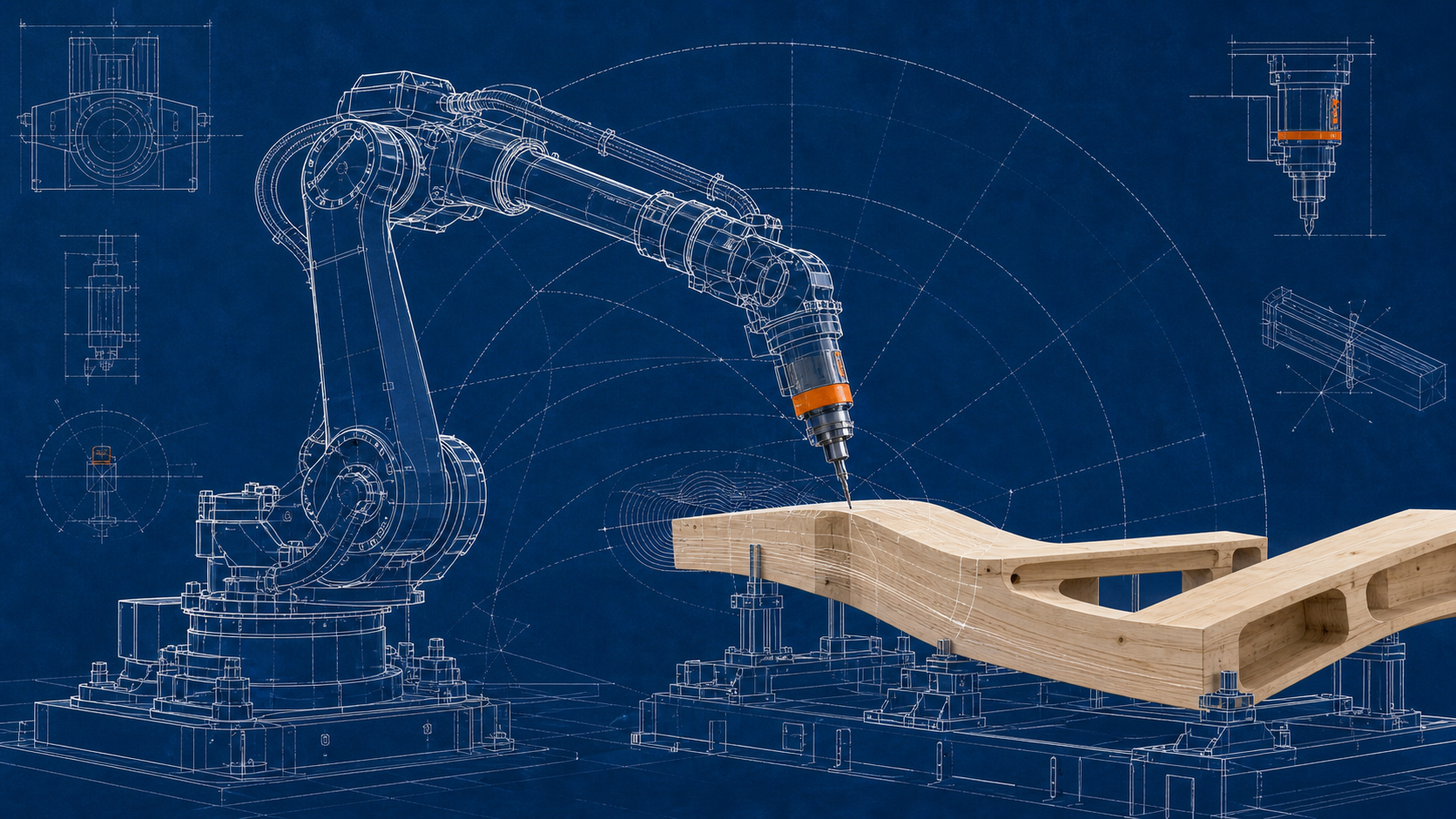
The University of Toronto’s first industrial-scale timber-fabrication robot combines a 3.5-metre reach, 210-kilogram payload and 0.06-millimetre repeatability.
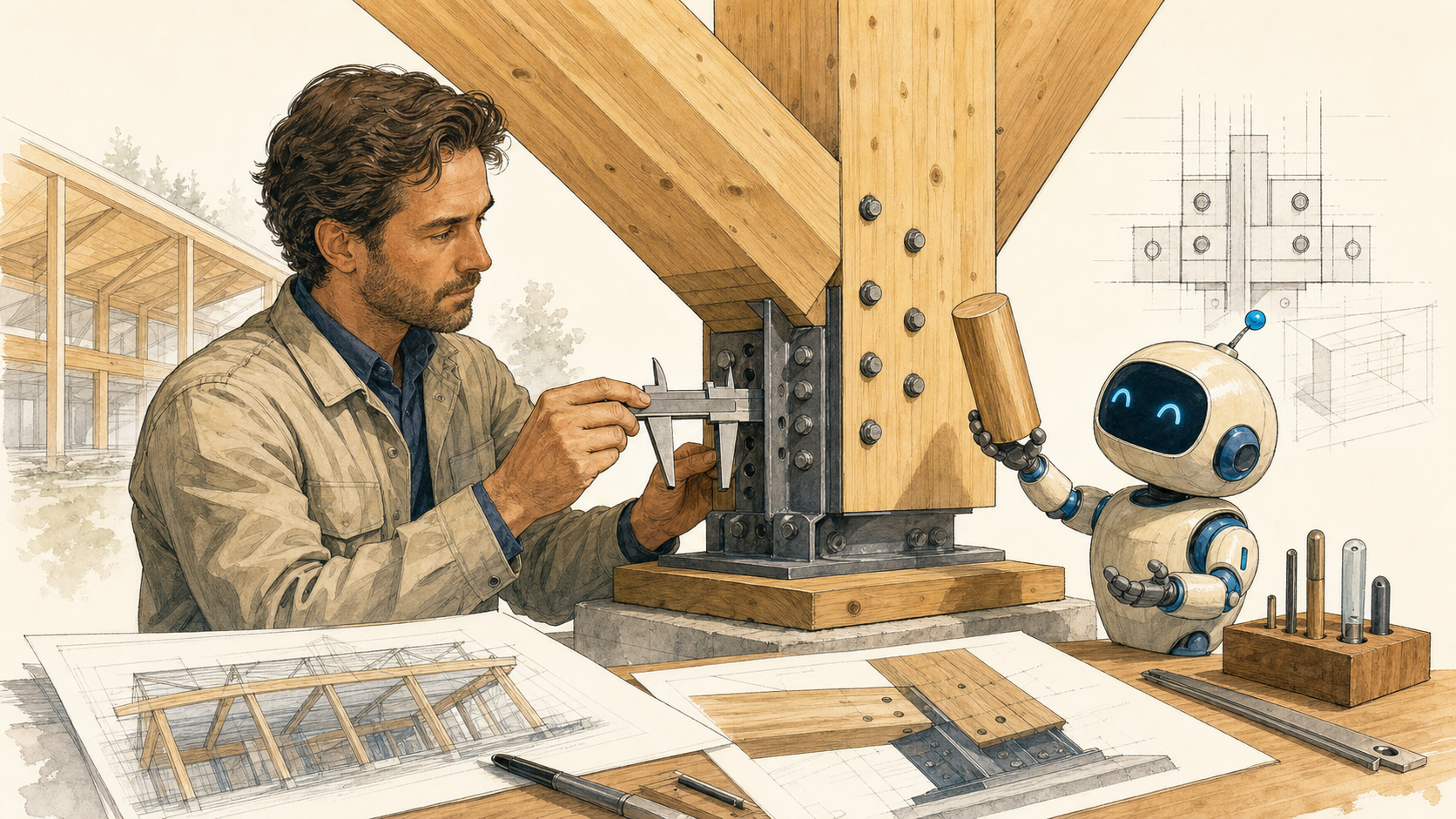
Trimble’s March 2026 release adds AI-assisted fabrication drawings, natural-language modelling previews and cloud settings. The timber opportunity is real, provided automation never becomes anonymous.
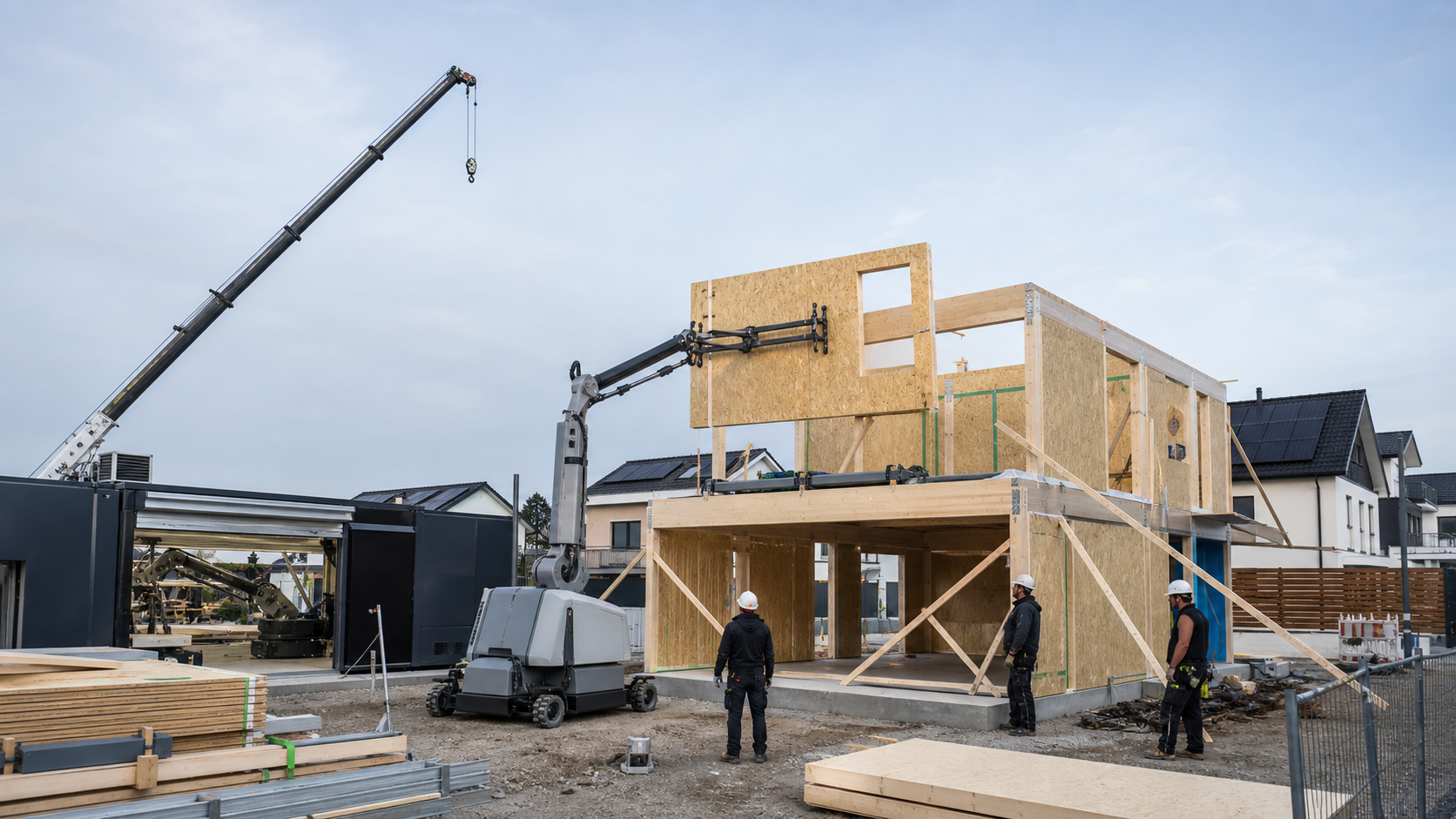
The EU-funded PTAH project will test robotic microfactories, digital twins and adaptive construction in a two-storey timber demonstrator.
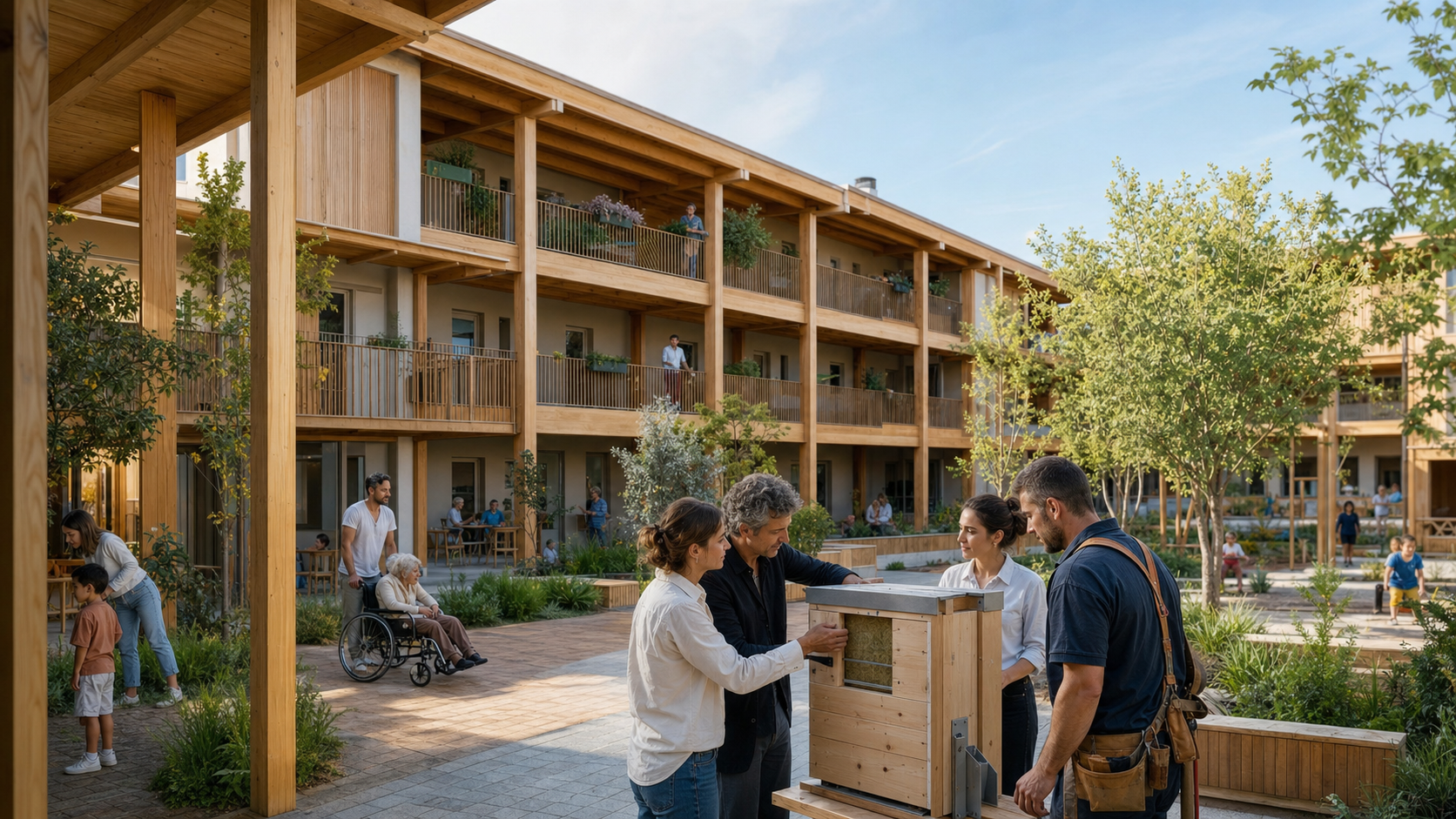
Two EU LIFE projects are building the training, local supply chains and practical knowledge needed to use more wood in affordable and social housing.
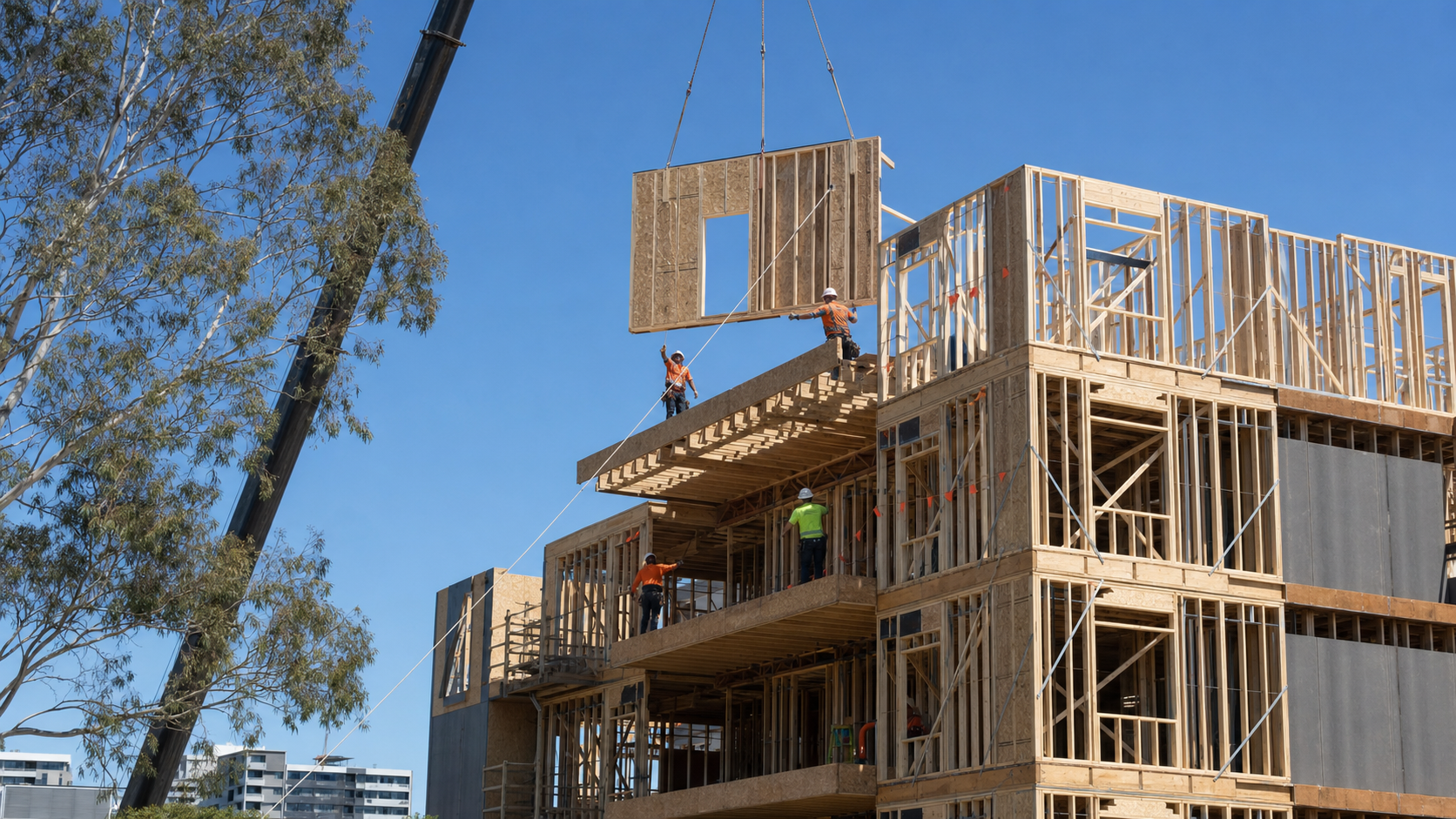
The Future Framing Initiative is developing the evidence and standards needed to extend light timber framing into 4–5-storey apartments, schools and aged-care buildings, with a target pathway into the 2028 National Construction Code.
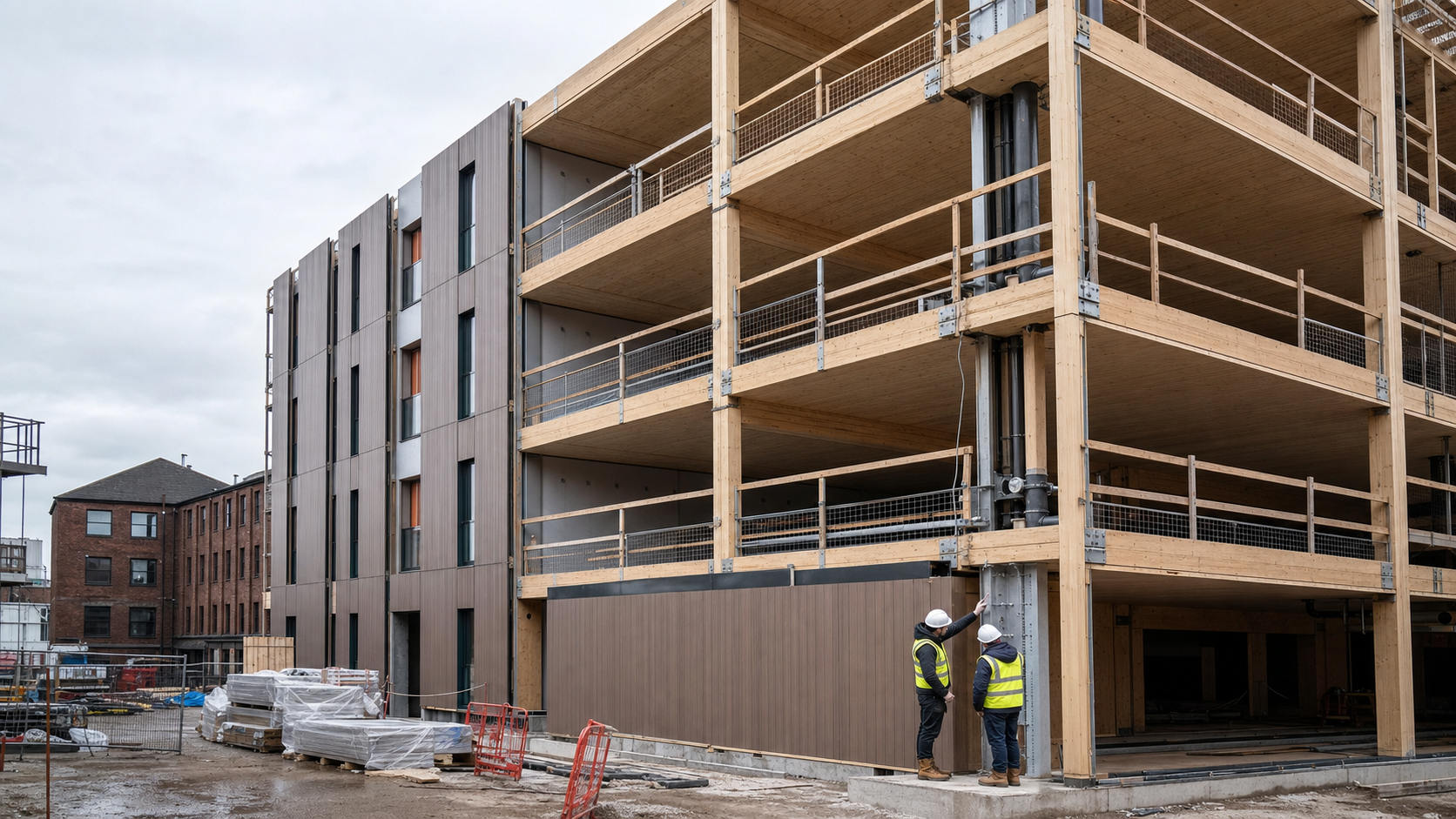
England is consulting on changes to Approved Document B that would remove its standard guidance route for combustible structural elements above 11 metres. The proposal could reshape even modest mid-rise timber projects, but it is not a final ban.
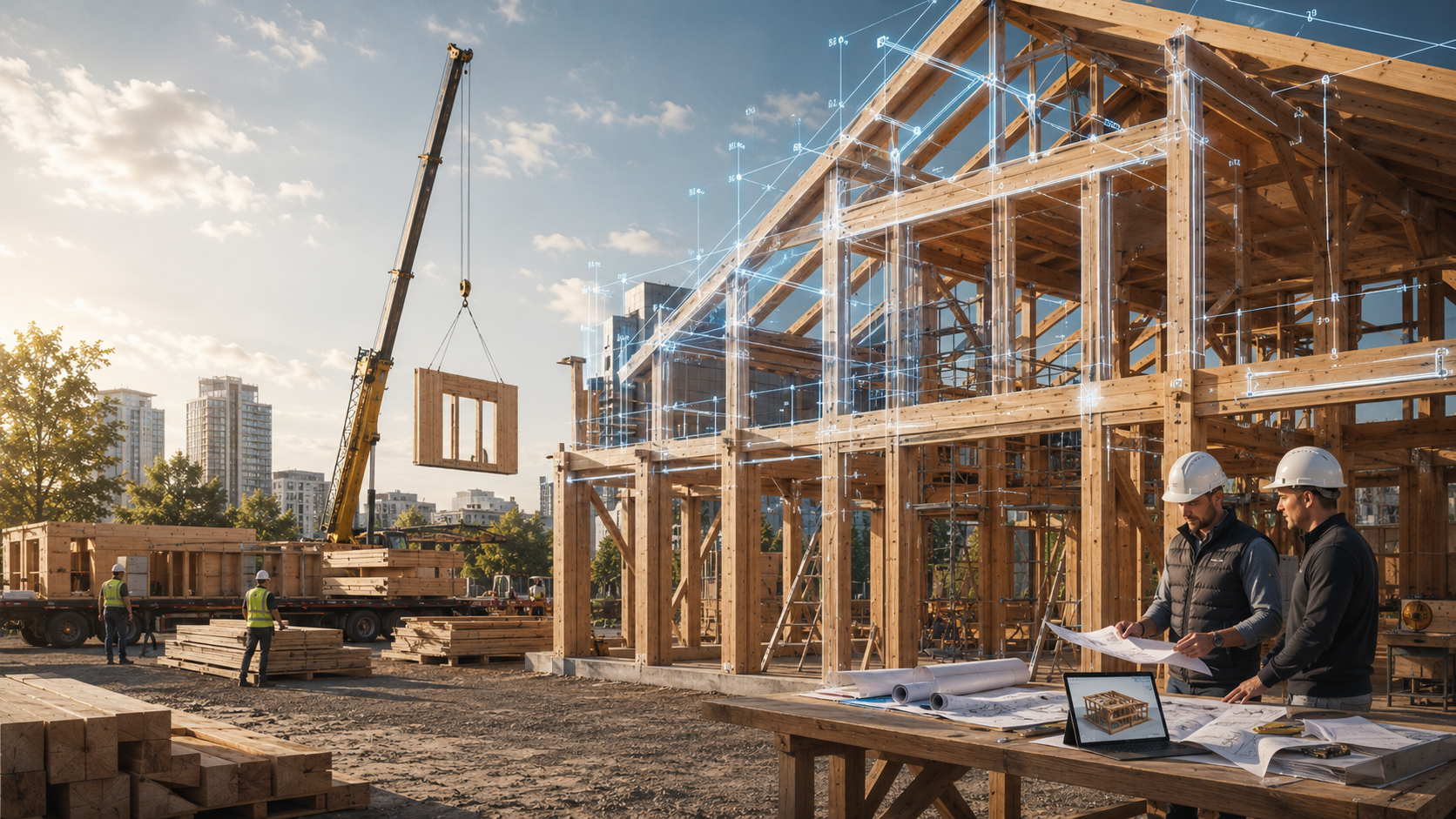
AI can generate a beautiful timber house in seconds. But can it place the posts correctly, align the plates, respect structural logic, and produce something a builder can actually cut? That is where things get interesting.
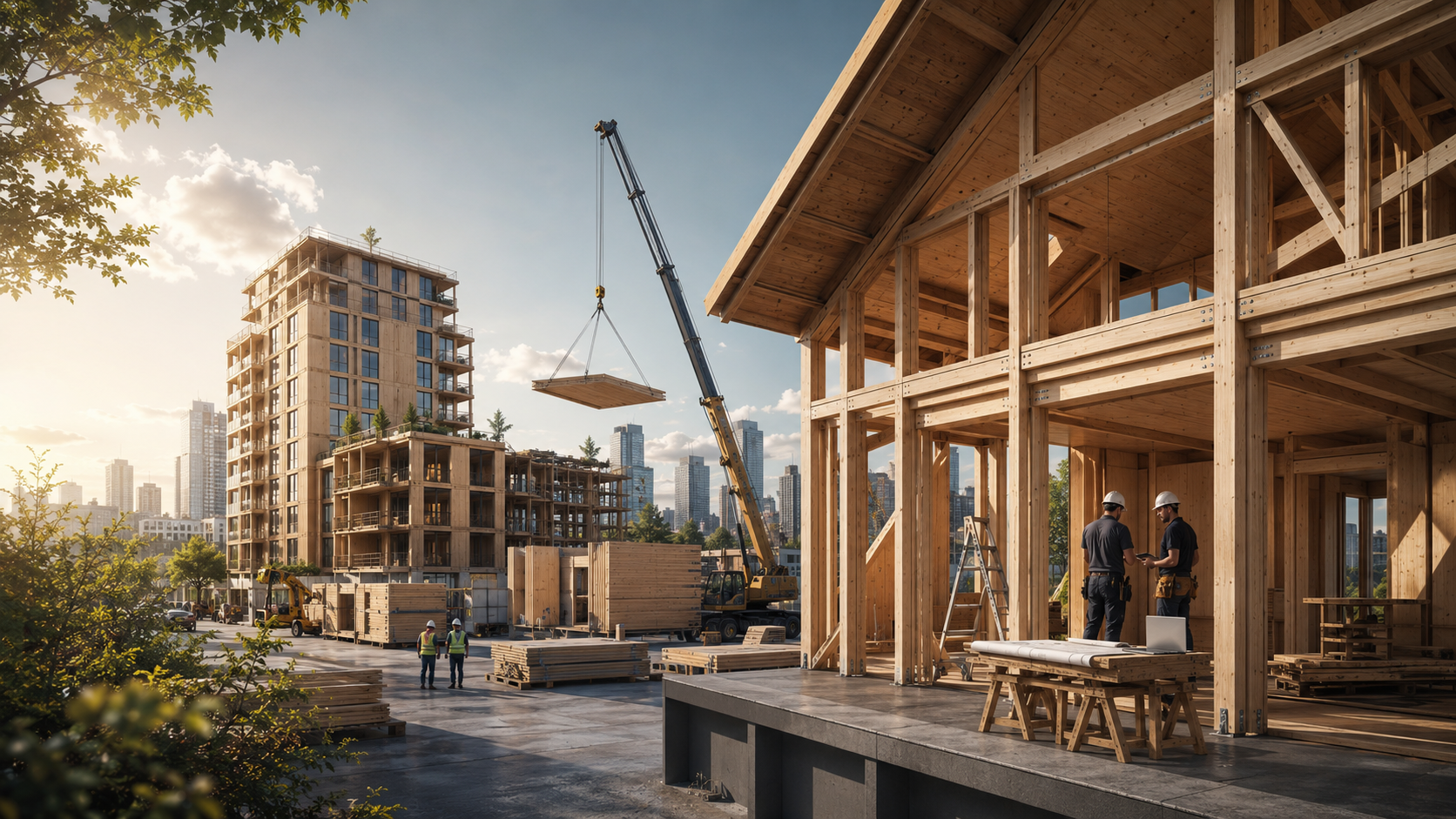
Timber construction is no longer just for cabins, eco-retreats, and people who own too many chisels. In 2026, wood is moving into cities, policies, insurance reports, factories, and serious construction pipelines. Here’s why timber may finally be crossing from niche to normal.
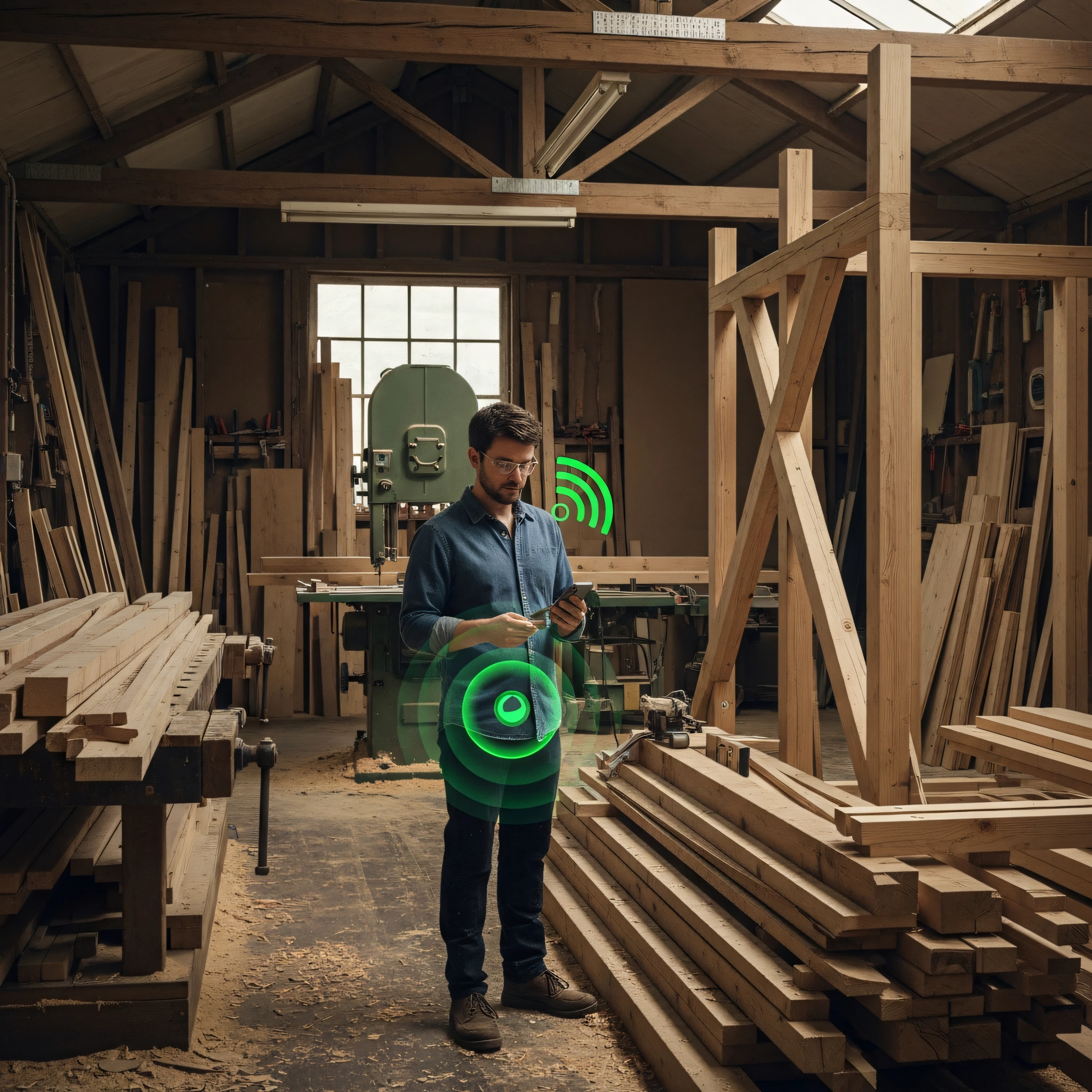
Timber framing crews lose up to 7% of weekly productivity searching for tools. Bluetooth trackers are the simplest, funniest, and most effective way to stop the disappearing-square epidemic forever.
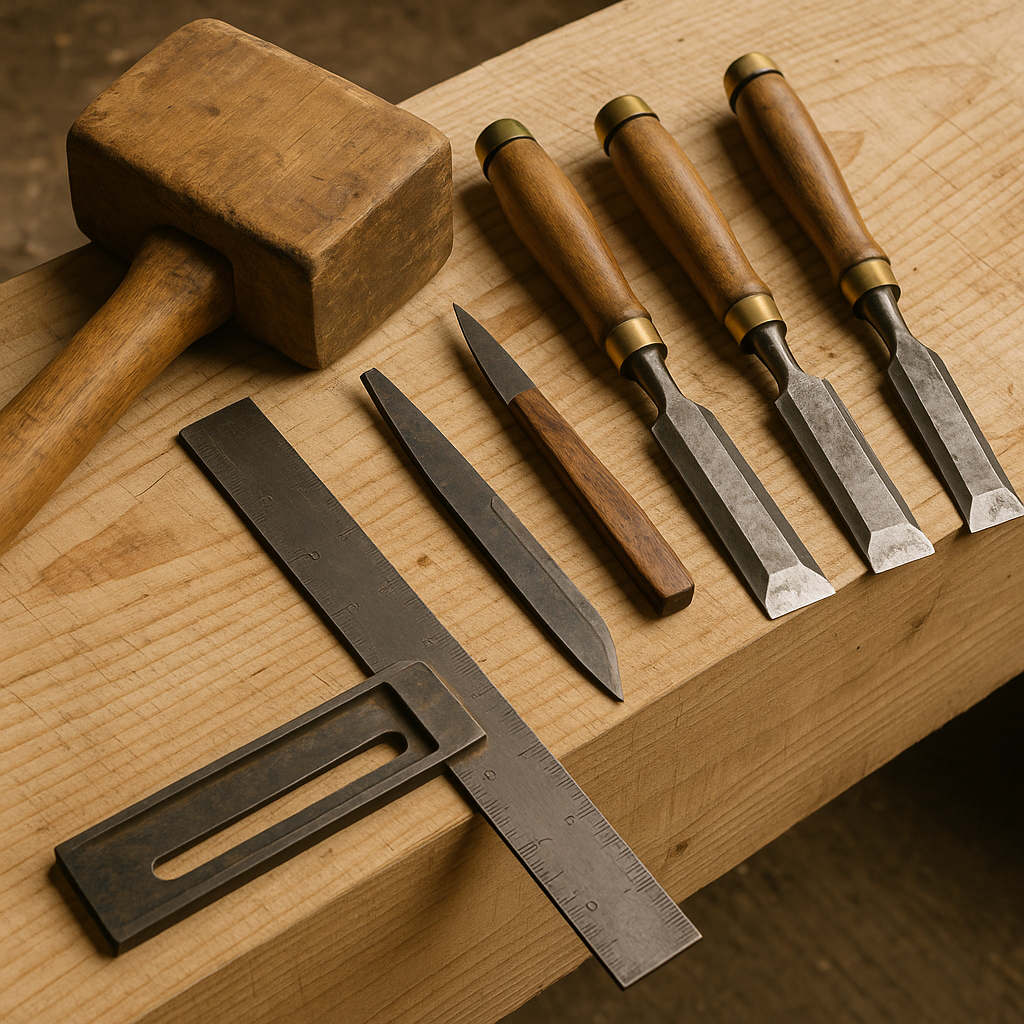
Your first five hand tools for timber framing—framing square, chisels, slick, marking knife, and wooden mallet—are more than nostalgia. They’re precision instruments that still outperform power tools when joinery really matters.
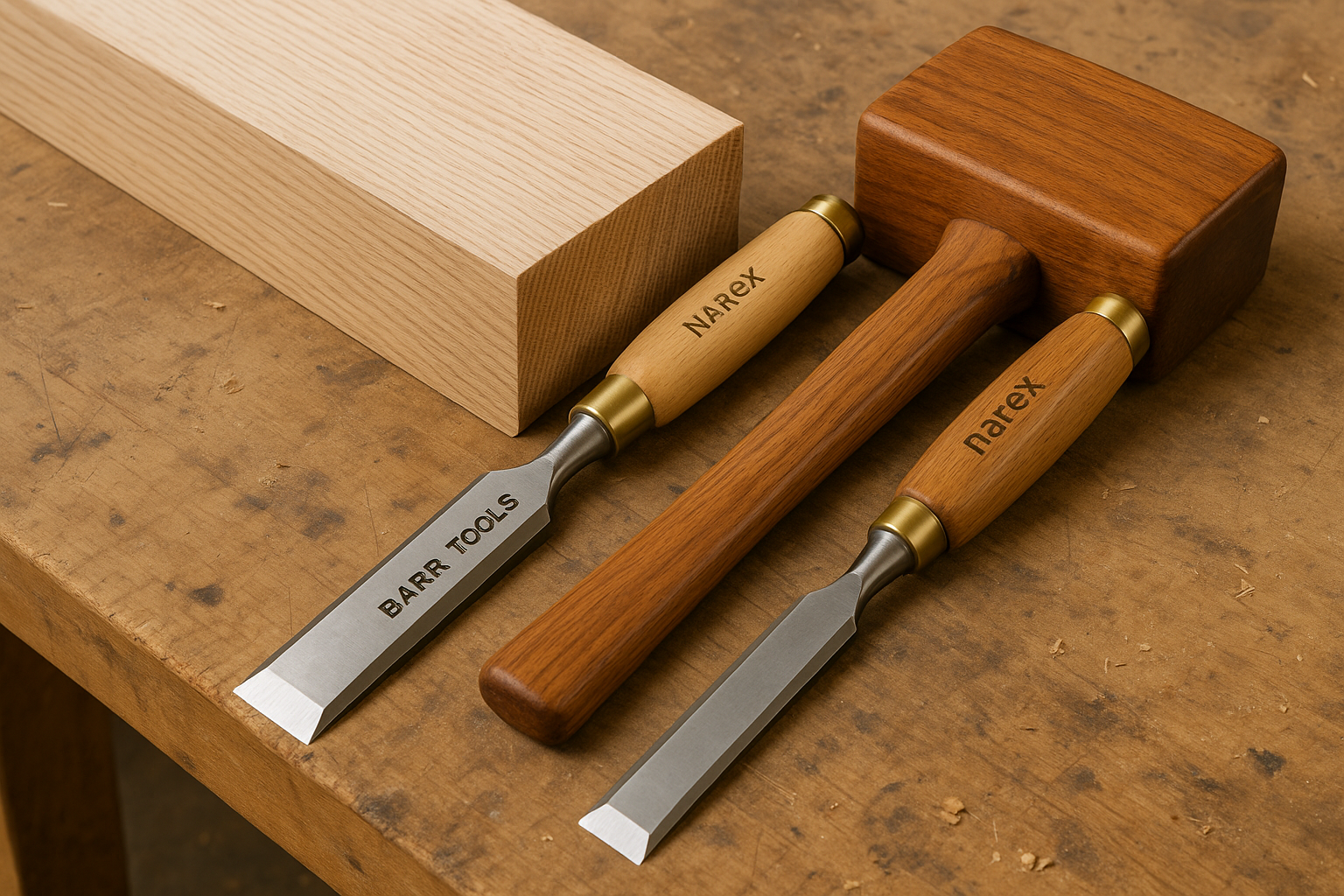
We put two legends of timber framing—Barr Tools and Narex—to a real workshop test: white oak, end grain, identical mortises. One costs €145, the other €32. Here’s what actually matters.
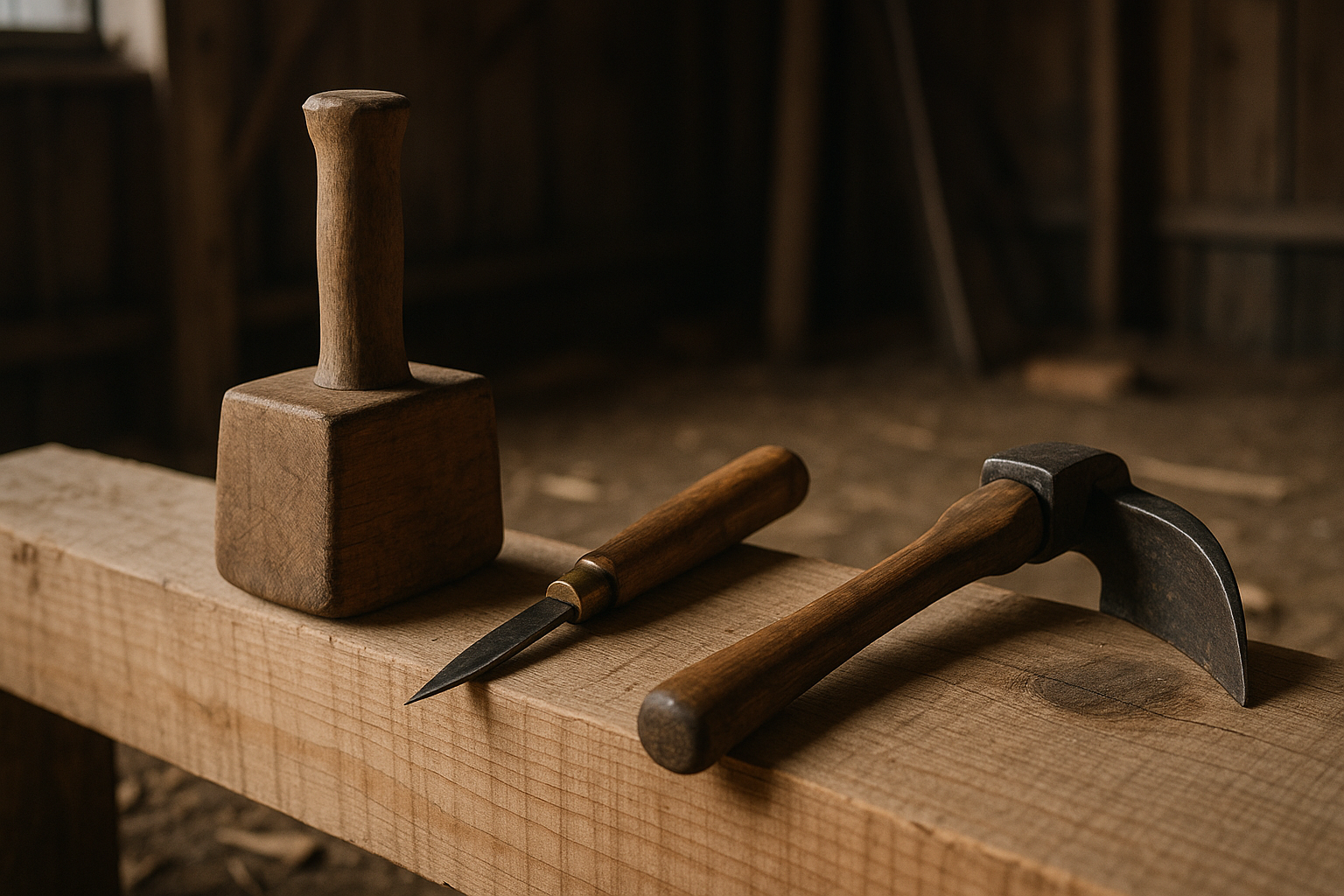
Power tools scream, but traditional hand tools whisper—and still deliver joinery accuracy down to fractions of a millimeter. Meet the mallet, adze, and marking knife: three timeless tools that shape timber with precision, control, and zero battery anxiety.
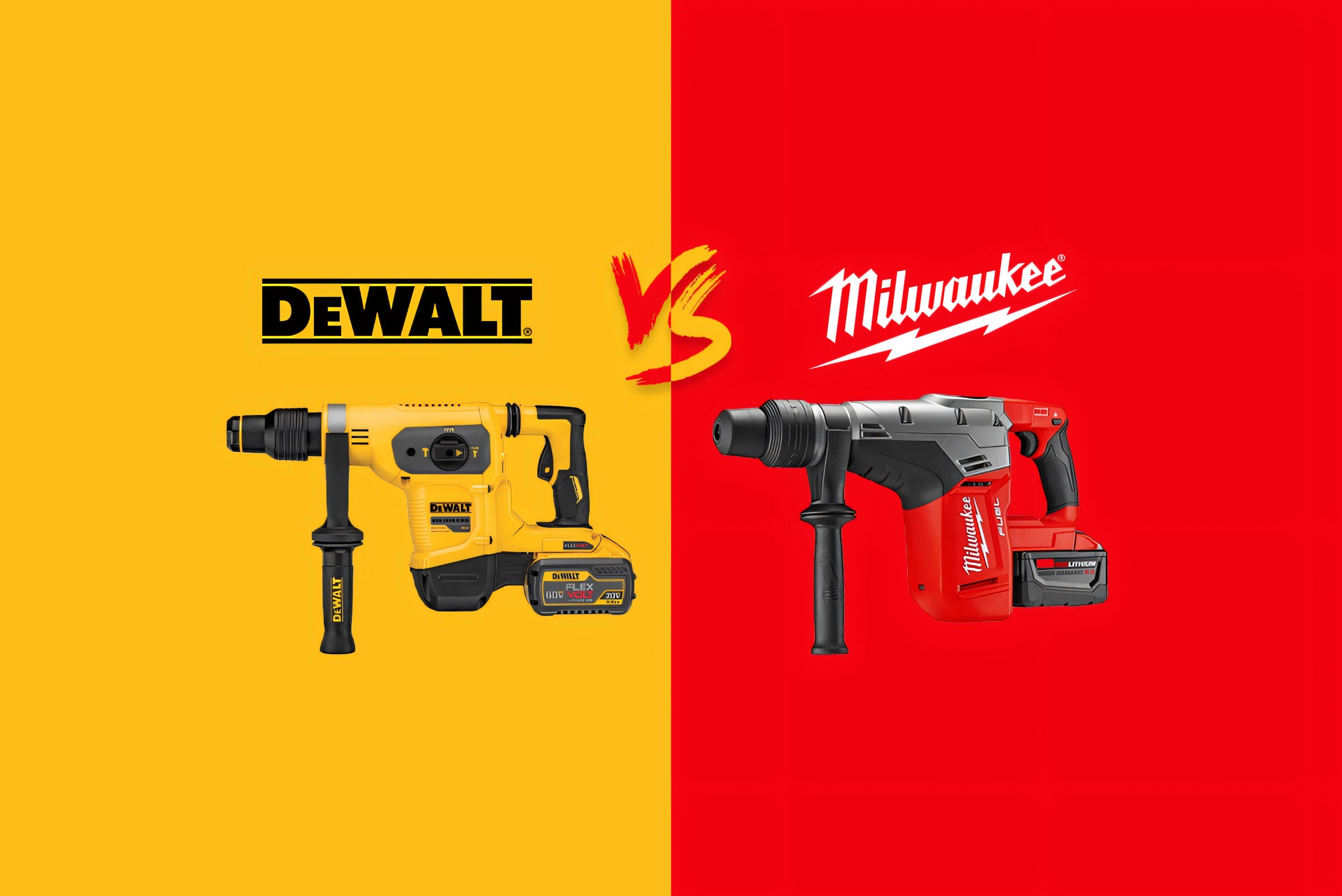
Milwaukee brings brute-force torque. DeWalt brings hyper-efficient speed. We tested both on real timber framing tasks—white oak (6×8 in / 150×200 mm), structural lag screws, wet weather, and long battery cycles—to see which tool matches your building style.
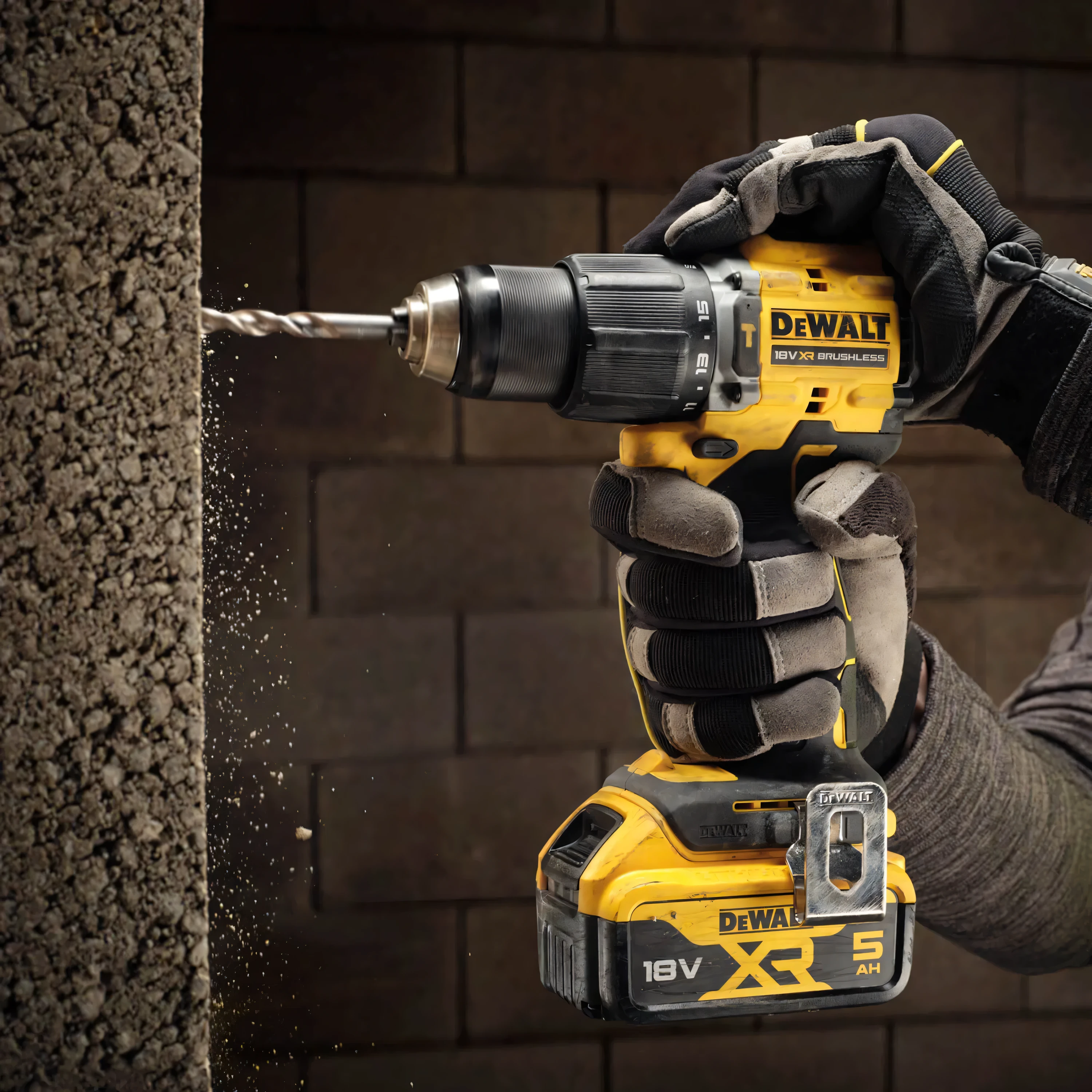
DeWalt’s new 2025 DCD799 Multi-Head Drill Driver is a shape-shifting compact tool built for tight spaces, awkward angles, and impossible timber-frame joints. With four interchangeable heads, surprising torque, and a tiny 5.3 in (135 mm) body, it’s quickly becoming the most versatile drill of the year.

A fast, funny, builder-grade recap of the best (and strangest) timber framing innovations revealed at WMS 2025—from contactless blade safety to on-bed CNC labeling and modular beam saws that scale with your shop.

A clear, real-world comparison between the Festool ETS 150/3 EQ and the Makita BO5041K. We test vibration, dust collection, finish quality, ergonomics, and long-term value to reveal when paying extra truly makes sense.
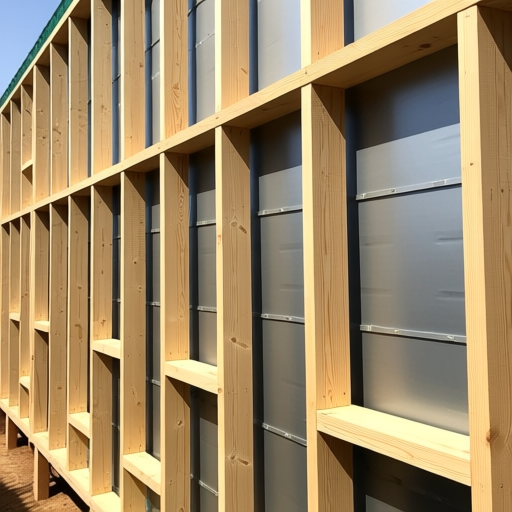
Behind every long-lasting timber structure lies an invisible defense system against moisture, UV, insects, and decay. From ancient thatch to modern backer panels, this is the science of durability.

The story of how a gold-flake-water-drinking architect's useless napkin sketch drove a DIYer to build his own browser-based timber frame design software from scratch.

From NBA training centers to university labs and iconic arenas, Think Wood’s Top 10 Timber Projects of 2024 reveal how mass timber has become the gold standard for sustainable, high-performance architecture.

Once used for small cabins and barns, timber now supports massive stadiums, skyscrapers, and research centers. This is the story of how wood became one of the most advanced structural materials on Earth.
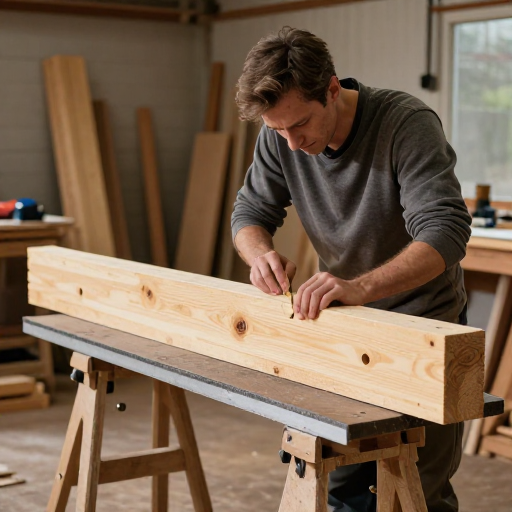
Learn how to launch a small timber frame shop on a lean budget: tools, workspace, pricing, marketing and a first-year roadmap without going broke.

Tired of fake chalets and cosplay cabins? Discover how modern timber homes can actually belong to their landscape instead of looking like confused tourists.

Japanese precision, Scandinavian simplicity, and traditional craftsmanship — the magic inside every soulful timberframe structure.
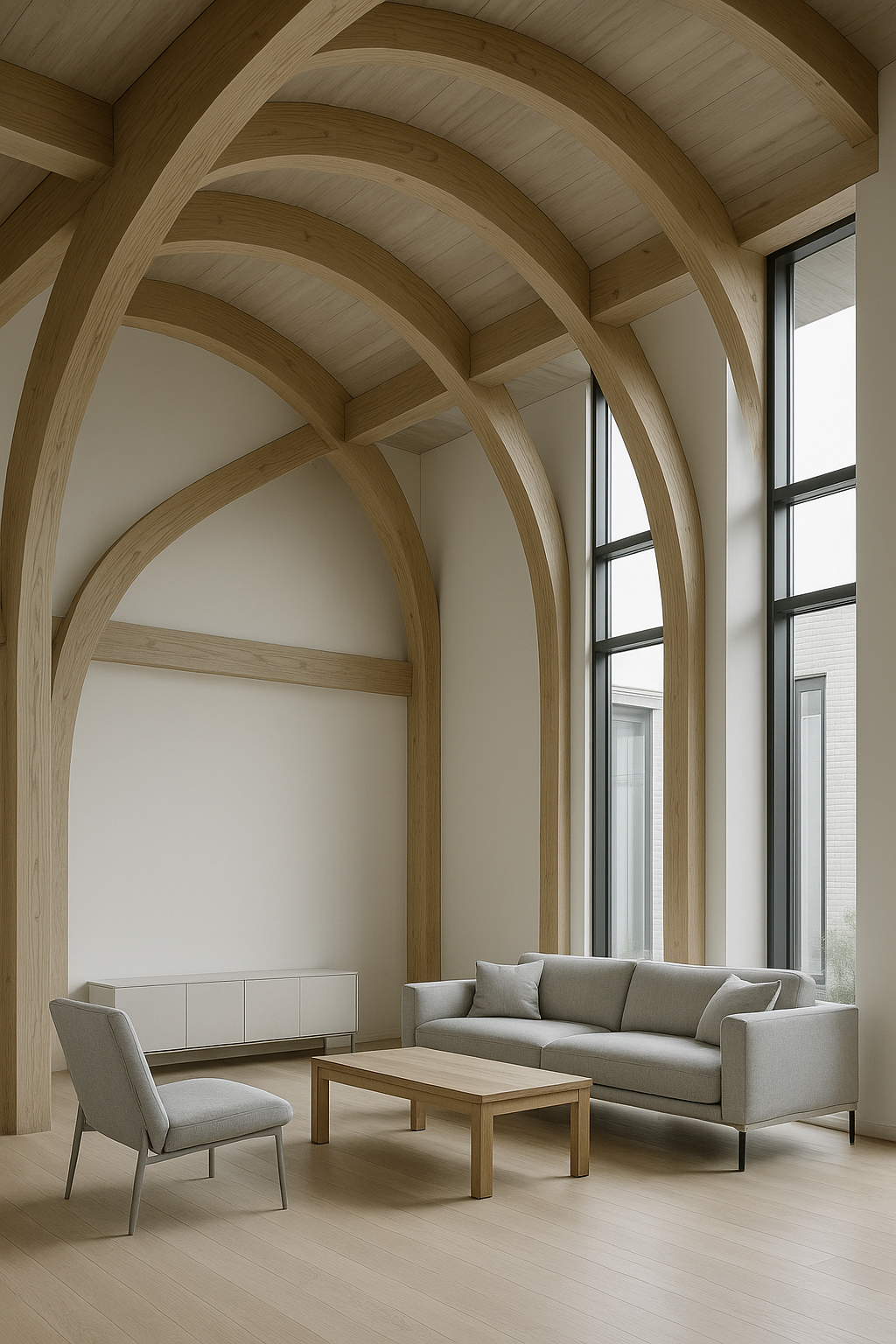
Curved beams, fluid shapes, and organic timberframe design taking over 2025 architecture.

Archaeologists discovered a notched wooden structure dated to 476,000 years ago — proving early hominins built the earliest known timber framing long before Homo sapiens existed.
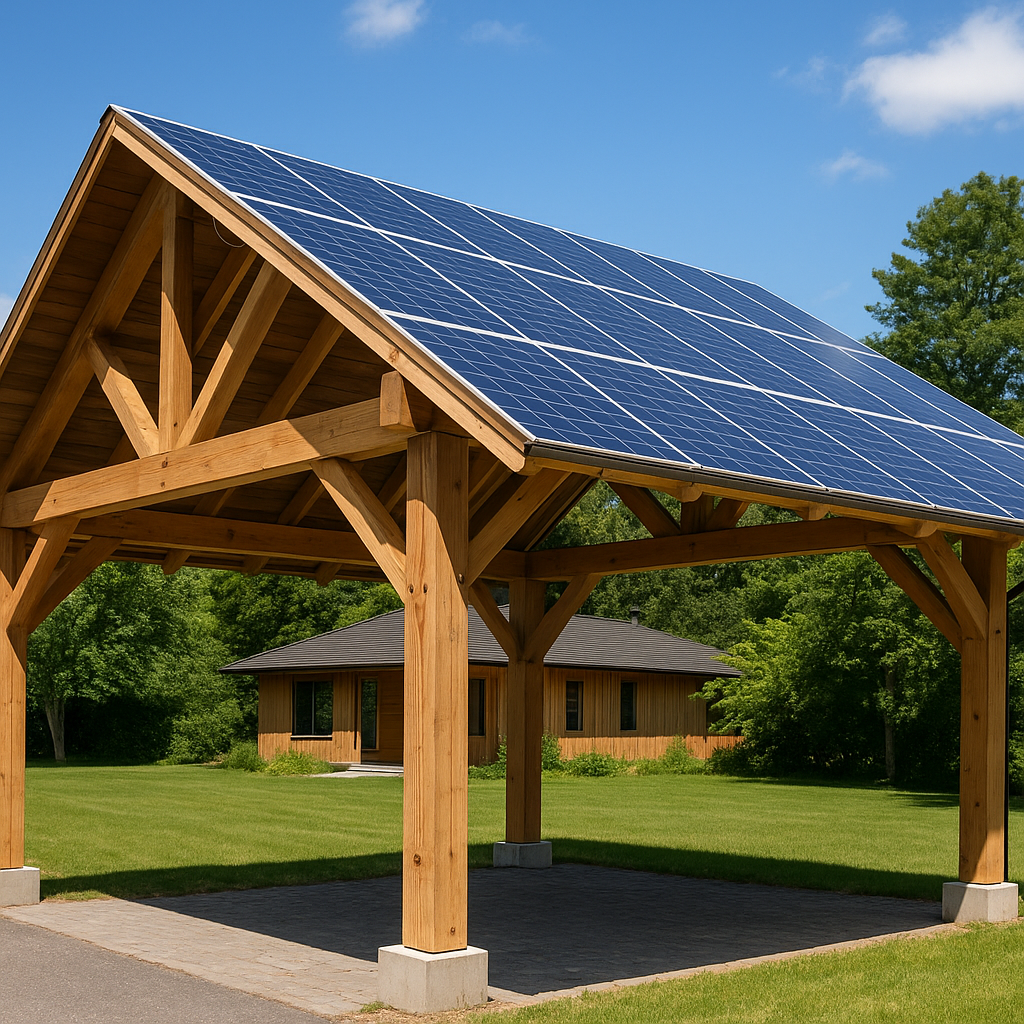
Timber frame construction combined with solar panels is rapidly becoming the global standard for sustainable architecture, blending natural materials with renewable energy.

Dark beams, open layouts, and smart details redefining modern timber frame living in 2025.

Global timber frame trends for 2025—Japan to Scandinavia, curves, modern rustic, gardens, and biophilic design.
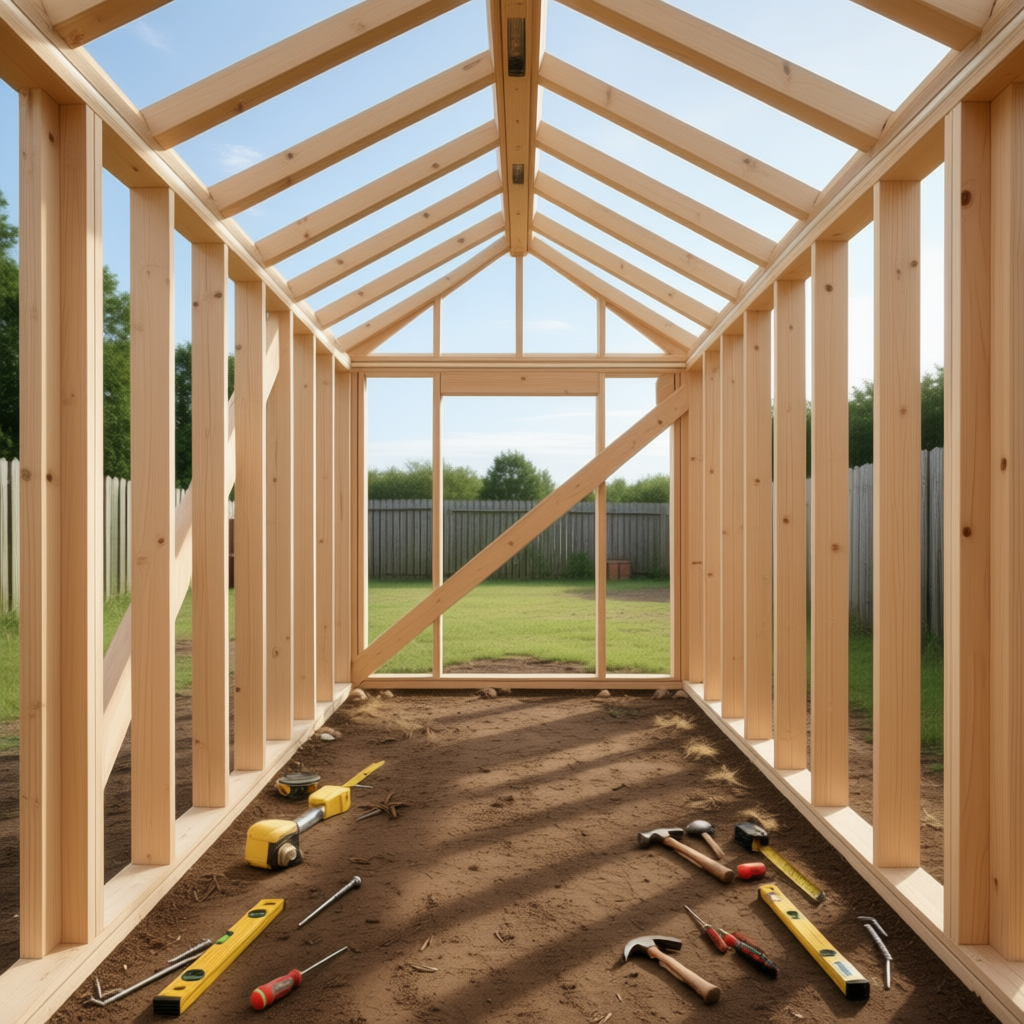
A hilariously true tale of DIY timber framing gone wrong—and the tools that saved my shed (and my marriage).